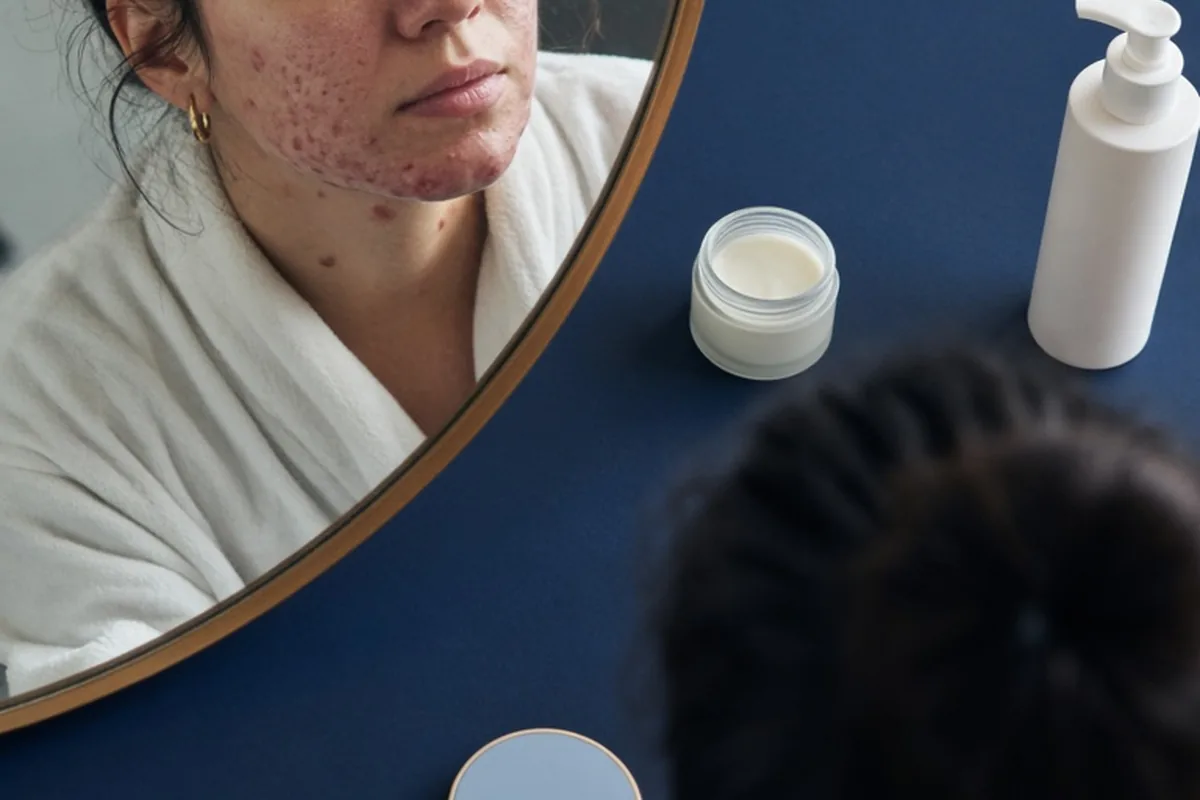
Treating hormonal acne requires balancing daily topical care with targeted medical therapies directed by a healthcare professional. Mild breakouts often respond to topical retinoids, benzoyl peroxide, and gentle skin-barrier support. Persistent, deep, or cystic breakouts along the jawline typically require prescription interventions such as oral contraceptives, anti-androgen medications, or oral retinoids. A board-certified dermatologist can evaluate underlying hormone fluctuations, review medical history, and tailor a sustainable plan combining topical maintenance and prescription therapies.
Hormonal acne often presents as deep, tender bumps concentrated along the lower third of the face, including the jawline, chin, and neck. Because these breakouts originate from internal endocrine signals that stimulate excess sebum production inside hair follicles, topical surface washes alone rarely resolve recurrent flare-ups without a cohesive, long-term management strategy.
Recognizing How Hormonal Acne Differs from Surface Congestion
Hormonal breakouts behave differently than standard teenage acne or transient surface congestion. While comedonal acne typically presents as scattered whiteheads and blackheads across the forehead, nose, and upper cheeks, hormonally mediated breakouts usually concentrate along the lower perimeter of the face. Individuals frequently notice tender, inflamed nodules beneath the skin surface around the chin, jawline, and upper neck. These lesions tend to be deeper, more painful to the touch, and slower to resolve than superficial blemishes.
The cyclical nature of these breakouts often corresponds directly to natural shifts in circulating hormones. Many adults experience predictable surges in inflammation shortly before menstrual cycles, during periods of chronic stress, or through phases of endocrine transition. These hormonal shifts trigger androgen receptors within the sebaceous glands, prompting the glands to produce larger volumes of thick, sticky oil. When this excess oil mixes with shedding dead skin cells inside the follicle, it creates an oxygen-deprived environment where acne-causing bacteria thrive and cause deep inflammatory swelling.
Further reading: American Academy of Dermatology: Acne
Topical Ingredients for Mild to Moderate Hormonal Blemishes
For mild or localized hormonal breakouts, topical active ingredients serve as the primary first line of defense. Topical retinoids stand out as a cornerstone of topical management because they accelerate cellular turnover, normalize the shedding of follicular lining cells, and prevent microcomedones from forming deep within the pore. Introducing a topical retinoid gradually into an evening routine helps clear existing congestion while smoothing uneven texture and reducing post-inflammatory hyperpigmentation.
Combining retinoids with antibacterial and anti-inflammatory topicals creates a synergistic effect that addresses multiple acne pathways simultaneously. Benzoyl peroxide targets surface bacteria and reduces inflammatory swelling without promoting bacterial resistance, while azelaic acid gently exfoliates, calms redness, and inhibits abnormal pigment production left behind by resolved blemishes. Because hormonal skin can easily become sensitized, applying these potent active ingredients over a hydrated skin base helps minimize peeling, flaking, and unwanted irritation.
Further reading: American Academy of Dermatology: Acne
Prescription Oral Medications for Deep Hormonal Nodules and Cysts
When deep cystic lesions and inflammatory nodules fail to clear with topical regimens alone, dermatologists frequently recommend oral prescription treatments to address systemic hormone triggers. Combined oral contraceptives work by regulating circulating hormone levels and reducing free androgens that stimulate the oil glands. For appropriate adult patients, this systemic stabilization helps prevent the recurring monthly inflammatory cascades that lead to lower-face breakout cycles.
Another widely utilized systemic option is an oral anti-androgen medication, which selectively blocks androgen receptors in the skin tissue without altering general hormone levels throughout the rest of the body. By preventing androgens from binding directly to sebaceous gland receptors, this targeted therapy significantly lowers oil output and decreases the frequency of cystic flare-ups. For severe, scarring, or treatment-resistant cases, clinicians may discuss systemic retinoids to structurally shrink sebaceous glands and achieve extended remission under close clinical monitoring.
Further reading: American Academy of Dermatology: Acne
Daily Skincare Habits That Protect and Repair the Moisture Barrier
Aggressive over-cleansing and excessive physical scrubbing often worsen hormonal acne by stripping the skin of essential lipids and compromising the epidermal barrier. When the protective barrier is damaged, moisture escapes, irritants penetrate more easily, and the skin becomes hyper-reactive, frequently responding by producing compensatory oil that further clogs pores. A gentle, non-stripping cleanser used twice daily effectively removes impurities without disturbing the delicate acid mantle.
Hydration is critical even for breakout-prone and oily skin types. Incorporating a lightweight, non-comedogenic moisturizer formulated with barrier-replenishing ceramides, glycerin, or hyaluronic acid helps maintain optimal skin suppleness and resilience against active treatments. Daily application of a broad-spectrum sunscreen protects vulnerable healing blemishes from UV-induced inflammation and prevents dark post-acne marks from becoming stubborn, long-lasting hyperpigmentation.
Further reading: American Academy of Dermatology: Acne
Evaluating Treatment Expense Tiers and Clinical Billing Categories
Planning for the cost of hormonal acne care involves understanding several distinct billing categories, as overall expenses vary depending on product selection, clinical setting, and insurance coverage. Over-the-counter topical treatments represent the lowest barrier to entry, encompassing basic cleansers, standard benzoyl peroxide gels, non-prescription retinoids, and non-comedogenic moisturizers purchased directly at retail pharmacies and grocery stores. These self-directed essentials provide an accessible foundation for mild, non-cystic congestion.
Specialist medical care introduces professional consultation fees and prescription pharmacy co-pays that require careful budget planning. Initial clinical evaluations and follow-up monitoring appointments with a board-certified dermatologist fall into professional outpatient billing categories, where out-of-pocket expenses depend heavily on individual insurance deductibles, specialist co-pays, and network participation. Prescription medications themselves span multiple pricing tiers, ranging from widely available low-tier generic topicals and oral pills to specialty branded formulations requiring prior authorization.
In-office procedural interventions represent a higher-tier out-of-pocket investment because they are generally categorized as elective cosmetic services rather than medically necessary care. Procedures such as professional chemical peels, localized cortisone injections for acute painful cysts, and laser or light-based treatments typically require direct out-of-pocket payment per session. Requesting an itemized fee schedule from the clinical practice before scheduling procedures ensures clear visibility into total potential expenses.
How to Verify Local Treatment Costs and Insurance Benefits
Because healthcare pricing, pharmacy formularies, and retail prices vary widely across regions and individual health plans, verifying your specific benefits before starting a new regimen prevents unexpected bills. Begin by contacting your health insurance carrier to confirm specialist visit co-pays, whether a primary care referral is necessary, and which acne medications are listed on your plan's preferred prescription formulary. Asking the insurer specifically about coverage rules for generic versus brand-name hormonal treatments clarifies your ongoing medication budget.
When purchasing prescription medications, consider comparing prices across retail pharmacies, mail-order programs, and prescription discount platforms that offer reduced cash rates for generic options. If you are consulting a dermatology clinic for in-office procedures or extractions, ask the administrative staff directly for the clinic self-pay rate, potential package pricing for ongoing sessions, and whether lab monitoring services are billed separately by outside diagnostic laboratories.
Frequently asked questions
How long does it usually take for hormonal acne treatments to show visible results?
Skin cell turnover and hormonal stabilization require consistent application over an extended period. Most topical and oral regimens require several weeks to a few months of regular use before noticeable improvements in breakout frequency and severity emerge.
Can over-the-counter acne washes completely cure deep hormonal cysts?
Over-the-counter washes help clear surface dead skin and reduce bacteria, but they generally cannot penetrate deeply enough to alter the internal hormonal triggers causing cystic nodules. Deep, persistent cysts usually require evaluation by a healthcare provider for systemic or prescription topical therapies.
Why do hormonal breakouts often leave persistent dark marks after healing?
Deep inflammation triggers localized melanocytes to produce excess pigment as the skin repairs itself, resulting in post-inflammatory hyperpigmentation. Daily broad-spectrum sunscreen and gentle ingredients like azelaic acid help fade these marks and prevent them from darkening.
Your next step
Schedule an evaluation with a board-certified dermatologist to identify the root triggers of your breakouts, review prescription options, and obtain an itemized estimate of your care plan.