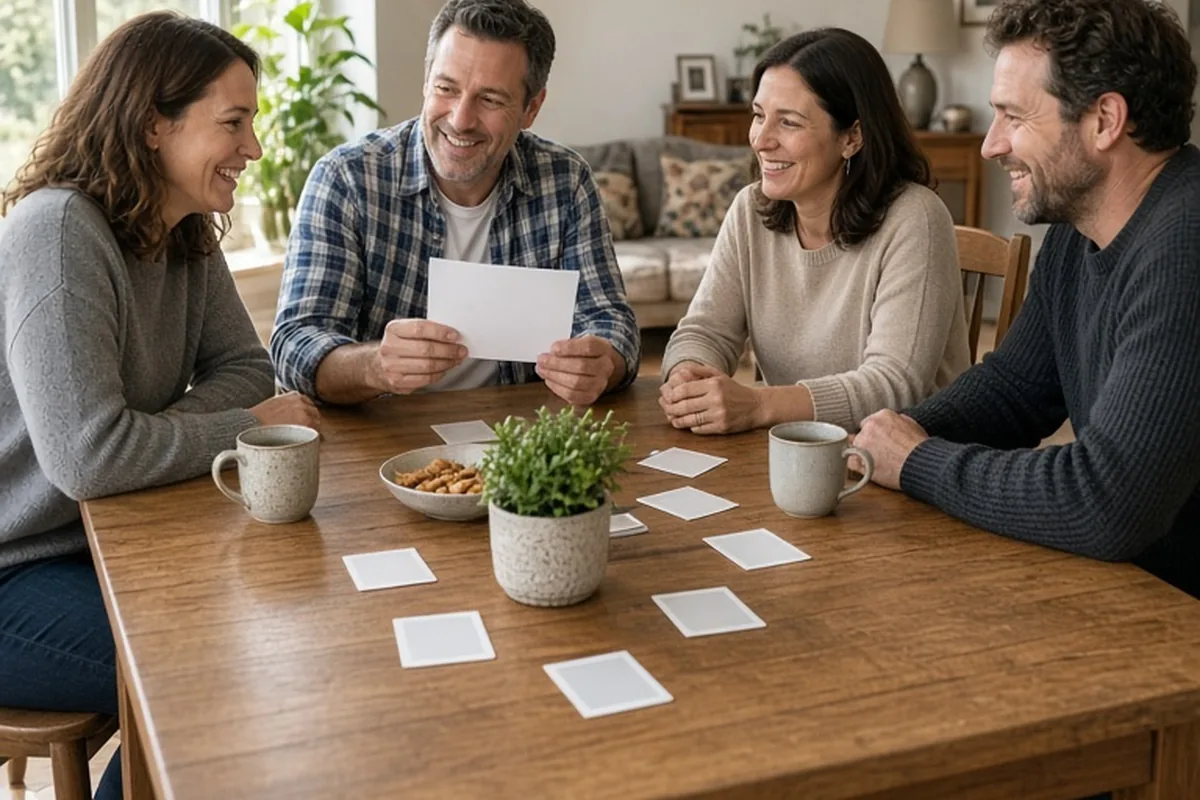
A family 'How Well Do You Know Me?' game works best when you mix everyday routines, childhood stories, comfort foods, and future dreams. Rather than turning the activity into a rigid test, ask questions that reveal personal growth, highlight funny quirks, and bridge generational gaps. Good categories include daily habits, favorite comfort foods, milestone memories, secret pet peeves, and meaningful personal values.
Gathering around the living room table with family often brings out familiar stories, but it can also reveal how much everyone assumes they know about one another versus what has actually changed over time.
Daily Quirks and Everyday Habits Across Generations
Everyday routines reveal details that family members often witness without completely understanding. Siblings and parents may see someone wake up early or scroll on their phone before bed, yet they rarely know the exact preference behind the habit. Asking questions centered on minor routines keeps the conversation light, playful, and immediately relatable for participants of all ages.
These prompts highlight how living under the same roof or catching up on holidays produces shared observations. When relatives guess each other's hidden morning rituals or work-from-home quirks, they celebrate the humorous realities of daily living without any emotional pressure.
- What is the first thing I do immediately after getting out of bed in the morning?
- Am I more likely to be ten minutes early, exactly on time, or running slightly late?
- What is my go-to beverage when I need an energy boost in the afternoon?
- Which household chore do I secretly dislike doing the most?
- What is my favorite way to spend an unexpected free afternoon with zero responsibilities?
- Which minor pet peeve drives me crazy faster than anything else?
Childhood Memories, Family Lore, and Shared History
Shared history forms the backbone of family connections, yet siblings and parents frequently remember the exact same event from entirely different perspectives. Asking about childhood memories lets parents recall early milestones while allowing adult children to express how those experiences felt from their own vantage point.
Focusing on past hobbies, school memories, and holiday traditions invites older generations to share background context that younger members may have never heard. It also keeps storytelling collaborative, turning an ordinary trivia round into an opportunity to archive family lore.
- What was my favorite toy or blanket that I refused to part with as a child?
- Which school subject did I struggle with the most while growing up?
- What is the funniest or most chaotic family vacation memory involving me?
- Who was my absolute best childhood friend during elementary school?
- What hobby or sport did I try out for a single season and promptly abandon?
- Which holiday tradition have I consistently loved the most over the years?
Comfort Foods, Takeout Orders, and Kitchen Preferences
Food preferences are intensely personal, frequently evolving, and guaranteed to produce lively debate during family trivia. While parents often remember what their children ate as toddlers, tastes change significantly through adolescence and adulthood. Guessing exact takeout orders or kitchen boundaries reveals who has paid attention during recent visits.
These questions also serve a functional purpose for future family dinners. Learning that a sibling has developed an aversion to cilantro or that a parent secretly prefers a specific dessert makes holiday menu planning easier and more considerate.
- If I could only eat one comfort dish for dinner every night this week, what would it be?
- What is my exact order when we pull into a coffee shop or drive-thru?
- Which food or vegetable do I actively avoid eating under any circumstances?
- Am I more likely to choose salty snacks, spicy appetizers, or sweet desserts?
- What is my absolute favorite home-cooked recipe made by someone in this family?
- If we split a pizza right now, which toppings would I immediately request?
Personal Values, Ambitions, and Deeper Reflections
Once everyone feels comfortable and warmed up with lighthearted questions, introducing thoughtful prompts encourages deeper emotional connection. Family members often change careers, alter their priorities, or adopt new worldviews that do not come up during routine catch-ups. Reflective questions offer space to discuss those shifts naturally.
The goal in this category is curiosity rather than debate. Listening to what a relative values most, who inspires them today, or what milestone they hope to reach next helps family bonds stay current rather than frozen in the past.
- What personal achievement from the past two years am I privately most proud of?
- Who outside of our immediate family do I look up to as a major role model?
- If I could master any new skill or artistic hobby overnight, what would I pick?
- What kind of compliment or recognition means the most to me when I work hard?
- Where is one travel destination I still dream of exploring before I get older?
- What personal boundary or life lesson has taken me the longest to finally learn?
Setting Up Family Trivia Night Without Hurt Feelings
A game intended to measure closeness can occasionally trigger insecurity if someone feels left out or scores poorly. To prevent unnecessary tension, establish from the beginning that guessing incorrectly does not signal a lack of care. Life stages, physical distance, and shifting schedules naturally limit how much detail relatives track day to day.
Structuring the activity around rotating pairs or collaborative small teams often works better than head-to-head showdowns. For instance, pairing a parent with an in-law or letting siblings team up against cousins shifts the emphasis from individual testing to collaborative laughter. Keep scores informal and allow the person answering to elaborate on the story behind their answer.
- Set ground rules that rule out topics involving private finances, active romantic conflicts, or past family arguments.
- Allow the person answering to award bonus points for funny, creative, or surprisingly close guesses.
- Rotate the questioning order so quiet family members receive equal attention and time in the spotlight.
- Treat wrong answers as opportunities for the speaker to update the family on what has changed in their life.
Adapting the Questions for Multigenerational Family Gatherings
Multigenerational rooms require questions that span vastly different developmental stages and life experiences. Young children enjoy active, sensory prompts about their favorite cartoon characters or playground games, whereas teenagers appreciate questions that treat their developing independence with respect. Grandparents often enjoy questions that bridge their historical perspective with modern life.
When tailoring the game, offer multiple-choice formats for younger kids so they can participate without feeling overwhelmed. For older relatives, leave room for open-ended storytelling, as their answers often provide living history that enriches everyone present.
- For kids: Ask about favorite animals, recess activities, bedtime stories, or school playground games.
- For teenagers: Focus on current musical artists, weekend hobbies, dream road trips, or favorite video games.
- For young adults: Focus on apartment living, work-life balances, favorite podcasts, or weekend cooking experiments.
- For grandparents: Ask about first jobs, favorite decades for music, classic family road trips, or favorite neighborhood memories.
Illustrative Scenarios
Bridging Distance Between Siblings at Thanksgiving
Marcus and his sister Elena had lived in different states for five years and found their conversations turning into brief weather updates and work summaries. During a holiday dinner, Marcus initiated a casual round of 'How Well Do You Know Me?' questions focused on everyday habits. Elena guessed his morning routine based on his college habits from seven years earlier, which led Marcus to laugh and explain how his schedule had completely shifted since adopting a rescue dog. Elena then shared her recent shift away from running toward weekend pottery classes. The short guessing game broke through their conversational rut without making either feel guilty about missing recent life details.
Key point: Outdated guesses are normal when family lives apart; use discrepancies as invitations to share updates rather than evidence of growing apart.
Including an In-Law in the Family Trivia Circle
During a family weekend cabin trip, David felt hesitant to join his partner's family in a personal trivia game, worrying he would score zero and appear disconnected from long-running inside jokes. The host adjusted the rules, forming pairs that combined one long-time family member with an in-law and focusing on food preferences and travel dreams rather than childhood history. David was able to guess several of his mother-in-law's cooking preferences from recent dinners, while his partner learned three new details about David's ideal vacation spots. The collaborative setup welcomed him into the circle without testing his knowledge of thirty-year-old memories.
Key point: Frame questions around current preferences and future interests so new partners and in-laws can participate on equal footing.
Frequently asked questions
What if someone feels hurt because a family member guesses their answer wrong?
Remind the group before starting that life moves fast and no one tracks every detail perfectly. Frame incorrect guesses as a fun chance to catch up and update each other on new tastes and routines rather than as a measure of love.
How many questions should we include in one family trivia session?
A set of fifteen to twenty questions usually provides plenty of entertainment across forty-five minutes to an hour. Ending the session while everyone is still laughing and engaged keeps the activity fresh for future gatherings.
Can these questions work well over video calls for long-distance families?
Yes, virtual family calls work very well with this format if everyone writes their guesses on paper and reveals them to the camera simultaneously. Keep rounds brisk by picking five focused questions per call so screen fatigue does not set in.
How do we keep competitive family members from taking scores too seriously?
Skip numerical scorekeeping entirely or award arbitrary, humorous points for the most imaginative answers. Emphasize that the prize is simply hearing good stories and learning new things about one another.
Your next step
Pick five questions from two different categories, write them on index cards, and try them during your next family dinner as an easy, low-pressure conversation starter.