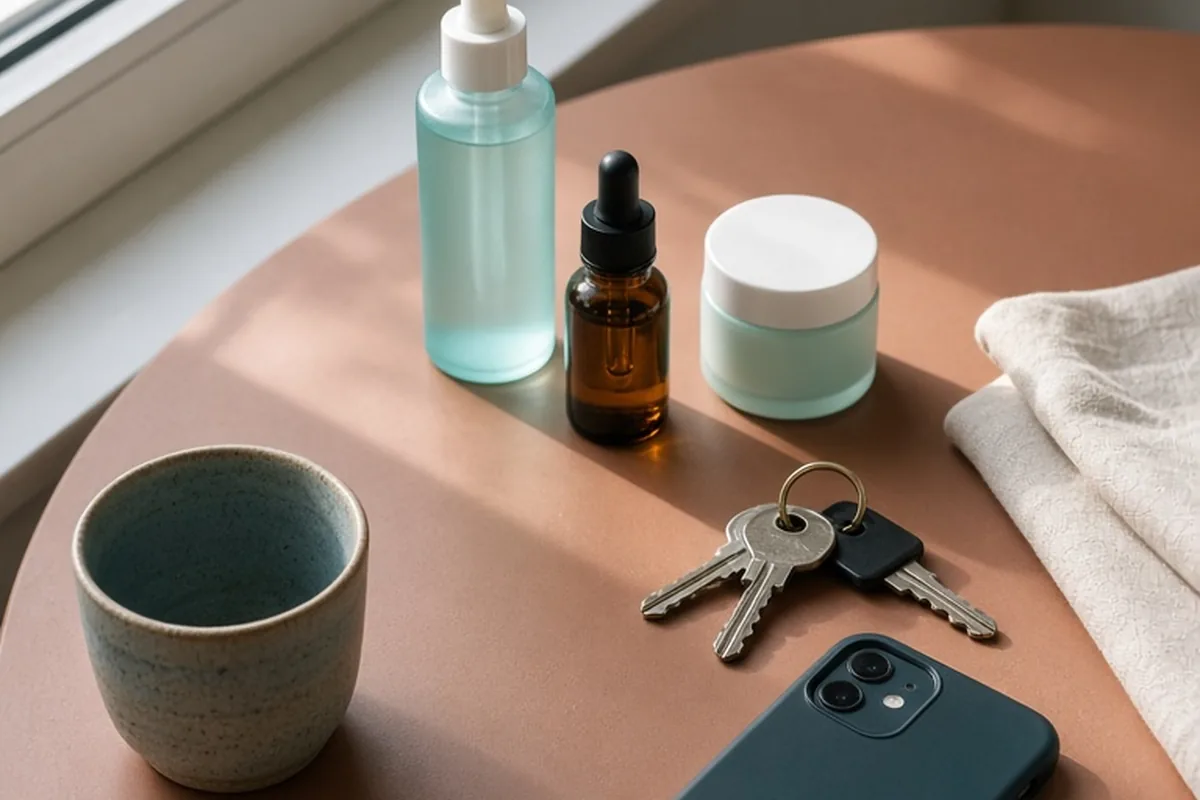
Expensive skincare is worth the investment only when you are paying for stabilized, high-potency active ingredients or advanced formulations that drugstore alternatives struggle to replicate. For basic daily essentials like gentle cleansers, simple moisturizers, and everyday sunscreens, budget-friendly options work just as well. Spending more makes sense for specialized treatment serums, but price alone never guarantees better results for your skin.
Walking down the beauty aisle or browsing prestige counters can make anyone wonder whether a hundred-dollar jar delivers noticeably better skin than a ten-dollar bottle. The beauty industry relies heavily on luxury packaging, sensory fragrances, and aspirational marketing to justify premium price tags. Understanding what actually drives the cost of skincare helps you build an effective routine without overspending on hype.
What You Actually Pay for in Luxury Skincare Formulas
When evaluating high-end skincare, it helps to separate production costs from retail positioning. Premium pricing frequently reflects extensive formulation development, sophisticated delivery systems, and patent-protected ingredient combinations. For example, stabilizing fragile compounds such as pure L-ascorbic acid or encapsulation technologies that deliver retinol gradually into the skin without immediate surface irritation requires specialized manufacturing. Higher-end brands may also invest in airless, opaque packaging that shields sensitive compounds from light and air degradation, preserving their potency throughout daily use.
A substantial portion of a luxury product's price tag, however, supports expenses unrelated to skin biological performance. Heavy glass containers, bespoke fragrances, elaborate box designs, celebrity endorsements, and prime department store retail space all add to the retail price. While these elements create a pleasurable sensory experience, they do not inherently improve cellular turnover, clear congestion, or repair a damaged moisture barrier. Recognizing this distinction allows you to decide whether you are paying for functional formulation science or aesthetic pleasure.
Skincare Categories Where Spending More Makes Sense
Certain skincare categories benefit significantly from the advanced research and stabilization techniques typical of higher-end laboratories. Antioxidant serums, particularly pure vitamin C, represent one of the most practical areas to allocate a larger budget. L-ascorbic acid requires a precise, low pH level and supporting antioxidants like ferulic acid and vitamin E to remain stable and absorb effectively. Cheaply made alternatives often oxidize rapidly on the shelf, turning dark orange or brown and rendering the product ineffective or potentially irritating.
Advanced retinoid formulations, complex peptide blends, and growth-factor serums also tend to justify higher costs. Formulating retinoids so they produce visible results with minimal redness and flaking requires refined base vehicles, soothing supporting lipids, and specialized encapsulation methods. If a premium product allows you to use a potent active consistently without triggering dermatitis or barrier breakdown, the investment delivers tangible functional value.
The primary trade-off with these investment products is financial continuity. Skincare results rely on sustained application over several months. If purchasing an expensive serum forces you to apply minuscule, ineffective amounts or prevents you from repurchasing it once empty, the initial investment cannot yield its full potential.
Everyday Essentials Where Budget Brands Excel
Not every step in a daily regimen requires a premium price tag to achieve clinical efficacy. Cleansers represent the clearest example of a category where spending more rarely delivers added benefits. Cleansing agents remain in contact with your skin for less than a minute before being washed down the drain. An inexpensive, fragrance-free drugstore cleanser formulated with mild surfactants and glycerin will effectively remove dirt, excess sebum, and makeup without stripping the acid mantle just as well as a luxury foaming wash.
Basic moisturizers and barrier creams are another area where economical choices frequently match or exceed prestige alternatives. Legacy pharmacy brands possess massive manufacturing scale and decades of safety data focusing on fundamental barrier-repair lipids such as ceramides, cholesterol, fatty acids, and petrolatum. A simple twelve-dollar ceramide cream often provides superior hydration and barrier restoration compared to a luxury cream loaded with botanical essential oils, heavy perfumes, and artificial colorants that increase the risk of contact allergies.
Daily sunscreen is equally viable at accessible price points. Sun protection depends entirely on applying the proper volume—roughly a nickel-sized amount for the face. When people buy sixty-dollar sunscreens, they frequently skimp on the application amount to make the bottle last longer, unintentionally compromising their UV protection. An affordable sunscreen that you apply generously and reapply consistently offers far better protection than an expensive one used sparingly.
How to Read Ingredient Labels to Spot True Value
Learning to evaluate an ingredient label according to the International Nomenclature of Cosmetic Ingredients (INCI) helps you assess true product value independently of marketing claims. Ingredients are listed in descending order of concentration until reaching the one-percent threshold, after which they can appear in any order. If a brand charges premium prices for an exotic botanical extract or rare peptide, but that ingredient appears below preservatives like phenoxyethanol or thickeners like carbomer, it is present in minute quantities that may offer minimal real-world impact.
At the same time, an identical ingredient list does not always mean two products perform identically. The raw grade of ingredients, the molecular weight of humectants like hyaluronic acid, the overall formula pH, and the carrier vehicle determine how deeply and evenly actives penetrate the skin. A drugstore brand and a luxury brand might both list niacinamide at five percent, but differences in texture, spreadability, finish, and stability can influence how comfortably the product layers within your routine.
To navigate these nuances, look for transparency regarding active percentages and packaging design rather than romantic marketing stories. When a company clearly states the active concentration, formulates at an effective pH, and uses protective packaging, you have a reliable indicator of product integrity regardless of price tier.
The Practical Risks of Relying on High-End Routines
A common pitfall of luxury skincare is the assumption that higher prices permit immediate, risk-free layering of multiple strong products. High-end brands frequently combine multiple active ingredients, botanical extracts, and essential oils into single formulas to create a sense of multi-correctional value. While this sounds convenient, complex ingredient rosters significantly raise the likelihood of allergic contact dermatitis, clogged pores, or surface irritation for sensitive skin types.
Another practical risk involves routine adherence. An elaborate multi-step luxury regimen can quickly become unsustainable both financially and logistically. When a routine requires six or seven expensive bottles to maintain, consumers often hesitate to discard products that have oxidized, expired, or caused subtle irritation simply because of the financial guilt associated with throwing them away. A streamlined routine built around three or four well-tolerated products consistently outperforms a cluttered cabinet of prestige jars used erratically.
A Targeted Strategy for Allocating Your Beauty Budget
A balanced approach to skincare spending relies on a high-low strategy that directs funds toward concentrated active treatments while economizing on supportive foundation steps. Dedicate the largest portion of your budget to one or two targeted products designed to address specific concerns, such as an advanced morning antioxidant serum or a refined evening retinoid. These products remain on the skin for hours and rely on precise formulation science to deliver measurable outcomes.
For the remainder of your routine, rely on dependable, low-cost staples. Pair your investment serum with a gentle pharmacy-grade cleanser, a basic ceramide moisturizer, and a broad-spectrum sunscreen that fits comfortably within your monthly budget. This structure ensures that your essential barrier maintenance remains affordable and steady, allowing you to sustain your routine over the long term without financial strain.
Before purchasing any expensive full-sized product, take advantage of sample sizes, travel kits, or return policies. Testing a formula for two weeks allows you to confirm that the texture, scent, and ingredient compatibility work with your skin barrier before committing significant financial resources.
Illustrative Scenarios
Illustrative Budget Reallocation for Sensitive, Sun-Damaged Skin
A person with sun spots and mild barrier sensitivity was spending nearly four hundred dollars every few months on a complete seven-step luxury botanical line. Despite the expense, their skin frequently felt tight, and dark spots showed minimal fading because the routine lacked a stabilized active antioxidant and the luxury sunscreen was applied too thinly to save money. By switching to a high-low regimen—investing eighty dollars in a stabilized vitamin C and ferulic acid serum while replacing the luxury cleanser, moisturizer, and sunscreen with thirty dollars worth of gentle drugstore alternatives—they reduced overall spending by over sixty percent while achieving better skin hydration and consistent UV defense.
Key point: Shifting funds into a single well-formulated active treatment while using budget essentials often delivers better skin tolerance and greater practical value than buying an entire luxury line.
Frequently asked questions
Does an expensive skincare product deliver faster results than an affordable one?
Price does not speed up your skin's natural cellular renewal cycle, which typically takes between 28 and 40 days. While a well-formulated luxury product may offer superior texture or immediate surface hydration, long-term changes like collagen support or pigmentation fading take several weeks regardless of cost.
Are inexpensive drugstore dupes genuinely identical to prestige products?
Drugstore dupes often share key active ingredients with luxury products, but they rarely match the exact base vehicle, delivery technology, or sensory finish. While a dupe can provide similar functional benefits at a fraction of the price, subtle differences in texture, absorption speed, and fragrance remain common.
How can I tell if an expensive treatment is actually working for my skin?
Track your skin's progress with clear photos in consistent natural lighting over an eight to twelve-week period. If you observe tangible improvements in texture, tone, or moisture retention without irritation, the formula is functioning as intended; if there is no visible difference, a lower-cost alternative is likely sufficient.
Can I safely mix luxury serums with budget moisturizers and cleansers?
Yes, mixing price tiers is standard practice and often the most cost-effective approach to skincare. As long as the active ingredients themselves do not conflict—such as pairing strong exfoliating acids with prescription retinoids—the retail price of the individual bottles has no impact on chemical compatibility.
Your next step
Audit your current skincare shelf today: keep affordable essentials for cleansing, basic moisturizing, and daily sun protection, and reserve higher spending strictly for one well-formulated, targeted active serum tailored to your primary skin goal.