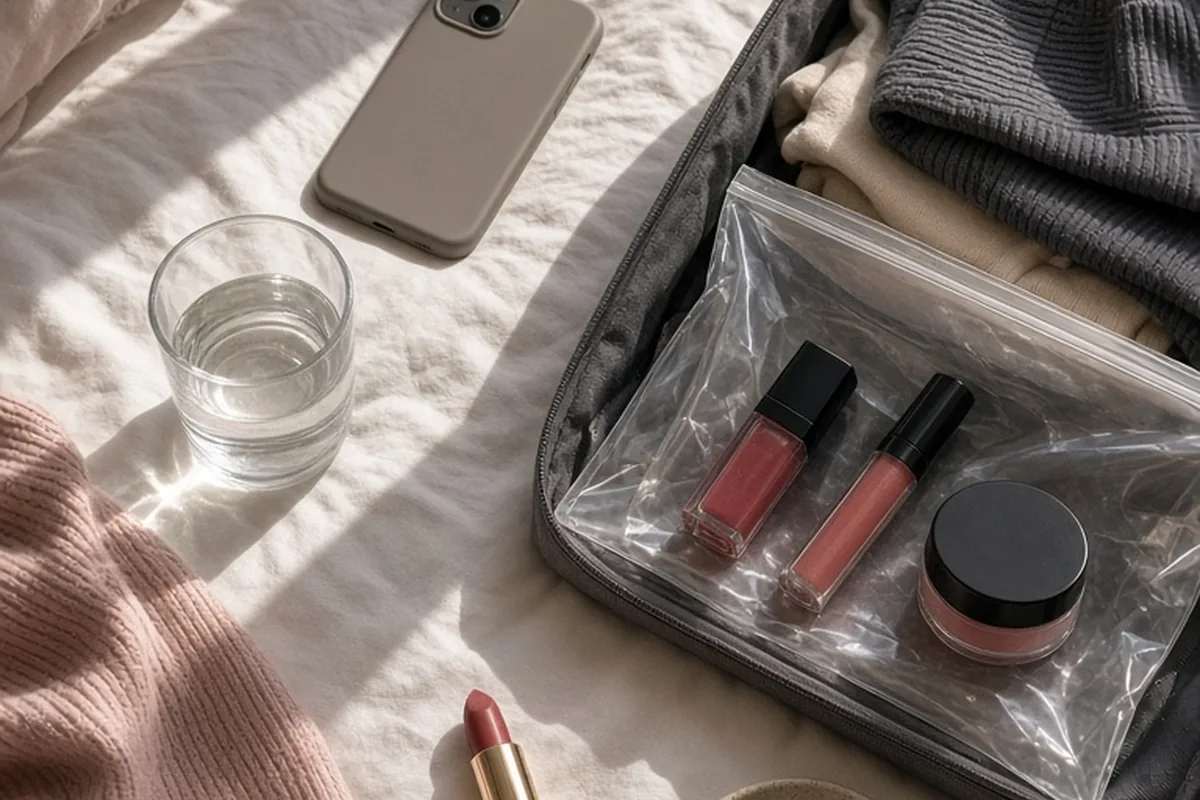
TSA does not classify traditional solid stick lipstick as a liquid. You can pack standard twist-up bullet lipsticks freely in your carry-on luggage without placing them in your quart-sized liquids bag. In contrast, liquid lipsticks, lip glosses, lip oils, and gel-based balms fall under the TSA 3-1-1 liquids rule, requiring containers of 3.4 ounces (100 milliliters) or less packed inside a clear, quart-sized toiletry bag.
Preparing a beauty kit for air travel often creates unnecessary confusion at airport security checkpoints, especially when dealing with cosmetic formulas that blur the line between solids, creams, and gels. Understanding how transportation security officers evaluate different lip products helps you pack efficiently, avoid delays at the screening belt, and keep your favorite cosmetics safe.
How TSA Distinguishes Solid Lipstick from Liquid Makeup
The fundamental principle guiding the Transportation Security Administration (TSA) revolves around product consistency at room temperature. A traditional twist-up bullet lipstick is chemically formulated with solid waxes, hard butters, and pigments that maintain a rigid structure. Because it retains its shape independently and cannot be poured, sprayed, or smeared like a fluid, the TSA categorizes it strictly as a solid cosmetic. This classification means you are not restricted by container volume limits for standard stick lipsticks, nor do they count toward your allotted space in a clear liquids bag. You can carry several shades in your personal purse or carry-on luggage without raising concerns during x-ray screening.
Conversely, any lip cosmetic that flows, pumps, or spreads via a doe-foot applicator or rollerball falls into the liquid, aerosol, or gel (LAG) category. Liquid lipsticks, matte lip paints, lacquer stains, and liquid plumpers are treated under the exact same guidelines as perfume, liquid foundation, or shampoo. The chemical binders in these products keep pigments in a fluid suspension until applied to the skin, which places them squarely under the regulatory definition of a liquid. Even if a formula dries completely matte within seconds of application, its physical state inside the vial determines how airport screening officers evaluate it at the checkpoint.
Categorizing Lip Balms, Glosses, Tints, and Pots
Beyond clear-cut bullet sticks and fluid paints, beauty collections feature hybrid products that require careful assessment before packing. Classic stick balms packaged in twist-up plastic tubes are solid cosmetics and do not need to go into your quart bag. However, lip balms packaged in squeeze tubes—where gentle pressure expels a soft gel, petroleum jelly, or viscous paste—are classified as liquids or gels by security officers. The same standard applies to open pots of lip sleeping masks or thick salves; if you can easily leave an indentation in the product with light fingertip pressure, security personnel generally treat it as a spreadable paste or gel.
Lip oils, rollerball glosses, and wand-applied tints also fall under liquid guidelines regardless of their thickness or sheer opacity. For instance, a tinted lip oil might feel lightweight on the lips, but its fluid nature inside the bottle mandates compliance with container size restrictions. When deciding where to pack an ambiguous item, evaluate whether the formula behaves more like a solid candle wax or a viscous lotion. If there is any doubt about whether an officer might view a balm or tint as a gel, placing it in your clear liquids bag prevents inspection delays at the security checkpoint.
- Solid stick lipsticks, chapsticks, and crayon pencils: Treated as solids; carry freely in any bag without size caps.
- Squeeze-tube balms, petroleum salves, and gel pots: Treated as liquids or gels; must follow the 3-1-1 liquids rule.
- Doe-foot liquid lipsticks, glosses, oils, and roll-on stains: Treated as liquids; must be 3.4 ounces or smaller inside a clear quart bag.
Mastering the TSA 3-1-1 Rule for Liquid Lip Products
When traveling with liquid lip products, you must adhere strictly to the 3-1-1 liquids rule established for carry-on baggage. Under this guideline, every liquid, gel, or aerosol container must have a marked manufacturer capacity of 3.4 ounces (100 milliliters) or less. Fortunately, most commercial lip glosses, liquid lipsticks, and lip oils range between 0.1 and 0.3 ounces (3 to 9 milliliters), easily complying with the individual volume ceiling. However, the rule applies to the printed container capacity rather than the remaining product volume inside, meaning an oversized container that is nearly empty will still be confiscated.
The second component of the rule requires all individual liquid items to fit comfortably within a single, transparent, quart-sized zip-top bag per passenger. This clear bag must seal completely without stretching or tearing at the seams. Because space in a one-quart bag is limited and shared with essential toiletries like toothpaste, contact solution, and foundation, reserving that space for true liquids is vital. Keeping solid lipsticks in your regular makeup bag frees up valuable real estate in your clear toiletry pouch for items that genuinely require screening.
Practical Packing Strategies to Streamline Checkpoint Security
Efficient packing prevents unnecessary stress and repacking at the security conveyor belt. Start by separating your cosmetic collection into two distinct groups during your pre-trip packing routine: true solids and liquid-gel formulas. Place all your bullet lipsticks, lip liner pencils, and solid stick balms into your main cosmetic pouch or personal handbag. Because these items do not need to be displayed during screening, they can stay tucked away inside your luggage unless an officer specifically requests an additional manual bag inspection.
For your liquid lipsticks, glosses, and squeeze balms, group them with your skincare essentials inside your clear quart bag. If you prefer having a lip product accessible during the flight, consider carrying a solid stick or lip pencil in your purse pocket rather than a liquid. This approach keeps a touch-up shade readily available in your seat while leaving your regulated liquids securely packed in your carry-on overhead or underseat compartment. If you must carry a liquid gloss for in-flight use, ensure the single quart bag remains at the top of your personal item for quick retrieval during security checks.
International Airport Regulations and Security Discretion
While domestic US travel adheres to standard TSA directives, traveling internationally introduces minor regional variations in airport security protocols. Aviation authorities across the European Union, the United Kingdom, Canada, and parts of Asia maintain similar limits on liquids, aerosols, and gels, generally capping individual items at 100 milliliters. However, enforcement strictness regarding cosmetic pastes, thick balms, and creamy pots can vary significantly between foreign airports. In some international hubs, security screeners are noticeably more stringent about categorizing dense cosmetic pastes as liquids.
Regardless of the destination, individual security officers always retain final operational discretion at the screening lane. If an officer determines that a particular potted lip scrub, hybrid cream formula, or dense salve qualifies as a spreadable paste, their determination governs the checkpoint. To protect expensive or limited-edition makeup from potential confiscation, either verify that the product is a clear solid stick or pack borderline items in your compliant liquids bag from the outset. Alternatively, placing high-end liquid collections in checked baggage completely bypasses cabin volume restrictions.
Protecting Lipsticks and Cosmetics from Travel Damage
Beyond regulatory compliance, air travel presents physical challenges that can ruin delicate lip products. Airplane cargo holds and cabin environments experience rapid pressure shifts and dry atmospheric conditions. Liquid lipsticks with screw tops can occasionally leak if the cap is not tightened firmly, as expanding air within the tube pushes fluid past the threading. To mitigate this risk, wipe the neck of liquid lipstick bottles clean before packing and verify that caps click securely into place. Storing liquid tubes upright within your clear bag further minimizes potential mess.
Solid bullet lipsticks face their own set of travel risks, primarily related to temperature fluctuations and mechanical impact. Leaving luggage in a warm car before arriving at the terminal or placing a purse directly against heating vents can soften wax formulations, causing them to break or melt upon application. When packing solid lipsticks, twist the bullet all the way down into the base before capping to prevent the tip from crushing against the lid during handling. Choosing sturdy metal or heavy acrylic packaging over brittle plastic casings also protects your collection from impact damage in crowded carry-on bags.
Illustrative Scenarios
Streamlining Carry-On Cosmetics for a Multi-City Trip
An illustrative traveler was packing for a four-day business trip with only a rolling carry-on and a laptop tote. Her daily routine included two traditional bullet lipsticks, a matte liquid lip stain, a squeeze-tube nighttime lip mask, and a lip pencil. To optimize her packing, she placed the two bullet lipsticks and the pencil into her everyday handbag makeup pouch. She placed the liquid stain and the squeeze-tube mask inside her transparent quart-sized toiletry pouch alongside her travel-sized skincare.
Key point: Dividing cosmetics strictly by formula keeps the clear liquids bag uncluttered while ensuring full compliance at standard security screening checkpoints.
Frequently asked questions
Do lip liner pencils count as a liquid according to TSA?
No, standard wooden and retractable lip liner pencils are classified as solid cosmetics. You can pack as many lip pencils as you like in your regular carry-on makeup bag without container size restrictions or clear plastic bags.
Can I bring full-sized solid lipsticks on an airplane?
Yes, full-sized solid bullet lipsticks are completely permitted in carry-on bags with no volume caps. Because they are not liquids or gels, they do not need to fit within the 3.4-ounce limit or the quart-sized bag.
Does TSA consider petroleum jelly or Carmex lip balm a liquid?
If packaged in a squeeze tube, jar, or pot, semi-solid balms like petroleum jelly and Carmex are classified as liquids, gels, or pastes. These must be in containers of 3.4 ounces or smaller and packed in your quart bag, whereas twist-up stick balms count as solids.
What happens if I accidentally leave a liquid lipstick in my regular makeup bag?
If an x-ray screener flags a liquid or gel item inside your regular luggage, your bag will be pulled for manual inspection. The officer will typically ask you to transfer the item to your compliant quart bag or confiscate it if your liquids bag is full or unavailable.
Your next step
Sort your makeup bag before leaving home: keep solid bullet lipsticks and pencils in your standard cosmetic case, and transfer any liquid lipsticks, glosses, oils, or squeeze tubes into your clear quart-sized liquids bag.