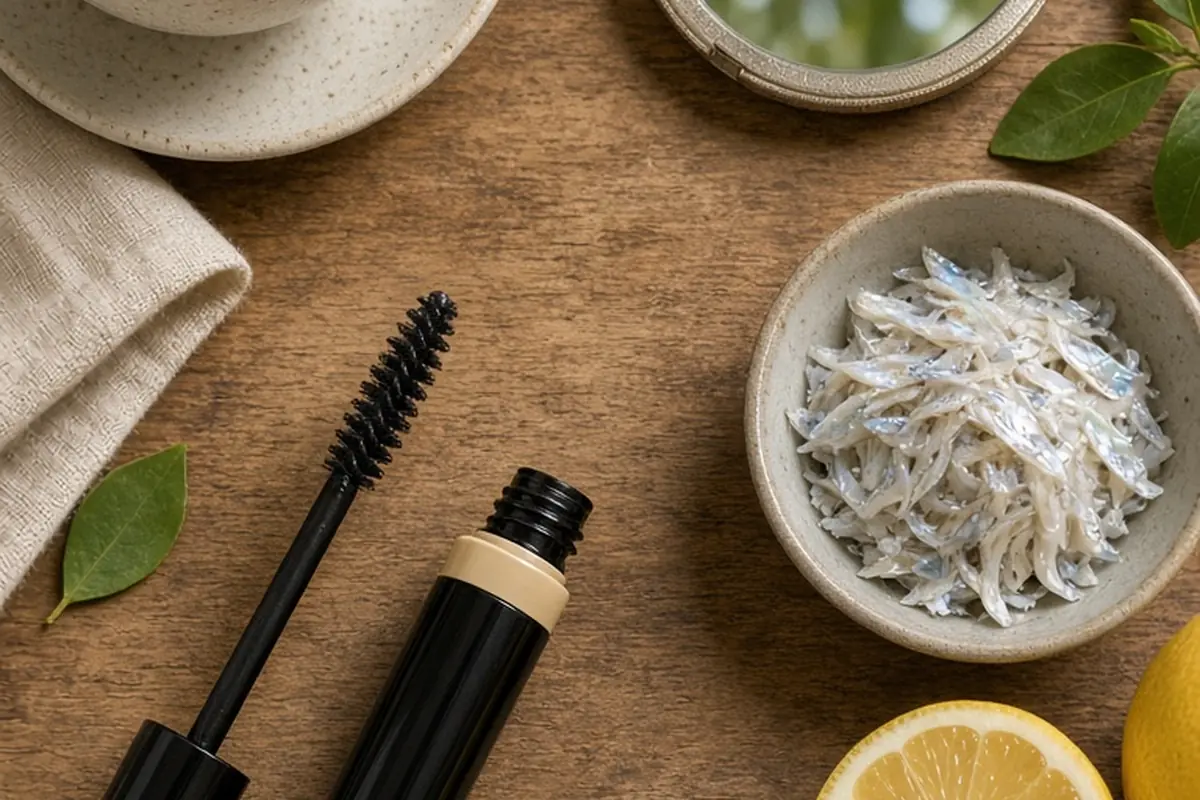
No, mascara does not contain bat feces. The widespread rumor is caused by confusion between the word guano, which refers to bat or seabird droppings, and guanine, a shimmering cosmetic colorant historically extracted from fish scales. Major cosmetic manufacturers use non-fecal colorants, waxes, and synthetic minerals to create mascara formulas safely under strict hygiene standards.
Few beauty urban legends have persisted as stubbornly as the claim that everyday mascara relies on bat excrement for its dark texture and sheen. While the rumor sounds shocking enough to prompt an immediate check of your makeup drawer, the reality is rooted in an old linguistic misunderstanding rather than cosmetic formulation.
The Linguistic Mix-Up: How Guano Became Guanine
The myth that mascara contains bat droppings traces back to a misunderstanding of scientific nomenclature. Bat and seabird excrement is commercially known as guano, an organic material historically harvested for agricultural fertilizer due to its high nitrogen and phosphate content. In contrast, cosmetic formulations that require a shimmering or reflective finish sometimes utilize a compound called guanine, a completely separate crystalline substance.
Because the words guano and guanine sound almost identical to the casual listener, the terms became conflated in popular culture during the late twentieth century. As chain emails, schoolyard rumors, and early internet forums spread the claim, the sensational nature of the idea kept it alive. In reality, guano has never had a practical application in eye cosmetics, where purity, stability, and sterility are essential formulation requirements.
What Guanine Actually Is and Why It Appears in Cosmetics
Guanine is one of the four fundamental nucleobases found in the nucleic acids DNA and RNA across virtually all living organisms. In chemistry and materials science, guanine forms microscopic, plate-like crystals that reflect and transmit light simultaneously. This unique crystalline structure produces a distinctive iridescent, pearl-like luster that cosmetic chemists value for highlighting products, nail polishes, eye shadows, and occasionally specialty mascaras.
When light strikes a suspension of guanine crystals, it bounces off multiple layers at varying depths, creating a soft optical depth rather than a flat, metallic shine. While common in products designed for noticeable shimmer, traditional black and dark brown mascaras rarely use guanine at all, as their primary aesthetic goal is deep, matte opacity rather than light diffraction. When it is included in eye makeup, it serves purely as an optical brightener or pearlescing agent.
Where Cosmetic Guanine Comes From: Fish Scales and Synthetics
When guanine is sourced from natural biological materials, it comes from the scales and skin of harvested fish, most commonly herring, rather than any mammalian or avian waste product. The shimmering substance is extracted through a multi-step purification and washing process that strips away proteins and oils, leaving behind a clean, odorless crystalline slurry known in the trade as pearl essence or essence d'orient.
In modern cosmetic manufacturing, natural fish-derived guanine has largely been superseded by synthetic alternatives and mineral pigments due to cost, stability, and consumer demand for vegan products. Formulators frequently achieve pearlescent and reflective finishes using lab-synthesized crystals, synthetic fluorphlogopite, bismuth oxychloride, or ethically sourced mineral mica coated with titanium dioxide. These synthetic options offer greater batch-to-batch consistency and eliminate animal harvesting entirely.
The Core Anatomy of a Standard Tube of Mascara
To understand what actually touches your eyelashes every morning, it helps to examine the functional components that make up a standard mascara tube. Formulations are carefully engineered emulsions designed to coat, extend, and hold lash hairs without clumping, smudging, or flaking throughout the day.
Every standard commercial mascara relies on four primary categories of ingredients, each serving a distinct mechanical or structural role:
- Structural Waxes: Ingredients such as beeswax, carnauba wax, candelilla wax, and paraffin provide the body of the formula, allowing it to adhere smoothly to lashes and build buildable thickness.
- Coloring Pigments: Deep black and brown tones come from purified inorganic pigments, predominantly synthetic iron oxides and carbon black, which have been processed to remove heavy metal contaminants.
- Film-Forming Polymers: Substances such as acacia senegal gum, PVP, and various acrylates create a flexible, water-resistant sheath around each lash to lock curl and resist humidity.
- Preservative Systems: Essential antimicrobials, including phenoxyethanol, potassium sorbate, and caprylyl glycol, prevent dangerous bacterial and fungal growth inside the moist, dark tube.
How Cosmetic Safety Regulations Prevent Biological Contamination
The cosmetic industry operates under strict regulatory frameworks designed to protect consumer health, particularly when products are intended for use around the mucous membranes of the eye. In the United States, the Food and Drug Administration (FDA) prohibits the sale of adulterated or misbranded cosmetics. Any inclusion of raw animal excrement would immediately classify a product as adulterated due to the severe microbiological risks associated with biological waste.
Color additives used in cosmetics must undergo formal authorization and meet exacting purity specifications before they can be legally distributed. The FDA maintains strict limits on microbial limits, heavy metals, and foreign matter in all eye-area colorants. Cosmetic manufacturing facilities must follow Good Manufacturing Practices (GMP), which mandate sterile processing equipment, air filtration, and routine laboratory testing for pathogens such as Pseudomonas aeruginosa, Staphylococcus aureus, and mold.
How to Identify Vegan and Animal-Free Lash Formulas
While bat droppings are absent from cosmetics, shoppers seeking entirely animal-free or vegan beauty routines should know how to spot traditional animal-derived ingredients on ingredient declarations. Even though fish-derived guanine is uncommon in daily black mascaras, other animal byproducts frequently appear in traditional volumizing and conditioning formulas.
When examining the ingredient list on the outer carton of your mascara, you can check for specific nomenclature to verify whether the formula aligns with your lifestyle preferences:
- Guanine (CI 75170): Indicates the presence of the pearlescent compound, which may be derived from fish scales unless explicitly noted as synthetic.
- Beeswax (Cera Alba): A common structural wax produced by honeybees, replaced in vegan mascaras by rice bran wax, sunflower wax, or synthetic alternatives.
- Lanolin: An emollient wax derived from sheep wool, often substituted with plant-based butters and synthetic esters.
- Carmine (CI 75470): A vivid red pigment derived from crushed cochineal insects, sometimes present in purple, burgundy, or tinted mascaras.
Genuine Eye Hygiene: Real Contaminants to Watch Out For
While consumers do not need to worry about bat droppings in their makeup, biological contamination of mascara is a real concern that develops after the product is opened. Every time you remove the mascara wand, apply it to your lashes, and push it back into the tube, you introduce naturally occurring skin flora, environmental dust, and airborne spores into the moist liquid environment.
Over time, the preservative system in the formula gradually degrades while the microbial load inside the bottle increases. To protect your vision and avoid blepharitis, styes, or bacterial conjunctivitis, eye care professionals recommend adhering to straightforward hygiene habits rather than stressing over formulation urban legends.
Replace your mascara tube every three to four months, never share applicators with others, and immediately discard any product used during an active eye infection. Avoid pumping the wand repeatedly into the tube, as this pushes excess air and ambient contaminants into the reservoir, drying out the formula and accelerating bacterial growth.
Frequently asked questions
Why do people still believe there is bat poop in mascara?
The belief continues because of the phonetic similarity between guano, which means bat or seabird droppings, and guanine, a shimmering cosmetic ingredient. Sensational word-of-mouth stories and internet memes have kept the misunderstanding alive despite clear ingredient records.
Is guanine safe to use near the eyes?
Yes, cosmetic-grade guanine is thoroughly purified, non-toxic, and approved by international safety regulators for use in eye makeup. It is subjected to rigorous quality controls to ensure it is free from harmful bacteria, heavy metals, and organic contaminants.
What gives black mascara its dark color if not organic matter?
Black mascara gets its rich pigment almost exclusively from cosmetic-grade iron oxides or purified carbon black. These inorganic mineral and elemental pigments are manufactured in controlled laboratory environments to ensure safety and consistent coloration.
How can I tell if my mascara contains fish scales?
Check the ingredient list on the packaging for the term guanine or the color index number CI 75170. If you prefer completely animal-free options, look for products clearly labeled as certified vegan or cruelty-free.
Your next step
Check the ingredient list on your current mascara packaging for CI 75170 or beeswax if you prefer animal-free formulas, and mark your calendar to replace the tube every three months for optimal eye hygiene.