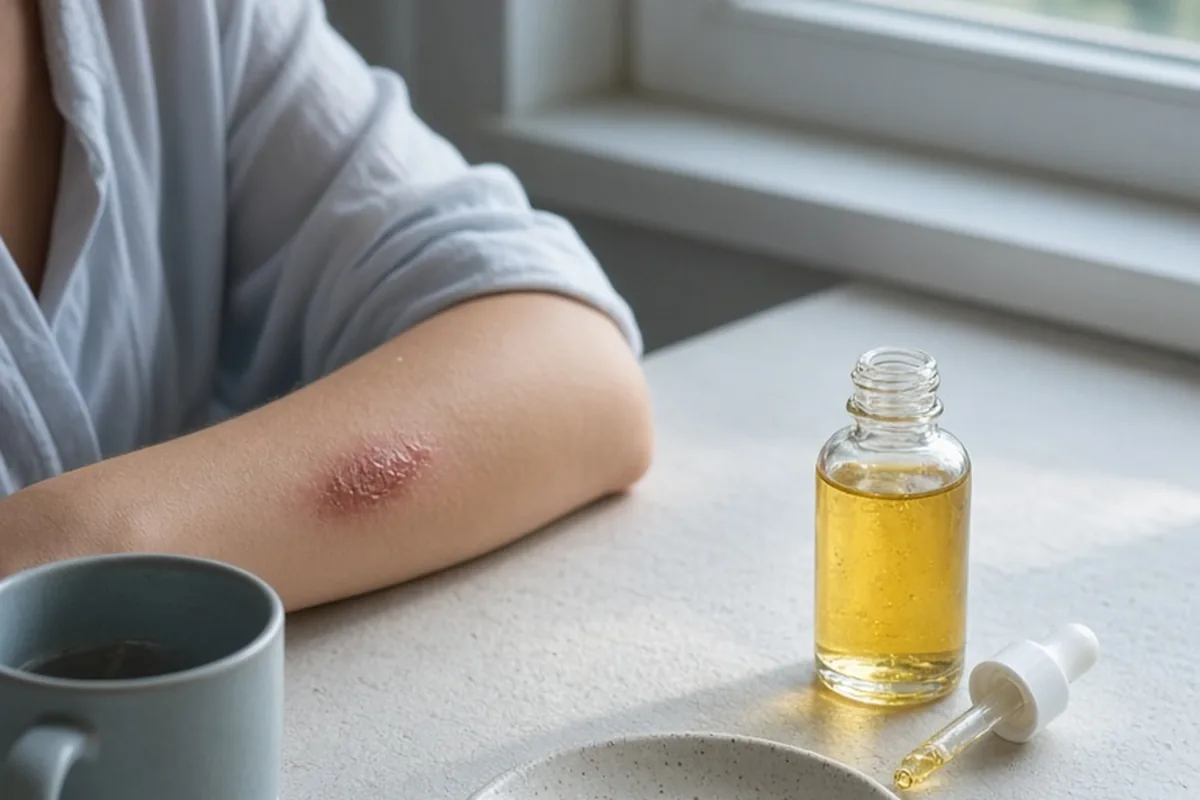
Vitamin E is widely used for scar care, but evidence showing it improves scar appearance is limited and mixed. While it acts as an antioxidant and moisturizes healing tissue, topical application can cause skin irritation or allergic contact dermatitis in some people. For most scars, consistent hydration, daily sun protection, and silicone gels offer more reliable benefits than pure vitamin E oil alone.
When a surgical incision, kitchen burn, or acne breakout leaves an unexpected mark, reaching for a capsule of vitamin E oil is often the first home remedy suggested by well-meaning friends. Understanding how vitamin E interacts with healing tissue helps you care for your skin effectively while avoiding common complications like contact allergies and clogged pores.
How Vitamin E Interacts with Healing Skin
Vitamin E, often listed on skincare labels as tocopherol or tocopheryl acetate, is a fat-soluble antioxidant that naturally occurs in human sebum. In healthy skin, it helps neutralize reactive oxygen species created by ultraviolet exposure and environmental pollution, while simultaneously supporting the lipid barrier that retains moisture. Because tissue repair requires significant cellular activity, the idea of supplying extra antioxidants to wounded skin seems logical on the surface. When applied topically, vitamin E functions as an emollient, softening stiff scar tissue and preventing excessive water loss through the delicate new epidermis.
However, the biological process of scar remodeling is far more complex than simple hydration. After an injury, your body produces collagen fibers to bridge the gap in the dermis. During normal healing, these fibers gradually reorganize from a disorganized weave into a stronger, flatter structure. While maintaining a moist environment is essential for proper cellular migration, topical vitamin E does not specifically direct collagen alignment or speed up this remodeling phase. In practice, the primary physical benefit observed from applying vitamin E oil comes from the occlusive barrier and the gentle mechanical action of massaging the tissue, rather than a unique regenerative quality of the vitamin itself.
Common Risks and Side Effects of Topical Vitamin E
The most significant drawback of using pure vitamin E oil on healing skin is the relatively high risk of developing allergic contact dermatitis. Many dermatological observations indicate that a notable percentage of individuals experience localized allergic reactions when applying concentrated tocopherol directly from punctured dietary capsules. These reactions typically present as intense redness, small fluid-filled bumps, burning sensations, and persistent itching. If a contact allergy develops over a fresh scar, the resulting inflammation can prolong the healing timeline and ultimately worsen the scar's final aesthetic outcome.
In addition to allergic dermatitis, heavy oils can create problems for breakout-prone skin. Pure vitamin E has a dense, viscous texture that can easily trap dead skin cells and sebum inside hair follicles. When used on the face to treat post-acne blemishes, concentrated oil frequently induces secondary breakouts, creating new inflammatory lesions right beside the marks you are trying to fade. For individuals with oily or sensitive skin, applying pure oil directly to the face often produces more setbacks than improvements, making lighter, non-comedogenic formulations a safer choice.
Evaluating Proven Alternatives for Scar Management
If you are seeking dependable methods to improve the texture and color of a scar, medical silicone remains the widely recognized gold standard in topical scar management. Available as self-adhesive sheets or quick-drying gels, medical-grade silicone creates a breathable, protective seal over the scar. This micro-environment mimics the natural stratum corneum, balancing hydration levels, reducing capillary activity, and signaling fibroblasts to moderate collagen production. Unlike concentrated oils, silicone is chemically inert, meaning it rarely triggers allergic reactions or causes contact dermatitis, making it suitable for sensitive and post-surgical skin.
Another critical factor in scar appearance is rigorous photoprotection. Healing skin is exceptionally vulnerable to ultraviolet radiation, which stimulates melanocytes to deposit excess pigment into the newly formed tissue. This process leads to long-lasting post-inflammatory hyperpigmentation that turns scars dark brown, red, or purple. Applying a broad-spectrum sunscreen with an SPF of thirty or higher every morning—and shielding the scar with protective clothing or hats—is one of the most impactful steps you can take to keep a healing scar as discreet as possible.
How Different Types of Scars Respond to Topicals
The effectiveness of any topical regimen depends heavily on the specific classification of the scar you are treating. Flat, superficial scars resulting from minor abrasions or small cuts typically fade well on their own over several months, provided they are kept clean and protected from the sun. In these instances, basic emollients like plain petroleum jelly support the skin barrier just as effectively as specialty oils, with a negligible risk of allergic sensitization or skin irritation.
In contrast, raised scars—such as hypertrophic scars and keloids—involve excessive collagen synthesis that extends beyond the original wound boundary. These raised formations do not respond meaningfully to superficial vitamin E applications and generally require structured interventions such as silicone compression therapy, intralesional corticosteroid injections, or pulsed-dye laser treatments under professional supervision. Similarly, depressed or pitted scars common after severe cystic acne represent a permanent structural loss of dermal collagen; topical oils cannot rebuild this missing volume, which typically responds best to procedures like microneedling, subcision, or chemical peels.
How to Safely Test and Use Vitamin E Formulations
If you still wish to incorporate vitamin E into your personal skincare routine, following a cautious, methodical application process will help minimize the chance of adverse reactions. Never apply vitamin E or any other non-sterile cosmetic product to an open, weeping, or actively bleeding wound. Wait until the skin has completely re-epithelialized, any surgical sutures have been removed by your healthcare provider, and the initial scab has naturally separated.
Before applying the product to a visible scar on your face or neck, perform a strict patch test on an inconspicuous area, such as your inner forearm or behind your ear. Apply a small drop of the formulation twice daily for three consecutive days and monitor the area closely for signs of redness, warmth, swelling, or itching. If your skin shows no sensitivity after seventy-two hours, you can introduce a small amount to the scar, gently massaging it into the skin for one to two minutes once daily. If any irritation develops at any point, wash the area with mild soap and water and discontinue use immediately.
Building a Practical Daily Routine for Scar Recovery
A successful scar care strategy does not require expensive or complicated multi-step regimens; it relies on consistency, patience, and skin barrier protection. Start your morning routine by gently washing the area with a fragrance-free cleanser, patting it dry with a clean towel, and applying a thin layer of silicone scar gel or a bland barrier ointment. Follow this with a broad-spectrum mineral sunscreen containing zinc oxide, which provides physical protection against UV rays while being gentle on newly healed tissue.
In the evening, repeat the gentle cleansing step and apply a plain hydrating moisturizer or a reusable silicone scar sheet, which can be worn overnight for continuous occlusion. Throughout the entire process, avoid picking at flaking skin or scratching the scar, as mechanical disruption reactivates inflammatory pathways and can trigger additional collagen deposition. Keep in mind that scar maturation is a gradual biological journey that unfolds over twelve to eighteen months, so giving your body time to heal naturally under optimal barrier conditions produces the best long-term outcome.
Frequently asked questions
Can I put vitamin E directly on an open wound or fresh stitches?
No, you should never apply topical vitamin E to an open wound or fresh surgical stitches. Introducing non-sterile oils into a compromised skin barrier can introduce bacteria, increase infection risk, and disrupt early tissue formation. Wait until the wound is fully closed and cleared by your doctor.
Does taking oral vitamin E supplements help scars heal faster?
There is no strong evidence that taking extra oral vitamin E improves scar outcomes in people who already eat a balanced diet. Furthermore, high doses of oral vitamin E can thin the blood and interfere with normal clotting, which can be hazardous around surgical procedures.
How long does it take for a new scar to mature and fade?
A new scar typically takes anywhere from twelve to eighteen months to fully remodel and mature. During this period, the mark will gradually shift from a bright pink or red hue toward a softer, paler tone as blood vessels normalize.
Is vitamin E oil safe to use for fading acne marks on the face?
Pure vitamin E oil is comedogenic and can easily clog pores, which may trigger new breakouts on acne-prone skin. If you are dealing with dark spots or red marks left by blemishes, lighter ingredients like niacinamide, azelaic acid, or non-comedogenic silicone gels are generally safer alternatives.
Your next step
Before applying pure vitamin E oil to healing skin, conduct a 72-hour patch test on your inner arm and prioritize daily broad-spectrum sunscreen alongside proven silicone gels to protect your skin's natural repair process.