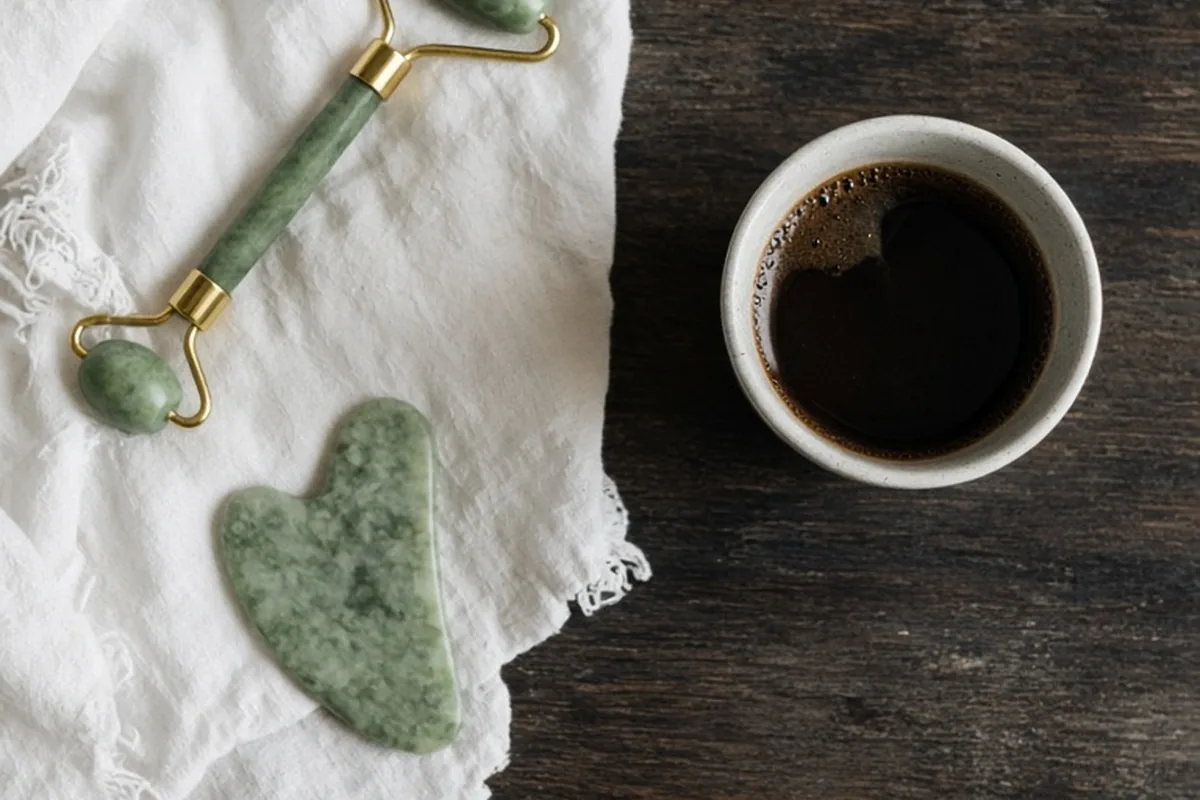
A jade roller provides quick, gentle rolling motions designed to soothe the skin surface, reduce morning puffiness, and assist lightweight product absorption. In contrast, gua sha involves flat stone scraping edges that apply deeper directional pressure, helping release persistent facial muscle tension and define facial contours. Choose a jade roller for sensitive skin and fast routines, or gua sha for targeted sculpting and tension relief.
Facial massage tools have become standard fixtures on modern vanity tables, offering a non-invasive way to stimulate circulation and promote lymphatic drainage at home. While jade rollers and gua sha boards often share similar mineral materials like nephrite jade, rose quartz, or stainless steel, their mechanical actions and practical results serve noticeably distinct purposes in daily skincare.
Core Differences in Mechanics, Pressure, and Tool Design
The most immediate distinction between a jade roller and a gua sha tool lies in how they physically interact with the skin. A jade roller features one or two smooth cylindrical stones attached to a metal frame with a central handle. As you move the tool across your face, the stone rotates freely on its axis, dispersing downward pressure evenly across the surface. This rolling action creates minimal friction and prevents tugging, making it virtually impossible to apply excessive force accidentally. It acts primarily as a cooling compress that moves superficial fluid without engaging deep muscular tissue.
A gua sha tool, by contrast, is a flat, hand-held stone carved with specific notches, curved arches, and straight bevels. Because it lacks moving parts, the user holds the stone directly against the skin at a low angle, using manual sweeping strokes to move fluid and stretch underlying fascia. This design allows you to modulate pressure precisely, applying light pressure along delicate areas like the under-eyes or firmer pressure along the jawline and neck. The rigid edges allow for targeted friction and tissue manipulation that a cylindrical roller simply cannot reproduce.
Understanding this mechanical divergence helps set realistic expectations for your routine. A roller is inherently passive, relying on continuous rolling passes to calm the epidermis and encourage fluid movement. A gua sha board is an active sculpting instrument that requires deliberate grip positioning, angle management, and localized pressure to address deeper tissue restrictions.
De-Puffing and Lymphatic Drainage: Which Tool Works Faster?
Both tools support the lymphatic system, a network of vessels responsible for clearing excess interstitial fluid and metabolic waste from facial tissues. Because the lymphatic system lacks a central pump like the heart, it relies on muscular movement, external massage, and gravity to circulate fluid. When fluid pools in facial tissues overnight due to horizontal sleeping positions, dietary factors, or allergies, manual manipulation helps guide this fluid toward lymph nodes situated near the ears and down the lateral neck.
For immediate morning de-puffing when time is limited, the jade roller is typically the faster option. Keeping a jade roller in the refrigerator provides an instantaneous vasoconstrictive effect, which helps narrow surface blood vessels and calm inflammation within three to five minutes. The natural coolness of the stone combined with light, outward strokes toward the hairline swiftly disperses stagnant morning fluid around the eyes and cheeks with minimal preparation.
Gua sha also drains lymphatic fluid effectively, but it requires a more methodical, multi-step process to achieve optimal drainage. Gua sha protocols typically begin by clearing the neck pathways first before working upward to the jaw, cheeks, and forehead. While gua sha can produce a more pronounced reduction in facial fluid retention when performed correctly, it demands greater time and technique to avoid moving fluid into congested pathways.
Relieving Facial Tension, Jaw Tightness, and Headaches
Persistent facial tension often concentrates in specific muscle groups, particularly the masseter muscles along the jawline, the temporalis muscles near the temples, and the corrugator muscles between the eyebrows. Stress, daytime teeth grinding, and frequent screen time can cause these muscles to tighten, contributing to facial discomfort, jaw stiffness, and tension headaches. When the primary goal is muscular relaxation rather than surface soothing, the two tools perform quite differently.
A jade roller provides mild surface relaxation, but its rolling mechanism prevents the stone from gripping the muscle tissue or exerting sustained pressure on tight trigger points. Rolling over a clenched jaw provides a pleasant sensory sensation, yet it rarely penetrates deep enough to release dense muscular knots or tight connective fascia.
Gua sha is significantly more effective for relieving muscular tension. The pointed tips, curved valleys, and flat edges of a gua sha stone allow you to anchor into specific tension points. By holding the tool at a 15- to 45-degree angle, you can perform slow, firm strokes across the masseter muscle or use the notched end to hug the jawbone, applying steady pressure that helps release chronic tightness. Many people find that five minutes of targeted gua sha along the neck, jaw, and base of the skull provides noticeable relief from tension-related discomfort.
Skin Compatibility and Slip Requirements: Oils vs. Serums
The medium you apply to your skin before using these tools is critical for preventing irritation, broken capillaries, and premature stretching of the skin. Because the tools interact with the skin surface through different mechanical actions, they have distinctly different lubrication requirements.
Jade rollers require minimal lubrication because the stone rotates over the skin rather than sliding across it. You can safely use a jade roller over a water-based hydrating serum, an essence, a lightweight moisturizer, or even directly on top of a sheet mask to help press the product into place. This makes the roller ideal for individuals with acne-prone or congested skin who prefer to avoid facial oils that might clog pores or trigger breakouts.
Gua sha strictly requires a dedicated facial oil or an exceptionally rich balm to create adequate slip. Because the flat edge scrapes and glides across the skin, using a gua sha stone without sufficient lubrication causes friction burn, micro-tears, and tissue dragging. If you have active inflammatory acne, rosacea flare-ups, or open skin lesions, gua sha should be avoided in those localized areas, as the dragging motion can spread bacteria or exacerbate existing surface inflammation.
Time Investment and the Technique Learning Curve
When deciding between these two implements, your daily schedule and willingness to master specific hand movements should play a central role. A skincare tool only delivers results if you use it consistently, making practical usability an essential consideration.
The jade roller offers near-zero learning curve and maximum convenience. You simply hold the handle and roll upward and outward across the face for two to three minutes. There is very little risk of improper technique causing harm or irritation. It fits seamlessly into a rushed morning routine, requiring no special hand positioning, angle calibration, or complex sequence of strokes.
Gua sha requires dedicated practice and a slightly longer time commitment, usually between eight to fifteen minutes per session. Proper gua sha demands that you keep the stone almost flat against the skin—roughly at a 15-degree angle—rather than perpendicular to it, which would scrape the tissue too aggressively. You must also use your free hand to anchor the skin behind the stroke to prevent pulling. Mastering the correct angle, pressure, and stroke sequences takes time, but it offers a far more customizable massage experience once learned.
Material Selection, Hygiene, and Long-Term Maintenance
Both jade rollers and gua sha tools are commonly crafted from natural stones such as nephrite jade, rose quartz, amethyst, and obsidian, as well as non-porous modern materials like medical-grade stainless steel. Understanding the physical properties of these materials helps ensure safe, sanitary use over time.
Natural jade is relatively cool to the touch and has a smooth texture, but genuine jade is slightly porous compared to quartz or metal. This means jade tools require prompt, thorough cleaning after each use to prevent oils and skincare residues from accumulating inside microscopic surface pits. Cleaning involves washing the tool with warm water and a gentle antibacterial soap, followed by drying it completely with a clean towel. Never soak tools with metal hardware in water, as the metal brackets on rollers can rust or squeak over time.
Gua sha stones, having no moving parts, hinges, or glued components, are generally easier to sanitize and maintain over years of use. Stainless steel gua sha tools offer an additional advantage: they are non-porous, highly durable, unbreakable if dropped on tile, and can be sanitized with alcohol wipes without degrading the finish. When choosing your tool, consider whether you prefer the traditional ritual and natural weight of authentic stone or the durability and hygienic ease of stainless steel.
A Practical Decision Framework: Which Tool Fits Your Needs?
Choosing between a jade roller and a gua sha tool comes down to aligning the physical properties of the tool with your primary skin goals, lifestyle, and skin tolerance. Neither tool is universally superior; each solves a specific set of daily skincare concerns.
You should choose a jade roller if your primary goal is rapid morning de-puffing, soothing skin redness, or cooling sensitive complexions without using facial oils. It is the best choice for beginners, individuals with limited morning time, and those with breakout-prone skin who want gentle lymphatic support without mechanical friction.
You should choose a gua sha tool if you want to address chronic jaw tension, sculpt the jawline and cheekbones, release tight facial fascia, or engage in a mindful evening massage ritual. If you enjoy using facial oils and have ten minutes to devote to proper technique, gua sha delivers a deeper, more noticeable muscular and contouring effect over time.
- Choose a Jade Roller for: quick morning routines, sensitive or reactive skin, water-based product application, and gentle cooling.
- Choose a Gua Sha for: deep jaw and neck tension release, facial contouring, fascial stretching, and evening relaxation rituals.
Illustrative Scenarios
Illustrative Routine Comparison: Morning Puffiness vs. Jaw Tension
Consider an individual who wakes up with puffiness around the eyes and cheeks due to seasonal allergies, but also experiences jaw tightness in the evenings from working at a computer. In the morning, they keep a jade roller in the refrigerator and glide it over their water-based hyaluronic acid serum for three minutes, quickly draining excess fluid and cooling their face before applying sunscreen. In the evening, they switch to a gua sha stone paired with a few drops of squalane oil, using slow, angled strokes along the masseter muscle and neck to relieve accumulated muscular tension.
Key point: Using each tool for its mechanical strength allows you to address surface fluid quickly in the morning while reserving deeper tissue manipulation for relaxed evening routines.
Frequently asked questions
Can I use a jade roller and a gua sha tool in the same skincare routine?
Yes, you can combine both tools, though it is usually more practical to separate them by time of day. Many people use a chilled jade roller for a quick de-puffing session in the morning and a gua sha stone with facial oil for deep tension relief during their evening routine.
Which tool is safer to use if I have active acne or rosacea?
A jade roller is generally safer for reactive or breakout-prone skin because it rolls over the surface without creating friction or dragging across blemishes. If you use gua sha, you must carefully navigate around active breakouts and inflamed areas to avoid spreading bacteria or irritating the skin barrier.
Do I need to apply facial oil before using a jade roller?
No, facial oil is not mandatory for a jade roller because the rolling mechanism prevents friction against the skin. You can use a jade roller over hydrating serums, sheet masks, or light moisturizers, whereas gua sha strictly requires an oil or rich balm to provide necessary glide.
How often should I use a jade roller or gua sha tool to see results?
A jade roller can be used daily, morning or night, to manage fluid retention and soothe the skin surface. Gua sha is typically practiced two to four times per week for noticeable tension relief and contouring, allowing facial muscles and tissues adequate time to rest between deeper sessions.
Your next step
Assess whether your main priority is fast surface de-puffing or deeper tension relief, choose the corresponding tool, and start by practicing consistent, light-handed strokes on well-hydrated skin.