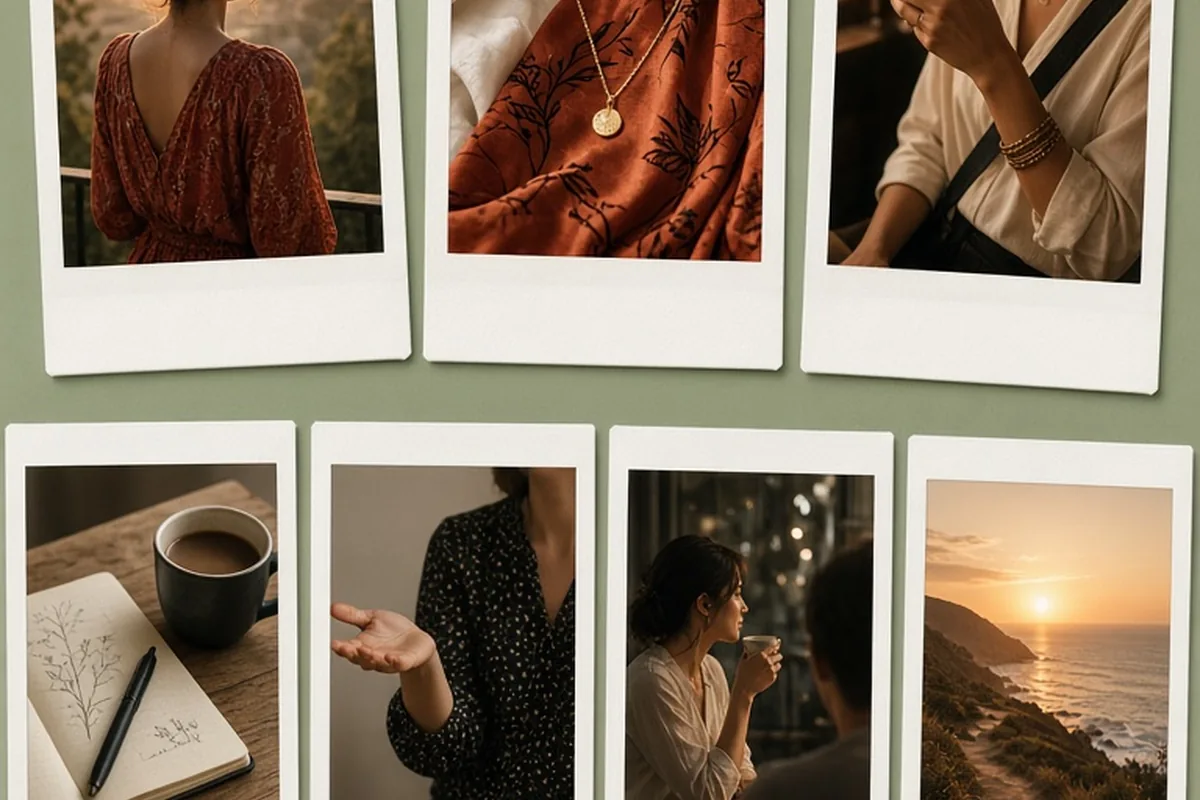
Looking fabulous while getting attention comes down to three things: wearing what genuinely suits you, carrying yourself with relaxed, open body language, and engaging people with real curiosity instead of performing for approval. Attention follows presence. When you feel good in your own skin and act like it, people notice without you having to chase it.
Most advice about getting attention focuses on tactics: what to wear, what to post, how to act. The more useful truth is that attention is a byproduct of how comfortable and engaged you seem in your own life. This article breaks down how to build that kind of presence in a way that feels like you, not a costume.
Start With Presence, Not Perfection
The people who draw a room's attention are rarely the most polished ones. They are the ones who seem fully there: shoulders relaxed, eyes engaged, unhurried. Presence reads as confidence, and confidence reads as attractive long before anyone registers your outfit or your hair. If you walk into a party scanning for who is looking at you, you broadcast need. If you walk in curious about who is interesting, you broadcast ease.
A practical way to build presence is to give yourself a job in social settings. Decide you will genuinely listen to two people, or that you will enjoy the music, the food, the conversation for its own sake. This shifts your focus from 'how do I look' to 'what am I experiencing,' and paradoxically makes you look better. The trade-off is that presence takes practice; if you are naturally anxious in groups, it will feel forced at first. That is normal. Ease is a skill, not a personality trait you either have or lack.
Dress for the Version of You You Like Best
Looking fabulous is less about trends and more about fit, comfort, and intention. An outfit that fits your body well and matches the occasion will always beat an expensive look you are tugging at all night. When you feel physically comfortable, you stop adjusting, fidgeting, and self-monitoring, and that freed-up attention goes into your face and posture instead.
Choose one element to make a statement rather than competing with yourself: a bold color, a great jacket, standout shoes, or jewelry that starts conversations. For example, a simple well-fitted outfit plus one distinctive piece gives people something to compliment, which hands them an easy opening to talk to you. The limit here is budget and context. You do not need new clothes to look good; you need clothes that fit and suit the setting. Overdressing for a casual hangout can read as trying too hard, while underdressing for a date can read as low effort. Match the room, then add one thing that is unmistakably you.
Let Your Body Language Do the Inviting
Open body language is the quiet engine of attention. Uncrossed arms, a relaxed stance, eye contact that lingers a beat longer than usual, and a genuine smile all signal that you are approachable. People gravitate toward whoever seems easiest to talk to, and these small cues do that work before you say a word.
A concrete example: at a gathering, standing near the action rather than in a corner, with your body angled toward the room instead of your phone, makes you dramatically more likely to be approached. If someone catches your eye, holding the look for a second and smiling is a clear, low-risk invitation. The important limit is that body language is an invitation, not a guarantee or a contract. It opens doors; it does not obligate anyone, including you, to walk through them. If someone you are not interested in approaches, you can be warm and still redirect politely.
Know the Difference Between Magnetism and Chasing
There is a real difference between attracting attention and pursuing it. Magnetism is doing your thing well and letting people notice. Chasing is performing, oversharing, laughing too hard at everything, or engineering jealousy to be seen. Chasing might get eyes on you briefly, but it tends to attract people who like the performance rather than you, and it is exhausting to maintain.
The test is simple: are you doing this because it is fun, or because you are afraid of being ignored? If you would still wear the outfit, tell the story, or dance to the song with nobody watching, it is magnetism. If the whole point is the audience, it is chasing. This matters for self-respect as much as attraction. Attention you have to beg for rarely turns into the kind you actually want, which is someone interested in the real person underneath the show.
Turn Attention Into Actual Connection
Getting noticed is the easy part; keeping someone's interest is where most people stall. The reliable move is curiosity. Ask questions that go one level deeper than small talk, then actually listen to the answer. 'What do you do' becomes 'what do you like about it' or 'how did you get into that.' People remember how they felt around you, and feeling genuinely heard is rare enough to be memorable.
Playfulness helps too. Light teasing about something harmless, a callback to something they said earlier, or a shared joke creates a small private world between you and the other person. For instance, if someone mentions they are competitive about board games, challenging them to prove it later gives the conversation a future. The trade-off is that connection requires risk. You have to offer something real, an opinion, a story, a bit of personality, and not everyone will respond. That is fine. Attention that does not convert to connection is just noise anyway.
Handle the Attention You Did Not Ask For
Looking fabulous means you will sometimes attract attention you do not want, and handling it well is part of the skill. A brief, polite deflection works for mild cases: a smile, a short answer, and a turn back to your friends. For persistent cases, directness is kinder than ambiguity. 'I am flattered, but I am not interested' is clear, respectful, and ends things faster than vague politeness that leaves the door cracked open.
You also never owe anyone continued attention because they gave you theirs. A compliment is not a transaction. If someone reacts badly to a polite no, that is information about them, not a problem you caused by looking good. On the practical side, stay aware of your surroundings, keep your friends in the loop, and trust your read on situations. Feeling fabulous should never require feeling unsafe, and leaving early is always an acceptable choice.
Build a Life That Generates Its Own Attention
The most sustainable way to look fabulous and get attention is to have things going on that you care about. People who are mid-story, mid-project, mid-laugh with friends are inherently watchable because they are doing something rather than seeking something. Attention drawn to a full life tends to be higher quality, because it arrives already filtered for people who find your actual life appealing.
This also protects you from the crash that comes when attention fades, which it always does in any given room or on any given night. If your sense of a good evening depends on being noticed, you will have bad evenings for reasons outside your control. If it depends on whether you enjoyed yourself, you win most nights. The honest limit: building a life takes longer than buying an outfit. But it is the only version of this that still works on a random Tuesday when you are not trying at all.
Illustrative Scenarios
The Party Where Nobody Came Over
Maya spent the first hour of a friend's birthday party standing near the wall with her group, checking her phone between conversations and wondering why nobody new was talking to her. Her first interpretation was that she did not look good enough that night. Halfway through, she put her phone in her bag, moved closer to the kitchen where people were mixing drinks, and asked a stranger which bottle made the best cocktail. Twenty minutes later she was in a four-person debate about spicy margaritas. The lesson: she had not become more attractive; she had become more reachable. Attention often waits on proximity and openness, not on looks.
Key point: Position yourself where interaction is easy and give people an obvious way in.
The Date Who Performed Instead of Talking
On a first date at a busy taco place, Andre noticed his date kept glancing at the next table, amping up her laugh, and telling stories that seemed designed for an audience. His first read was that she was not interested in him. Later he realized she was probably nervous and performing confidence instead of feeling it. On their second date he asked her a direct, specific question about a hobby she had mentioned once, and she dropped the act almost immediately. The conversation that followed was quieter and far better. The lesson: performance gets glances, but specificity gets connection. When someone seems to be performing, a real question can be the off-ramp they were hoping for.
Key point: A specific, genuine question often breaks through performance faster than matching it.
Frequently asked questions
Can I get attention without dressing up or looking polished?
Yes. Grooming and fit matter more than glamour, and warmth matters more than both. A relaxed person in a plain outfit who smiles and engages will usually draw more genuine attention than a polished person who seems closed off.
What if I get attention but conversations fizzle fast?
Fizzling usually means the conversation stayed at the surface. Ask one follow-up question that goes deeper, share a real opinion, or suggest a small next step like trying the food truck they mentioned. If it still fizzles, the fit was off, not your technique.
How do I get attention without seeming desperate for it?
Focus on enjoying the setting rather than monitoring who is watching. Do things you would do anyway, talk to people because they interest you, and let your body language stay open. Neediness shows in scanning and performing; ease shows in engagement.
What should I do when the attention I get feels unwelcome?
Start with a polite but brief deflection, and escalate to a clear 'I am not interested' if it continues. You owe no one extended access to you because they noticed you. Stay near people you trust and leave any situation that starts to feel off.
Your next step
Pick one social setting this week and try the simplest version: wear something that fits well and feels like you, put your phone away, position yourself where conversation is easy, and ask one person a genuine question. Notice whether attention finds you when you stop chasing it.