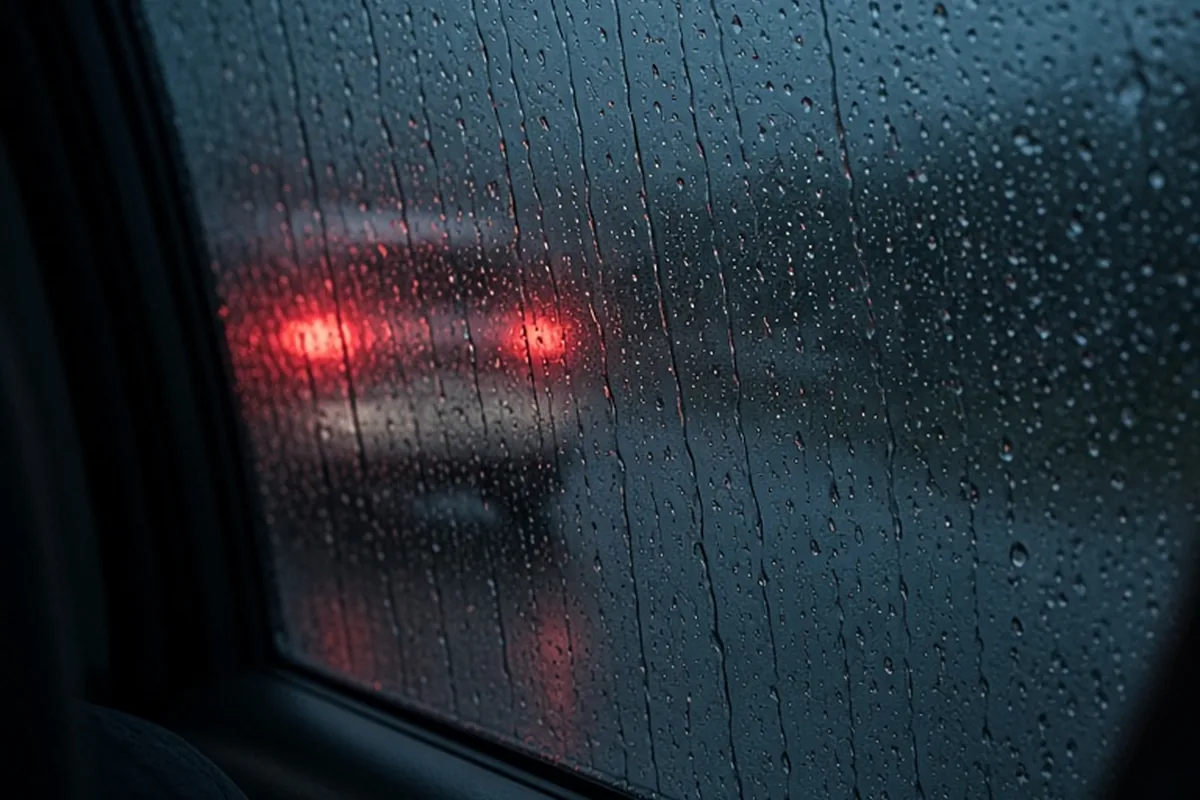
Lost love quotes give shape to grief that's hard to say out loud. The best ones name exactly what you're feeling — the missing, the regret, the slow acceptance — so you feel less alone in it. Read them to understand yourself, not to stay parked in the pain, and let the right line be a starting point, not a home.
If you're here, you're probably carrying something that doesn't fit into ordinary words yet. That's exactly what the right quote is for — and this page will help you find it, use it well, and know when to set it down.
Why lost love quotes hit so hard when you're grieving
A breakup leaves you with feelings that are too big for ordinary sentences. You can say 'I'm sad' a hundred times and still not touch what's actually happening inside you. A good lost love quote does something different: it compresses the whole tangled mess — the missing, the replaying, the what-ifs — into one line that lands like someone finally described it correctly. That recognition is the real comfort. It's not the words themselves; it's the proof that another human has stood exactly where you're standing.
There's also a quieter reason these quotes matter. Heartbreak is lonely in a specific way: the person you'd normally tell about your pain is the person causing it. Friends mean well, but they tend to rush toward 'you'll find someone better' long before you're ready. A quote doesn't rush you. It sits with you in the feeling for as long as you need. The limit worth knowing: a quote can name your grief, but it can't grieve for you. It's a mirror, not a map — useful for seeing where you are, not for getting somewhere else.
Lost love quotes for when you still miss them
Missing someone who hurt you, or someone you had to leave, can feel like a betrayal of yourself. It isn't. Missing them just means the attachment was real, and attachments don't dissolve on the schedule your pride would prefer. You can know the relationship was wrong and still ache at the song, the street corner, the time of evening you used to call. These lines are for that ache — the part of loss that has nothing to do with logic.
Read them slowly. The one that stings is usually the one telling the truth.
- I didn't lose you all at once. I lost you in a hundred small silences.
- Missing you is my heart still knocking on a door that already closed.
- You became past tense long before I learned to speak about you that way.
- Some people leave and take the version of you that only existed with them.
- The hardest part isn't that you're gone. It's that everything still reminds me you were here.
- I keep reaching for my phone to tell you things, then remembering you're the one thing I can't tell.
Lost love quotes for acceptance and letting go
Acceptance rarely arrives as one big decision. It shows up in small moments: you stop checking their page first thing in the morning, you tell the story without your voice shaking, you imagine a future that doesn't include them and it doesn't feel like a lie. These quotes are for that shift — the slow turn from asking 'why did this happen' to asking 'what do I do with what it taught me.'
Letting go gets misunderstood as forgetting or forgiving on command. It's simpler and harder than that: it's remembering without reaching. If a line below feels like relief rather than pain, that's a sign you're further along than you thought.
- Letting go isn't forgetting. It's remembering without reaching for what was.
- I stopped rereading our chapter when I finally accepted the ending was real.
- You were a season, not a sentence. I can honor that without living there.
- The love was real. So is the ending. I'm learning to hold both.
- I don't wish you back anymore. I wish myself forward.
- Some doors close quietly, and peace is deciding not to keep knocking.
Posting, keeping, or sending a quote — the difference matters
A lot of people searching for lost love quotes want one for a caption, a story, or a status. That's a normal impulse — public grief is still grief, and sometimes you want witnesses. Before you post, run one honest check: who is this for? If it's for you — to mark what you survived — post away. If it's aimed at one specific viewer, if you're picturing your ex reading it and feeling something, pause. A quote used as a signal flare rarely gets the response you're hoping for, and it hands your healing over to whether or not they react.
Sending a quote directly to an ex is the riskier version of the same move. It reads as a bid — a way of knocking without committing to a real conversation — and it usually creates confusion rather than closure. If you have something to say, say it plainly or don't say it yet. A better use: paste the quote into your notes app and write one honest sentence underneath it. You get the expression without the hangover of waiting for a reply. The trade-off is simple: private expression heals quietly; public expression invites interpretation you can't control.
When the quotes stop helping and start keeping you stuck
There's a difference between processing pain and rehearsing it. Processing feels like the quote opens a door — you feel the feeling, learn something, and move a little. Rehearsing feels like the same door closing on you nightly: you reread the same lines, check their profile afterward, and wake up no further along. If months have passed and your quote collection only makes the wound fresher, the tool has become the habit.
A practical test: after reading, do you feel clearer or just sadder with better vocabulary? If it's the second, change the ritual. Put a limit on it — one quote, one journal line, then one outward action like a walk, a call, or a task. And if the heaviness has been sitting on you for a long stretch without lifting, talking with a counselor isn't dramatic; it's just a faster way to sort what the quotes keep circling.
How to write your own lost love line
The most useful quote you'll ever read about your breakup is the one you write yourself, because only you know the specific texture of what you lost. You don't need to be a writer. Use a simple shape: name one concrete image, name the feeling it carries, then add the turn — the thing you understand now that you didn't before. 'Sunday mornings still smell like your coffee' is an image. 'I still make two cups' is the feeling. 'I'm learning to drink mine slowly' is the turn.
Try it as a journal exercise rather than a performance. Set a timer for ten minutes and finish sentences like 'What I actually lost was...' or 'The thing I can't say to you is...' Most of what you write will be ordinary, and that's fine — you're not crafting a caption, you're emptying a pocket. One honest line of your own will do more for you than fifty borrowed ones, because it moves you from consuming the feeling to describing it, and describing is the first step to carrying it differently.
What to do after the quotes have said everything
Quotes are a beginning, not a plan. Once the right line has named your grief, the next move is physical and ordinary: tell one friend the truth instead of 'I'm fine,' put the photos and gifts in a box you don't have to decide about yet, and rebuild the small routines the relationship absorbed — the gym slot, the Sunday call, the hobby you dropped. None of this is glamorous, but healing is mostly logistics repeated kindly.
Also give the loss a timeline of grace rather than a deadline. Some weeks you'll feel done; then a song undoes you. That's not failure — it's how attachment unwinds. Keep one or two quotes that still mean something and let the rest go, the same way you're learning to let the relationship be something that happened rather than something that's still happening. The goal was never to stop loving them on command. It's to love your own life in present tense again.
Illustrative Scenarios
The 1 a.m. caption he almost posted
Three weeks after his girlfriend ended things, a composite reader we'll call Marcus was scrolling lost love quotes at 1 a.m. He found one about being replaced and started typing it as a caption, already picturing her seeing it. He caught himself mid-sentence: the post wasn't expression, it was a message in a bottle he hoped she'd open. He deleted it, pasted the quote into his notes instead, and wrote one line under it about what he actually missed. He slept better that night than he had in weeks.
Key point: Before sharing a quote, ask who it's for. Writing for yourself heals; writing for an audience of one keeps you waiting on them.
The saved quotes that stopped working
Eight months after a long relationship ended, a composite reader we'll call Dana still opened her saved quotes folder every night. She told herself it was processing, but she noticed she always ended the ritual by checking his profile, and she always felt worse. One evening she picked a single line — 'I don't wish you back anymore' — and used it as a journal prompt instead: what would I do this weekend if I weren't waiting? Her answer became actual plans with a friend. The folder stayed closed after that.
Key point: A quote is a bridge, not a home. When reading becomes rehearsing, turn one line into a question and answer it with an action.
Frequently asked questions
Is it okay to post lost love quotes after a breakup?
Yes, if you're posting for yourself — to mark what you felt or survived. Check your motive first: if the real audience is your ex, the post becomes a bid for their reaction, which hands your healing to someone else. Keep it dignified and general, and you'll rarely regret it.
Can a quote actually help me get over someone?
It can help you name and normalize what you're feeling, which is a real part of healing — feeling understood lowers the loneliness. But a quote can't do the grieving for you; time, honest reflection, and small daily actions do that. Think of quotes as companions on the walk, not the walk itself.
Should I send a lost love quote to my ex?
Usually no. A forwarded quote reads as a knock without a conversation behind it, and it tends to create confusion or false hope rather than closure. If you have something real to say, say it plainly when you're calm — or write the quote in your notes and keep the dignity of silence.
What if reading these quotes makes me feel worse?
Treat that as useful information, not failure. Put the quotes down for a few days, move your body, and talk to someone who knows you. If the heaviness sits on you for a long stretch without lifting, a counselor can help you sort what the quotes keep circling — that's a practical step, not a dramatic one.
Your next step
Tonight, pick the one line above that stings the most, copy it into a note, and finish this sentence beneath it: 'What I actually lost was...' Then put the phone down and do one small thing for tomorrow-you — text a friend, lay out your running shoes, or simply sleep.