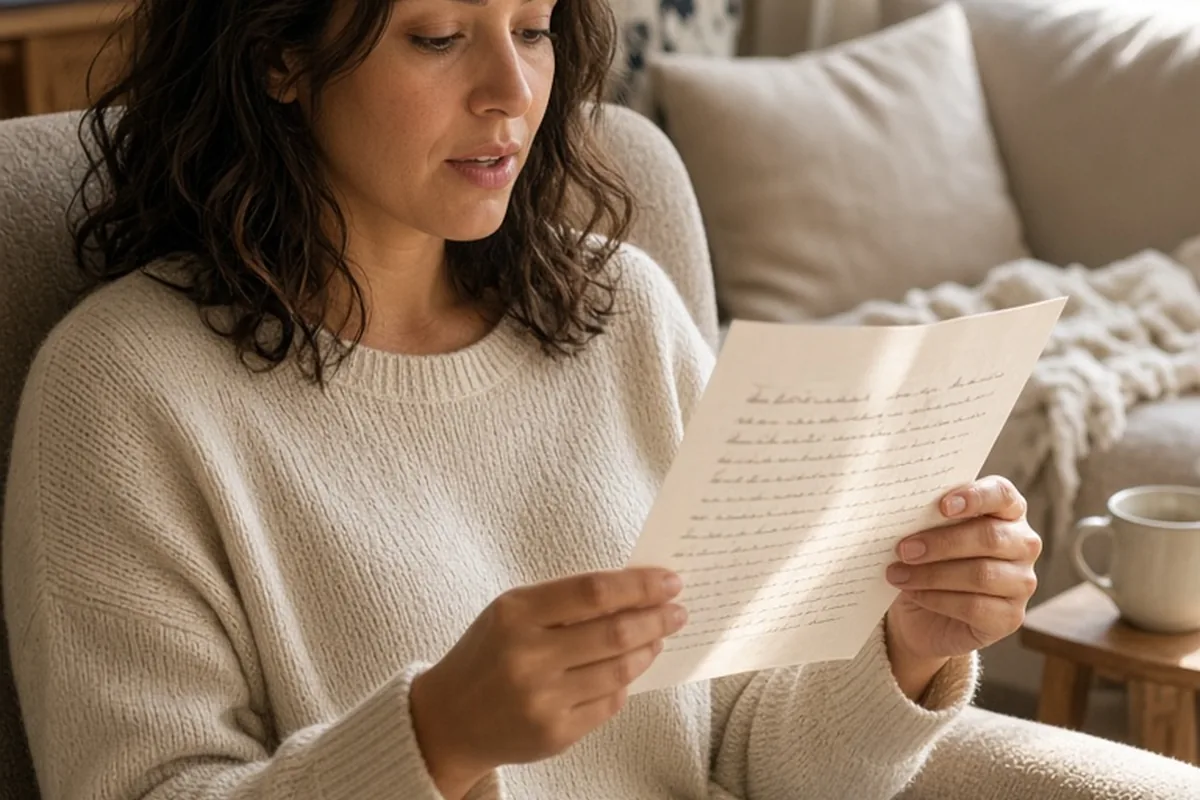
To write a love letter your partner will treasure forever, focus on vivid, specific memories rather than grand generic statements. Use prompts that explore sensory details from when you first realized your feelings, express gratitude for quiet everyday quirks, acknowledge how you navigate challenges together, and celebrate your shared future. Writing with concrete details creates an authentic, timeless keepsake.
A meaningful love letter does not require poetic mastery or elaborate prose. The notes that people keep tucked in nightstand drawers for decades resonate because they capture honest observations, shared history, and authentic appreciation that belongs entirely to that unique relationship.
Grounding Your Letter in Specific Sensory Memories
The most common mistake in romantic writing is relying on broad statements like 'you mean the world to me' or 'you are always amazing.' While well-intentioned, these generalizations often feel abstract and interchangeable. Grounding your letter in concrete sensory moments instantly brings emotional weight to the page. When you recall the exact blue mug your partner held during a rainy morning conversation, the soundtrack playing during a late-night highway drive, or the quiet sound of their laugh when a joke caught them completely off guard, you show that you are paying attention to their actual presence.
To start using memory-based prompts, ask yourself: 'What is a small, quiet moment between us that felt entirely ours, even if nothing dramatic happened?' You might write about the afternoon you sat together in a crowded laundromat folding towels in companionable silence, or the way they looked when trying to assemble a stubborn piece of furniture. Another helpful prompt is: 'When did I first see a side of you that made me feel deeply safe?' Focus on naming the physical setting, what you heard or felt, and why that specific detail remains etched in your mind.
- Prompt: Describe the exact moment during an ordinary day when you looked over and felt an overwhelming wave of gratitude for their company.
- Prompt: Recall a shared trip or minor detour where everything went slightly off schedule, but their reaction made the entire day enjoyable.
- Prompt: Write about the very first time their laughter felt familiar and comforting to you.
Celebrating Unnoticed Habits and Personal Quirks
People rarely feel most loved for their polished achievements or formal accomplishments. Instead, deep affection is often rooted in being seen and appreciated for idiosyncratic habits that the rest of the world overlooks. Highlighting these micro-traits communicates an intimacy that cannot be replicated by anyone else. Whether it is their habit of saving the best bite of food for last, how they narrate their thoughts while cooking, or their particular way of organizing books by color, these details prove that your affection is personal and observant.
When exploring these nuances, select prompts that focus on appreciation rather than critique. Ask yourself: 'What is a quiet habit of theirs that always brings an internal smile to my face?' or 'How do they treat people, animals, or stressful situations in a way that reveals their core kindness?' Framing these observations with warmth reassures your partner that their unvarnished self is valued. Write about how their unique quirks balance your own personality, creating a comfortable rhythm in your shared home or routine.
- Prompt: Detail a small, private habit of theirs that you find endearing, explaining why it makes you feel closer to them.
- Prompt: Describe how their approach to solving a frustrating problem reveals the character traits you admire most.
- Prompt: Highlight the gentle way they interact with a pet, a friend, or a family member that made you respect them even more.
Acknowledging Teamwork and Growth Through Difficult Seasons
A lasting love letter does not need to pretend that life is entirely frictionless. In fact, acknowledging the challenges you have weathered as a team often carries far more emotional resonance than describing an idealized fairy tale. Notes that honor mutual resilience, patient compromises, and the quiet comfort offered during grief, career stress, or illness validate the maturity of your connection. Mentioning real life grounds your romantic appreciation in solid reality.
To approach this theme constructively, use prompts that emphasize collaboration rather than rehashing old arguments or unresolved grievances. Consider the prompt: 'What difficult week or stressful event made me realize how capable we are as a team?' Reflect on the practical support they provided when you felt overwhelmed, such as quietly taking over a chore or sitting with you without offering unsolicited advice. Framing their presence as an anchor reinforces security and mutual trust.
- Prompt: Reflect on a high-pressure week when their quiet presence or practical help kept you grounded.
- Prompt: Write about an obstacle you both tackled where you learned something positive about how you communicate under stress.
- Prompt: Thank them for a specific way they offered patience, understanding, or comfort when you were struggling.
Writing Prompts for Long-Distance and Time Apart
Physical separation introduces unique challenges to romantic communication, often making conversations skew toward logistical scheduling or brief digital check-ins. A handwritten or thoughtful digital letter written during a period of distance bridges the geographical gap by offering reflection that real-time texting rarely allows. The goal of a long-distance letter is not merely to say 'I miss you,' but to vividly recreate your shared world and build anticipation for future routines.
Prompts tailored for distance should explore the continuity of your bond across time zones. Try responding to: 'What familiar sight or sound in my daily routine always reminds me of you, even when you are hundreds of miles away?' Alternatively, explore the prompt: 'What is the very first ordinary ritual we will share the next time we are in the same room?' Focus on the simple pleasures—such as grocery shopping together or sharing a morning tea—to anchor the letter in tangible warmth rather than vague longing.
- Prompt: Describe a moment this week when you instinctively reached to tell them something, capturing the exact thought you wanted to share.
- Prompt: Detail the specific quiet morning or evening routine you look forward to reclaiming once you are reunited.
- Prompt: Write about an object, song, or location in your current environment that makes you feel connected to their presence.
Envisioning the Future Without Making Rigid Demands
Looking forward together is an inspiring element of a memorable note, but it works best when it expresses shared hope rather than imposing rigid timelines or expectations. A treasured letter invites your partner into a shared horizon of mutual growth, curiosity, and companionship. Describing simple future traditions or personal goals you hope to support builds a sense of enduring partnership without creating unnecessary pressure.
Effective future-oriented prompts focus on ongoing discovery and companionship. For example, write to the prompt: 'What is a small tradition or shared habit I hope we are still enjoying twenty years from now?' Another grounding prompt is: 'How do I hope to support your personal dreams and passions in the coming years?' By framing your future vision around continuous curiosity about who they are becoming, you communicate a durable commitment to walking alongside them as an equal.
- Prompt: Describe a simple, everyday tradition you want to cultivate together over the next few years.
- Prompt: Write about a personal goal or hobby of theirs that you are excited to encourage and watch unfold.
- Prompt: Reflect on how you hope your shared sense of humor or partnership will evolve as you grow older together.
Assembling Your Letter from Prompt Responses to Final Page
Once you have chosen one or two prompts and drafted your initial thoughts, focus on structuring the letter into a clear, cohesive message. You do not need to assemble every prompt you answered into a sprawling essay. A well-paced love letter typically consists of three parts: a warm, specific opening that sets the scene; a substantive body paragraph exploring a central memory, trait, or shared milestone; and a grounded closing that reaffirms your affection and appreciation.
Pay attention to the physical presentation and delivery. Writing by hand on clean, substantial stationery provides a tactile warmth that digital text cannot match, though a carefully composed email or typed letter is equally valid if handwriting presents physical barriers. Take a few minutes to read your draft aloud before finalizing it. Reading out loud helps you catch phrases that sound overly dramatic or stiff, allowing you to replace them with your natural speaking voice. Sincerity always outshines formal poetic posturing.
- Select one central theme or memory to anchor the body rather than trying to catalog your entire relationship history in one note.
- Read your sentences aloud to ensure they sound like your authentic voice rather than an artificial greeting card.
- Choose an unhurried, comfortable moment to deliver the note so your partner can read and absorb it at their own pace.
Illustrative Scenarios
Moving Past Generic Romance to Genuine Detail
Marcus sat down to write an anniversary letter to his partner, Elena, but found himself writing clichéd phrases like 'you complete me' that felt hollow. Realizing the letter lacked personality, he switched approaches and focused on a single prompt about everyday quirks. He wrote two paragraphs detailing how Elena meticulously waters her balcony herbs while singing half-remembered pop songs, and how that morning ritual makes their apartment feel like home. Elena kept the note on her desk, mentioning that it was the first time she felt truly observed and appreciated for who she actually is.
Key point: Specific, affectionate observations of daily life create more genuine connection than grandiose, generic declarations.
Finding Meaningful Words During Life Transitions
Priya wanted to write a supportive note to her spouse, David, who was facing intense career burnout, but she worried about sounding dismissive of his stress. Instead of offering unsolicited advice or forced positivity, she used a prompt centered on shared resilience. She recounted a difficult cross-country move they had navigated years earlier, reminding him of his steady patience and reaffirming that they would manage this demanding season together as a team. David later shared that the letter gave him tangible relief because it validated his reality without demanding that he cheer up immediately.
Key point: Validating shared history and offering steady partnership during hard times provides genuine comfort.
Frequently asked questions
What if my handwriting is messy or hard to read?
Legibility is more important than calligraphy. Write slowly on lined or heavier paper, or type and print the letter on quality stationery if handwriting causes physical strain or frustration. The thoughtfulness of your specific message matters far more than having perfect penmanship.
How long should a meaningful love letter be?
A powerful letter can be anywhere from a single substantive paragraph on a thoughtful card to two handwritten pages. Focus on delivering one or two vivid, authentic memories rather than hitting an arbitrary length, ensuring the message feels complete without becoming repetitive.
When is the best time to give someone a love letter?
While anniversaries, birthdays, and holidays are traditional, unexpected ordinary days often make the deepest impression. Delivering a note tucked into a lunch bag, placed on a nightstand, or handed over on a quiet weekend allows your partner to absorb it without the pressure of a public setting.
How do I avoid sounding overly cheesy or dramatic?
Write in your everyday speaking voice and stick to concrete facts and observable moments. Describe actual events, sensory details, and genuine personal feelings rather than borrowing grand, sweeping metaphors from romantic fiction.
Your next step
Choose one specific prompt today, write down three concrete sensory details from that memory on scrap paper, and draft a two-paragraph note in your natural voice.