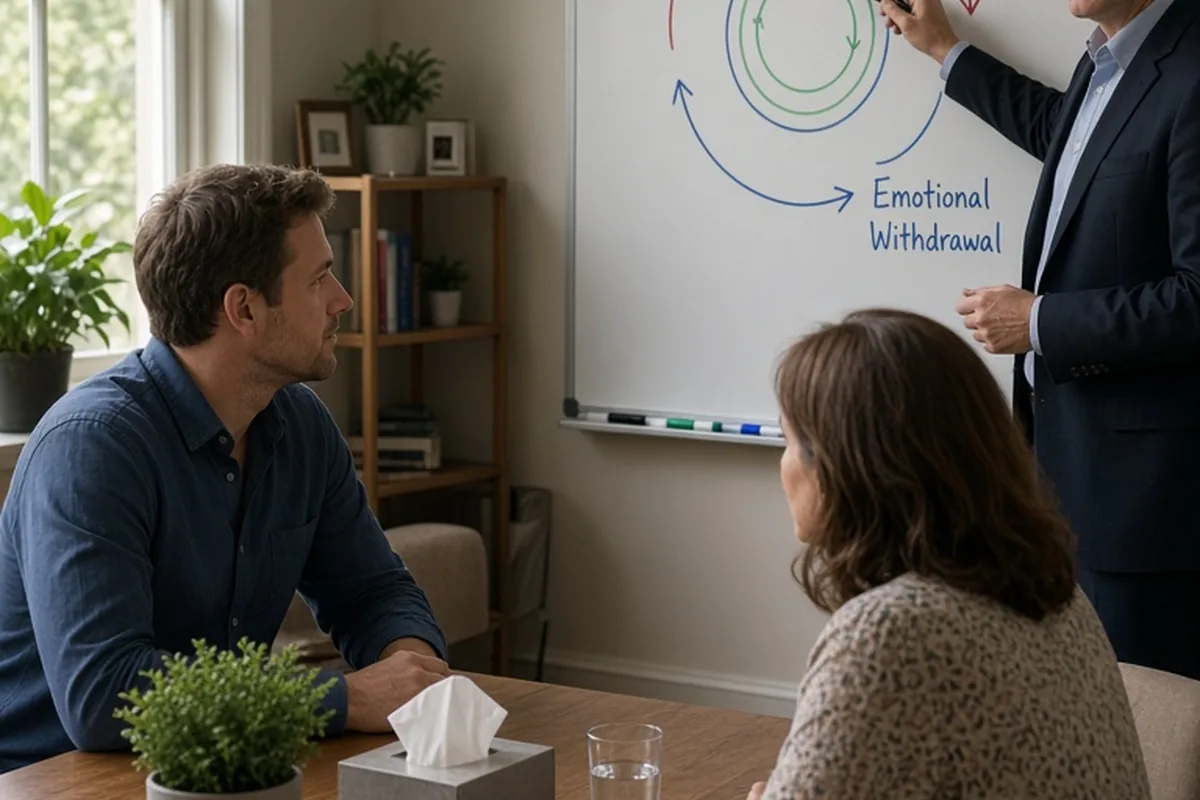
Marriage counseling is a structured form of therapy designed to help couples identify recurring conflicts, rebuild healthy communication, and make deliberate choices about their partnership. By working with a neutral professional, partners learn to examine behavioral patterns beneath daily friction, de-escalate circular arguments, clarify personal boundaries, and establish practical agreements for ongoing emotional and logistical support.
Entering counseling does not mean a relationship has reached a point of failure; rather, it indicates that current methods for resolving tension have reached their practical limit. Understanding how the process functions allows both partners to participate without defensiveness or unrealistic expectations.
Recognizing When Professional Support Is Warranted
Couples often seek therapy when everyday disagreements stop resolving and instead settle into entrenched patterns of hostility or avoidance. A primary indicator that outside help is needed is the emergence of circular arguments, where the same friction over schedules, finances, or parenting recurs without resolution. Over time, these unresolved exchanges erode basic goodwill, leading partners to view ordinary misunderstandings through a lens of negative intent. When simple logistical questions trigger defensive reactions, the issue is rarely the topic at hand, but rather the underlying emotional safety between partners.
Another critical signal is emotional withdrawal, where one or both individuals stop bringing up genuine concerns because they anticipate an unproductive fight. While quiet withdrawal can feel safer than open conflict, it frequently leads to emotional detachment and lingering resentment. Engaging with a counselor early, before emotional exhaustion sets in, allows couples to address relational blind spots while both individuals still retain the energy and motivation to collaborate.
What Actually Happens in a Couples Therapy Session
A typical counseling process begins with an intake phase where the therapist assesses the relationship history, current distress points, and individual goals. The counselor serves as a neutral facilitator rather than a judge whose job is to decide who is right. Sessions focus heavily on observing how partners interact in real time. When an argument flares up in the room, the counselor steps in to slow the conversation down, helping each person identify the exact moment defensiveness, sarcasm, or stonewalling took over.
Therapy sessions also involve learning and practicing concrete conversational frameworks that can be applied at home. Counselors help partners translate harsh criticisms into clear, actionable requests and teach active listening techniques that ensure each person feels accurately heard before a solution is proposed. Between sessions, couples are usually assigned structured exercises, such as brief scheduled check-ins or specific de-escalation protocols, to reinforce new habits in everyday settings.
Addressing Hesitation When One Partner Is Reluctant
It is common for one partner to feel hesitant about starting therapy, often fearing that the sessions will become a platform for them to be blamed, ganged up on, or pressured into unwanted changes. Reluctance can also stem from discomfort with opening up about private struggles to a stranger or skepticism about whether talking will yield practical results. Acknowledging these concerns with respect rather than frustration is the most constructive way to invite genuine participation.
A useful way to approach a reluctant spouse is to propose a low-stakes, time-limited trial, such as committing to four or six sessions before making any long-term decisions. Framing therapy as an objective consultation focused on reducing household stress, improving teamwork, or gaining clarity creates an inviting entry point. When both individuals see that the therapist maintains strict neutrality and focuses on mutual benefit, initial resistance typically diminishes.
Methods Used to Break Destructive Communication Cycles
Counselors rely on established therapeutic frameworks to help partners understand their dynamic. One standard focus is identifying the pursue-withdraw loop, in which one partner presses urgently for resolution while the other retreats to manage emotional overwhelm. By mapping this pattern visually, the counselor helps both partners realize that the destructive cycle itself is the common adversary, rather than each other. This shift reduces personal blame and opens space for collaborative problem-solving.
Therapists also teach structured communication boundaries to prevent conversations from turning toxic. These include enforcing agreed-upon cooling-off periods when emotional flooding occurs, using clear language to describe internal experiences rather than attacking a partner's character, and establishing protocols for repairing tension after a fight. Learning to acknowledge a partner's perspective without necessarily agreeing with every detail allows couples to maintain connection even during profound disagreements.
Setting Realistic Goals and Tracking Relational Progress
Progress in marriage counseling is rarely a linear absence of all disagreement. Instead, realistic improvement looks like shorter recovery times following an argument, fewer escalating exchanges, and a renewed sense of shared humor and warmth. When couples expect therapy to eliminate all friction immediately, they risk becoming discouraged by normal setbacks. Setting incremental, observable goals helps maintain steady momentum throughout the therapeutic process.
Meaningful milestones include demonstrating the ability to pause a heated conversation before it escalates, expressing appreciation regularly, and managing household logistics without passive-aggressive tension. Counselors periodically review these goals with the couple, assessing what tools are working and adjusting the treatment plan as the relationship stabilizes. Recognizing and celebrating small communicative victories reinforces new behavioral patterns over the long term.
Navigating Disagreements on Future Direction and Values
Sometimes couples enter counseling facing major life decisions where their core desires diverge, such as career relocations, financial priorities, or differing levels of commitment to the marriage. In these situations, therapy provides a structured, emotionally safe environment to explore fundamental differences honestly. The counselor helps each partner articulate their core values, non-negotiable boundaries, and areas where flexible compromise is possible.
When differences prove irreconcilable, counseling helps couples navigate necessary transitions with dignity, clarity, and mutual respect. Rather than allowing an impasse to deteriorate into prolonged bitterness or explosive conflict, the therapeutic setting enables partners to make deliberate, ethical choices about their future, whether that involves intentional recommitment or an orderly, cooperative separation.
Illustrative Scenarios
De-escalating the Pursue-Withdraw Pattern
Mark and Elena entered counseling after months of unresolved tension where every disagreement resulted in days of icy silence. Mark initially believed Elena was stonewalling to punish him, while Elena felt completely overwhelmed by Mark's rapid-fire questioning and withdrew to protect herself. In therapy, the counselor helped them identify this recurring pursue-withdraw cycle. Instead of pressing for immediate answers, Mark learned to request a conversation while offering a explicit thirty-minute pause. Elena agreed to provide a clear verbal assurance that she would return to discuss the issue after taking time to collect her thoughts, removing the fear of abandonment.
Key point: Replacing automatic defensiveness with clear, time-bounded conversational agreements allows partners to manage emotional overwhelm without severing connection.
Resolving Daily Operational Friction
Jordan and Priya found themselves bickering constantly over domestic responsibilities and schedules after the birth of their second child. Jordan felt unappreciated for his long work hours, while Priya felt isolated and overwhelmed by household management. In therapy, rather than debating who worked harder, the counselor guided them to treat their schedules as an operational puzzle. They clearly defined specific ownership areas for household tasks and instituted a brief weekly logistics check-in. This structured approach removed daily ambiguity and eliminated passive-aggressive comments about routine chores.
Key point: Translating ongoing emotional complaints into structured operational agreements protects relationship goodwill from daily domestic stress.
Frequently asked questions
How long does marriage counseling typically take?
The duration of counseling varies based on a couple's specific goals and the complexity of their challenges. Many couples participate in therapy for three to six months of regular weekly or biweekly sessions to address specific communication roadblocks. Some choose shorter, targeted consultations, while others maintain periodic maintenance sessions to preserve long-term progress.
Can marriage counseling help if only one spouse is willing to attend?
While joint participation is most effective for addressing relational dynamics, individual counseling can still be highly valuable. Working with a therapist allows one partner to clarify personal boundaries, manage their own emotional reactivity, and shift how they respond to conflict. Changing one half of an established dynamic often encourages positive shifts in the overall relationship.
How should a couple select the right therapist?
Look for a licensed professional with dedicated training in relationship therapy, such as a Licensed Marriage and Family Therapist. It is beneficial to arrange an initial consultation to ensure both partners feel equally respected, heard, and aligned with the practitioner's therapeutic style. A good counselor maintains strict neutrality and avoids taking sides.
Why does counseling sometimes feel harder in the beginning?
It is completely normal for discomfort to increase temporarily when long-buried resentments and difficult topics are brought into the open. As the counselor helps establish clear conversational boundaries and effective de-escalation tools, this initial friction generally subsides, leading to greater clarity and emotional relief.
Your next step
Choose one recurring, minor disagreement this week and agree to discuss it during a planned fifteen-minute conversation using neutral, observation-focused statements rather than critiques.