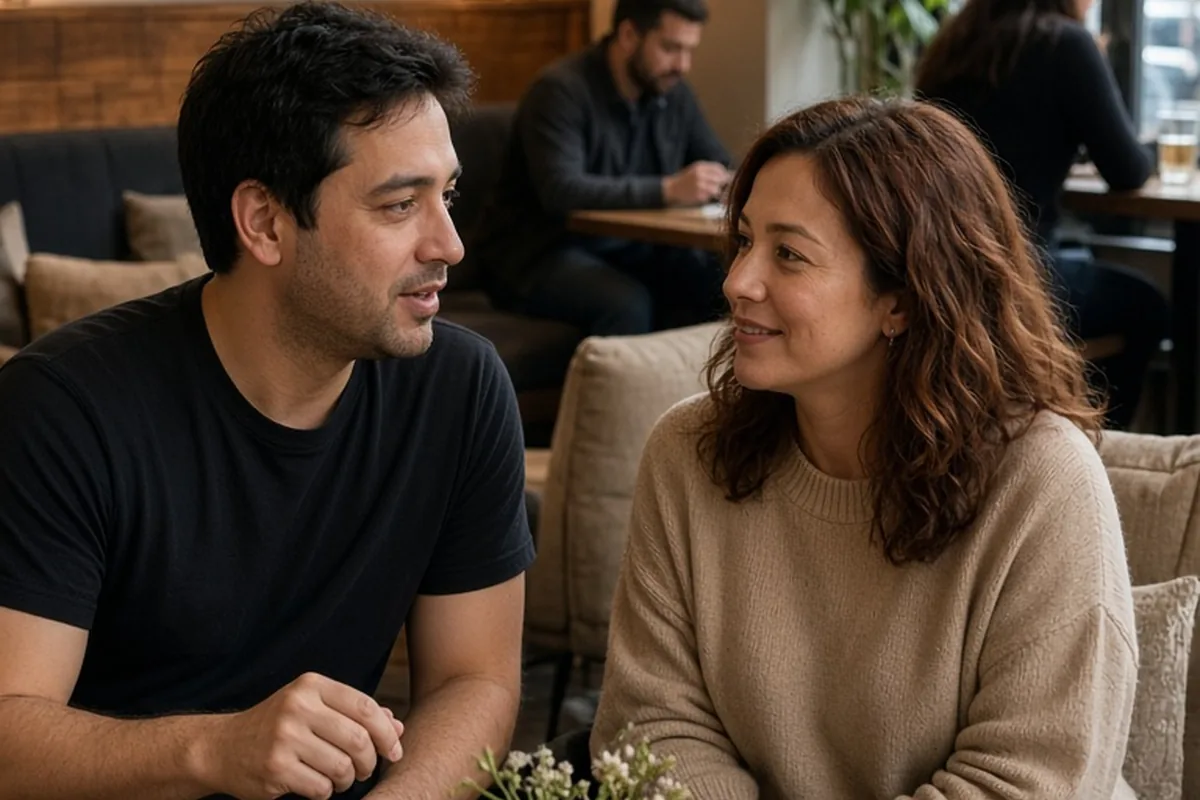
To master a blind date and keep it stress-free, treat the outing as an exploratory conversation rather than an audition for a life partner. Pick a familiar, low-stakes public venue with a natural time limit, such as a casual coffee shop or an early drink. Focus on genuine curiosity instead of performance, ask open-ended questions about everyday interests, establish clear safety boundaries beforehand, and conclude with warm, honest feedback rather than false promises or game-playing.
Meeting someone completely unfamiliar can easily trigger performance anxiety, especially when friends, colleagues, or matchmaking setups frame the encounter with high expectations. Shifting your approach toward casual curiosity allows you to enjoy an engaging conversation without carrying the exhausting weight of immediate romantic destiny.
Shifting Mindset: From Romantic Audition to Low-Stakes Social Hour
The single largest contributor to blind date anxiety is the hidden assumption that the evening must determine your long-term romantic future. When you frame an encounter as an evaluation of whether this person is your future spouse or long-term partner, every conversational pause, differing opinion, or awkward glance carries outsized significance. This mental pressure encourages hypervigilance, prompting you to analyze the other person's behavior while simultaneously monitoring your own posture, tone, and wit. The result is an exhausting social performance that leaves little room for genuine human connection or spontaneous enjoyment.
A far more sustainable framework is to view a blind date simply as an opportunity to share an hour of pleasant conversation with an interesting person you would not otherwise have met. You are not auditioning for their approval, nor are you sitting on a judging panel evaluating theirs. Approach the event with the modest objective of finding out how they experience the world, what hobbies occupy their weekends, or what funny perspective they bring to everyday topics. If romantic chemistry develops, that is a delightful secondary outcome. If it does not, you have still spent an hour practicing active listening, expanding your social comfort zone, and enjoying a change of scenery without declaring the outing a failure.
Setting Up Logistics and Non-Negotiable Safety Protocols
A relaxed date rests on a foundation of basic practical security. Even when a blind date is arranged by a trusted mutual friend or family member, you are still meeting an individual whose boundaries, temperaments, and habits are unknown to you. Establishing simple safety parameters beforehand eliminates background anxiety and allows you to focus fully on the social interaction. Always arrange your own transportation to and from the venue, whether that means driving your own car, using public transit, or calling a rideshare service. Having independent mobility ensures you can leave whenever you decide the date is finished without relying on the other person for a ride home.
Choose an established, well-populated public venue where staff and patrons are consistently present. Send a quick text to a close friend or family member before you arrive, sharing the address of the location, your match's first name, and an approximate time you expect to check in. Keep your personal belongings, drinks, and phone within sight throughout the meeting. These steps are neither paranoid nor adversarial; they are standard personal safety habits that give you total autonomy. Knowing your exit strategy is secure and your support network is aware of your plans allows your nervous system to stay settled.
Selecting Blind Date Venues: Why Casual Settings Beat Formal Dinners
The setting of a first blind date dictates its emotional pace and structural flexibility. Committing to a multi-course dinner at a high-end restaurant is one of the most common mistakes people make. A formal sit-down meal locks both participants into a rigid ninety-minute to two-hour commitment, regardless of whether conversation flows naturally or stalls after five minutes. Dinners also introduce unnecessary friction points around ordering etiquette, differing budgets, dietary restrictions, and who handles a potentially substantial bill. Furthermore, quiet, formal dining rooms can amplify awkward silences, turning simple pauses into uncomfortable moments under bright chandeliers.
Instead, choose dynamic, casual environments that offer built-in flexibility and natural conversation pieces. An afternoon coffee shop, a relaxed tea lounge, a craft brewery with open seating, or a walk through an art gallery or botanical garden provides a comfortable backdrop. These settings allow either person to gracefully end the date after forty-five minutes if the connection feels flat, or easily extend it into lunch or a secondary drink if the conversation is thriving. Casual venues also feature ambient background noise and visual distractions, which relieve the pressure of constant eye contact and give both people room to breathe.
Keeping Conversation Balanced: Prompts That Avoid Job Interviews
When nervousness peaks during a blind date, people frequently default to what resembles a corporate employment screening. Rapid-fire questions about job titles, career trajectories, college majors, and neighborhood rent can keep the air filled with words, but they rarely generate genuine emotional warmth. This transactional exchange feels stiff and tires both participants out quickly. The goal of conversation on a first outing is not to build a background dossier, but to uncover shared sensibilities, senses of humor, and mutual curiosity.
Steer the dialogue toward open-ended questions about how your date spends their discretionary time and what brings them genuine enjoyment. Ask about recent projects they are excited about, books or shows they have enjoyed, their favorite neighborhood food spots, or a memorable travel mishap. When they share a story, practice reflective listening by picking up on an emotional detail rather than immediately pivoting back to your own life. Share your own anecdotes in reasonable, two-to-three-minute bursts rather than delivering extended monologues. A balanced rhythm where both individuals speak roughly equal amounts and follow conversational tangents organically creates rapport faster than any scripted list of queries.
Managing Awkward Pauses, Incompatible Humor, and Red Flags
Almost every blind date encounters a few bumpy moments during the first fifteen minutes as two strangers adjust to one another's cadences. A momentary lull in conversation does not signify incompatibility; it is simply a natural rhythm of human speech. When a pause occurs, resist the urge to panic or make a self-deprecating comment about how awkward things are. Take a sip of your drink, look around the room, and comfortably introduce a new topic, such as asking what they think of the venue or mentioning an interesting piece of local news. Giving the pause space to exist without alarm shows social confidence and allows the other person to gather their thoughts.
It is equally important to distinguish harmless stylistic differences from clear behavioral warning signs. A match who has a drier sense of humor or who takes a little longer to open up may simply be working through initial shyness. However, genuine warning signs should never be rationalized away out of politeness. If your date treats service staff condescendingly, speaks with chronic hostility about their ex-partners, disregards your clear physical or conversational boundaries, or pressures you to drink more alcohol than you want, you are under no obligation to endure the behavior. Address boundaries calmly and directly, and do not hesitate to end the outing early if their conduct is disrespectful.
Navigating the Bill and Closing the Outing Smoothly
Handling the payment on a blind date can cause unnecessary friction if expectations remain uncommunicated. In modern dating, the cleanest and most considerate default position is to arrive prepared and willing to split the bill evenly or pay for exactly what you ordered. When the server brings the check, reaching for your wallet demonstrates financial independence and mutual respect. If one person offers to pay the entire bill as a kind gesture, you can offer once to cover the tip or split it; if they politely insist, accepting with a genuine thank you is perfectly gracious.
Ending the outing smoothly requires clear timing rather than lingering indecisively on the sidewalk. Around the sixty-minute mark, take stock of how the date is going. If you are having a pleasant time but want to keep the initial meeting brief, state your timeline warmly by saying you need to head out soon for evening plans, but that you thoroughly enjoyed the chat. This prevents the date from dragging into fatigue and leaves both of you wanting more conversation. If the connection was uninspiring, concluding at the one-hour mark allows you to part ways cordially without wasting anyone's evening.
Clear Post-Date Communication: Follow-Ups Without Ghosting or Pressure
What happens immediately after the date sets the tone for your personal integrity and respects the other person's time. One of the most damaging dating habits is offering empty platitudes at the end of the night, such as saying 'we should definitely do this again soon,' when you have no intention of following through. While people often say this to avoid momentary discomfort, it creates confusion and false hope. A simple, polite farewell such as 'Thank you for taking the time to meet tonight, it was great getting to know you' provides closure without misleading promises.
If you had a wonderful connection and want to see them again, send a brief message later that evening or the following day letting them know you had a great time and suggesting a specific follow-up idea. If you realize there was no romantic compatibility, a prompt, gracious message is far kinder than silence or ghosting. You can text: 'Thanks again for meeting up yesterday. I enjoyed our conversation, but I did not feel a strong romantic spark between us. Wishing you all the best.' If a mutual acquaintance set you up, check in with that friend briefly, thanking them for the introduction while keeping personal details of the date discreet and respectful.
Illustrative Scenarios
Handling Different Social Rhythms
Julian agreed to a blind date arranged by a coworker at a moderately busy downtown lounge. When his match, Priya, gave short answers during the first twenty minutes, Julian assumed she was bored and found himself nervously dominating the conversation with rapid workplace stories. Catching his own spiral, Julian took a breath, slowed his pace, and asked Priya how she usually prefers unwinding after a busy week. Priya smiled, visibly relaxed, and explained she was exhausted from a back-to-back deadline and took a little time to switch into social mode. The conversation smoothed out naturally once Julian stopped interpreting initial quietness as personal rejection.
Key point: Patience and open questions reveal whether an early silence is genuine disinterest or simply normal introversion and fatigue.
Holding Boundaries With Courteous Firmness
Clara met a blind date for afternoon coffee at a local neighborhood cafe. Twenty minutes into the meetup, her date began asking intrusive questions about her private finances and repeatedly insisted they move to a nearby cocktail bar despite Clara mentioning she had evening obligations. Feeling pressured, Clara avoided arguing or making up elaborate excuses. She set down her cup, calmly stated that she was keeping to her original plan of a quick coffee, and thanked him for the conversation before standing up to leave. She drove home safely, feeling relieved that she honored her own limits rather than yielding to uncomfortable social pressure.
Key point: Polite clarity protects your boundaries; you never owe an escalation of time or intimacy to keep someone else comfortable.
Frequently asked questions
What should I do if my blind date looks noticeably different from their photos or descriptions?
Focus initially on their conversational presence and personality, as lighting and camera angles frequently distort expectations. However, if there is a severe, intentional misrepresentation of identity, or if you feel genuinely deceived, it is completely acceptable to complete a brief coffee politely or excuse yourself early if you feel uncomfortable.
Who should pay the bill on a first blind date?
The most considerate approach is for both individuals to expect to pay their own share. If one person offers to treat, you can graciously offer to cover the tip or split the total. If they insist on paying, thank them warmly without turning the bill into an extended debate.
How long should a first blind date realistically last?
A standard blind date should aim for roughly forty-five to seventy-five minutes. This provides plenty of time to gauge basic compatibility, communication style, and mutual interest without risking conversational burnout or trapping either person in an overextended commitment.
How should I handle feedback to the mutual friend who introduced us?
Send a warm, brief note thanking your friend for thinking of you and making the introduction. If it did not work out romantically, let them know that while you enjoyed meeting the person, you did not feel a romantic connection, avoiding harsh critiques or oversharing private details.
Your next step
Choose a familiar, casual coffee shop or neighborhood lounge today, and suggest a specific one-hour meeting window for your upcoming date to keep the experience relaxed and low-pressure.