To master online dating message replies, answer the other person's prompt directly while introducing one specific, open-ended detail about your own life or interests. Follow your answer with a related question that gives them an easy hook to respond to. Avoid dry one-word confirmations, excessive flattery, or overthinking reply delays. Focus on authentic curiosity, clear personal boundaries, and a balanced exchange that naturally leads toward a low-pressure phone call or in-person meeting.
Navigating text conversations on dating platforms often feels like balancing enthusiasm with caution, especially when a promising match sends a message that leaves you wondering how to respond.
Moving Beyond One-Word Answers: Crafting Openers and Early Replies
First impressions on dating apps rarely depend on clever punchlines or scripted opening lines. Instead, strong message replies rely on creating conversational momentum. When a match asks a standard question like how your weekend went, answering with just 'It was good, how about yours?' stalls the interaction before it starts. A more engaging response answers the question with a vivid, concrete detail from your day and connects it back to a shared interest. For instance, stating that you spent Saturday testing a new sourdough recipe or looking for a quiet running trail gives the other person distinct topics to explore.
The most effective structure for early replies follows a simple pattern: acknowledge what they said, share one relatable or intriguing piece of context about yourself, and ask a low-friction question. If someone mentions they just returned from a trip to Colorado, avoid generic reactions like 'Cool, did you like it?' A reply such as 'Colorado is incredible this time of year. Did you spend most of your time hiking in the mountains, or were you exploring food in Denver?' demonstrates active reading and offers clear direction for the next exchange.
Keep your initial replies proportional in length and tone. Sending three dense paragraphs in response to a friendly two-sentence icebreaker can feel overwhelming, while consistently sending two-word answers signals disinterest. Aim to match the general energy of the exchange while maintaining your natural voice, ensuring that each message acts as an invitation to keep talking rather than a dead end.
The Balance of Asking and Sharing in Dating App Messaging
A common pitfall in digital dating is turning an organic chat into an interrogation. When one person asks all the questions and the other merely provides answers without reciprocating, the dynamic quickly becomes exhausting. Sustainable conversation requires an equal distribution of self-disclosure and inquiry. If your match asks what you do for work, give a brief, colorful description of what your day actually looks like rather than just a dry job title, and then pivot the topic toward something broader, like how they prefer to unwind after a busy week.
Similarly, be mindful of dominating the conversation with lengthy personal monologues. If you find yourself writing several continuous messages about your favorite band, paused projects, or past routines without pausing to see how your match relates, take a breath. Share your enthusiasm in manageable pieces and invite their perspective. For example: 'I could talk about 90s indie rock for hours, but I am curious—what is the last live concert that genuinely blew you away?'
Observing how readily the other person picks up these conversational threads helps you assess basic compatibility. Someone who consistently asks thoughtful follow-ups is actively investing in the interaction. Conversely, if you notice you have carried the entire conversational burden over four or five exchanges with zero questions directed back at you, it is entirely reasonable to let the dialogue pause and see if they step forward on their own.
Responding to Slow, Short, or Inconsistent Text Cadence
Irregular reply times are an inevitable part of online dating. People balance demanding work schedules, family commitments, notifications turned off, and social fatigue. It is easy to interpret a six-hour delay as a calculated game or a sudden loss of interest, but assuming negative intent usually leads to unnecessary anxiety or passive-aggressive follow-ups. If a match takes a day to reply but returns with a thoughtful, detailed message, their slower cadence may simply reflect a preference for messaging only when they have uninterrupted focus.
When dealing with delayed or short messages, avoid sending immediate check-ins like 'Did you fall off the earth?' or 'Guess you got busy.' These messages place defensive pressure on someone you have not yet met. If someone sends a brief reply after a long silence, you have clear choices: match their lighter tone and continue if the topic still interests you, introduce a fresh subject to test engagement, or let the conversation naturally fade if the lack of momentum does not suit your communication style.
If you enjoy a conversation but find the slow platform messaging frustrating, a polite transition can clarify where things stand. You might say: 'I find it tough to keep up on this app during the workweek. If you prefer, we could switch to a quick evening phone call or grab a coffee sometime soon.' This offers a practical forward step without demanding constant digital availability.
Navigating Flirtatious Banter, Playful Humor, and Personal Boundaries
Flirting via text requires attentiveness to context and nuance. Light teasing and playful humor can build rapport, but they rely heavily on mutual calibration. When introducing playful remarks, keep them lighthearted and focused on neutral topics, such as silly food debates or light pop culture opinions, rather than making assumptions about personal habits, physical appearance, or sensitive background topics. Watch how your match receives the comment; if they reciprocate with similar humor, you have established a shared wavelength.
Establishing and respecting personal boundaries is equally critical during early banter. If an exchange turns explicitly intimate or touches on personal topics faster than you feel comfortable with, you do not need to abruptly disappear or play along out of politeness. A direct, calm boundary message resets the tone effectively: 'I enjoy our banter, but I prefer to get to know someone a bit better in person before diving into those topics. Tell me more about that road trip you mentioned earlier.'
How a person responds to a clear boundary provides vital information about their character. An emotionally mature match will acknowledge your preference smoothly and redirect the conversation without defensiveness, guilt-tripping, or sulking. If someone pushes past your stated comfort zone or dismisses your boundary as being uptight, it indicates a fundamental mismatch in respect and communication.
Knowing When and How to Suggest Moving from the App to a Date
Endless messaging without transitioning to a real-world interaction often leads to false intimacy or conversation burnout. While comfort timelines vary, spending several weeks exchanging daily text messages before meeting can build unrealistic expectations that rarely match in-person chemistry. Once you have established basic safety, mutual rapport, and a shared conversational rhythm—often after a few days of consistent, engaging dialogue—it is appropriate to propose a casual meetup.
A successful invitation is specific, low-pressure, and time-bounded. Instead of vague prompts like 'We should hang out sometime,' propose a concrete activity with an easy out: 'I have really enjoyed our chats about local art. I am planning to check out the downtown gallery this Saturday afternoon; would you like to join me for an hour and grab a coffee nearby?' This makes it easy for the other person to say yes or suggest an alternate time if they are genuinely interested.
If the other person mentions they prefer to message a bit longer before meeting in person, respect their timeline without taking it personally. You can suggest a brief video chat or a ten-minute phone call as an intermediate step. However, if weeks pass with repeated dodged invitations and no willingness to connect over voice or video, you can decide whether continuing to invest emotional energy in an exclusively digital pen pal aligns with your dating goals.
Spotting Deceptive Patterns and Guarding Privacy in Online Exchanges
While most people on dating platforms are seeking genuine connections, maintaining sound privacy practices is essential when messaging new contacts. In the initial stages of chatting, keep your exact home address, specific workplace location, financial details, and personal contact handles private until you have established mutual trust and verified identity. Be cautious of matches who immediately push to move conversations to encrypted messaging apps while refusing simple phone or video calls.
Pay close attention to sudden emotional escalation or claims of dramatic personal crises. According to consumer guidance from the Federal Trade Commission on romance scams, fraudulent actors frequently profess deep affection very quickly, fabricate urgent medical or travel emergencies, and eventually ask for money, gift cards, or financial investments.
If an online match ever requests financial assistance, asks for access to your accounts, or pitches an investment opportunity, treat this as an immediate safety hazard. Genuine prospective partners do not ask online acquaintances for funds. Disengage, report the profile to the dating platform, and avoid sending sensitive documentation or funds under any circumstances.
Further reading: FTC: What to know about romance scams
Illustrative Scenarios
Navigating a Generic Opener with Specific Context
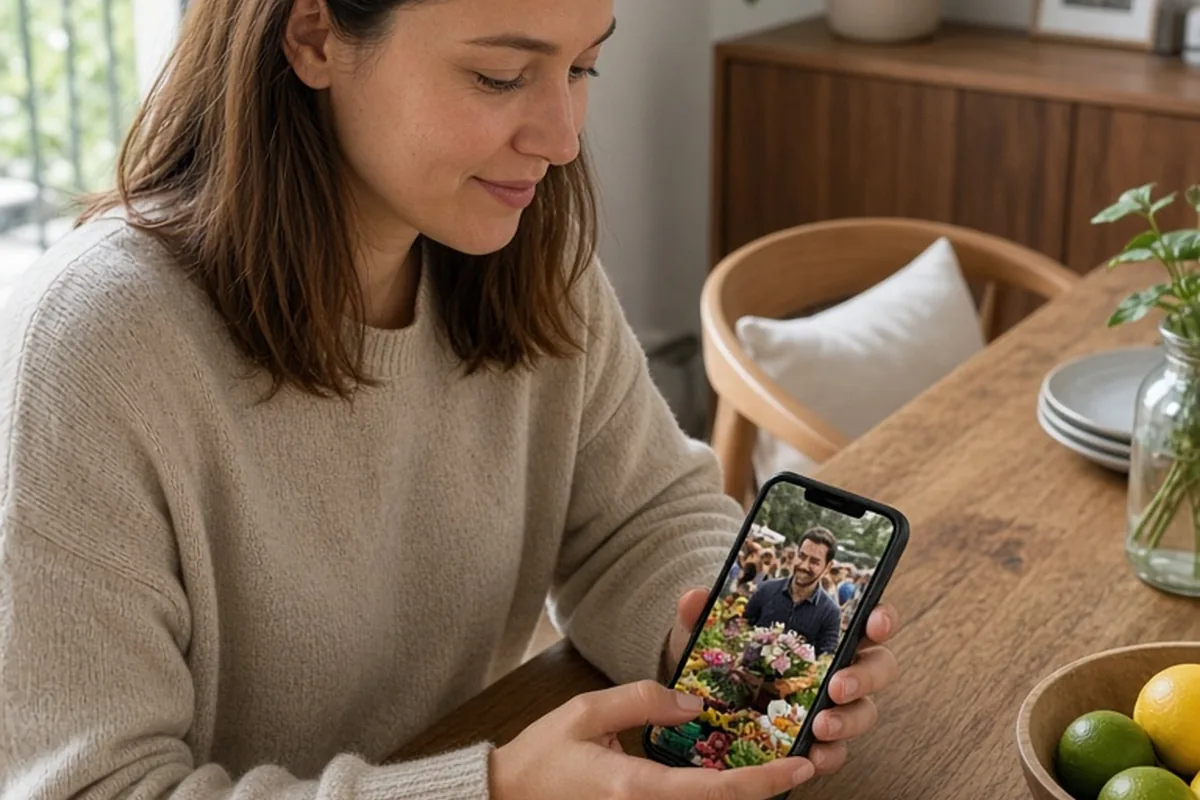
Elena received a message on a dating app that simply read: 'Hey, nice photos! How is your week going?' Her initial instinct was to write back a brief 'Good thanks, how about you?', but she realized that would likely end the conversation before it began. Instead, Elena looked at her match's profile, noticed a photo of them at a local farmers market, and replied: 'Hi David! My week has been busy with graphic design projects, but I am unwinding tonight. I saw your picture at the Saturday market—do you have a favorite local produce stall or bakery there?'
Key point: Offering a specific personal detail while referencing a visible interest from the other person's profile transforms a bland icebreaker into an easy, engaging conversation.
Addressing Inconsistent Reply Cadence Directly
Marcus was chatting with a match who took between 24 and 48 hours to reply to every message. While her replies were warm, the long delays made it difficult to maintain any momentum or plan an outing. Rather than sending multiple anxious check-ins or assuming she was completely uninterested, Marcus sent a clear invitation: 'I appreciate our conversations, but I am much better at connecting in real life than over intermittent app messages. Would you be open to grabbing a casual coffee this Thursday or Friday after work?' His match gladly accepted and explained she rarely checked notifications during her busy work shifts.
Key point: Proposing a low-pressure in-person meeting clarifies genuine romantic interest far better than analyzing texting intervals or waiting indefinitely in digital limbo.
Frequently asked questions
How long should I wait before replying to a message on a dating app?
You do not need to follow arbitrary waiting rules or delay your response to appear busy. Reply whenever you have the time and attention to write a thoughtful message, whether that is twenty minutes or several hours later. Consistent authenticity is far more appealing than calculated timing games.
What should I do if a conversation on a dating app suddenly stalls?
If an exchange goes quiet for a few days, you can send one friendly, low-pressure message tied to a shared interest or new topic, such as a recent movie or local event. If they do not respond to that message, let the conversation sit and focus your energy on matches who actively engage.
Is it rude to decline moving from the dating app to phone numbers right away?
Not at all. It is completely reasonable to protect your privacy and prefer messaging within the app until you have established mutual comfort or met for a first date. A polite reply like 'I prefer keeping chats on here until we meet in person' clearly sets your boundary without rejecting the person.
Your next step
Review your current active dating app conversations, identify one promising match where dialogue has stalled on generic small talk, and send a specific, low-pressure reply that pairs a personal detail with an open-ended question about their interests.