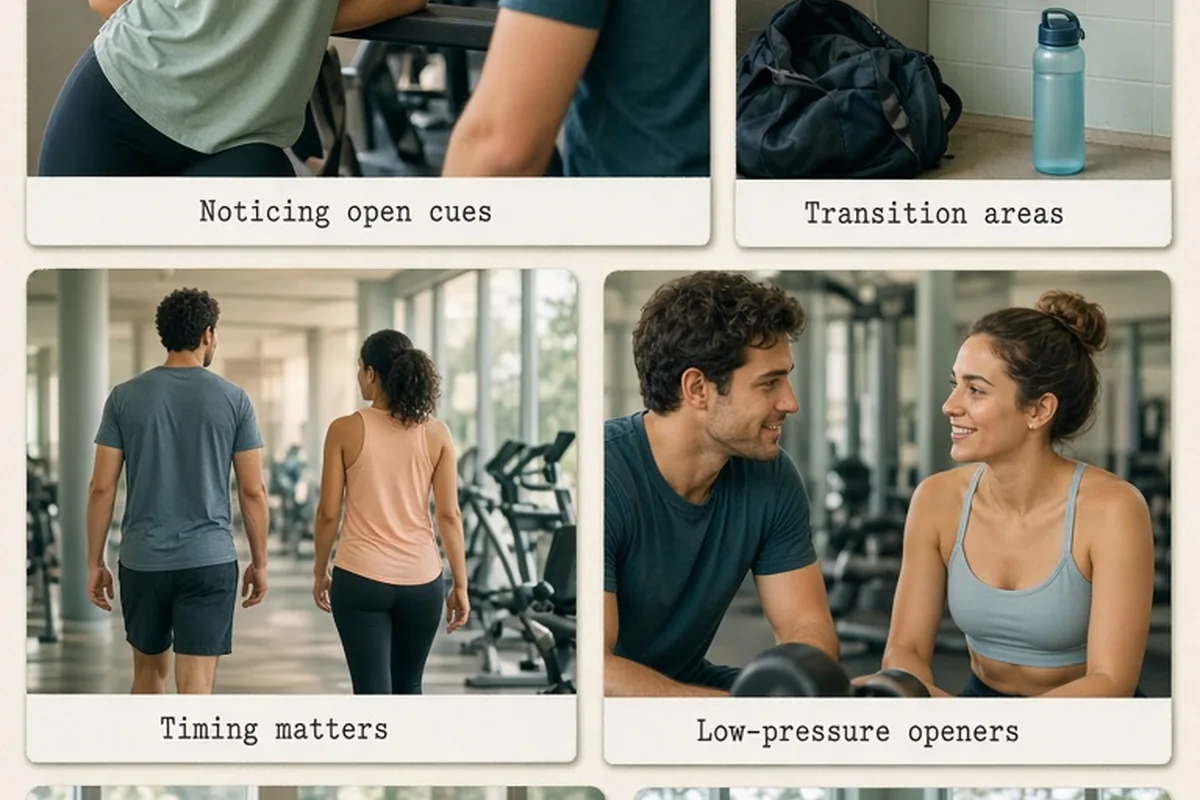
Meeting people at the gym requires prioritizing respect, situational awareness, and low-pressure interactions. The best approach relies on noticing open cues, such as removed headphones or friendly eye contact, engaging briefly during natural transition areas rather than mid-exercise, and keeping initial comments light and contextual. If someone seems receptive, build rapport gradually across multiple visits rather than forcing an immediate romantic pitch.
Fitness centers present a unique social dynamic where people share close physical quarters while pursuing personal, solitary goals. Approaching someone successfully in this environment is less about clever openers and entirely about respecting their focus, reading contextual signals accurately, and establishing organic rapport that leaves both people feeling comfortable in their workout space.
Reading Context and Social Availability on the Gym Floor
The gym is primarily a functional workspace where people go to decompress, build physical strength, and concentrate on personal wellness. Recognizing whether someone is socially open or deeply focused is the foundational rule of gym etiquette. When an individual wears large over-ear headphones, keeps their gaze locked on the floor or their phone timer, or moves quickly between stations, they are establishing a clear visual boundary. Interrupting someone in this zone forces them to break their physical momentum to manage an unsolicited social interaction, which quickly creates friction.
Conversely, receptive cues tend to be subtle, recurring, and relaxed over multiple visits. An individual who is open to casual conversation often works out without headphones, offers a warm nod or smile when passing by, and maintains relaxed posture in communal areas. Even in these moments, an open cue is merely an invitation for a courteous greeting, not a green light for an extended conversation. Treating these early signals as simple tests of social temperature helps you gauge interest without making assumptions about someone's romantic availability.
Timing Matters: Safe Zones Versus Disruptive Moments
Timing influences how an approach is received far more than the words you choose. Attempting to start a conversation while someone is mid-set, sprinting on a treadmill, or heavily catching their breath is dangerous and inconsiderate. Disrupting a lift compromises physical safety, shatters concentration, and signals a lack of basic gym awareness. The same standard applies when someone is cornered at a dedicated station where they cannot comfortably disengage without abandoning their equipment.
The most considerate moments for brief dialogue occur in neutral transition areas. Spaces near the water refill station, the stretching mats, the front lobby, or the smoothie bar provide organic opportunities to exchange a few words without interrupting a workout. When initiating contact on the main gym floor, keep the exchange strictly logistical and under thirty seconds. Asking if a bench is free or if you can work in gives the other person an effortless exit if they prefer to stay focused.
Low-Pressure Openers Grounded in the Environment
Effective gym introductions are contextual, casual, and completely free of unsolicited remarks about physical appearance. Commenting directly on someone's body, workout attire, or physique immediately shifts the dynamic into an evaluative, uncomfortable space. Instead, ground your opening comment in the immediate, shared environment. Asking about a piece of equipment, inquiring about a group class schedule, or sharing a brief observation about how busy the free-weight room is grounds the conversation in everyday reality.
A practical opener might sound like asking for a quick spot on a bench press where you legitimately need one, or asking someone how they like a specific brand of lifting straps. If the person responds with enthusiastic energy and continues the thread, you can exchange a brief follow-up before returning to your workout. The critical boundary to maintain is offering a clear, natural conclusion to the chat so nobody feels cornered into a lengthy conversation when they have sets left to finish.
The Slow Burn: Building Rapport Across Multiple Visits
Unlike social environments where people expect to make quick social or romantic decisions, gym interactions flourish through gradual consistency. Because you will likely see the same people week after week, rushing to ask for a phone number or a date on the first day carries high social risk. If an early interaction feels pushy, it creates lingering awkwardness that can spoil a space meant for daily stress relief.
A respectful gym approach develops across stages. Start with simple familiarity, offering a friendly nod when passing someone over the course of a week or two. Once a mutual greeting feels standard, introduce yourself briefly by name after a short exchange, and then let that interaction breathe for the rest of the session. Allowing familiarity to mature naturally gives both people time to assess mutual comfort, establishing trust before any romantic intentions enter the frame.
Recognizing Polite Disinterest and Preserving Comfort
Distinguishing between basic polite compliance and genuine reciprocal interest is an essential social skill. Because the gym is a shared, enclosed public venue, people often default to pleasant smiles and short answers simply to keep the environment friendly and avoid tension. Brief single-word replies, avoiding eye contact while answering, or putting headphones back over their ears immediately after speaking are clear signs that someone prefers to be left alone.
When you encounter these subtle disinterest cues, the appropriate response is to wrap up the conversation smoothly and give them space. Do not hover in their immediate vicinity, adjust your routine to match theirs, or attempt another conversation later that day. Stepping back with dignity protects your own self-respect, keeps the gym an anxiety-free environment for them, and ensures future encounters remain comfortable and painless.
Cultivating an Authentic, Workout-First Mindset
Your primary reason for being at the gym should always be your own fitness and training progression. When someone treats the weight room like a singles lounge by wandering around, looking for people to approach, and ignoring their own routine, their lack of focus becomes immediately noticeable and uncomfortable to those around them. People are naturally drawn to individuals who demonstrate discipline, presence, and purpose.
You build an approachable presence simply by being a courteous gym member who re-racks weights, treats staff respectfully, and gives others ample personal space. When you are established as a respectful regular, any small conversation you start feels like a natural part of community building rather than an intrusive agenda. This grounded, workout-first attitude removes social desperation and fosters mutual respect.
Illustrative Scenarios
Navigating Focused Cues Versus Transition Spaces
Marcus noticed a woman whose workout schedule frequently overlapped with his in the functional training area. One afternoon, while she had large over-ear headphones on between kettlebell sets, he considered tapping her shoulder to ask about her routine. Recognizing that physical touch and interrupting a workout with headphones violates clear boundaries, Marcus held back. Instead, he waited until they were both wiping down equipment near the exit after finishing their sessions. He offered a warm smile, made a brief comment about the gym's peak hours, introduced himself, and said goodbye before walking out.
Key point: Waiting for natural transition zones instead of interrupting focused exercise respects personal boundaries and keeps initial encounters comfortable.
Interpreting Polite Compliance Versus Genuine Interest
Taylor regularly saw another lifter near the squat racks and decided to strike up a conversation by complimenting his lifting technique. The other lifter smiled, said 'Thanks, just following my program,' and immediately looked down at his watch while reaching for his water bottle. Taylor initially wondered if she should suggest exchanging contact info or ask more questions about his training split. Instead, she recognized the short answer and closed posture as polite disinterest. She gave a friendly nod, said 'Have a good lift,' and returned to her own station without lingering.
Key point: Gracefully accepting brief, polite responses prevents lingering awkwardness and preserves a comfortable gym environment for everyone.
Frequently asked questions
Is it appropriate to ask for someone's phone number or social media handle at the gym?
It is only appropriate after you have built consistent, mutual rapport across several conversations over time. To avoid putting them on the spot, offer your own contact information on a note so they have complete freedom to reach out without pressure.
What should I do if I misread a cue and made another gym member uncomfortable?
Give them immediate and consistent space without staging an elaborate apology that forces another awkward interaction. Simply acknowledge them with a neutral nod if you cross paths and adjust your station positioning to give them room.
Are group fitness classes better for meeting people than the free-weight floor?
Group fitness classes provide a more natural social setting because attendees share a communal experience. Arriving a few minutes early or chatting while cleaning equipment after class offers organic opportunities to speak without disrupting solo training focus.
Your next step
During your next workout, focus on being a courteous, focused regular, and limit any initial social greetings to neutral transition zones only when someone displays clear, relaxed availability.