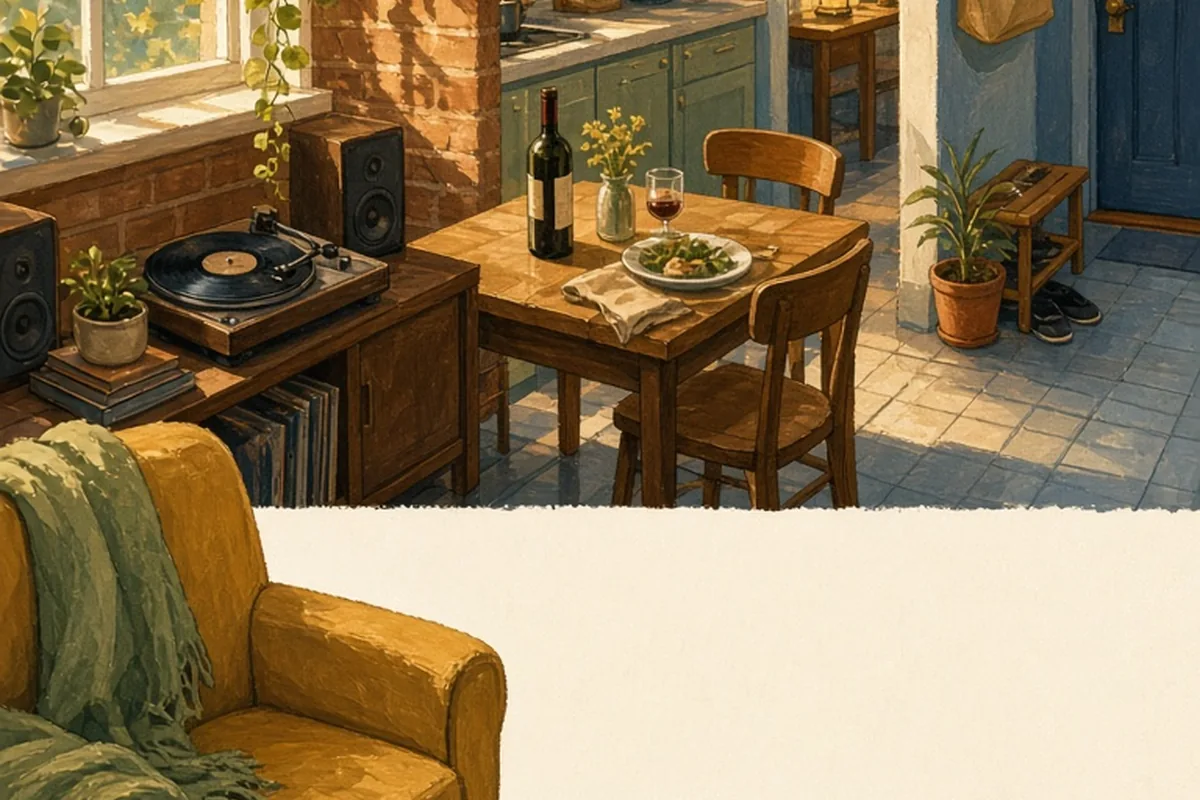
The most romantic songs are the ones that fit the moment: slow-burn classics for closeness, tender acoustic tracks for vulnerability, upbeat soul for joy, and modern ballads for new love. Start with At Last, Let's Stay Together, Something, Adorn, Perfect, Come Away with Me, and All of Me, then adjust to your partner's taste.
Romance lands better when the music sounds like attention, not a performance. The right track can make dinner feel warmer, a drive feel closer, or an apology feel less clumsy, as long as it matches the person and the moment.
What makes a song feel romantic
A romantic song usually does three things at once: it slows your attention down, gives emotion a clean shape, and leaves room for the other person to enter the moment. Tempo matters, but so do lyrics, vocal warmth, and association. A sparse piano ballad can feel intimate because it sounds exposed; a silky soul record can feel romantic because it suggests ease and devotion. The common thread is not genre. It is whether the song helps two people feel more present with each other.
The biggest mistake is treating romance like a formula. A famous love song can fall flat if it reminds your partner of an ex, a wedding they hated, or a lyric that feels possessive rather than tender. Before you build a playlist, think about what you want the song to say: I am glad you are here, I want to know you better, I am sorry, or I choose this ordinary evening with you. When the message is clear, the music becomes support instead of pressure.
Classic romantic songs that still land
Older songs endure because they tend to say simple things with confidence. Etta James on At Last sounds like relief after a long search. Al Green on Let's Stay Together makes commitment sound warm instead of heavy. The Beatles' Something is admiring without begging, and Nat King Cole's Unforgettable has a calm elegance that works when you want tenderness without a big speech. These tracks can suit anniversaries, slow dancing in the kitchen, or a first date that unexpectedly starts to feel meaningful.
Use classics when you want a shared cultural reference that feels steady. They are especially useful if you are not naturally poetic; the song carries some of the sentiment while you stay present. The trade-off is familiarity: a very famous wedding song can feel generic if you drop it into a casual moment. If you choose a standard, add one personal detail, such as why it reminds you of the person or when you first noticed them smiling at it.
- At Last - Etta James
- Let's Stay Together - Al Green
- Something - The Beatles
- Unforgettable - Nat King Cole
- The Way You Look Tonight - Frank Sinatra
- Wonderful Tonight - Eric Clapton
Modern romantic songs for new love
Newer love songs often work best early because they sound closer to how people actually talk now: a little uncertain, a little awed, and less formal than a vow. Adorn by Miguel has playful devotion. All of Me by John Legend is direct enough for commitment but familiar enough to sing under your breath. Come Away with Me by Norah Jones feels like an invitation rather than a claim. Perfect by Ed Sheeran is popular because it turns ordinary details into a scene two people can imagine sharing.
Modern tracks are helpful when you want romance that does not feel antique or overly scripted. They can also be risky if the song is everywhere; a heavily used hit may sound like you reached for the first search result. Balance one recognizable song with one that feels more personal to your taste. If she loves indie folk, R&B, country, or Latin pop, choose inside that world instead of forcing a generic ballad. Specific taste reads as attention.
- Adorn - Miguel
- All of Me - John Legend
- Come Away with Me - Norah Jones
- Perfect - Ed Sheeran
- Best Part - Daniel Caesar featuring H.E.R.
- Lover - Taylor Swift
Upbeat romantic songs when slow feels too serious
Not every romantic moment needs candlelight tempo. Sometimes the better move is joy: a song that makes cooking together feel like a scene, turns a drive into a memory, or gives shy people an easier way to be affectionate. Upbeat romance can lower the stakes while still saying I like being near you. Think of Stevie Wonder's warmth, the lightness of early Beatles, the glow of disco, or a clean pop groove that makes both of you smile before anyone has to define the feeling.
This is useful when a slow song might create pressure, such as a third date, a casual night at home, or a relationship that is still finding its language. A playful track lets affection show up as laughter, dancing badly, or singing the chorus too loud. The limit is that upbeat songs can hide sincerity if you use them to avoid every vulnerable moment. Keep one or two slower songs ready for when the conversation turns real.
- Signed, Sealed, Delivered I'm Yours - Stevie Wonder
- I Want to Hold Your Hand - The Beatles
- You're the One That I Want - John Travolta and Olivia Newton-John
- Crazy Little Thing Called Love - Queen
- Kiss Me - Sixpence None the Richer
- Electric Love - Borns
How to choose the right song for the moment
Start with the moment, not the ranking. A song for a first kiss should leave space and not demand a reaction. A song for an anniversary can be more direct because commitment is already on the table. A song after a disagreement should avoid grand promises and instead support patience. Ask what the other person already loves, what era makes them nostalgic, whether lyrics matter to them, and whether they prefer being moved or being put at ease.
Then check the lyrics before you press play. Some songs sound romantic for thirty seconds and turn jealous, possessive, or fatalistic by the bridge. Others are beautiful but clearly about loss, which can send the wrong signal if you are trying to say I am here. A practical rule: choose songs that describe care, admiration, steadiness, desire with respect, or shared joy. Save songs about obsession, begging, or heartbreak for when you are actually processing those feelings, not trying to create closeness.
Playlist and etiquette tips that keep it comfortable
A good romantic playlist is short enough to feel intentional. Three to five songs can frame a dinner, a drive, or a slow dance without turning the night into a DJ set. Put the most obvious song second or third rather than first; opening too strong can feel like a declaration before anyone is ready. Keep volume low enough for conversation, and let silence happen between tracks. Romance needs air. If the other person talks over a song, let them.
Etiquette matters more than taste. Do not use music to corner someone into a mood, a kiss, or forgiveness. If a song makes them laugh because it is too earnest, laugh with them instead of defending the choice. If they seem distracted, lower the volume and ask what they are in the mood for. Confidence here is not picking the perfect track; it is noticing the response and adjusting without sulking. That kind of attention is usually more attractive than any playlist.
When a song is doing repair work
After conflict, a song can soften the room, but it cannot replace the sentence you owe someone. If you hurt them, say plainly what you did, why it mattered, and what you will do differently before you reach for atmosphere. A tender track can help both nervous systems settle, yet if the apology is vague, the music may feel like decoration over a wound. Choose something calm and low-pressure, not a dramatic ballad that asks them to feel moved on command.
Repair songs work best when they are an invitation to sit together, not a shortcut back to affection. Try a track that says patience, gratitude, or steadiness rather than destiny. Then be willing to turn it off if they need quiet or want to talk. The trade-off is that music can make you feel like you did something when the real work is still listening. Let the song hold the door open; you still have to walk through with humility.
Illustrative Scenarios
Composite example: the too-big song on date three
In this composite scenario, a man cooks dinner for a woman he has seen three times and queues a famous wedding-style ballad as she walks in. She smiles, but the song is so loaded that the room suddenly feels like a proposal rehearsal. He notices her joke to defuse the intensity. Instead of pushing through, he laughs too, switches to a lighter soul track, and says he got ahead of himself. The evening relaxes because he reads the moment instead of defending his playlist.
Key point: If a song raises the stakes faster than the relationship can hold, change it and name the misread lightly.
Composite example: the apology that needed fewer lyrics
In this composite scenario, a partner sends a dramatic love song after canceling plans twice, hoping it will say what he has not. The other person replies that the song is nice, but the pattern is the issue. He takes the hint, calls instead of texting, apologizes for the specific cancellations, and asks what would make plans feel reliable again. Later, when things are calmer, he plays a quiet song they both like during a drive. It lands because trust has started to repair first.
Key point: Music can support repair, but the apology and changed plan have to come before the mood.
Frequently asked questions
What is the most romantic song for a first date?
Pick something warm but not overwhelming, such as Come Away with Me or Best Part. A first-date song should leave room for conversation and not sound like a commitment speech. If you are unsure, choose upbeat soul or soft acoustic over a wedding staple.
Are older love songs better than modern ones?
Not automatically. Classics can feel steady and timeless, while modern songs may sound closer to how you actually talk. The better choice is the one that fits your partner's taste and the meaning of the moment.
How many songs should a romantic playlist have?
Three to five is enough for a dinner, drive, or slow dance at home. A shorter list feels intentional and keeps the music from taking over. Add more only if the night naturally stretches and both of you want it.
What should I avoid in a romantic song?
Avoid lyrics that sound possessive, desperate, or clearly about heartbreak unless that is the honest mood. Also avoid using a song to pressure affection or dodge a needed conversation. Romance works better when the music supports consent, comfort, and choice.
Your next step
Tonight, pick three songs: one light, one tender, and one personal to your partner's taste; play them low, watch the response, and be ready to change the track.