Navigating NYC dating apps requires choosing platforms aligned with your relationship goals, tightening geographic filters across boroughs, and moving conversations to low-pressure in-person meetups within a week. High user density creates endless options, but intentional profiles, specific neighborhood logistics, and clear communication prevent decision fatigue, helping you build genuine connections rather than getting stuck in endless messaging loops.
New York City offers one of the most dynamic dating pools in the world, yet the sheer volume of choices can make digital dating feel overwhelming, transactional, and exhausting. Success on local dating platforms comes down to managing your time, communicating clearly, and treating the apps as introductions rather than complete relationships.
Selecting the Right Platforms for Your Relationship Goals
Different dating apps in New York City cater to distinct paces, intentions, and social subcultures. Choosing the right platform prevents mismatched expectations and saves hours of unproductive swiping. Mainstream apps like Hinge and Bumble tend to attract professionals seeking intentional dating or committed relationships, utilizing prompt-driven profiles that make conversation starters easier. Platforms like Tinder lean more casual, though its massive user base still encompasses a broad spectrum of relationship goals. Meanwhile, specialized apps such as Feeld appeal to those exploring non-monogamy or specific relationship structures, and curated apps like Raya cater to creative and media industries.
The primary trade-off when selecting an app involves pool size versus user intent. Large, general-purpose apps offer thousands of active users within walking distance, but they require substantial effort to filter through inactive profiles, ambiguous bios, and casual browsers. Niche platforms provide clearer upfront alignment and community-specific norms, but smaller user pools in outer neighborhoods may limit your daily options. Evaluating what you genuinely want—whether casual exploration, regular companionship, or a long-term partner—ensures you direct your social energy toward the app community that mirrors your priorities.
Navigating Five-Borough Geography and Commute Logistics
In New York City, distance is measured in subway minutes and transfer complexity rather than linear miles. Two neighborhoods that look close on a map might require two train transfers and an hour-long commute, especially late at night or during weekend track maintenance. Setting a realistic geographic radius on your apps is essential for sustainable dating. When matches live along shared transit corridors—such as the L train between Williamsburg and Union Square, or the A/C line through Brooklyn and Manhattan—scheduling casual, spontaneous meetups becomes far more manageable.
Tightening your geographic filters has a clear trade-off: keeping your radius within two or three miles limits your total exposure to potential partners across other boroughs, but it dramatically increases the likelihood that a match turns into a practical, repeatable date. If you decide to date someone across bridges or rivers, establish shared responsibility early by alternating neighborhoods or picking central meeting points near major transit hubs like West 4th Street or Grand Central. Acknowledging transit realities upfront prevents resentment from building over uneven travel investments.
Crafting a Profile Grounded in Authentic City Life
An effective dating profile in a fast-paced city communicates personality quickly without resorting to generic clichés. Avoid overused prompts about finding the best slice of pizza, running on caffeine, or visiting rooftop lounges without context. Instead, highlight specific, grounded interests that invite easy conversation—such as your favorite indie bookstore in Greenpoint, a regular run through Prospect Park, or an interest in gallery exhibits in Chelsea. Your photos should show a natural mix of clear, well-lit portraits, casual candids in everyday settings, and an activity you genuinely enjoy.
The goal of your profile is not to appeal to every single user in the city, but to provide high-quality hooks for people who share your lifestyle and values. Selecting distinct, authentic details acts as a natural filter, repelling bad fits while giving compatible people a concrete reason to reach out. Be transparent about your lifestyle, communication preferences, and relationship goals in your bio. Clear self-representation reduces early misunderstandings and builds immediate trust before you ever exchange phone numbers.
Moving from Initial Matches to Low-Pressure In-Person Dates
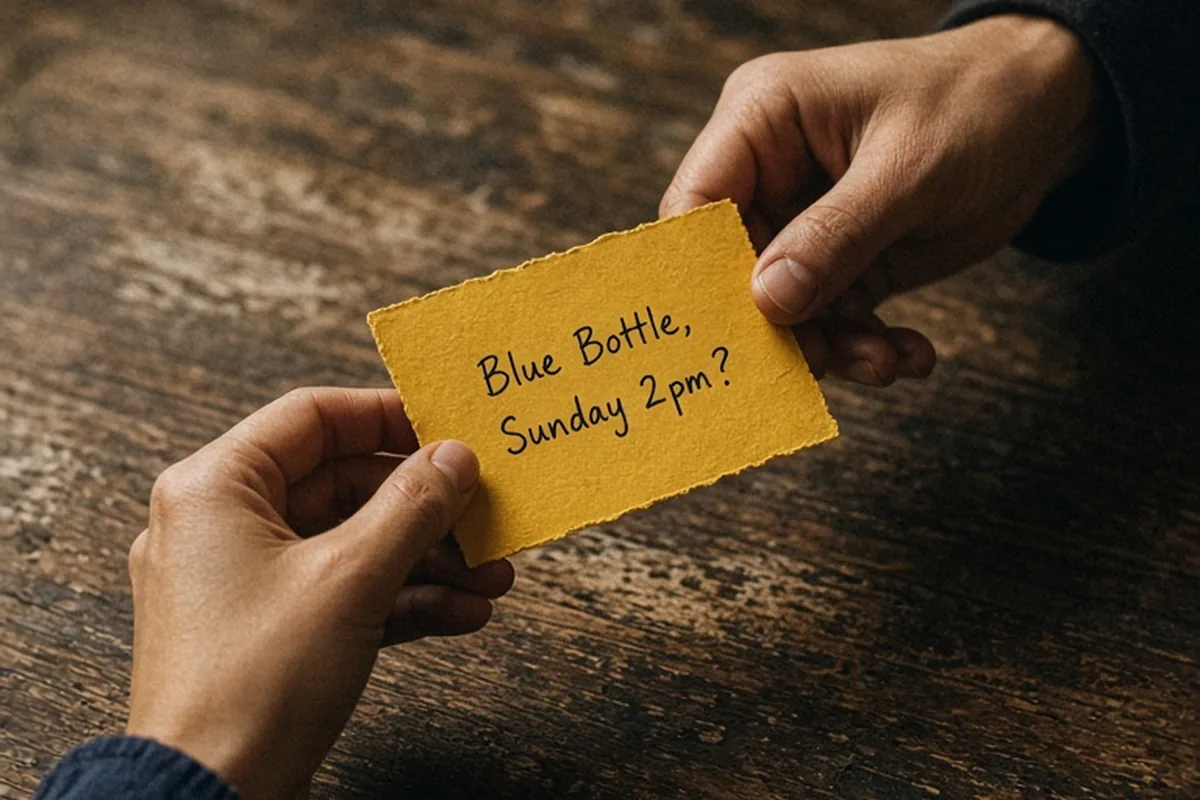
Dating apps are introduction tools, not long-term messaging platforms. In New York, leaving a conversation in the app for weeks often leads to digital fatigue and fading interest. A practical guideline is to exchange four to eight engaging messages focused on a shared interest or an engaging profile prompt, and then suggest an in-person meetup. Proposing a concrete plan—naming a specific neighborhood, day, and activity—demonstrates confidence and intentionality while reducing the cognitive burden of endless back-and-forth planning.
Keep first meetups low-stakes, public, and time-bounded. Grabbing coffee, visiting an art space, or meeting for a single drink in a lively neighborhood allows both people to assess mutual comfort, communication style, and attraction without the pressure of an expensive three-hour dinner. A low-pressure setting makes it easy for either person to extend the date if things go well, or to wrap up politely after forty-five minutes if the chemistry is not there. Always choose locations with straightforward transit access to ensure both parties feel comfortable commuting to and from the venue.
Managing Option Overload and Digital Dating Burnout
The constant influx of new profiles in high-density metropolitan areas can trigger the paradox of choice, leading users to believe an ideal match is always just one swipe away. This mindset fosters impatience and causes people to discard promising connections over minor, inconsequential quirks. Over time, continuous swiping creates emotional numbness and cynicism, causing you to show up to dates feeling drained rather than curious.
To combat app burnout, establish strict personal boundaries around digital dating. Limit active use to fifteen or twenty minutes a day, focus on having meaningful conversations with two or three matches at a time, and pause your accounts when you need a mental reset. Remember that delayed replies or sudden disconnections usually reflect the other person's busy schedule, transit stress, or app overwhelm rather than a personal evaluation of your worth. Maintaining a full, fulfilling life outside the apps keeps dating in its proper perspective as an enjoyable addition to your routine.
Practicing Direct Communication and Mutual Respect
Clarity and direct communication save time and protect emotional energy in a demanding city. If you enjoy a first date and want to see the person again, state it plainly within twenty-four hours rather than playing strategic waiting games. Conversely, if you realize after meeting that you do not see a romantic future, sending a brief, kind message thanking them for their time and wishing them well provides clean closure and respects their effort.
Clear communication also extends to physical boundaries and pacing. Mutual consent, comfort, and safety must remain central to every in-person interaction. Never interpret friendliness or casual banter as an implicit agreement for physical intimacy. Checking in naturally about personal boundaries ensures both people feel respected, setting a healthy foundation for whatever relationship dynamic develops next.
Illustrative Scenarios
Managing Borough Distance and Scheduling Friction
Marcus lived in Crown Heights, Brooklyn, while his match Elena lived on the Upper West Side of Manhattan. After matching on Hinge, Marcus noticed scheduling was becoming difficult because neither wanted to commit to an hour-long commute after a long workday. Initially, Marcus considered unmatching, assuming the geographic distance signaled an inevitable mismatch. Instead, he suggested meeting on a Saturday afternoon at a quiet coffee spot near Washington Square Park—a neutral, central location accessible by direct train lines for both of them. The meeting was relaxed, and they agreed to alternate neighborhoods for future dates.
Key point: Proposing central transit hubs and planning weekend meetups can overcome early borough-commute friction while testing mutual flexibility.
Breaking the Extended Messaging Pattern
Julian found himself stuck in week-long messaging exchanges on Bumble that rarely materialized into actual dates. He worried that asking someone out too quickly would seem overly forward, so he continued making endless small talk about work and weather until the conversations stalled. After matching with Sarah, Julian adjusted his approach. After three engaging exchanges about a mutual appreciation for live comedy, he wrote that he enjoyed their conversation and asked if she would be open to grabbing a casual drink in the East Village later that week. Sarah accepted promptly.
Key point: Suggesting a specific, casual plan within several messages demonstrates clear intent and prevents conversations from losing momentum.
Frequently asked questions
How quickly should I ask someone out after matching on an NYC dating app?
Aim to propose a low-stakes meetup after exchanging four to eight engaging messages over two to four days. This builds basic rapport while preventing the conversation from stalling into endless digital small talk.
What distance radius works best for dating apps in New York City?
A radius of two to five miles is usually ideal for balancing a large match pool with practical subway commutes. Focus more on shared direct transit lines rather than physical distance alone to keep meetups convenient.
How many dating apps should I actively manage at the same time?
Using one or two apps simultaneously is typically the most sustainable approach for avoiding digital burnout. Managing more platforms often leads to split attention, slower replies, and lower-quality interactions.
What makes a good location for a first date from an app in NYC?
Choose a public, low-pressure venue such as an independent coffee shop, casual wine bar, or public park near a major transit station. These spots allow either person to end the date comfortably after forty-five minutes or easily extend it if both are having a great time.
Your next step
Review your active dating profiles today to update one generic bio prompt with a specific local interest, tighten your geographic filters to realistic transit lines, and invite your current top match to a low-pressure coffee or drink this week.