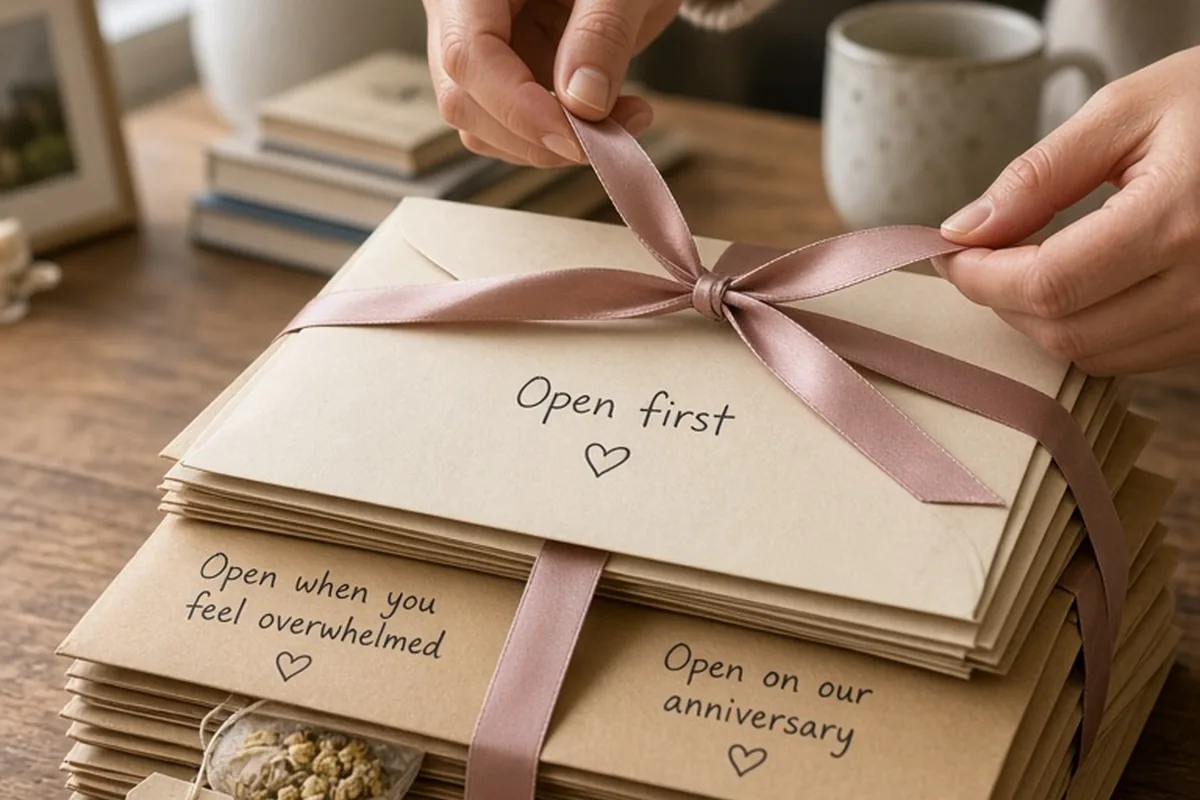
Open when letters are a collection of sealed, personalized messages labeled for specific future moments, emotions, or milestones. To create an impactful set, choose a clear theme, write honest notes tailored to anticipated situations like feeling overwhelmed or celebrating a victory, and tuck small flat tokens inside. The goal is offering comforting, timely companionship whenever the recipient opens an envelope.
Crafting a bundle of open when letters gives you a meaningful way to offer ongoing emotional support, shared memories, and encouragement across distance or routine life transitions, turning simple stationery into a long-lasting keepsake.
Foundational Prompts and Ground Rules for Everyday Moments
Every successful collection of open when letters begins with an introductory envelope labeled 'Open first.' This letter sets the expectations, explains the concept, and establishes the ground rules for the entire bundle. It is helpful to clarify guidelines gently, such as opening only one letter at a time, waiting until the specified emotion or situation actually occurs, and preserving the letters in their original envelopes so they can be revisited later. Establishing these boundaries preserves the anticipation and ensures the recipient experiences the emotional support at the exact moments it was intended to provide comfort or joy.
Beyond the initial instructional letter, everyday prompts help bridge the gap between major life events by celebrating ordinary routines. Prompts such as 'Open when you cannot sleep,' 'Open when you are having a quiet morning,' or 'Open when you need a five-minute distraction' offer lighthearted, grounding moments. In these letters, focus on warm conversational writing, short stories, or quick prompts that do not require intense emotional processing. Including simple interactive elements, such as a short crossword, a list of calming breathing techniques, or a light riddle, turns routine downtime into a tangible connection between you and the recipient.
Supportive Prompts for Difficult Emotions and Stressful Days
One of the primary benefits of open when letters is delivering comfort when you cannot be physically present during hard times. Prompts such as 'Open when you feel overwhelmed,' 'Open when you doubt yourself,' 'Open when you feel lonely,' and 'Open when you had a terrible day' address common emotional lows. When drafting these letters, prioritize validation over generic positivity. Acknowledging that bad days happen and that difficult feelings are completely normal is often far more comforting than offering unsolicited advice or urging someone to look on the bright side immediately.
Provide concrete coping anchors in these messages to help the reader regain equilibrium. You might recount a specific past obstacle the recipient overcame, reminding them of their resilience with tangible evidence. Pair this reassurance with practical grounding steps, such as suggesting they drink a glass of cold water, step outside for fresh air, or wrap themselves in a warm blanket. It is equally important to recognize the limitations of written notes: an envelope cannot replace professional help or real-time communication during a crisis, so include a gentle reminder in tough-day letters that reaching out directly is always welcomed.
Romantic Prompts for Partners and Long-Distance Relationships
Couples frequently use open when letters to navigate physical separation, deployment, busy work schedules, or milestone anniversaries. Romantic prompts work best when they focus on specific shared memories, affirmations of affection, and anticipation of future plans. Prompts like 'Open when you miss my voice,' 'Open on our anniversary,' 'Open when you need a reminder of how much I appreciate you,' and 'Open when we are counting down the days until we meet' help maintain emotional closeness regardless of physical distance.
Addressing relationship friction proactively through a letter labeled 'Open when we have had a disagreement' can also be valuable, provided it is handled with care. The purpose of this letter is not to litigate a specific argument or assign blame in advance, but to reinforce underlying commitment and mutual respect. Express that temporary disagreements do not erase your shared foundation, remind your partner of your willingness to listen, and suggest taking a short break to cool down before reconnecting. Keeping the focus on de-escalation and love helps prevent misunderstandings when emotions run high.
Encouraging Prompts for Milestones, Friends, and Students
Open when letters make adaptable gifts for friends, siblings, and students stepping into new environments like college, a new career, or a different city. In these transitional phases, prompts should highlight encouragement, celebration, and familiar humor. Consider envelopes labeled 'Open on your first day of class or work,' 'Open when you are feeling homesick,' 'Open when you accomplished a major goal,' and 'Open when you need a confidence boost before a big presentation.'
For milestone letters, emphasize shared history and personal growth. Mention inside jokes, recall humorous past mishaps that turned out fine, and remind the recipient of their strengths. If writing for a student or someone living independently for the first time, you might include simple comfort recipes, practical household tips, or words of wisdom from home. The balance of practical utility and sentimental reassurance helps alleviate the isolation that often accompanies major life transitions.
Creative Flat Keepsakes and Envelope Enclosure Ideas
Pairing your written letters with small, tactile enclosures elevates the gift and provides an immediate physical experience for the recipient. Because letters are typically stored in envelopes and often mailed, the best inclusions are lightweight, flat, and non-perishable. A well-chosen token adds depth to the message without creating bulk or damaging the paper.
Consider matching the enclosure directly to the letter prompt to enhance the theme. A letter for relaxation can include an individually wrapped chamomile tea bag or a flat sachet of dried lavender. A celebration letter might contain a small packet of confetti or a coffee gift card. For memory-focused prompts, include printed photo strips, ticket stubs from past events, or a handwritten music playlist with a scannable song code. Keeping items thin prevents envelope tears and avoids unexpected postage surcharges if you plan to ship the collection.
- Individually wrapped tea bags, single-serve drink packets, or flat dried botanicals for soothing prompts
- Printed photo prints, polaroids, or photobooth strips illustrating shared memories
- Small gift cards for coffee shops, bookstores, or digital media platforms
- Curated playlists written on cardstock or paired with a printed streaming code
- Flat paper activities such as stickers, customized word searches, or folded origami notes
Designing, Organizing, and Packaging the Complete Collection
The physical presentation of an open when bundle shapes the recipient's initial impression and protects the letters over months or years of use. Choose durable envelopes made from heavy paper or kraft stock so they endure handling and storage. Clearly write or stamp the prompt on the front of each envelope, ensuring the text is legible and distinct. You can use color-coding to categorize the letters by emotion or theme, such as blue for calming notes, yellow for celebrations, and kraft for general milestones.
When assembling the finished package, tie the collection together with sturdy twine, ribbon, or an elastic band, placing the 'Open first' letter right at the top. Alternatively, place the envelopes inside a decorative keepsake box, a wooden crate, or a fabric pouch. Including a master checklist or table of contents on a separate card allows the recipient to track which envelopes remain unopened without having to shuffle through the entire stack each time.
Pacing Your Writing and Preventing Project Burnout
Creating a set of open when letters is rewarding, but attempting to write dozens of deep, heartfelt messages in a single sitting frequently leads to writer fatigue and repetitive phrasing. A standard, thoughtful collection typically contains between 8 and 15 letters. This range provides plenty of variety for the recipient while remaining manageable for the writer to complete with care and genuine intention.
To maintain creative energy, spread the writing process over several days or weeks leading up to the gift date. Outline your chosen prompts in advance and jot down bullet points of specific memories, anecdotes, or advice for each one before drafting full paragraphs. Varying the length and format across the envelopes also helps: some letters can be multi-page reflections, while others might be short encouraging lists, funny poems, or illustrated notes. Structuring the project systematically ensures every envelope receives meaningful attention.
Frequently asked questions
How many open when letters should I include in a standard gift set?
A collection of 8 to 15 letters is ideal for most recipients. This quantity covers a healthy mix of celebratory, comforting, and everyday moments without overwhelming the creator or diluting the quality of each message.
What should I write if I struggle with expressive emotional writing?
Focus on concrete details, shared memories, and practical encouragement rather than elaborate emotional prose. Writing about a specific funny event you shared or listing five reasons you admire the person is straightforward and just as impactful.
How should I handle sensitive topics like arguments or disagreements in a letter?
Keep the message focused entirely on mutual respect, de-escalation, and reassurance of long-term commitment. Avoid trying to solve hypothetical issues or assigning blame, and instead offer a calming reminder to take a break and talk things through openly.
Can open when letters be delivered digitally?
Yes, digital open when letters can be set up using scheduled emails, password-protected cloud folders, or digital note apps labeled by scenario. While physical paper provides a tactile keepsake, digital delivery is a convenient alternative for international relationships or sudden moves.
Your next step
Select eight to twelve realistic prompts tailored to your recipient's upcoming season of life, write the foundational 'Open first' letter to set the guidelines, and draft two to three envelopes per week to create a heartfelt, long-lasting gift.