To write a meaningful love letter that avoids sounding robotic or synthetic, replace grand abstract praise with specific, sensory memories and unpolished honesty. Write in your natural conversational voice, describe small moments only the two of you share, and explain how their presence concretely impacts your daily life. Sincerity comes from distinct details, emotional vulnerability, and genuine appreciation rather than elevated vocabulary, dramatic poetry, or generic romantic cliches.
A meaningful love letter endures because it captures the quiet reality of two specific people, not an idealized romance novel. In an era where polished, computer-generated text is everywhere, authentic affection stands out when it sounds recognizably human, unvarnished, and true to your everyday voice.
Pinpoint Sensory Memories and Micro-Moments Over Abstract Praise
Generic romantic prose often relies on grand, sweeping statements such as calling someone your entire world, your soulmate, or the light of your life. While these sentiments come from a kind place, they lack texture and can easily sound like an algorithm generated them. A deeply human letter relies on micro-moments—the tiny, observable habits and shared experiences that belong solely to your relationship. Mentioning the way your partner leaves half-empty mugs near the window, how they laugh with their shoulders when surprised, or the quiet comfort of splitting breakfast on a rainy Tuesday anchors your affection in the real world.
To build these details into your draft, think about a single recent afternoon or evening that felt peaceful or joyful. Describe what you saw, heard, and felt in that moment. For example, instead of writing that you appreciate their unwavering support, describe the exact evening they sat on the kitchen floor with you while you processed difficult news, listening without trying to rush your reaction. These sensory anchors prove that you pay attention to who they are when no one else is watching, which communicates love far more effectively than elevated, theatrical vocabulary.
Match Your Natural Speaking Voice Instead of Forcing Elevated Prose
A common trap when sitting down to write a love letter is adopting a stiff, formal register that sounds nothing like your everyday speech. When people try to sound profound, they often borrow archaic sentence structures or dramatic adjectives they would never use during dinner. This sudden shift in tone makes the letter feel detached, creating an unintended emotional barrier between you and the reader.
Read your drafts aloud to catch phrases that feel foreign in your mouth. If you would never say a word like 'undying devotion' or 'resplendent beauty' in person, do not force it onto the page. Use the casual cadences, gentle humor, and specific nicknames that already define your bond. When your partner reads the letter, they should hear your distinct vocal inflection and rhythm behind every sentence. Honesty in tone reassures the reader that the vulnerability on the page is genuinely yours, not a script borrowed from someone else.
Structure Your Love Letter Around Past, Present, and Future Gratitude
A well-structured letter moves with clear emotional momentum, preventing the writing from wandering aimlessly or trailing off abruptly. A dependable framework begins with an opening anchor, moves through present appreciation, and closes with grounded anticipation. Start by naming why you are writing today—whether celebrating a milestone, reflecting after a quiet week, or simply feeling a sudden wave of gratitude that you wanted to put into tangible words.
The middle section forms the core of the letter: detail two or three concrete ways your partner enriches your daily routines and personal perspective. Explain not just what you love about them, but who you feel encouraged to be when you are around them. Conclude by looking forward to tangible shared plans, whether that is an upcoming trip, an ordinary weekend project, or navigating the next season of life together. This trajectory creates a satisfying narrative arc that feels intentional and complete without requiring overly dramatic climaxes.
Frame Vulnerability and Appreciation Across Different Relationship Stages
The emotional depth of a love letter must match the realistic landscape of your relationship. In a newer partnership, intense declarations of eternal commitment can feel overwhelming or premature. For emerging relationships, focus on curiosity, delight in discovering their quirks, and appreciation for the comfort you feel in their company. A line such as 'I love how easy it feels to talk for hours without checking the clock' honors the connection without imposing heavy emotional expectations.
In a long-term relationship or marriage, letters often require a different balance. Over years of shared routines, domestic responsibilities, and personal shifts, love letters can easily slip into logistical summaries or take deep bonds for granted. Use long-term letters to re-see your partner outside of shared chores or co-parenting roles. Acknowledge how you have watched them grow, express gratitude for their steadfast character through difficult seasons, and reaffirm your active choice to keep investing in the partnership every day.
Acknowledge Real Life and Shared Resilience Rather Than Pure Perfection
Flawless perfection is one of the easiest ways to make writing feel artificial. Real relationships involve awkward conversations, compromises, personal stresses, and quiet reconciliations. Acknowledging that your connection has weathered real-world friction adds weight and credibility to your affection. It shows that your love is rooted in reality rather than a fragile fantasy that requires everything to be seamless.
You do not need to turn a love letter into an airing of grievances, but you can tenderly honor your resilience. Phrasing like 'Even when we have had long, exhausting weeks and misunderstand each other, I am always grateful that we choose to come back to the table and listen' signals deep safety. Demonstrating that you value the messy, collaborative work of staying close makes your expressions of love feel sturdy, honest, and earned.
Choose Thoughtful Physical Presentation Over High-Tech Convenience
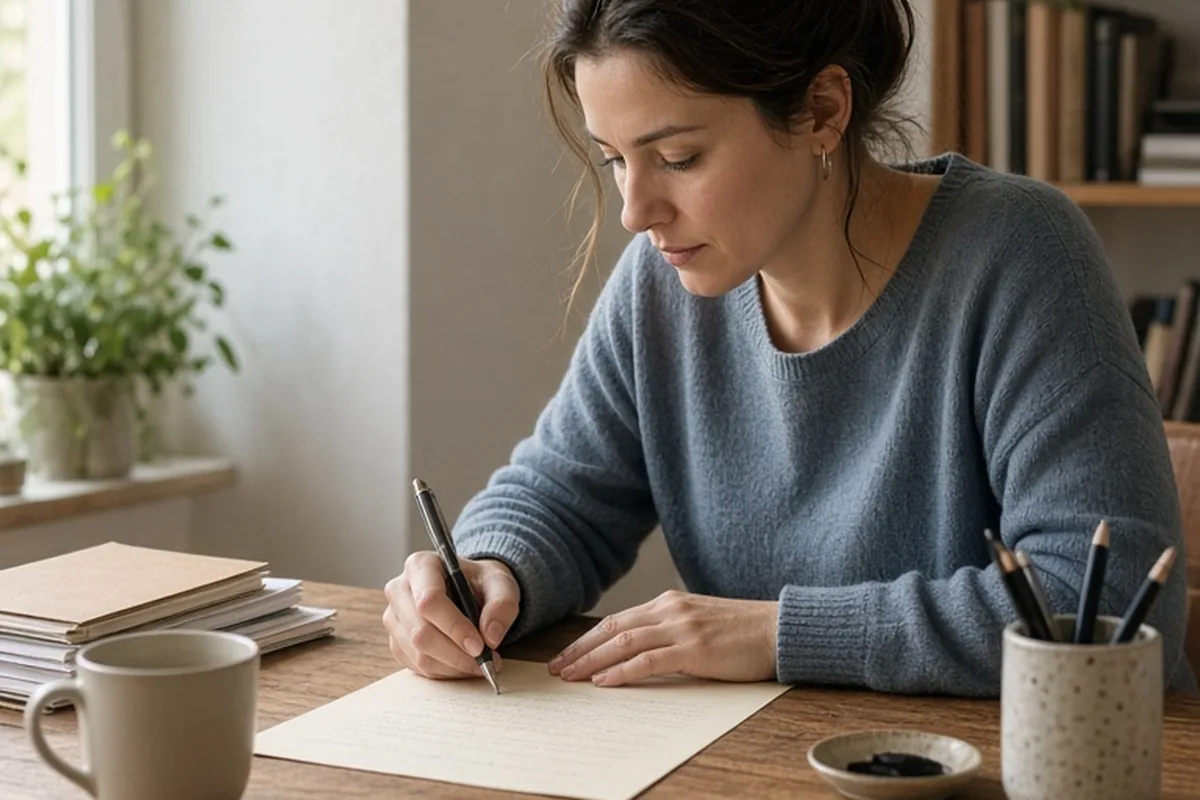
In a digital environment dominated by fast text messages and notifications, the physical medium of a letter carries significant emotional weight. Writing by hand on simple, quality paper immediately signals that you invested focused, unhurried time. Even if your handwriting is uneven, those personal markings—crossed-out words, slight margins, the pressure of the pen—are human signatures that a digital screen cannot replicate.
If physical handwriting presents accessibility challenges, typing and printing the letter with a personalized signature and a handwritten note at the bottom provides a thoughtful alternative. Decide on a delivery method that suits your partner's comfort level. Leaving it on their bedside table, tucking it into their travel bag, or handing it to them during a quiet moment lets them process your words at their own pace without feeling pressured to deliver an immediate, performative reaction.
Illustrative Scenarios
Moving Past Stilted Phrasing in a Long-Term Marriage
Marcus wanted to write his spouse an anniversary letter but struggled to find the right words. He initially drafted high-sounding sentences about eternal destiny and cosmic luck, but reading them made him cringe because they sounded like a greeting card. Marcus set aside his draft and instead wrote about a cold morning last November when his spouse quietly scraped his car windshield before work without mentioning it. He detailed how that quiet act of consideration made him feel seen and cared for throughout a stressful week.
Key point: Replacing grand, generic declarations with specific examples of quiet thoughtfulness creates immediate emotional intimacy that sounds authentic.
Calibrating the Tone for an Emerging Relationship
Priya was dating someone for four months and wanted to express her growing feelings for his birthday without coming across as overly intense. Her first draft contained heavy statements about the future that felt too heavy for their stage. Priya revised the note to highlight specific things she enjoyed: his quick humor during a delayed train ride, his kindness to restaurant staff, and how grounded she felt around him. The resulting note was warm, genuine, and matched their current connection perfectly.
Key point: Aligning your letter's depth with your relationship's actual stage honors the bond without creating unnecessary pressure or synthetic sentiment.
Frequently asked questions
What if my handwriting is messy or hard to read?
Take your time and write slightly larger and slower than usual to improve legibility. Neatness matters far less than sincerity, and slight imperfections make the letter uniquely yours. If readability is a serious concern, typing the body and adding a handwritten personal greeting and closing is a practical and thoughtful compromise.
How long should a meaningful love letter be?
A powerful letter can be anywhere from a single substantive page to three or four paragraphs. Focus on clarity and emotional resonance rather than filling pages for the sake of length. A concise note packed with genuine, concrete memories often leaves a stronger impression than several pages of rambling, repetitive text.
Can I use digital drafting tools to brainstorm ideas?
Drafting on a computer or phone can help you organize your thoughts and edit sentences easily. However, avoid asking automated tools to write the core content for you, as their suggestions tend to rely on standard romantic tropes. Use your digital draft simply as a private scratchpad before committing your own thoughts to paper.
What should I do if expressing my emotions on paper feels intimidating?
Start small by focusing entirely on gratitude for everyday actions rather than trying to sum up your entire emotional universe. Write down three specific things your partner did this week that made you smile or feel supported. Building your letter around clear, observable facts lowers the pressure and makes vulnerability feel natural.
Your next step
Choose one specific, quiet memory from the past month, grab a piece of paper, and write three unvarnished sentences describing why that moment made you grateful for your partner.