Overcoming challenges as a single mom involves building structured daily routines, establishing reliable local support systems, and setting realistic emotional boundaries. Practical relief comes from simplifying weekly logistics, utilizing community childcare exchanges, communicating clearly with co-parents or relatives, and letting go of perfectionist standards. Instead of attempting to handle every responsibility in isolation, sustainable solo parenting relies on deliberate delegation, predictable financial tracking, and protecting small pockets of personal rest without guilt.
Solo parenting demands an enormous cognitive and emotional investment, as the responsibilities of income generation, household management, emotional nurturing, and logistics fall squarely on one person. Navigating this reality requires practical systems rather than idealistic advice, focusing on sustainable daily habits that preserve your energy and protect your family's stability.
Managing the Mental Load and Daily Schedule as a Solo Parent
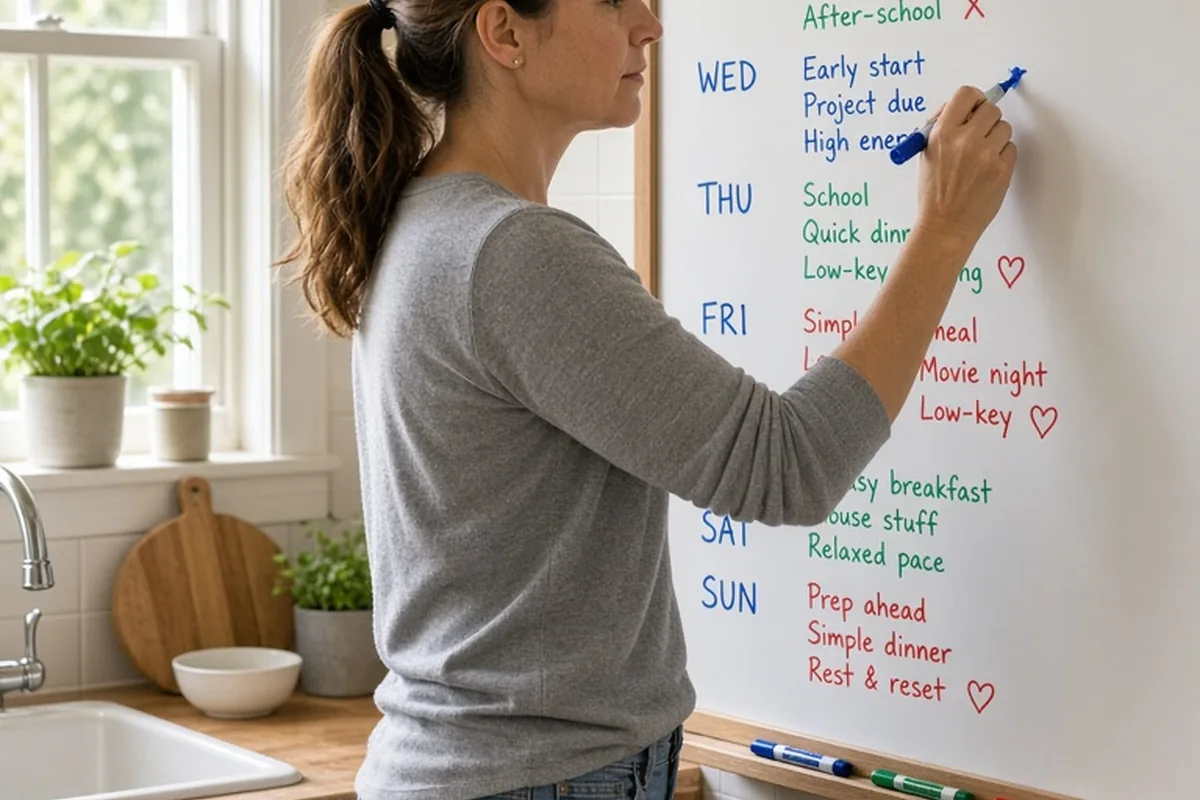
The cognitive burden of solo parenting often exhausts mothers before physical tasks even begin. When you are the only adult tracking doctor appointments, school spirit days, meal planning, and home repairs, decision fatigue sets in quickly. Managing this load requires externalizing your memory. Relying on shared digital calendars, kitchen whiteboards, or simple paper checklists removes the pressure of holding dozens of moving parts in your head simultaneously. Dedicate ten minutes each Sunday to mapping out the upcoming week, noting which days demand high energy and which days allow for simpler meals and low-key evenings.
Routines provide crucial scaffolding for children while significantly reducing the number of instructions you must give each day. Establish visual morning and bedtime sequences that allow kids to take ownership of getting dressed, packing backpacks, or brushing teeth without direct oversight for every step. When unexpected delays arise—such as a spilled drink or a missing shoe—having an established five-minute buffer built into departure times prevents ordinary friction from escalating into full household chaos. Automate repetitive decisions wherever possible, such as repeating weekly dinner themes or rotating a standard set of school snacks, so your mental energy remains available for parenting moments that actually require your presence.
Building a Reliable Community Support Network Beyond Family
A common struggle for single mothers is the assumption that asking for assistance signals inadequacy or places an unfair burden on others. In reality, modern parenting was never meant to occur in complete isolation. If you do not have close, dependable relatives nearby, cultivating a chosen community is essential. Start by observing parents at your child's school, sports activities, or neighborhood parks who share similar schedules or values. Building these ties does not require deep emotional disclosures right away; it begins with small, practical exchanges of mutual support.
Consider establishing reciprocal arrangements that offer equal value to both households. For example, you might offer to pick up a neighbor's child from school on Tuesdays and Thursdays in exchange for them watching your child on Wednesday evenings so you can run errands or work late. Look into local community centers, single-parent support circles, faith-based groups, or cooperative childcare exchanges where parents rotate supervision. When asking for help, be specific about what you need—whether it is a ride home from soccer practice or an emergency contact for school forms—so the other person knows exactly how to support you without feeling overwhelmed by an open-ended request.
Navigating Financial Realities and Unplanned Household Expenses
Managing household finances on a single income creates persistent pressure, particularly when unexpected costs arise like car maintenance, medical co-pays, or sudden school fees. Rather than avoiding financial reviews out of stress, establishing a clear, factual baseline provides a sense of control. Track fixed monthly obligations such as rent or mortgage, utilities, and debt payments, and separate them clearly from variable costs like groceries, clothing, and entertainment. Having a transparent view of cash flow helps you identify which expenses can be paused during tighter months without compromising core necessities.
Building even a small reserve fund offers immense psychological relief, even if contributions begin at modest amounts each pay period. To ease day-to-day strain, take advantage of community resources designed to lighten household budgets, including local clothing swaps, library tool and toy lending programs, and seasonal municipal recreation scholarships. If child support or alimony is part of your financial arrangement, treat those payments with appropriate caution; whenever possible, build your baseline survival budget around dependable income and direct sporadic support payments toward emergency reserves, debt reduction, or future needs rather than everyday operating costs.
Handling Co-Parenting Boundaries and Inconsistent Support
Interactions with a former partner can introduce substantial stress, especially when parenting styles clash or agreements are inconsistently honored. The most protective strategy in high-conflict or unreliable situations is parallel parenting, where you focus strictly on maintaining a healthy, structured environment in your own home rather than attempting to control what happens under the other parent's roof. Establish firm communication boundaries by shifting non-emergency discussions to written channels, such as email or dedicated co-parenting applications. This creates a factual record, reduces emotional escalation, and gives you time to respond thoughtfully rather than reacting in the heat of the moment.
When dealing with an absent, inconsistent, or emotionally volatile co-parent, clarity protects your children more than making excuses on the other adult's behalf. If visits are canceled or promises are broken, validate your child's disappointment without launching into adult grievances or personal attacks. Frame answers around factual observations and reassurance of your own consistency: 'I know you were looking forward to going to the park today, and it is completely okay to feel sad that plans changed. I am here, and we will figure out an afternoon activity together.' Your steady presence serves as the primary anchor for their sense of safety.
Protecting Personal Energy and Countering Single Mother Guilt
Single mothers frequently carry a persistent sense of guilt, believing their children are missing out because there is only one parent in the home or because working hours limit free time. This guilt often leads to overcompensating—trying to be the breadwinner, the playful companion, the strict disciplinarian, and the homemaker all at once. It is vital to recognize that children do not require constant entertainment or a flawless domestic setting to thrive. What they require is an emotionally regulated, attuned parent who feels reasonably secure and rested.
Redefine self-care away from expensive, time-consuming activities that feel unrealistic for a solo schedule. Instead, integrate restorative micro-moments into your day: drinking a morning beverage in quiet before waking the household, taking a ten-minute walk after work, or reading a book for pleasure after bedtime rather than tackling non-urgent chores. Releasing unrealistic domestic standards—such as accepting simpler meals or letting laundry sit folded in baskets—preserves valuable patience. When you care for your own nervous system, you model healthy self-respect and boundaries for your children.
Supporting Children Through Emotional Reactions to Family Dynamics
Children raised in single-parent homes may naturally express curiosity, grief, or frustration regarding their family structure as they observe peers with two-parent households. These questions often surface during school events, holidays, or casual conversations. When your child asks why their situation is different, avoid defensive or overly complicated explanations. Provide simple, developmentally appropriate honesty: 'Every family is put together differently. Some have two parents in one house, some have two parents in different houses, and some have one mom who loves them deeply, like ours.'
Watch for non-verbal signs of emotional distress, such as sudden behavioral regression, increased clinginess, or uncharacteristic withdrawal at school. Instead of treating these behaviors purely as discipline issues, treat them as signals that your child needs extra connection. Creating predictable one-on-one rituals—even just fifteen minutes of undivided attention before bed where your phone is put away—reinforces stability. Remind your child regularly that adult decisions, separations, or schedule changes are never their responsibility or fault.
Illustrative Scenarios
Resolving Burnout Through a Childcare Exchange
Rachel, a composite illustration of a solo mother balancing full-time work with parenting an elementary schooler, felt perpetually drained by dinner-time exhaustion. She initially believed that asking fellow parents for help would make her look like she could not handle her responsibilities. After a conversation with another mother at after-school pickup who faced similar scheduling crunches, Rachel proposed a trial swap: she would watch both children every second Saturday morning, while the other mother hosted weekday afternoon homework sessions. The predictable three-hour window gave Rachel time to run errands and rest without falling behind.
Key point: Support networks grow out of practical reciprocity; offering a structured, mutually beneficial trade builds reliable community without placing one-sided pressure on either household.
Establishing Boundaries with an Unpredictable Co-Parent
Carmen, an illustrative composite of a divorced mother, spent months in distress over last-minute schedule changes and critical text messages from her ex-spouse. Each exchange left her anxious and distracted during evenings with her toddler. Carmen decided to shift all logistical communication to a written parenting application, turning off non-urgent phone notifications after 7:00 PM. When the co-parent canceled scheduled weekend visits, she stopped arguing and simply maintained a calm, predictable alternate routine at home, keeping her responses concise, polite, and strictly focused on logistics.
Key point: Removing emotional reactivity from co-parenting communications preserves your mental peace and prevents adult conflict from spilling over into your children's daily environment.
Frequently asked questions
How can a single mother manage sudden emergencies without nearby relatives?
Develop a written contingency plan well before an emergency occurs by identifying at least two trusted neighbors, school parents, or local friends willing to serve as backup contacts. Share emergency authorizations with your child's school or healthcare provider in advance, and keep an easily accessible folder with essential contacts, medical information, and house keys clearly organized.
What is the best way to handle severe burnout when free time feels impossible to find?
Focus on lowering non-essential household standards rather than trying to manufacture extra hours. Simplify meals to basic staples, allow screen time deliberately while you rest, and protect short five- to ten-minute pauses throughout the day rather than waiting for an elusive full free evening.
How should I respond if my child blames me for their other parent's absence?
Acknowledge the pain behind the blame without taking on personal guilt or speaking harshly about the other parent. You can say, 'I know it hurts that they are not here, and it makes sense that you feel angry; I am here with you, and my love for you is not going anywhere.'
Can children thrive equally well in a single-parent household?
Yes. Children thrive based on the emotional security, consistency, warmth, and stability provided by their primary caregiver rather than the sheer number of adults living in the home. A peaceful, predictable single-parent home offers a healthy environment where children can develop resilience and strong attachments.
Your next step
Select one logistical task causing you daily stress this week—such as weekday meal planning or morning departures—and write down a simplified, three-step routine to test over the next five days.