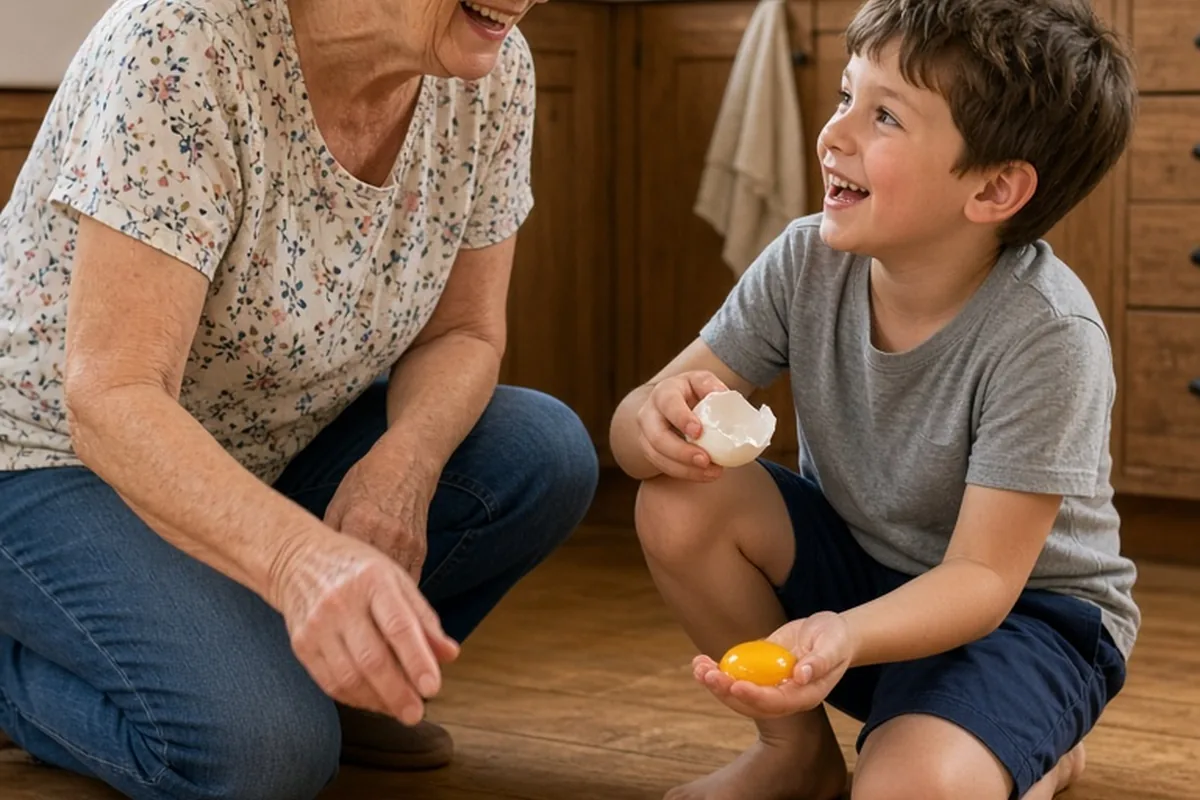
Being a grandparent is often far more enjoyable than being a parent because the relentless burdens of daily survival, disciplinary enforcement, and logistical micromanagement shift back to the parents. Grandparents get to focus almost exclusively on connection, presence, and play. With mature patience, financial stability, and the freedom to return home to rest, you experience the absolute best moments of childhood without carrying the exhausting twenty-four-hour responsibility.
Stepping across the threshold into grandparenthood often feels like entering an entirely different emotional landscape, even though the children running across the room carry your family resemblance.
Stepping Off the Relentless Carousel of Daily Logistics and Discipline
Parenting is dominated by structural necessities that leave very little room for unhurried observation. When you raise your own children, everyday life often resembles an unrelenting operational schedule: organizing pediatrician checkups, tracking vaccination dates, washing mountains of laundry, enforcing bedtimes, and making sure homework gets finished before morning carpool. This constant mental load naturally forces parents into the role of taskmaster. You must repeatedly say no, manage temper tantrums over vegetable consumption, regulate screen time, and monitor the family budget while operating on fragmented sleep. The sheer volume of logistical maintenance can easily drown out the spontaneous delight of watching a child grow up in real time.
As a grandparent, that operational burden largely vanishes. You are not responsible for the long-term character formation that requires grueling, consistent boundary enforcement week after week. If a toddler spills water on your kitchen floor, it does not represent an ongoing behavioral crisis or a personal parenting failure; it is simply a momentary spill to wipe up with a rag before continuing your game. You can look at childish messiness, stubbornness, or loud laughter with amusement rather than the exhaustion of someone who has managed twelve consecutive hours of domestic pressure. The freedom from having to police every single mistake transforms routine interactions into lighthearted, affectionate moments.
Experiencing Grandparent Play Without an Eye on the Kitchen Clock
When young parents sit on the rug to play blocks or assemble puzzles, a persistent internal voice usually tallies the chores left undone. They think about the dinner simmering on the stove, unread work emails piling up on their phone, or the basket of dry clothes waiting to be folded before bed. This constant divided attention makes pure immersion difficult, even when parents genuinely adore their children. The mental clock never stops ticking, creating subtle feelings of restlessness or guilt during extended floor play.
Grandparents, by contrast, possess the luxury of unbroken presence. When you spend an afternoon with a grandchild, the rest of your life can easily wait. You can spend forty-five minutes carefully inspecting a caterpillar crawling across a driveway or building an elaborate cardboard castle without checking your watch every three minutes. Grandchildren immediately sense this undivided focus. Because you are not mentally multi-tasking your career or domestic duties, you get to inhabit their imaginary worlds completely, rediscovering the whimsical details of early childhood that passed by in a blur when you were busy surviving your own thirties and forties.
Enjoying the Sweetness of Indulgence Within Sensible Boundaries
Parents carry the weighty mandate of teaching delay of gratification, nutritional balance, and budget consciousness. They have to serve broccoli, restrict treats, and ensure teeth are brushed for two full minutes twice a day. Grandparents, however, operate in a cultural zone where reasonable pampering is welcome. While it remains vital to honor the parents' baseline dietary rules and core household standards, grandparents have room to offer unexpected treats, take mid-afternoon ice cream trips, or purchase that specific illustrated book the child has been eyeing in the bookstore window.
The pleasure of this indulgence is not about buying affection; it is about creating distinct, sparkling memories that stand apart from the ordinary domestic routine. Grandchildren learn that visiting your home means warmth, special rituals, and relaxed rules around minor conveniences, such as staying up an extra twenty minutes to finish a chapter or having pancakes shaped like animal faces on a Tuesday morning. Because you are not maintaining that leniency seven days a week, it does not spoil the child or undermine their core development. Instead, it creates an enduring emotional oasis where childhood feels inherently celebratory and sweet.
Gaining the Deep Perspective That Mellows Worry and Deepens Patience
First-time and even second-time parents live under intense anxiety that every developmental bump might derail their child's future. When a toddler bites, falls behind on potty training, or struggles with reading fluency in first grade, parents easily spiral into worry, questioning their competence and wondering if they are falling short. This anxiety creates an underlying tension that colors everyday interactions, making even minor developmental regressions feel like urgent emergencies that require immediate intervention.
Having already raised children to adulthood gives grandparents the invaluable gift of hindsight. You know from lived observation that messy phases, picky eating, awkward adolescent stages, and temporary academic dips almost always resolve with time and steady support. This knowledge gives you a relaxed, calming demeanor that soothes both the child and their anxious parents. You do not panic when a grandchild acts out or falls apart after a long day; you understand that fatigue and emotional overload are normal human experiences, allowing you to respond with steady kindness rather than reactive irritation.
Serving as a Safe Confidant and Gentle Family Anchor
As children grow into preteens and teenagers, the psychological tension between asserting autonomy and relying on parental authority often creates friction. Adolescents frequently guard their thoughts from parents out of fear of criticism, lectures, or loss of privileges. Even in loving homes, young people sometimes hesitate to reveal their social anxieties, school struggles, or secret aspirations to the people who hold the car keys and manage their curfews.
Grandparents often occupy an ideal neutral zone during these transitional years. Because you are not the primary enforcer of grades and conduct, grandchildren can confide in you with much lower emotional stakes. You can listen to their dilemmas without immediately offering unsolicited advice, administering punishments, or expressing disappointment. Serving as a steady, judgment-free sounding board allows you to build an authentic, deeply trusting relationship. Being sought out for comfort, conversation, or quiet companionship by a growing young person is one of the most rewarding relational milestones adulthood can offer.
Navigating Parental House Rules While Keeping the Experience Joyful
The unique fun of grandparenting depends entirely on maintaining a cooperative, respectful alliance with the child's parents. When grandparents dismiss parental boundaries regarding safety, screen exposure, or bedtime as silly or overly modern, tension quickly builds. That friction can reduce visits and turn what should be joyful family gatherings into stressful negotiations. The most satisfying grandparenting occurs when you recognize that the parents are the ultimate captains of the ship, and your supportive role is what grants you the freedom to have fun without friction.
A practical approach is to establish clear communication about which household rules are non-negotiable and where parents are comfortable granting you flexibility. For example, you might ask directly: 'I want to take Leo for frozen yogurt this afternoon; does that work with your dinner plans, or should we do a park trip instead?' By proactively respecting the parents' authority, you build deep trust. When parents know you will not deliberately undermine their routines or give contradictory directions, they enthusiastically encourage longer, more frequent visits, allowing you to maximize quality time with your grandchildren without residual guilt or family drama.
The Undeniable Gift of Returning to a Quiet, Restful Home
Perhaps the single most practical reason grandparenting feels so much easier and more enjoyable than parenting is the definitive conclusion of each visit. When you raise your own children, exhaustion has nowhere to go; even when you are sick, overwhelmed, or desperately needing solitude, you must keep cooking meals, supervising bath time, and waking up in the middle of the night. There is no off-switch for parenting during the active years of childrearing.
As a grandparent, you can pour all of your enthusiasm, energy, and love into an eight-hour afternoon or a lively weekend sleepover, knowing that an orderly, silent house awaits you on the other side. When the toys are packed away and the parents arrive to take over, you can step back, brew a cup of tea, and sleep through the night uninterrupted. This natural rhythm preserves your physical stamina and emotional generosity, ensuring that each visit begins with genuine excitement rather than accumulated depletion.
Illustrative Scenarios
Finding Freedom from the Perfectionist Trap
Marianne spent her parenting years in a perpetual state of quiet panic, worried that every untidy corner or missed reading goal reflected poorly on her mothering. When her seven-year-old grandson spent the weekend at her house, he accidentally dropped an entire carton of eggs on the linoleum while trying to help make muffins. Marianne's initial instinct was the familiar jolt of frustration she remembered from her thirties. Instead of scolding, she paused, laughed, and invited him to inspect the yolks before they cleaned it up together. They turned a messy kitchen accident into an impromptu science conversation about egg shells.
Key point: Without the exhausting pressure to prove your competence as a primary educator, ordinary domestic mishaps become harmless opportunities for shared laughter and warmth.
Respecting Routine to Protect Quality Time
Arthur loved taking his four-year-old granddaughter for surprise weekend outings, but he initially resented his daughter-in-law's strict adherence to a 1:00 PM nap schedule, viewing it as rigid helicopter parenting. After an outing where an overdue nap led to an hour of inconsolable meltdowns at the zoo, Arthur realized that honoring the schedule protected everyone's happiness. He adjusted future visits to morning park adventures that concluded comfortably before noon. His daughter-in-law felt heard and supported, and she immediately began inviting Arthur over for weekday dinners.
Key point: Cooperating with the parents' essential routines eliminates unnecessary tension and ensures that visits remain positive for both the child and the extended family.
Frequently asked questions
Is it normal to feel closer to your grandchildren than you felt to your own children at that age?
Yes, this is a very common emotional experience that does not reflect a lack of love for your own children. When you were raising your own kids, chronic fatigue and constant logistical responsibility occupied a huge portion of your emotional energy. Grandparenthood strips away those operational stressors, leaving you free to experience an unhurried, pure emotional connection that was simply harder to access amid the demands of young parenthood.
How can I spoil my grandchild without angering their parents?
Focus on spoiling them with attention, shared adventures, and special experiences rather than material goods or broken house rules. Spend an extra hour building a fort, reading three consecutive library books, or working on a craft project together. If you want to offer treats or gifts, ask the parents beforehand what fits their current household standards so your generosity never feels like an intentional subversion of their parenting.
What should I do if my grandchild's parents have very different parenting styles than I had?
Approach their parenting decisions with curious respect rather than comparison or unsolicited advice. Childrearing standards and cultural norms evolve across generations, and modern parents face distinct social pressures. Unless a child's safety is directly compromised, the most helpful stance is to validate the parents' dedication and follow their lead inside their family unit, which keeps the door wide open for strong, harmonious relationships.
Your next step
Pick one specific ritual you can introduce during your next visit, such as baking a simple recipe together or reading a dedicated chapter book, and check in briefly with the parents beforehand to confirm it fits smoothly into their schedule.