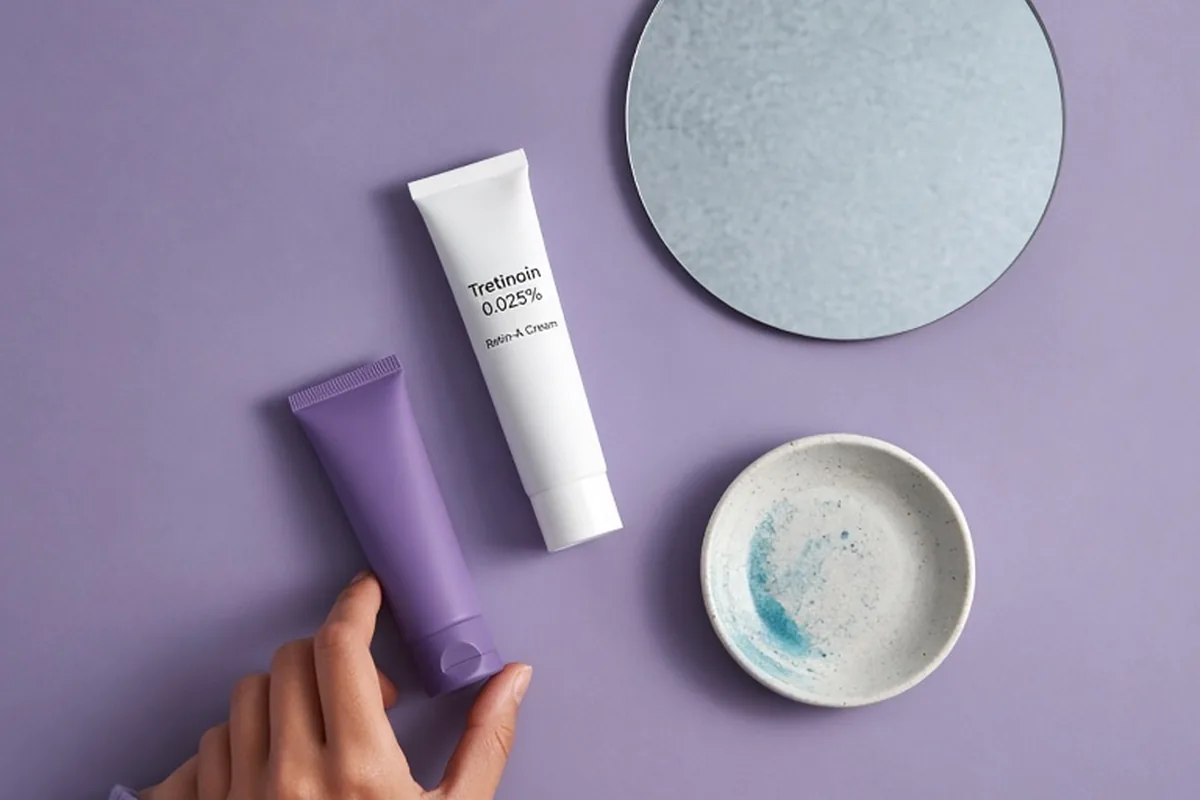
Retinol and tretinoin are both vitamin A derivatives that encourage skin cell renewal, but they differ fundamentally in strength and access. Retinol is available over the counter and requires enzymatic conversion by your skin cells into active retinoic acid, making it milder and slower to show results. Tretinoin is pure retinoic acid, requiring a prescription in most regions. Because tretinoin is directly active upon application, it produces faster, more pronounced changes for acne and photoaging but carries a higher risk of irritation, flaking, and dryness.
Navigating topical vitamin A options often comes down to balancing visible skin goals with everyday skin tolerance. While both ingredients belong to the broader retinoid family, understanding their biological conversion pathway, expected adjustment period, and practical routine requirements helps you select the right formulation without unnecessary barrier distress.
How Retinol and Tretinoin Work in the Skin
Both retinol and tretinoin function by signaling skin cells to accelerate turnover and normalize shedding inside pores. However, the human body cannot use topical retinol directly in its applied state. Once absorbed into the epidermis, retinol must undergo a two-step oxidative conversion process. Specialized enzymes first convert retinol into retinaldehyde, which is subsequently converted into retinoic acid. Because each enzymatic conversion stage experiences biological loss and variation based on individual skin chemistry, the final concentration of active retinoic acid reaching cellular receptors remains relatively low. This metabolic delay buffers the skin, yielding a gentler experience with gradual improvements in surface texture, tone, and fine lines over an extended period.
Tretinoin bypasses this internal conversion sequence entirely because it is already formulated as bioavailable retinoic acid. When you apply tretinoin, the molecule immediately binds to retinoic acid receptors in the cell nucleus, initiating rapid cellular transcription. This direct biological pathway explains why dermatologists frequently prescribe tretinoin for persistent inflammatory acne, comedones, and moderate to severe photoaging. The immediate cellular communication accelerates desquamation and dermal matrix support far more vigorously than over-the-counter retinol. At the same time, this unmediated potency demands careful management, as the rapid surge in cell turnover can overwhelm the skin barrier if introduced without proper buffering and gradual frequency adjustments.
Further reading: American Academy of Dermatology: Acne
Potency, Formulation Types, and Accessibility
The practical distinction between these two retinoids extends to how they are formulated, packaged, and acquired. Over-the-counter retinol products exist within a diverse cosmetic marketplace. Cosmetic manufacturers formulate retinol in hydrating creams, oil-based serums, lightweight emulsions, and encapsulated release vehicles. Encapsulation techniques suspend the molecule in lipid micro-spheres, shielding it from rapid oxidation while facilitating a slow, sustained release into the skin. Over-the-counter shoppers can choose rich moisturizers suited for dry complexions or fluid serums suited for oilier skin types, making retinol widely accessible without medical consultations.
Tretinoin formulations are regulated pharmaceutical preparations manufactured primarily in cream, gel, or micro-sponge vehicle systems. Pharmaceutical creams are commonly prescribed for dry or mature skin, whereas alcohol-based or aqueous gels are favored for oily or congestion-prone complexions. Micro-sponge vehicles disperse the active ingredient gradually across hours to reduce peak irritation. Obtaining tretinoin typically requires an evaluation from a board-certified dermatologist, general physician, or licensed healthcare professional who assesses skin conditions, medical history, and concurrent treatments before prescribing a suitable strength and vehicle base.
Further reading: American Academy of Dermatology: Acne
Comparing Retinol and Tretinoin for Acne Management
When managing acne, the primary objective is to clear microcomedones before they develop into visible whiteheads, blackheads, or inflammatory papules. Tretinoin represents a cornerstone of medical acne therapy because its direct binding activity swiftly normalizes hyperkeratinization within follicular infundibula. By preventing dead skin cells from sticking together inside the sebaceous gland opening, tretinoin clears existing plugs and prevents new blemishes from taking root. According to dermatologist-reviewed acne guidance, professional topical therapies like prescription retinoids help manage both non-inflammatory congestion and inflammatory breakouts while improving post-blemish discoloration.
Over-the-counter retinol can still provide meaningful assistance for mild, occasional breakouts or general skin congestion, particularly for individuals who find prescription strengths excessively drying. However, because retinol requires conversion, it acts at a slower pace and may not provide sufficient biological signaling to overcome severe inflammatory acne, cystic lesions, or deep nodular eruptions. Individuals struggling with stubborn, widespread, or scarring acne benefit from a medical consultation where a clinician can evaluate whether tretinoin, potentially paired with complementary topical or oral therapies, is appropriate.
Further reading: American Academy of Dermatology: Acne
Managing Retinization, Dryness, and Barrier Distress
Starting either retinoid prompts an initial adaptation phase known as retinization. During this introductory window, the sudden acceleration of cellular renewal can outpace the skin barrier's ability to produce necessary intercellular lipids, such as ceramides, cholesterol, and fatty acids. The outward symptoms of retinization include localized peeling, diffuse erythema, stinging upon applying gentle moisturizers, and a tight, uncomfortable sensation. These symptoms tend to be considerably milder with over-the-counter retinol, whereas tretinoin frequently produces a noticeable retinization response during the early weeks of regular use.
Navigating retinization successfully depends on pacing and supportive skincare habits. Applying a pea-sized amount to clean, fully dry skin minimizes excess penetration that occurs when the epidermal barrier is damp. Implementing a buffering technique—such as applying a layer of ceramide-rich moisturizer before or mixed with your retinoid—slows absorption and softens the impact on delicate tissue. If moderate peeling, stinging, or redness develops, spacing applications further apart allows the lipid barrier time to recover while cellular receptors adapt. Aggressive physical scrubs, astringent toners, and concurrent exfoliating acids should be paused entirely during this initial conditioning period.
Building a Safe Routine Around Sun Protection and Active Ingredients
Because retinoids accelerate the turnover of the stratum corneum and thin out the outermost layer of dead cells, newly exposed skin is particularly vulnerable to ultraviolet radiation. Applying broad-spectrum sunscreen with adequate daily coverage is an essential component of any retinoid routine. Retinoids themselves are photolabile, meaning exposure to sunlight destabilizes their molecular structure and degrades their effectiveness, which is why dermatologists universally recommend applying both retinol and tretinoin during evening routines only.
Combining multiple active skincare ingredients requires strategic timing to prevent severe barrier compromise. Potent direct acids such as glycolic acid, salicylic acid, and high-strength L-ascorbic acid can heighten irritation when layered directly with topical retinoids. A practical strategy involves separating these ingredients by time of day or alternating nights. For example, antioxidant serums such as vitamin C derivatives work well during morning routines under sunscreen, while retinoids remain reserved for evening application. Calming ingredients like niacinamide, panthenol, and hyaluronic acid can be applied alongside retinoids to soothe the skin and maintain hydration.
Decision Guide: Matching Your Skin Type and Goals to the Right Option
Choosing between retinol and tretinoin depends on your specific skin concerns, baseline barrier resilience, budget, and access to medical care. Retinol represents the ideal starting path for individuals with sensitive skin, rosacea-prone complexions, or those seeking preventative age management and gentle texture refinement. It allows first-time retinoid users to cultivate skin tolerance without significant disruption to their daily routine, while offering wide availability across various cosmetic price points and moisturizing bases.
Tretinoin is best suited for individuals dealing with persistent acne, deep comedonal congestion, pronounced sun damage, or advanced signs of photoaging who have not achieved their desired outcomes with over-the-counter formulations. It is also an appropriate progression for experienced retinol users whose skin has fully adapted and who now seek more robust, clinically documented outcomes. Before starting tretinoin, verify health insurance coverage or local prescription fulfillment costs, and confirm that you are not pregnant, planning to become pregnant, or nursing, as topical retinoids are contraindicated during pregnancy.
Further reading: American Academy of Dermatology: Acne
Frequently asked questions
Can I switch directly from over-the-counter retinol to prescription tretinoin?
Yes, you can transition from retinol to tretinoin under the guidance of a prescribing clinician. However, even if your skin tolerates retinol daily, tretinoin is significantly stronger, so you should start with lower application frequency to allow your skin barrier to adapt without excessive flaking.
How long does it take to see visible results from each ingredient?
Tretinoin generally demonstrates noticeable changes in acne congestion and skin smoothing within several months of consistent use. Over-the-counter retinol works at a more gradual pace, often requiring several additional months of nightly application to produce visible improvements in tone and fine lines.
Is it safe to use retinol or tretinoin around the delicate eye area?
The skin surrounding the orbital bone is considerably thinner and more prone to irritation and dryness. While some over-the-counter retinol eye creams are formulated specifically for this sensitive zone, full-strength tretinoin should generally be kept away from the immediate eyelid and under-eye area unless expressly instructed by your clinician.
What should I do if my skin begins burning or peeling excessively?
Pause your retinoid application immediately and simplify your routine to a gentle, non-foaming cleanser and a barrier-repair moisturizer containing ceramides. Once your skin feels calm and no longer stings upon moisturizer contact, reintroduce the retinoid with a buffering layer and reduced weekly frequency.
Your next step
Assess your current barrier tolerance and primary skin objective, then schedule a consultation with a healthcare provider if you have inflammatory acne, or begin with a buffered over-the-counter retinol if your primary focus is gentle texture refinement.