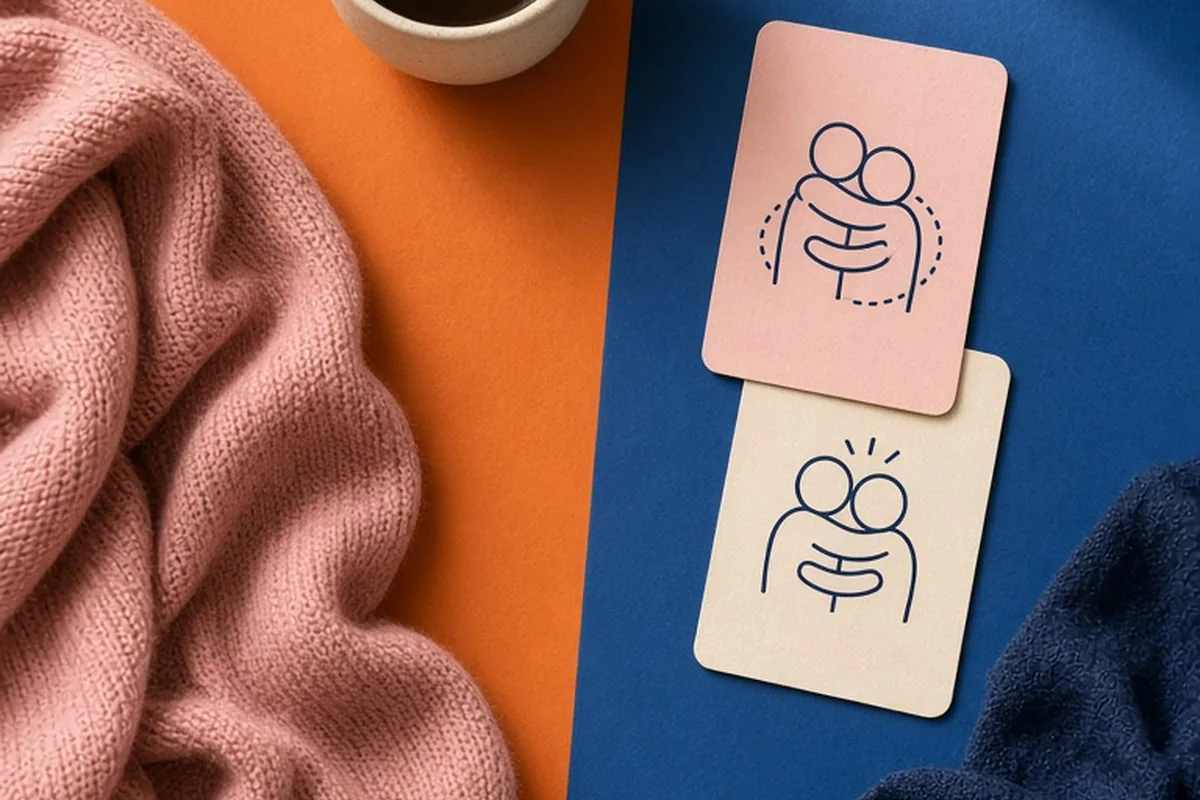
A romantic hug tends to last longer, involves closer body contact, and often includes lingering touch or a gentle hold at the waist or back. A friendly hug is usually brief, chest-forward, and ends cleanly. Neither type is a guarantee of deeper feelings, but together with eye contact, context, and how someone acts before and after, they give you useful information about where you stand.
Hugs are one of those gestures that feel obvious in the moment and completely ambiguous five minutes later. You replay it on the drive home, wondering whether it meant something or whether you are reading into a perfectly ordinary goodbye. The good news is that while no single hug is a definitive signal, there are consistent patterns worth understanding.
Why Hugs Carry Emotional Weight at All
Physical touch is one of the primary ways humans signal safety, warmth, and connection. A hug, even a brief one, involves a degree of vulnerability because you are literally lowering your guard and letting someone into your personal space. That is why the same gesture can feel completely different depending on who is giving it and what surrounds it.
The emotional meaning of a hug is rarely in the hug itself. It lives in the combination of duration, pressure, where hands land, what happens to eye contact afterward, and the overall pattern of how two people interact. Treating any single hug as a definitive romantic signal is a fast way to misread a situation, but ignoring all physical cues is equally unhelpful. The goal is to read the full picture rather than one data point.
The Core Differences in Duration and Pressure
The most reliable difference between a romantic hug and a friendly one is time. A friendly hug typically lasts one to three seconds. It is a social punctuation mark, a warm hello or goodbye that does not ask anything of either person. A hug that stretches past that, where neither person pulls away and the hold feels deliberate rather than habitual, tends to carry more weight. This is not a rule with a stopwatch attached, but if you notice that a hug with one specific person consistently runs longer than your hugs with everyone else in the same group, that asymmetry is worth noticing.
Pressure matters too. A friendly hug is often light and chest-forward, sometimes with a slight lean and a quick pat on the back. A hug with romantic undertones tends to involve more of the body, a fuller embrace, and pressure that feels like the other person is actually holding you rather than completing a social ritual. The pat on the back is a particularly interesting tell: it often signals a friendly, slightly formal hug, a way of adding warmth while also signaling a clear endpoint.
Where Hands Land and What That Suggests
Hand placement is one of the more specific cues people notice after the fact. In a casual friendly hug, hands typically rest on the upper back or shoulders, sometimes barely making contact at all. In a hug that carries more emotional charge, hands may settle lower on the back, or one person might hold the other's arm or shoulder for a moment after pulling away. None of these placements is a coded message, but they reflect how comfortable and deliberate someone is being with their touch.
A hug where someone uses both arms to pull you in fully, rather than a one-armed side hug or a brief chest-bump, generally signals more intentionality. Again, context shapes everything. A friend you have not seen in two years might give you a full, long embrace that has nothing romantic about it. The question is always whether this hug is different from how this person usually hugs you or others, not whether it fits some abstract template.
Eye Contact Before, During, and After
What happens around the hug often tells you more than the hug itself. Eye contact before a hug, especially sustained, soft eye contact that leads naturally into the embrace, tends to signal that the moment is intentional rather than automatic. After a romantic-leaning hug, people often hold eye contact for a beat longer than usual when they pull apart, as if checking in or acknowledging that something just happened.
A friendly hug, by contrast, often flows seamlessly into conversation or movement without a pause. There is no moment of stillness. If you notice that a hug with someone specific tends to create a brief, quiet pause where you are both just present before one of you speaks, that is a pattern worth paying attention to. It suggests the hug was not just a reflex.
Context Changes Everything
The same hug means different things in different settings. A long, close hug at a party after a few drinks, surrounded by people saying their goodbyes, carries less signal than the same hug at the end of a one-on-one dinner where the conversation ran two hours longer than planned. Context includes the setting, the relationship history, what was said before the hug, and whether the person initiates physical contact with you specifically or with everyone around them.
Some people are simply high-touch individuals. They hug friends warmly, touch arms during conversation, and express affection physically as a baseline. If someone like that gives you a long hug, it may reflect their personality more than a specific feeling toward you. Conversely, someone who is generally reserved with physical contact giving you a close, lingering hug is a much stronger signal. Calibrate what you observe against what you know about how that person moves through the world.
When You Are the One Giving the Hug
Understanding the difference also matters when you are deciding how to hug someone. If you want a hug to feel warm but clearly friendly, keep it brief, use a light back-pat, and step back cleanly. If you want to signal that you enjoy being close to someone, a slightly longer hold and a more deliberate release can communicate that without words. The key is that your intention should match your behavior, not outpace it.
It is worth being honest with yourself about what you are hoping a hug communicates. Giving someone a romantically-charged hug when you have not established mutual interest can create confusion or put them in an uncomfortable position. Physical signals work best when they are consistent with how you are showing up in the rest of your interactions. A hug that feels out of step with everything else you have said and done is more likely to confuse than to connect.
Reading the Pattern, Not Just the Moment
One hug is rarely enough information. What you are actually looking for is a pattern across multiple interactions. Does this person consistently find reasons to be physically close to you? Do they initiate contact, or do they always wait for you to? Do they seem relaxed and present during physical contact, or do they pull away quickly and redirect? These patterns, taken together, give you a much clearer picture than any single embrace.
It also helps to notice what happens after the hug. Do they text you later that evening? Do they reference the time you spent together? Do they make plans to see you again? Physical warmth that is followed by emotional distance is usually a sign that the hug was friendly, not a romantic overture. Physical warmth that is part of a broader pattern of attention, interest, and initiative is more likely to mean something more.
What to Do When You Are Genuinely Unsure
If you have been paying attention and you still cannot tell, the most useful thing you can do is create more opportunities to interact and observe. One more conversation, one more shared experience, one more moment of eye contact will tell you more than any amount of replaying a single hug. Certainty rarely comes from analysis alone; it comes from continued, honest engagement.
If the relationship matters to you and you want to move toward something clearer, the most direct path is usually a direct conversation rather than a physical signal. Asking someone if they would like to spend more time together, or telling them you enjoy their company, is lower-stakes and more respectful than trying to escalate physical contact to test their response. It also gives the other person a genuine choice, which is the foundation of any connection worth having.
Illustrative Scenarios
The Long Goodbye at the End of a Group Night
Marcus had been spending time with a group of mutual friends for several months, and one person in the group, Priya, had started to feel like more than just a friend to him. At the end of a group dinner, everyone hugged goodbye. Most hugs lasted a second or two. When Priya hugged Marcus, she held on for what felt like five or six seconds, said his name quietly before pulling away, and then held eye contact for a moment before turning to say goodbye to someone else. Marcus spent the next hour convinced it meant something, then talked himself out of it. What he missed was that this was the third time she had done something similar. The pattern, not the single moment, was the actual signal.
Key point: One warm hug is easy to explain away. A consistent pattern of slightly different behavior with one specific person is harder to dismiss, and worth paying attention to.
The Confusing Side Hug After a Good Date
After what felt like a genuinely great first date, Jordan walked his date, Claire, to her car. He leaned in for a hug and she gave him a quick, one-armed side hug before saying goodnight. He drove home deflated, certain she was not interested. What he did not factor in was that Claire was someone who moved slowly with physical affection and felt uncomfortable with full embraces from people she had just met, regardless of how much she liked them. She texted him the next morning asking about a second date. Jordan almost did not respond because he had already decided the hug meant rejection.
Key point: A reserved hug does not always signal disinterest. Some people are simply more cautious with physical contact early on, and other signals, like follow-up communication, often tell a more accurate story.
Frequently asked questions
Can a friendly hug turn into something more over time?
Yes, and this is actually quite common. As two people spend more time together and develop genuine closeness, the way they physically greet each other often shifts naturally. The change tends to be gradual and mutual rather than sudden, which is part of why paying attention to patterns over time is more useful than analyzing a single moment.
Is it okay to ask someone directly what a hug meant?
Asking directly about a hug is usually more awkward than it is helpful, and it can put the other person in an uncomfortable spot. A better approach is to express interest in spending more time together and see how they respond. That gives you the same information without requiring either of you to narrate a physical moment.
What if I gave someone a hug that felt more romantic than I intended?
It happens, and the best response is usually to continue behaving consistently and let your broader actions clarify your intentions. If you are concerned the other person may have misread it, a warm but clearly friendly follow-up interaction will usually recalibrate things without requiring an awkward explanation.
Does the type of hug someone gives everyone else matter?
It matters a great deal. Someone who hugs all their friends warmly and for a long time is expressing their personality, not necessarily a specific feeling toward you. The more meaningful question is whether their hugs with you feel different from their hugs with others in the same setting, and whether that difference is consistent.
Your next step
This week, instead of replaying a single hug, pay attention to the full pattern of how one specific person interacts with you across multiple moments. Notice duration, eye contact, follow-up, and whether their behavior with you feels different from how they are with others. That wider view will give you something much more useful to work with than any single embrace.