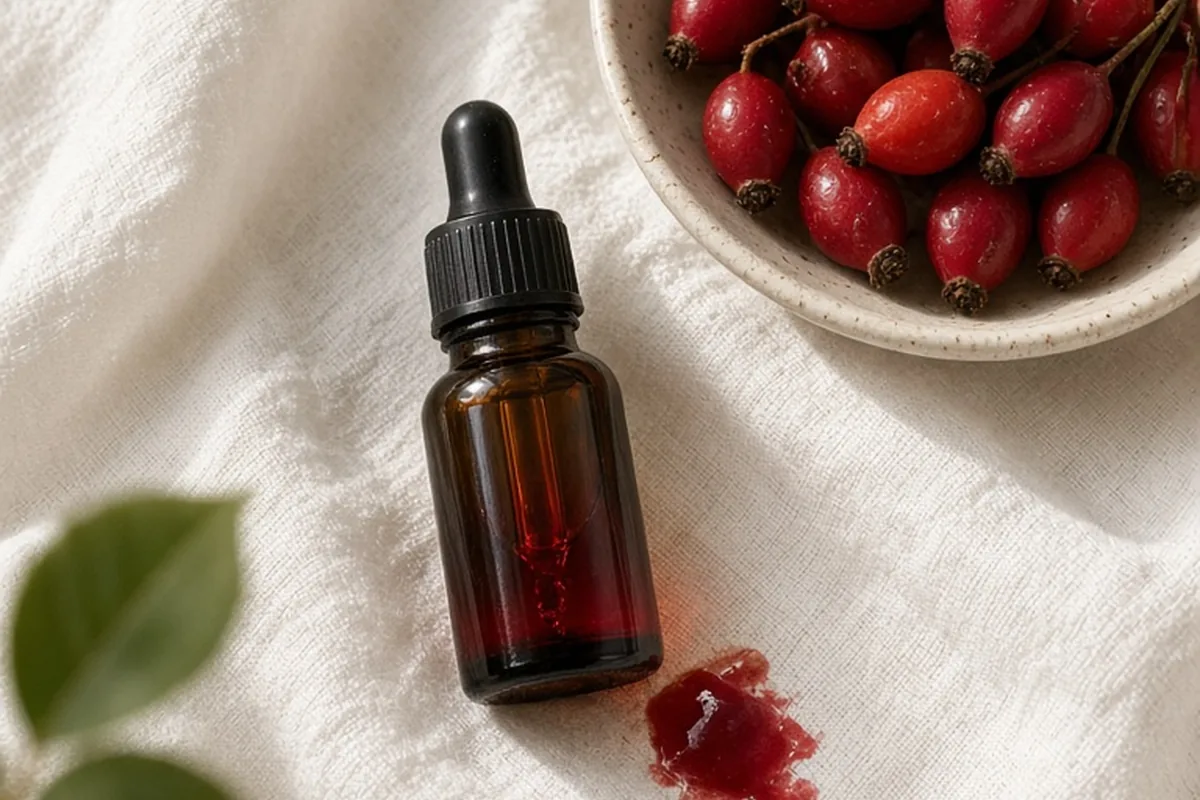
Rosehip oil delivers concentrated linoleic acid, alpha-linolenic acid, and natural carotenoids to the skin, helping strengthen the moisture barrier, soften rough texture, and improve the look of post-blemish marks. Unlike heavy occlusives, unrefined cold-pressed rosehip oil absorbs quickly without leaving a greasy film. It suits dry, balanced, mature, and combination skin types seeking gentle hydration and antioxidant support.
Plant oils play a versatile role in daily skincare, but their performance depends heavily on their fatty acid profile and extraction quality. Evaluating rosehip oil requires looking closely at how it compares to alternative botanicals, how it fits alongside active ingredients, and which product grades actually support your specific skin goals.
Essential Fatty Acids and Nutrients That Define Rosehip Oil Benefits
Rosehip oil is pressed from the seeds and surrounding fruit hips of wild rose bushes, primarily Rosa canina, Rosa moschata, or Rosa rubiginosa. The primary therapeutic strength of this botanical oil lies in its dominant ratio of polyunsaturated essential fatty acids. Linoleic acid (omega-6) and alpha-linolenic acid (omega-3) comprise the bulk of its lipid structure, balanced by smaller amounts of oleic acid (omega-9). These essential lipids naturally reinforce the intercellular matrix in the stratum corneum, helping replenish lipid depletion caused by environmental stress, harsh cleansers, or seasonal humidity drops.
Beyond structural lipids, unrefined rosehip oil contains active botanical micronutrients including beta-carotene, lycopene, tocopherols (vitamin E), and trace natural trans-retinoic acid precursors. These lipid-soluble antioxidants help neutralize oxidative free radicals generated by daylight and ambient pollution, reducing cumulative cellular strain. Because rosehip oil has a relatively low viscosity and a high polyunsaturated profile, it functions as a dry oil, penetrating upper epidermal layers rapidly rather than lingering as an impermeable surface barrier.
Rosehip Oil vs. Jojoba, Squalane, and Marula Oil
Choosing the right facial oil depends on your underlying skin balance, barrier thickness, and pore congestion tendencies. Comparing rosehip oil against other common single-ingredient botanicals helps clarify where it excels and where an alternative lipid might offer a better match for your routine.
Rosehip oil features a high linoleic acid profile with a lightweight feel, making it ideal for brightening dull tone, fading the visual aftermath of breakouts, and supporting barrier recovery without heavy residue. Jojoba oil is technically a liquid wax ester that closely mimics human sebum, making it exceptionally well-tolerated for oily and congested skin that needs sebum regulation rather than heavy lipid nourishment. Squalane, derived from sugarcane or olives, is a completely saturated, non-oxidizing hydrocarbon with an ultralight finish, making it the safest option for reactive, allergy-prone skin or individuals dealing with fungal acne triggers. Marula oil, by contrast, is rich in monounsaturated oleic acid, providing dense, rich emollience suited for deeply parched, flaky, or mature skin that cannot retain moisture with lighter oils alone.
- Rosehip Oil: High in linoleic acid and carotenoids; best for texture, barrier tone, and uneven pigmentation.
- Jojoba Oil: High in wax esters; best for balanced sebum modulation and lightweight daily conditioning.
- Squalane: Fully saturated and stable; best for hypersensitive barriers and minimalist routines.
- Marula Oil: High in oleic acid; best for dry, mature skin requiring substantive surface moisture.
Managing Blemishes, Marks, and Active Ingredients With Rosehip Seed Oil
A common point of confusion is whether rosehip oil causes breakouts or helps manage them. Skin prone to congestion often displays a natural deficiency in surface linoleic acid, leading to thicker, stickier sebum that can trap debris inside follicles. Applying a linoleic-rich botanical like rosehip oil can help balance the surface lipid pool. Additionally, its antioxidant carotenoid content supports skin renewal, which helps soften the lingering appearance of post-inflammatory hyperpigmentation after blemishes subside.
However, rosehip oil is not an antimicrobial acne medication. For persistent, cystic, or widespread inflammatory acne, clinical treatment from a qualified board-certified dermatologist remains the gold standard, as non-prescription cosmetic oils cannot clear bacterial acne or regulate severe follicular hyperkeratinization. When combining rosehip oil with potent actives such as prescription retinoids, chemical exfoliants (AHA/BHA), or pure L-ascorbic acid, use the oil as a buffering or finishing step. Applying one to two drops over your water-based treatments helps mitigate flaking and barrier irritation without blunting the efficacy of your primary active ingredients.
Further reading: American Academy of Dermatology: Acne
Extraction Methods: Cold-Pressed Seed Oil vs. Supercritical CO2 Extracts
The manufacturing process significantly influences the nutrient retention, shelf life, and sensory properties of rosehip oil. Cold-pressed rosehip seed oil is obtained through mechanical pressing at controlled temperatures, usually kept below 104 degrees Fahrenheit (40 degrees Celsius). This method preserves the natural balance of polyunsaturated fatty acids and delivers a light golden to amber liquid with a subtle, earthy scent. Cold-pressed seed oils absorb quickly and suit regular daily use.
Supercritical carbon dioxide (CO2) extraction uses pressurized CO2 at low temperatures to draw out compounds from both the seeds and the surrounding fruit pulp. This technique yields a deeply pigmented, reddish-orange oil enriched with higher concentrations of carotenoids and sterols. CO2 extracts offer potent antioxidant density, though they can temporarily stain fair skin or pillowcases if used unblended. Highly refined, clear, or solvent-extracted rosehip oils, on the other hand, undergo heat and chemical bleaching that strips away the natural color, aroma, and delicate antioxidant compounds, leaving a less effective carrier base.
Evaluation Criteria: How to Select High-Quality Rosehip Formulations
When browsing options, reviewing packaging, certifications, and ingredient transparency ensures you receive an uncompromised product. Because polyunsaturated oils degrade under heat, oxygen, and ultraviolet light, pure rosehip oil should always come packaged in dark amber, violet, or cobalt glass bottles equipped with an airtight dropper or pump mechanism. Avoid clear glass containers displayed in direct light.
Check the ingredient label carefully. A pure single-origin product should list only Rosa canina seed oil, Rosa rubiginosa seed oil, or Rosa moschata seed oil, occasionally with a trace addition of mixed tocopherols (vitamin E) to naturally extend freshness. If you prefer a blended oil, ensure rosehip appears near the top of the ingredient list rather than as a nominal marketing additive behind synthetic silicones or mineral oil. Look for certified organic designations (such as USDA Organic or Ecocert) to minimize the likelihood of residual agricultural pesticides in unrefined cold-pressed batches.
Recommended Product Profiles for Specific Skin Types and Goals
To select the most suitable rosehip formulation for your routine, match the delivery format to your primary skin condition rather than relying on generalized product ratings. Below are three practical product profiles based on formulation strengths and intended outcomes.
Profile 1: Pure Cold-Pressed Seed Oil (Ideal for Combination to Normal Skin). Single-ingredient, unrefined organic seed oil offers the cleanest lipid delivery. It absorbs within minutes, makes skin supple without heavy slip, and layers comfortably beneath daily moisturizer or mineral sunscreen.
Profile 2: Whole-Fruit CO2 Extract Blends (Ideal for Dry, Dull, or Mature Skin). Formulations combining seed oil with whole-fruit CO2 extract deliver elevated carotenoid levels and a deeper emollient feel. These formulas excel in evening recovery routines where intense barrier replenishment and antioxidant repair are prioritized over rapid daytime absorption.
Profile 3: Barrier Repair Oil Blends (Ideal for Sensitive or Compromised Skin). Multi-botanical blends pairing rosehip oil with squalane, evening primrose, and bisabolol offer balanced lipid ratios with reduced risk of sensitivity. These blends soothe redness, buffer strong exfoliating treatments, and support long-term moisture retention.
Application Technique, Storage Life, and Patch Testing Protocol
To get the best performance from rosehip oil, apply two to three drops to damp skin immediately after water-based serums or toners. Facial oils are occlusive emollients; they seal in existing hydration rather than infusing water into dehydrated tissue. Applying oil over dry skin can trap a dehydrated state beneath a lipid veil, while applying it over a hydrating toner locks in water and improves glide.
Because of its high concentration of delicate polyunsaturated fatty acids, rosehip oil has an average shelf life of roughly six to nine months after opening. Store your bottle in a cool, dark cabinet or skincare refrigerator away from steamy bathroom environments. If the oil develops a distinct rancid, sour, or crayon-like smell, its lipids have oxidized, and the product should be discarded. Always perform a patch test on a small area behind your ear or along your jawline for 24 to 48 hours before full-face application to check for individual botanical sensitivities.
Frequently asked questions
Can I use rosehip oil every day?
Yes, rosehip oil is suitable for daily use, either once or twice daily depending on your skin type. Dry and normal skin types can use it morning and night, while combination or oily skin types often prefer using two drops in their evening routine only.
Does rosehip oil replace a standard moisturizer?
Rosehip oil provides essential fatty acids and emollience, but it does not supply water-binding humectants like glycerin or hyaluronic acid. For best results, use it alongside or layered over a water-based moisturizer rather than using the oil alone.
Can rosehip oil cause allergic reactions or breakouts?
While rosehip oil is generally well-tolerated, any botanical extract carries a small risk of contact allergy or irritation. Perform a patch test before first use, and discontinue application if you notice redness, itching, or small comedones.
How can I tell if my rosehip oil has gone bad?
Fresh unrefined rosehip oil has a golden to reddish-amber color and an earthy, tea-like scent. If your oil turns pale, smells sour or sharp like stale cooking oil, or causes sudden stinging, it has oxidized and should be replaced.
Your next step
Check your current skincare routine to identify where a lipid step is missing, select an unrefined, dark-bottle cold-pressed rosehip oil, and patch test two drops on your inner arm before integrating it into your nightly routine.