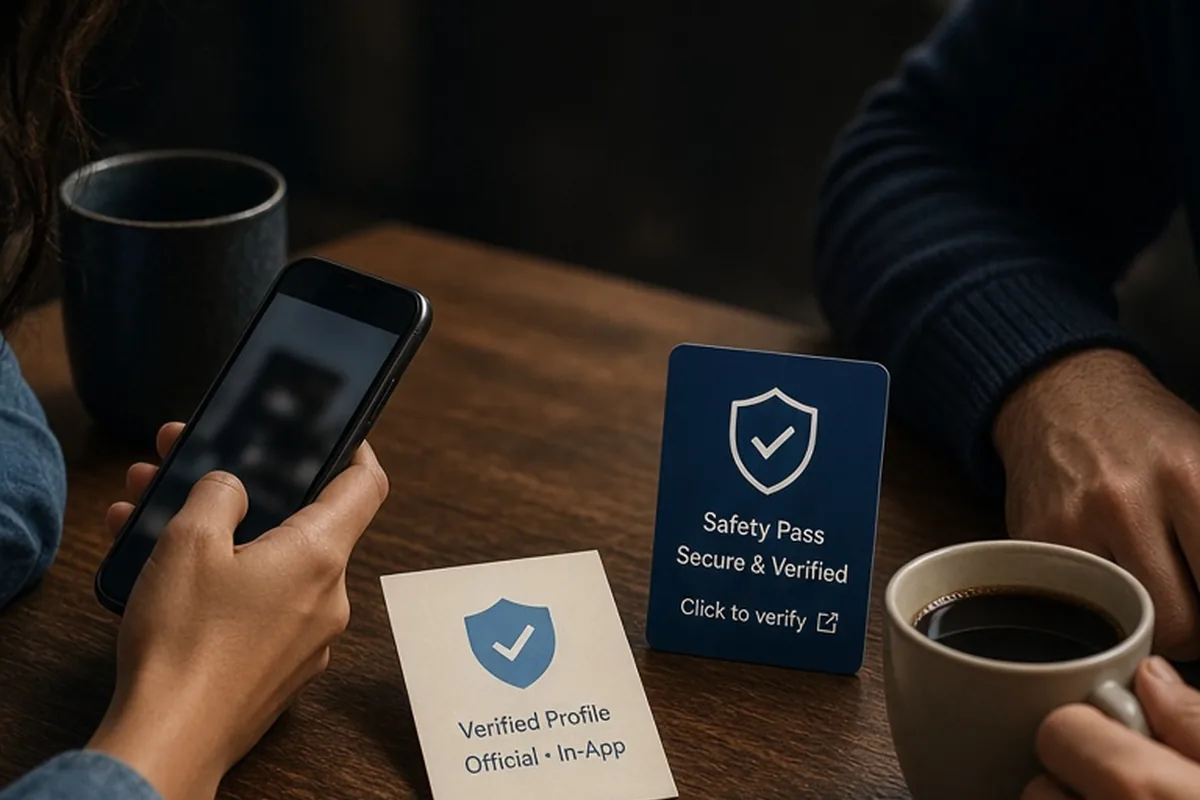
Safe dating verification refers to official tools built directly inside dating apps—such as selfie video scans and native ID badges—that confirm a profile belongs to a real person. Legitimate verification never requires clicking external links, paying for a safety pass, or sharing credit card numbers with a match. Authentic platforms provide verification for free inside their own settings.
Meeting new people online should feel exciting, but figuring out who is genuine behind a profile can feel complicated. Understanding how legitimate verification works—and recognizing common verification scams—allows you to protect your personal information, respect your own boundaries, and pursue real connections with confidence.
How Official In-App Verification Works
Major dating platforms have developed native verification systems designed to confirm identity without exposing personal details to other users. Most services use automated facial comparison technology where you record a short video selfie following specific prompts, like turning your head or smiling. The software compares your dynamic video capture against your static profile photos. Once confirmed, your profile receives a visible badge, such as a blue checkmark, signaling to other users that your images genuinely depict you.
Some platforms offer optional government ID verification directly through encrypted internal portals. In these setups, you submit a secure scan of a driver's license or passport to confirm your legal name and age. It is critical to note that legitimate platforms conduct this entire workflow inside their official application or website. They do not charge a separate fee, redirect you to an outside browser domain, or hand your raw identity documents over to matches. When you see a verified badge on a reputable platform, it simply means the platform validated that the person operating the account matches the photos displayed.
Recognizing Third-Party Verification Scams
A widespread scam across dating apps involves matches asking you to complete a mandatory safe dating verification, background check, or meetup pass through an external link before they agree to meet. The match often sends an urgent message claiming they have had bad past experiences and need you to register on an unfamiliar website to prove you are not dangerous. These domains often use authoritative-sounding names containing phrases like safe meetup, secure date, or identity shield.
When you click these links, the fraudulent site prompts you to enter sensitive information such as your full name, phone number, address, and credit card credentials under the guise of a small processing fee. In reality, these portals are phishing operations operated by scammers or rogue subscription networks. Once entered, your financial information is compromised or enrolled in expensive, recurring monthly charges that are difficult to cancel. Genuine dates who care about physical safety will rely on public meeting spaces or in-app tools, rather than insisting on third-party registration portals.
Low-Friction Ways to Verify a Match Yourself
You do not need invasive background check portals to confirm whether someone is genuine before planning a date. One of the simplest and most respectful verification methods is suggesting a brief, two-minute video call through the dating app itself or a casual platform like FaceTime before meeting up. A short call immediately confirms the person's appearance, clarifies mutual chemistry, and prevents hours wasted on catfishes or inactive profiles.
Another effective technique is exchanging spontaneous voice notes or sharing a brief, real-time snapshot during conversation. When you frame this as an easy way to say hello rather than an interrogation, it feels natural and enjoyable. For example, sending a quick voice note saying, 'Excited to check out that coffee spot this weekend,' invites a spoken reply. Scammers and automated bots will almost always make excuses to avoid live audio or video communication, giving you a clear signal to step back.
Responding to Demands for External Verification
If a match insists that you must verify yourself through a specific external website or purchase a safety badge before getting a drink, respond with calm clarity. You can validate their desire for safety while holding a firm boundary on your digital privacy. A direct response keeps the interaction grounded without escalating tension or compromising your principles.
A practical response might look like: 'I completely respect wanting to be safe, but I never enter my information into third-party sites. I am happy to hop on a quick video call or meet at a busy coffee shop in broad daylight so we both feel comfortable.' If the person reacts with anger, guilt-tripping, or continued insistence on clicking the link, you have your answer. A legitimate connection will appreciate practical safety alternatives, whereas a scammer will disconnect as soon as they realize you will not provide payment data.
Protecting Personal and Financial Data Early On
Maintaining strong privacy hygiene during initial conversations prevents potential bad actors from exploiting your information outside the app. Keep your communication on the dating platform until you have established basic rapport and verified that your match is authentic. Moving to text messaging, WhatsApp, or private social accounts too early gives unknown contacts access to your personal phone number, which can be linked to your workplace, home address, or public records.
Be mindful of casual information sharing that seems harmless on the surface. Avoid detailing your specific daily commute routines, the exact location of your employer, or photos where street signs and home addresses are visible in the background. Furthermore, never engage with requests for financial assistance, cryptocurrency investments, emergency travel funds, or verification codes sent to your phone. Financial requests in the early stages of dating are an immediate disqualifier.
Transitioning Safely to In-Person Dates
Verification is not just a digital step; it also informs how you structure your first real-world interaction. Always choose a well-lit, populated public venue such as a popular cafe, museum, or lively restaurant for a first meetup. Avoid private residences, secluded parks, or invitations to pick the other person up at their home on day one. Having your own independent transportation ensures you can leave whenever you decide the date has run its course.
Let a trusted friend know your plans before you head out. Share the name of the person you are meeting, the venue address, and an estimated time you will check in afterward. You do not need to overcomplicate the process; a simple text to a friend saying, 'Meeting Alex at Central Coffee at 7:00 PM, will check in by 9:30 PM,' provides peace of mind. Keeping early dates relatively brief—around an hour to ninety minutes—also keeps expectations manageable and lowers pressure for both people.
Illustrative Scenarios
Handling an Urgent Meetup Link
Marcus matched with an attractive woman on a dating app who quickly suggested meeting for drinks that evening. Before finalizing the location, she sent him an external URL, stating that her community safety group required every new partner to register a safe dating profile for mutual protection. Marcus felt an initial urge to complete the form quickly so he would not seem uncooperative or unsupportive of women's safety. However, when the website asked for his credit card number under the promise of a free trial, he paused. Marcus recognized the red flag, declined to enter his billing details, and offered a quick video chat instead. The match immediately unmatched him.
Key point: Legitimate dates will never require financial verification links, and setting a boundary quickly filters out automated fraud.
Verifying Chemistry Before a Long Commute
Elena was chatting with a profile located forty miles away who seemed engaging but had zero verified badges and only two photos. The match suggested meeting halfway for dinner over the weekend. Elena felt hesitant about investing two hours of driving for an unverified profile that might turn out to be completely different in person. Rather than cancelling or making an accusation, Elena sent a friendly message asking to do a five-minute FaceTime call on Thursday evening to say hello and pick a restaurant together. The match happily agreed, hopped on the call on time, and confirmed they were genuine, allowing Elena to travel to the date feeling relaxed.
Key point: A brief, friendly video call removes ambiguity and builds mutual comfort before investing significant time and travel.
Frequently asked questions
Does safe dating verification cost money on official apps?
No, legitimate dating apps do not charge users for basic profile photo or identity verification. Any service or person asking you to pay a fee or enter credit card information for a safety pass is running a scam.
Can someone fake an in-app verified blue checkmark?
While dating platforms continuously upgrade biometric algorithms, no system is entirely foolproof. A checkmark confirms that a live camera matched the uploaded photos at the time of verification, but you should still practice standard safety habits like meeting in public places.
What should I do if a match sends me a link to verify my identity?
Do not click the link or enter any personal information. Politely decline, offer an in-app video call or public meetup instead, and report the account to the platform if they continue demanding external registration.
Your next step
Open your dating profile today, complete the native in-app photo verification badge in your account settings, and make a quick two-minute video call your personal standard before meeting anyone new in person.