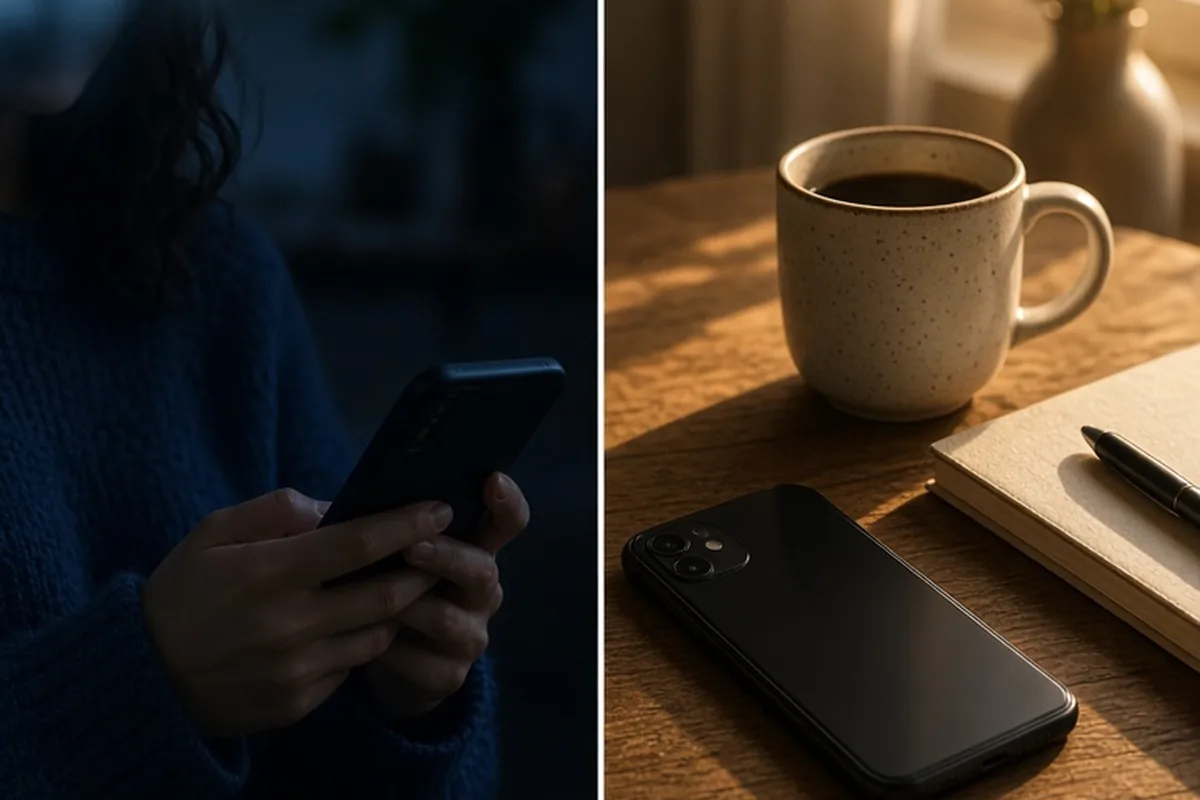
You should call him if you have a clear purpose, such as confirming plans, sharing timely news, or moving past an ambiguous text exchange. However, pause if you are calling purely out of anxiety, seeking reassurance, or repeatedly initiating after he has gone quiet. Making the call should feel like an intentional choice that respects your time, not an urgent attempt to control his response.
Debating whether to pick up the phone can quickly become an exhausting mental exercise, especially when you are trying to balance authentic interest with healthy self-respect. While traditional dating lore often pushes arbitrary waiting periods, modern communication functions best when guided by mutual effort, situational context, and personal clarity.
Evaluating Your Emotional State Before Reaching Out
The urge to call someone often stems from two very different places: grounded interest or reactive anxiety. Grounded interest is lighthearted and communicative; it comes from wanting to hear someone's voice, coordinate an event, or share a brief laugh. Reactive anxiety, by contrast, feels urgent and heavy. It typically arrives when an unexpected silence triggers worry, creating an impulse to demand proof of interest through a live interaction. Calling from an anxious state usually shifts the burden of emotional regulation onto the other person, which can strain a budding connection.
Before you place the call, take two minutes to check in with your immediate expectations. Ask yourself how you will feel if the call goes directly to voicemail or if his tone sounds distracted because he is busy with work or personal responsibilities. If an unanswered ring will ruin your afternoon or send your thoughts into a downward spiral, it is usually wiser to put the phone aside until your own foundation feels stable. Calling should be an expression of connection, not a bid to relieve inner distress.
Clear Scenarios Where Calling Is the Right Move
There are several practical moments where picking up the phone is vastly superior to sending another text. Logistical coordination is prime territory for a direct call. If you are trying to choose a meeting spot, align busy schedules, or address a last-minute schedule change, thirty seconds on the phone eliminates the friction of endless back-and-forth messaging. Calling in these instances demonstrates efficiency, maturity, and comfort with straightforward communication.
Another appropriate moment is when text messaging has turned clumsy or misunderstood. Text lacks tone, inflection, and warmth, making minor disagreements or nuanced jokes vulnerable to misinterpretation. If an exchange begins to feel tense or detached, saying, 'Let me give you a quick ring so we are on the same page,' cuts through ambiguity immediately. Reaching out by phone also works well when reciprocal investment has already been demonstrated. If he regularly calls you, checks in, and follows through, initiating a call simply mirrors his positive engagement.
When Withholding the Call Protects Your Self-Respect
There are equally distinct moments when calling works directly against your interests. The most common pitfall is calling to compensate for his consistent disinterest or prolonged silence. If you sent the last substantive text days ago and have received no response, dialing his number rarely produces the enthusiastic engagement you desire. More often, it rewards neglect by demonstrating that you are willing to double down on initiation when the other party steps back.
Similarly, calling during or immediately after a heated disagreement is often a misstep if your primary goal is venting frustration. When tempers run hot, live phone calls can escalate small irritations into major conflicts before either person has had space to reflect. In situations where an emotional rupture has occurred, giving the situation a few hours to breathe allows both individuals to speak with intentionality rather than raw defensiveness. Letting silence sit can feel uncomfortable, but it is often the exact boundary required to maintain dignity.
How to Frame the Call Without Creating Pressure
If you conclude that reaching out makes sense, your conversational approach should be concise, casual, and bounded. Starting a call with loaded questions like 'Why haven't you called me?' or 'Where have you been?' puts the recipient instantly on trial. Even if the underlying frustration is justified, introducing an interrogative tone during a casual phone call creates friction and makes future voice interactions feel like an obligation rather than a pleasure.
Instead, ground the conversation in a clear, specific topic from the outset. For example, opening with, 'Hey, I only have a few minutes before my appointment, but I wanted to hear about how your presentation went,' immediately signals that the call is both warm and low-pressure. Having a natural stopping point gives the other person space to engage without fearing an open-ended, demanding conversation. If the banter flows naturally, you can extend the time, but entering with an organic exit strategy keeps the interaction balanced and easy.
Managing Your Response If He Does Not Pick Up
One of the hardest moments in early dating is listening to the phone ring until it switches to voicemail. The immediate human reaction is often an impulse to follow up with an explanatory text message such as 'Just calling to say hi, let me know when you are free.' While understandable, sending an immediate follow-up message can broadcast insecurity, as though leaving a simple missed call was an error that required an apology or justification.
Treat a missed call as a complete, self-contained communication event. Modern smartphones clearly display missed calls; if he is interested and able, he will see it and return it in due course. If you choose to leave a voicemail, keep it brief and upbeat, mentioning one specific detail rather than asking for an urgent callback. Once you hang up, immediately redirect your focus toward your own routine, projects, or social plans. Over-analyzing the gap between your dial and his return call only breeds unwarranted stress.
Assessing the Broader Balance of Effort in the Connection
Whether to call on a specific Tuesday afternoon is ultimately a tactical question; the strategic question is whether the relationship shows a balanced pattern of effort. A healthy partnership does not rely on rigid fifty-fifty bookkeeping, but it does require mutual initiative over time. If you look back across the last few weeks and notice that you initiate every phone call, propose every plan, and sustain every text dialogue, the issue is not your phone habits—it is an asymmetrical connection.
Continuously stepping in to fill communication voids prevents you from seeing what someone would do on their own accord. By pausing and allowing space, you provide the other person an opportunity to show up. If they step forward and initiate, the connection gains genuine stability. If they drift away into prolonged silence, you receive valuable, unambiguous clarity about their level of readiness and investment, which allows you to invest your energy elsewhere.
Illustrative Scenarios
Handling the Weekend Silence
Elena had a great second date on Thursday night, but by Saturday afternoon, her messaging thread with David had gone quiet. Her first thought was to call him immediately to find out why he had stopped texting, feeling a surge of anxiety that his interest had vanished. Instead of dialing in a state of distress, Elena paused and waited until Sunday afternoon. She then called with a clear, upbeat purpose: asking if he wanted to join her at a neighborhood food market they had discussed on Thursday. David answered warmly, explained he had been helping his brother move, and gladly accepted the invite. Her calm, purpose-driven outreach resolved the ambiguity without creating unnecessary friction.
Key point: Calling with a concrete, positive idea is far more effective than reaching out simply to demand reassurance about an unexpected pause in messaging.
Clearing the Air After Text Confusion
Marcus and Sarah had an awkward exchange over text regarding dinner plans, where short replies caused Marcus to believe Sarah was irritated with him. His first instinct was to pull away and wait in silence for days to see if she would apologize. Realizing that passive silence would only deepen the misunderstanding, Marcus chose to pick up the phone that evening. He opened simply: 'Hey, I felt like our texts got a bit tangled earlier, and I wanted to hear your voice so we could sort out dinner.' Sarah laughed in relief, explaining that she had been running between meetings and typing in a rush. The two-minute call dissolved the tension completely.
Key point: A brief, friendly phone call cuts through text ambiguity much faster than over-analyzing written words or testing the other person with cold silence.
Frequently asked questions
Is it considered bad etiquette to call him before he calls me?
No, proactive communication is not bad etiquette when there is mutual interest and a clear context. Confident communication involves picking up the phone when it makes sense, rather than adhering to rigid, outdated rules about who must reach out first.
How long should I wait for him to return my call before moving on?
Give him twenty-four to forty-eight hours to return a non-urgent call, as work schedules and family responsibilities vary widely. If several days pass without any acknowledgment or callback, consider that a sign of low availability or interest and step back your efforts.
Should I send a text message explaining why I called if he does not answer?
In most cases, you should let the missed call stand on its own without sending an immediate follow-up text. An unprompted text explaining a casual missed call can signal anxiety, whereas letting the call rest shows confidence and patience.
Your next step
Before you dial, check whether your goal is to share a lighthearted, practical moment or to soothe an anxious thought; if it is the former, make the call with confidence, keep it brief, and let his response guide your next step.