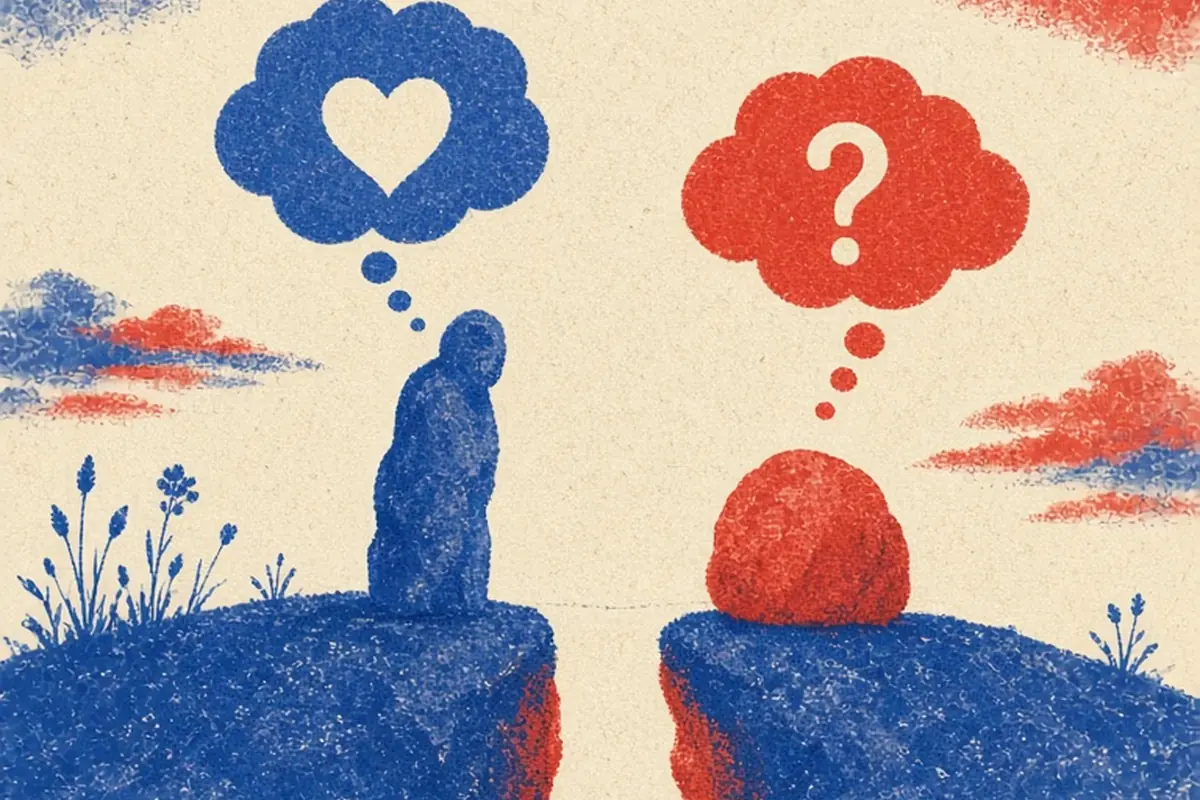
There is no universal rule about who should say "I love you" first. If you feel it genuinely and the relationship has real depth and mutual investment, saying it first is a reasonable, honest move. The main risks are timing and mismatched readiness, not the act of going first itself. Knowing your own motivation and reading the relationship's actual temperature matter far more than who speaks first.
Most people have stood at the edge of those three words at least once, running a quiet calculation: do I say it, or do I wait? The question feels enormous in the moment, but it usually comes down to a few practical things worth thinking through before you open your mouth.
Why the "Who Goes First" Question Matters Less Than You Think
The anxiety around saying "I love you" first is mostly about vulnerability, not etiquette. Culturally, there is a lingering idea that whoever says it first loses some kind of power, or that waiting makes you more desirable. Neither of those things is reliably true. What actually shapes how the moment lands is whether both people are at a similar emotional place, not which one of them spoke first.
Relationships do not run on a scoreboard. If you say it first and your partner feels the same way, the fact that you went first becomes a non-issue within about thirty seconds. If you say it first and they are not there yet, that is useful information, even if it stings. The real question is not about sequence. It is about whether you are ready to be honest and whether you can handle an honest response in return.
How to Know Whether You Actually Mean It
Love and infatuation can feel identical in the early weeks of a relationship, which is one reason timing matters. Infatuation tends to be intense and focused on how the other person makes you feel. Love, as most people describe it once the initial rush settles, involves genuine care for the other person's wellbeing independent of what you are getting from the relationship. Before you say it, it is worth asking yourself: do I want good things for this person even when it is inconvenient for me? That is a more reliable signal than butterflies.
It is also worth separating the feeling from the impulse to say it. Sometimes people want to say "I love you" because they are feeling particularly close in a specific moment, like after a great weekend together or during an emotional conversation. That is not a bad reason, but it is worth checking whether the feeling is consistent across ordinary moments too, not just peak ones. Saying it during a high and then feeling uncertain a week later can create confusion for both of you.
Reading the Relationship Before You Speak
A few practical signals suggest a relationship might be ready for that conversation. You spend real time together, not just exciting dates but ordinary time. You have navigated at least one disagreement or disappointment and come out of it intact. You know meaningful things about each other's lives, values, and the people who matter to them. These are not checkboxes, but they suggest a foundation where "I love you" has something to land on.
Pay attention to how your partner talks about the future. Do they include you in it naturally? Do they introduce you to friends and family without prompting? Do they show up consistently when things are hard? These behaviors are not guarantees of anything, but they suggest someone who is emotionally invested. Saying "I love you" into a relationship with those qualities is a very different risk than saying it to someone who is still inconsistent or unclear about what they want.
Managing the Risk of an Unreciprocated Response
The honest truth is that saying it first carries real risk. Your partner might not be ready to say it back. They might need time. They might feel differently than you do. None of those outcomes are catastrophic, but they do require you to be emotionally prepared for something other than an immediate "I love you too." Going in with that awareness is not pessimism; it is self-respect.
If your partner does not say it back right away, try not to treat that as a verdict. Some people take longer to reach that word. Some people have been hurt before and move carefully. A response like "thank you, that means a lot" or "I'm not quite there yet but I care about you deeply" is not a rejection of you as a person. It is honest communication, which is actually what you want from someone you love. What matters after that moment is whether they continue to show up and whether the relationship keeps moving forward.
Choosing the Right Moment and Setting
There is no perfect moment, but some moments are clearly better than others. Saying "I love you" for the first time in the middle of an argument, right before one of you leaves for a long trip, or after a few drinks is not ideal. Not because the feeling is less real, but because those contexts make it harder for the other person to respond thoughtfully. A calm, connected moment when you are both present and not distracted gives the conversation the space it deserves.
It does not need to be elaborate. A quiet evening at home, a walk, a moment after a genuine conversation, these work fine. Grand gestures can actually add pressure that makes the other person feel like they have to perform a response rather than give an honest one. Keeping it simple and direct tends to land better. Something like "I want you to know I love you" is clear without being a production.
When Waiting Makes More Sense
Sometimes the better move is to wait, and recognizing that is its own kind of clarity. If the relationship is very new, if you are still figuring out whether you are compatible on things that matter to you, or if you sense that your partner is not emotionally available in the way you need, waiting gives you more information. Saying "I love you" does not speed up a relationship's development; it just names where you are.
Waiting is also reasonable if you realize your motivation is partly about securing the relationship rather than expressing a genuine feeling. Saying it to get reassurance, to lock something in, or to test whether the other person will say it back puts the words to work they were not designed for. That tends to create more anxiety, not less. If you are not sure you mean it yet, it is okay to sit with that uncertainty a little longer.
What Happens After You Say It
Once "I love you" is out there and reciprocated, it changes the relationship in a small but real way. It creates an explicit acknowledgment of where you both are, which can make it easier to talk about other things that matter, like what you each want long-term, how you handle conflict, or what commitment looks like for you. The words open a door rather than close a chapter.
If it is not reciprocated right away, the conversation that follows matters more than the initial moment. How does your partner handle it? Do they acknowledge your feelings with care? Do they give you a sense of where they are? Do they pull away or stay engaged? Those responses tell you something real about the relationship and about the person. Either way, you have more information than you had before, and that is genuinely useful even when it is uncomfortable.
Illustrative Scenarios
The Moment That Felt Right but Came Too Soon
Marcus had been dating someone for about six weeks when a particularly good Saturday made him want to say it. They had spent the whole day together, laughed constantly, and he felt closer to her than he had to anyone in years. He almost said it that evening but paused. He asked himself whether he felt this way on a regular Tuesday, not just after a great day. He realized he was not sure yet. He decided to wait another few weeks, paid attention to how things felt during ordinary moments, and when he did say it, he was confident he meant it. She said it back.
Key point: A peak moment can feel like the right time, but checking whether the feeling is consistent across ordinary days gives you more confidence that you mean what you say.
When It Was Not Returned Right Away
Priya said "I love you" after three months of dating someone she felt genuinely close to. He paused, looked at her carefully, and said he was not quite there yet but that he cared about her a lot and wanted to keep building what they had. Her first instinct was embarrassment and the urge to take it back. Instead, she said she appreciated his honesty. Over the next few weeks, she watched whether his behavior matched his words. It did. He said it about six weeks later, and she believed him because he had shown her he meant it before he said it.
Key point: An unreciprocated "I love you" is not automatically a bad outcome. An honest, caring response followed by consistent behavior can actually build more trust than an immediate reply that was not fully felt.
Frequently asked questions
Is there a typical timeline for saying "I love you" in a relationship?
There is no standard timeline that applies to everyone. Some people feel it within a few months; others take longer. What matters more than timing is whether the relationship has real depth and mutual investment. Comparing your timeline to others or to a cultural average is generally less useful than paying attention to your own relationship.
What if I say it and my partner says nothing?
A silence or a non-answer is uncomfortable, but it is worth giving your partner a moment to process before drawing conclusions. Follow up gently rather than filling the silence with reassurances or walking it back immediately. How they respond in the minutes and days after will tell you more than the initial reaction.
Does saying it first put me at a disadvantage?
Only if you believe vulnerability is a disadvantage, and in a healthy relationship it is not. Going first requires courage, and most people who genuinely care about someone recognize and respect that. If a partner uses your honesty against you or treats it as weakness, that is useful information about the relationship itself.
Can you say "I love you" too early?
It is possible to say it before you have enough shared experience to know whether you mean it in a lasting way, which can create pressure or confusion. Very early declarations are not always wrong, but they benefit from a follow-up conversation about what you each mean by the word and where you both see things going.
Your next step
Before you say it, take one honest moment to ask yourself two things: do I feel this consistently, not just in peak moments, and am I prepared to hear an honest answer? If both are yes, saying "I love you" first is a straightforward act of honesty, and that is worth more than any strategy about who speaks first.