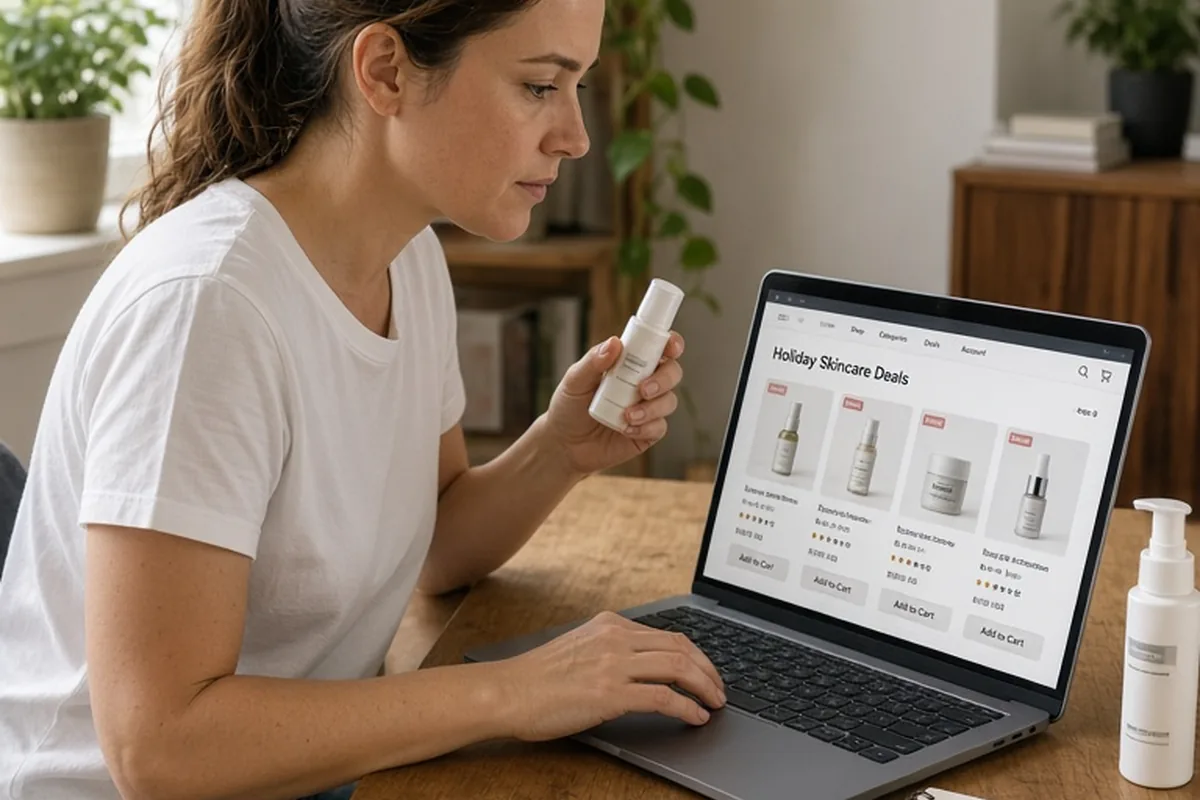
A strategic skincare Black Friday deals guide focuses on restocking verified everyday essentials, prioritizing high-cost active serums or tools you already tolerate well, and calculating price per ounce rather than chasing bundled novelties. Preparing a prioritized inventory list beforehand helps you identify genuine price cuts, skip deceptive multi-step gift sets, and preserve both your budget and your skin barrier.
Major holiday shopping events create substantial excitement around beauty discounts, but navigating seasonal skincare promotions requires a disciplined approach. When retailers flood inboxes with tiered discounts, doorbuster bundles, and limited-edition holiday sets, it becomes easy to lose track of what your skin actually requires. Approaching holiday sales with a structured plan protects you from spending money on products that might expire before you can open them or cause irritation from incompatible active ingredients.
Auditing Your Current Shelf Before the Sales Launch
The most cost-effective way to navigate holiday skincare sales begins with an objective inventory of what you already own. Take everything out of your bathroom cabinets, vanity drawers, and travel bags to assess your remaining supply of cleansers, moisturizers, treatments, and sunscreens. Note down products that are nearing completion, items that are halfway full, and bottles that remain unopened. This visual check immediately clarifies whether you actually need another hydrating serum or if your primary gap is simply a daily barrier cream.
Establishing your genuine product turnover rate prevents overbuying formulas that might degrade before use. For instance, a standard fifty-milliliter bottle of facial moisturizer typically lasts around two to three months when used twice daily, whereas a specialized clay mask used once a week may last an entire year. By estimating how many months of supply you already hold, you can restrict your shopping list to products you will reasonably finish within their safe usage window, ensuring your holiday savings are not wasted on expired clutter.
- Sort products by category to identify duplicate formulas you already own in surplus.
- Check the period-after-opening symbol on current products to discard expired formulas.
- Write down exact product names and sizes that you genuinely use every single week.
Distinguishing Genuine Markdowns from Bundled Distractions
Retailers frequently feature lavish holiday gift sets during major sales events, presenting them as high-value bargains. These sets often combine one hero product with several miniature novelty items, such as scented eye creams, decorative applicator tools, or gentle cleansing balms you would not otherwise purchase. While the total retail value listed on the packaging may appear impressive, the actual utility depends entirely on whether every included item serves a purposeful role in your skincare regimen.
To determine if a bundle offers genuine value, calculate the individual cost of the specific item you intended to buy versus the total price of the holiday kit. If a coveted peptide serum costs sixty dollars on its own at a twenty percent markdown, paying seventy dollars for a set that includes the serum alongside unwanted sample sizes represents an added expense rather than a discount. Prioritize straightforward sitewide percentage discounts on standalone formulas over pre-packaged collections to keep your routine targeted and cost-effective.
- Calculate the price per ounce of the primary product to confirm real savings.
- Avoid kits containing multiple active exfoliants or retinoids that your skin cannot comfortably handle together.
- Opt for direct percentage-off promotions on staple formulas instead of free-gift-with-purchase thresholds that encourage overspending.
Evaluating High-Ticket Tools and Advanced Treatments
Black Friday represents one of the few times of year when premium skincare categories, such as at-home microcurrent devices, targeted light therapy masks, and medical-grade active formulations, drop substantially in price. Because these tools and concentrated serums require a significant initial investment, acquiring them during seasonal promotional windows can yield meaningful monetary savings. However, the high price point also amplifies the financial risk if the device ultimately sits unused in a drawer.
Before purchasing an expensive beauty device or potent treatment, evaluate whether your schedule allows for consistent application. Many at-home technological devices require three to five sessions per week over several months to demonstrate noticeable results, while advanced active ingredients necessitate gradual acclimation to prevent barrier compromise. If you are uncertain about committing the necessary time or suspect an active ingredient may be too potent for your baseline sensitivity, postponing the purchase is far wiser than securing a discounted tool that fails to fit your lifestyle.
- Verify warranty policies and return periods for electronic skincare devices before purchasing.
- Ensure you have compatible base products, such as conductive gels or gentle barrier moisturizers, already in your routine.
- Check user manuals online to confirm treatment time commitments match your weekly schedule.
Understanding Shelf Life and Formula Stability
Stocking up on multiple backup bottles during deep sales is tempting, but skincare formulations possess finite shelf lives that require careful consideration. Water-based serums, unstable active antioxidants like L-ascorbic acid, and sunscreen products are particularly susceptible to gradual oxidation and degradation. Purchasing a three-year supply of vitamin C or sunscreen during a single promotional event often results in using oxidized or weakened formulas that no longer deliver their intended benefits.
Most unopened skincare products remain stable for roughly two to three years when stored in cool, dark environments, but once opened, the period-after-opening period generally ranges from six to twelve months. If you decide to purchase backups of your holy-grail items, limit your purchase to what you can realistically finish within six to nine months. Furthermore, avoid purchasing backups of experimental items you have never tried before, as discovering an adverse reaction on bottle one renders any additional discounted bottles useless.
- Store unopened backup products away from direct sunlight, humidity, and temperature fluctuations.
- Check batch codes or printed expiration dates immediately upon receiving your holiday shipment.
- Limit purchases of unstable actives like pure vitamin C to a single bottle at a time.
Comparing Direct Brand Websites and Multi-Brand Retailers
During major seasonal shopping periods, promotional structures diverge between standalone brand websites and broad beauty stockists. Direct brand storefronts frequently provide deeper single-brand discounts, exclusive tier bonuses, or complimentary full-size add-ons once you meet a specific spending threshold. This makes direct purchasing advantageous when you plan to replenish several items from a single specialized product line.
Conversely, multi-brand retailers offer the convenience of consolidating products from diverse companies into a single checkout, which helps you avoid multiple shipping fees and meet higher reward program tiers. Multi-brand platforms also tend to feature broader customer return policies, making them a safer choice if you need the option to exchange or return an unopened formulation. Compare the overall cart totals, factoring in applicable taxes, shipping minimums, and loyalty point accruals, before deciding where to execute your purchase.
- Review shipping thresholds on brand websites to avoid paying shipping costs that offset promotional discounts.
- Check return window policies, as some holiday promotional items may be marked as final sale.
- Factor in retailer loyalty rewards programs that can provide credit toward future routine essentials.
Creating a Disciplined Checkout Strategy to Prevent Impulse Buys
Flash sales and countdown timers are engineered to induce urgency, prompting shoppers to add unvetted serums and trendy moisturizers to their carts without adequate consideration. Introducing multiple unfamiliar formulas into your regimen simultaneously makes it impossible to identify which product causes irritation or breakouts if your skin reacts poorly. A structured shopping strategy safeguards your skin health by establishing firm boundaries before promotional discounts go live.
Build your shopping cart several days prior to the sale and step away from it to evaluate whether each item addresses a documented skin need. Restrict experimental items to no more than one new product per shopping event, keeping the remainder of your cart dedicated strictly to proven staples. If a promotional tier requires spending fifty extra dollars to unlock a ten-dollar gift, recognize the mathematical imbalance and complete your purchase with only the items you deliberately chose in advance.
- Construct your online cart in advance to avoid last-minute, panic-driven browsing.
- Introduce only one new product into your routine at a time, spaced several weeks apart.
- Set a strict spending limit before reviewing promotional marketing emails to keep your holiday budget intact.
Illustrative Scenarios
Restocking a Core Routine Versus Chasing Tiered Discounts
A shopper aiming to refresh their winter regimen reviewed holiday sales with an eighty-dollar budget. They initially planned to buy their regular thirty-dollar gentle cleanser and forty-dollar barrier moisturizer, which were both marked down by twenty-five percent. While browsing, they encountered a tiered promotion offering a free luxury mystery kit if they spent one hundred and twenty dollars. Instead of adding two unfamiliar exfoliating treatments to reach the gift threshold, they purchased only their two core replenishments for fifty-two dollars and fifty cents total.
Key point: Sticking to verified everyday essentials delivers genuine budget savings and prevents the skin barrier irritation often caused by impulsively acquired active treatments.
Frequently asked questions
How much discount is typical for skincare during Black Friday?
Most direct brand storefronts and major beauty stockists offer discounts ranging between twenty and thirty percent off sitewide during holiday events. Deeper markdowns of forty percent or higher typically apply to discontinued formulas, overstocked inventory, or select promotional bundles.
Is it safe to buy backups of multiple sunscreens during sales?
Purchasing one or two backup bottles of sunscreen is practical if you consistently use sunscreen daily and verify the expiration dates. However, avoid purchasing more than a six-month supply, as active sunscreen filters degrade over time and must be used before their printed expiration date for reliable protection.
Should I try a new active ingredient because it is heavily discounted?
Attempting a new active ingredient purely because of a low price point often leads to product waste or skin barrier irritation. If you wish to try a new formulation, thoroughly research its compatibility with your current routine and buy only a single bottle rather than bulk multiples.
How can I tell if a holiday skincare bundle is worth the price?
Check the volume of the primary product you actually intend to use and calculate its individual cost without the additional bundled items. If the price of the standalone product on sale is lower than the kit, buying the individual bottle is more economical than paying extra for mini novelties.
Your next step
Inspect your bathroom vanity today, write down your verified staple products, and set a firm spending limit so you purchase only what your skin genuinely needs when seasonal discounts go live.