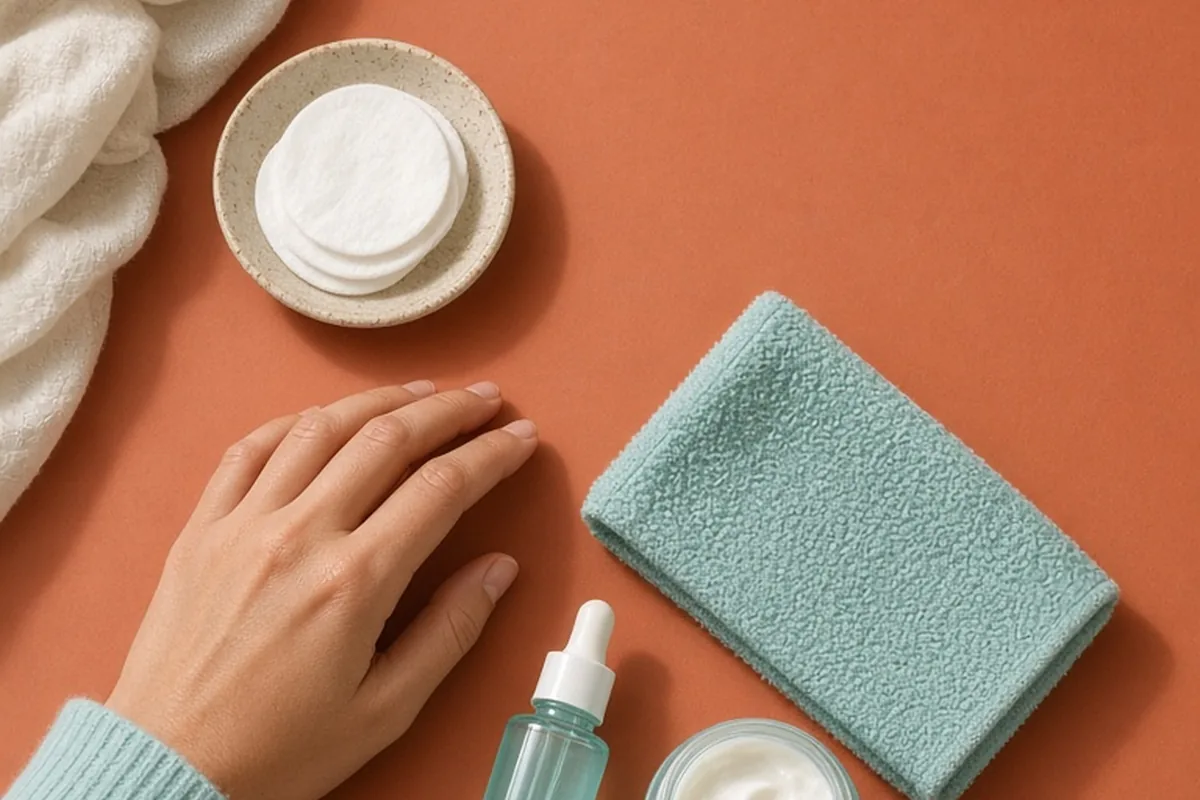
A skincare routine for dry skin focuses on gentle cleansing, replenishing lost hydration with humectants, and sealing moisture into the skin barrier with lipid-rich emollients and occlusives. A simple morning routine includes a hydrating cleanser, alcohol-free toner or serum, rich moisturizer, and broad-spectrum sunscreen. In the evening, cleanse gently, apply humectants to damp skin, and seal with a restorative barrier cream.
Dry skin occurs when the outer layer of the epidermis struggles to retain sufficient water and natural lipids, leaving the surface feeling tight, rough, or noticeably uncomfortable throughout the day. Selecting products that support natural barrier function rather than stripping away surface oils makes a predictable difference in daily comfort.
Understanding the Difference Between Dry and Dehydrated Skin
Before selecting new formulas, it helps to distinguish true dry skin from dehydration. Dry skin is an established skin type characterized by low natural sebum production. Because the sebaceous glands produce fewer protective lipids, the skin lacks the natural oils necessary to maintain an effective barrier against external irritants. In contrast, dehydration is a temporary condition characterized by a lack of water within the skin cells, which can affect any skin type, including oily or combination complexions. Recognizing your starting point ensures you do not treat an oil deficiency solely with water-based gels, or vice versa.
A simple way to check your skin state is observing how your face behaves an hour after washing with a neutral cleanser. If your cheeks feel taut, display tiny flaky patches, and rarely develop midday shine anywhere, your skin type is likely dry. Someone dealing with dehydration alone might feel surface tightness while still producing noticeable oil across the forehead and nose. The primary trade-off to consider here is that treating dry skin requires heavier, oil-replenishing textures that might feel overly rich if your skin is merely parched from seasonal weather changes or overusing aggressive facial treatments.
Structuring an Effective Morning Skincare Sequence
A daytime routine for dry skin should prioritize sustained hydration and defense against external stressors such as wind, low indoor humidity, and ultraviolet radiation. The morning begins by evaluating whether your skin truly needs a formal cleanser. If your face feels comfortable upon waking, rinsing with lukewarm water alone is often sufficient to remove overnight shedding without disrupting the lipid layer. If you prefer a cleanser, choose a non-foaming cream or lotion formula that cleanses without leaving the skin squeaking or pulling.
Following cleansing, immediately apply a hydrating essence or serum containing water-binding ingredients onto slightly damp skin. Follow this step promptly with a lipid-replenishing moisturizer to trap that moisture before it evaporates into ambient air. The final step is always a broad-spectrum sunscreen with at least SPF 30. For dry skin, moisturizing chemical sunscreens or mineral formulas suspended in soothing emollient bases work best. A potential downside of richer day creams is that they can cause certain foundations or mineral powders to pill, which means you may need to allow several minutes between moisturizing and makeup application.
Building an Evening Repair Routine for Barrier Restoration
Nighttime is when skin undergoes natural restorative processes, making the evening routine the ideal opportunity to replenish depleted lipids and reinforce the stratum corneum. If you wear sunscreen or makeup, start with a gentle first-step cleansing oil or balm to dissolve surface debris. Unlike foaming makeup removers that rely on strong surfactants, cleansing balms rinse away cleanly while cushioning dry patches. Follow with your hydrating cream cleanser to ensure a fresh, residue-free surface.
While your skin is still damp from your evening wash, layer targeted treatments and rich moisturizers. Night creams formulated for dry skin typically contain higher concentrations of fatty acids, ceramides, and cholesterol, which mimic the natural intercellular matrix. For particularly dry or cracked areas, you can finish with a thin layer of an occlusive ointment, such as medical-grade petrolatum or pure plant squalane, a practice frequently referred to as sealing or slugging. Keep in mind that heavy occlusive layers over unwashed skin can trap dead skin cells and sweat, so apply them only after thorough, gentle cleansing.
Key Ingredient Categories That Support Dry Skin
Successful product selection depends on balancing three distinct classes of moisturizing ingredients: humectants, emollients, and occlusives. Humectants draw water from the environment and deeper dermal layers toward the surface. Emollients smooth out rough edges between shedding cells and restore lipid balance, while occlusives form a physical shield that prevents moisture from escaping into the environment. Relying on only one category rarely provides lasting relief for genuinely dry complexions.
When reading product labels, look for combinations that unite these three families to provide immediate soothing and durable barrier support throughout daily activities.
- Humectants like glycerin, sodium hyaluronate, panthenol, and beta-glucan attract and hold ambient water inside the upper layers of the skin.
- Emollients such as ceramides, squalane, jojoba oil, and fatty alcohols fill in microscopic cracks between cells, softening roughness.
- Occlusives including shea butter, petrolatum, dimethicone, and beeswax create a semi-permeable protective film that curtails transepidermal water loss.
How to Safely Exfoliate Rough Patches and Flakes
Dry skin often sheds unevenly, leading to rough textures, dull tone, and patchy makeup application. While it is tempting to scrub away visible flakes with abrasive physical pastes or stiff facial brushes, vigorous friction damages an already compromised moisture barrier and triggers persistent redness. Exfoliation for dry skin must be measured, infrequent, and chemically gentle.
Consider using a low-percentage lactic acid or polyhydroxy acid treatment once every seven to ten days rather than strong glycolic acid formulas. Lactic acid is an alpha hydroxy acid with larger molecular size and natural humectant properties, making it far less irritating than other chemical exfoliants. Apply your chosen gentle exfoliant exclusively on clean, fully dry skin, wait a minute, and immediately follow with a soothing barrier cream. If you experience stinging, visible flushing, or warmth, pause exfoliation entirely until your barrier feels completely calm.
Common Application Mistakes That Worsen Dryness
Even high-quality formulas can fall short if applied incorrectly. The most widespread error is applying humectant-dense serums or water-based toners onto completely dry skin in an arid indoor environment. When the surrounding air contains very little moisture, humectants like pure hyaluronic acid can pull water upward out of the deeper skin layers, leading to heightened tightness once the serum dries down. Always mist or pat clean tap water onto the skin prior to applying serums.
Another routine misstep is washing the face with hot water during winter showers. While hot water feels comforting, it strips the delicate natural lipids that keep your skin supple. Switching to lukewarm water prevents unnecessary barrier stress. Additionally, check your current product lineup for hidden drying ingredients, such as high concentrations of denatured alcohol, strong witch hazel extracts, or heavy synthetic fragrances that can cause sub-clinical contact irritation.
Environmental Adjustments to Complement Your Skincare Products
Skincare products work most efficiently when the immediate living environment supports skin hydration. Central heating systems, indoor air conditioning, and dry regional climates continuously leach moisture from the epidermis. Placing a cool-mist ultrasonic humidifier in the bedroom or main living area helps maintain ambient humidity levels between forty and fifty percent, which noticeably slows down transepidermal moisture loss while you sleep.
Daily lifestyle practices also play a supportive role in how comfortable your skin feels throughout the day. Consider switching to silk, satin, or fine cotton pillowcases washed with fragrance-free, dye-free laundry detergents to minimize nighttime surface friction. While these external modifications will not replace the physiological need for topical lipids and water-binding humectants, they reduce the environmental demands placed on your protective skin barrier.
Illustrative Scenarios
Layering Adjustments for Persistent Midday Tightness
An office worker in an arid climate experienced tight, stinging cheeks by mid-afternoon despite using an expensive multi-step hydration routine. An audit of their process revealed they applied a concentrated hyaluronic acid serum directly to dry skin, followed only by a lightweight gel moisturizer. The routine lacked sufficient emollients and occlusives to retain hydration in an air-conditioned office. By changing the sequence to apply a basic glycerin mist on damp skin, switching to a ceramide-rich cream, and adding two drops of squalane oil over the top, their surface tightness resolved without requiring midday reapplications.
Key point: Humectants must be paired with lipid-dense creams or light facial oils to prevent atmospheric moisture loss in dry environments.
Frequently asked questions
Can I skip washing my face with cleanser in the morning if I have dry skin?
Yes, many people with naturally dry skin benefit from rinsing with lukewarm water instead of using a cleanser each morning. This preserves the beneficial natural lipids generated overnight while still clearing away residual evening products. If your skin feels oily or congested upon waking, a very mild, non-foaming cleansing milk is a sensible middle ground.
Is applying facial oil alone sufficient to moisturize dry skin?
No, facial oils provide emollients and occlusives but contain no water or humectants. For proper hydration, the skin needs both water-based moisture and lipid-based sealants. Applying oil over dry skin traps dryness underneath, so always layer facial oils over a damp face, hydrating toner, or water-based moisturizer.
How long does it take for a dry, damaged skin barrier to recover?
A mildly compromised skin barrier usually begins to feel more comfortable within two to four weeks of using a consistent, gentle routine. Complete cellular renewal of the stratum corneum typically takes roughly a month in healthy adults. Severe flaking, cracking, or persistent irritation may require longer care and guidance from a dermatologist.
What is the best way to prevent flaky patches from showing under foundation?
Prep your skin thoroughly ten minutes before makeup application with a hydrating toner, rich emollient moisturizer, and sunscreen, allowing the products to settle completely. Avoid matte or oil-controlling makeup formulas, which draw out moisture, and choose radiant, hydrating tinted balms or serums applied with a damp sponge.
Your next step
Take five minutes tonight to inspect your current cleanser and daily moisturizer, replacing any foaming wash that leaves your face feeling tight with a gentle, non-foaming cream cleanser before adding any new active treatments.