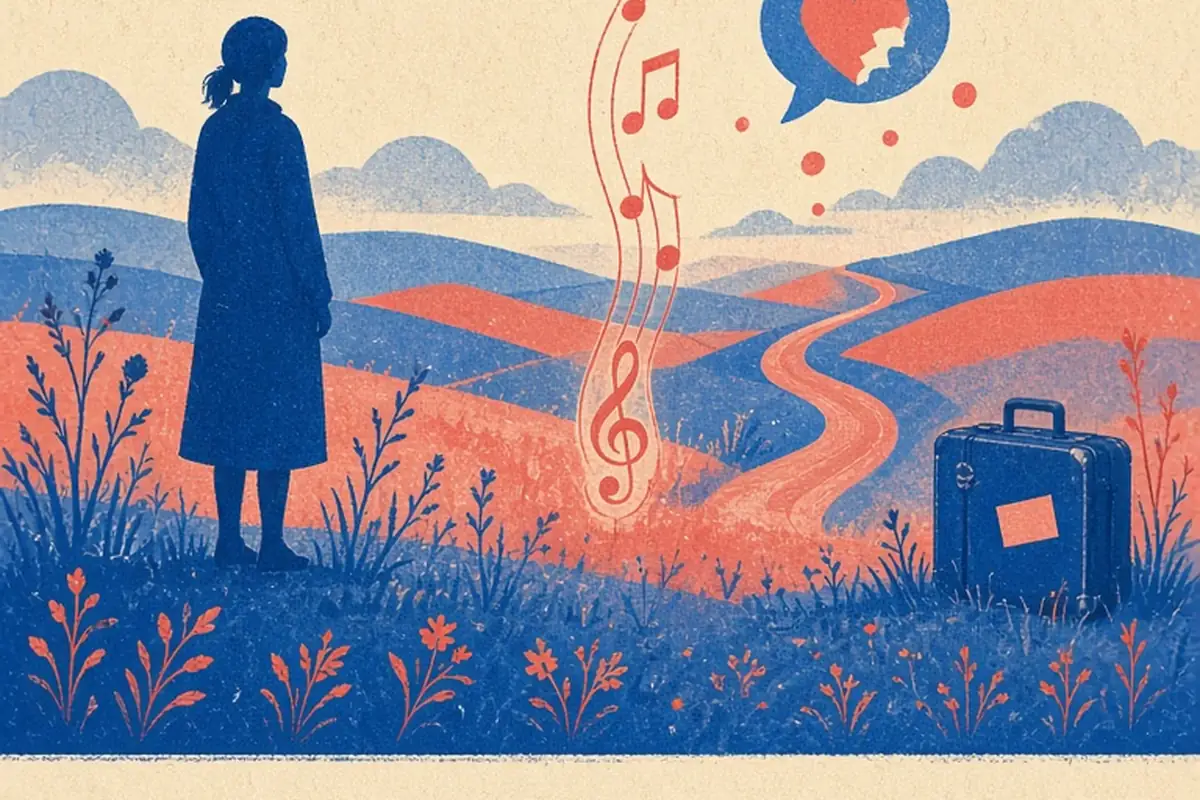
Songs about missing someone provide emotional validation, giving voice to complex feelings of grief, nostalgia, and longing when everyday words fall short. By reflecting your internal state, the right music helps you safely process heartache, acknowledge the pain of physical or emotional distance, and gradually transition from feeling stuck in unresolved memories toward emotional clarity and self-respect.
Longing is rarely a single emotion. It is often a shifting blend of fond memories, quiet regret, physical emptiness, and the disorienting shock of adjusting to daily life without someone who once anchored your routine.
Why Music Resonates When Someone Is Missing
When an important person is absent from your life, whether through a mutual breakup, an abrupt parting, or simple geographic distance, your mind naturally searches for ways to make sense of the void. Language in everyday conversation often feels too rigid or clinical to capture the specific weight of an empty passenger seat or a silent phone. Music bridges this gap because it combines lyrical storytelling with tonal atmosphere, allowing you to feel understood without needing to explain yourself to anyone else.
Listening to an artist articulate the exact tension you are experiencing creates a private sense of solidarity. It confirms that your emotional reaction is a normal human response to attachment and separation rather than a personal weakness. This resonance acts as a safe container where you can let down your guard, experience the grief or longing fully, and begin the internal work of organizing your feelings rather than repressing them.
Identifying the Different Shades of Longing in Music
Not all songs about missing someone serve the same emotional purpose. Depending on your current circumstances, you might require music that mirrors deep heartbreak, captures the patience required in a healthy long-distance relationship, or explores the wistful nostalgia of a connection that ended years ago. Choosing tracks that match your specific reality prevents you from projecting false narratives onto your situation.
Recognizing what kind of absence you are dealing with allows you to select music that clarifies your perspective instead of confusing it. A song about waiting indefinitely for someone who treated you poorly will evoke a very different internal reaction than an acoustic ballad about honoring the genuine beauty of a past chapter.
- Fresh breakup grief: Songs centered on sudden silence, disbelief, and the physical shock of separation.
- Geographic distance: Tracks that focus on mutual commitment, anticipation of reunion, and maintaining emotional closeness across miles.
- Nostalgic reflection: Melodies that look back on a past relationship with warmth, acceptance, and a clear understanding of why things ended.
- Ambiguous loss or unexpressed feelings: Music exploring unspoken affection, unresolved endings, or the pain of mixed signals.
The Difference Between Emotional Release and Rumination
Music can be a potent tool for catharsis, but it can also become an engine for rumination if used without awareness. Catharsis occurs when a track helps you release bottled-up sadness, shed tears you have been holding back, or acknowledge how much you valued someone. Once the song ends, catharsis leaves you feeling somewhat lighter, clearer, and more grounded in reality.
Rumination, by contrast, happens when you loop the same melancholic songs to feed an obsessive mental cycle. In this state, listening is no longer helping you release emotion; it is keeping you tethered to regret, fantasy, or anger. If you find yourself analyzing old text messages while playing a specific ballad on repeat for hours, the music is no longer serving your healing. Setting a boundary around how long you spend in deep listening sessions helps protect your mental energy.
Managing Shared Songs and Painful Musical Triggers
One of the hardest aspects of missing someone is encountering music that you explicitly shared with them. A song played during a road trip, an album discovered together, or a track that became your unofficial anthem can instantly trigger a visceral wave of memory. When that association hits unexpectedly, the natural instinct is often either to shut it down in panic or to drown in the memory.
A practical approach is to give yourself permission to place certain tracks on a temporary hiatus. Muting specific artists or playlists during the rawest phases of separation gives your nervous system room to stabilize. Later, when the emotional charge has diminished, you can deliberately listen to those tracks in new environments, creating fresh associations and reclaiming your personal enjoyment of the art.
Building a Playlist That Moves You Forward
When constructing a playlist to help you cope with missing someone, consider creating an emotional trajectory rather than a continuous loop of despair. A well-designed playlist acts as a structured journey: it starts by meeting you where you are, allows space for vulnerability, and gradually transitions into tracks with steadier rhythms, neutral themes, or grounded optimism.
You might begin with two or three reflective songs that articulate the ache of absence, follow them with acoustic or instrumental pieces that create quiet breathing room, and finish with songs focused on self-reliance, broader life adventures, or simple daily momentum. This structure prevents you from ending your listening session in an emotional ditch, guiding your attention back to your immediate life and responsibilities.
Channeling Musical Emotion into Grounded Decisions
Music often amplifies emotional urgency, making you feel as though you must immediately reach out, send a track link, or make a grand gesture to resolve the ache. However, the intensity you feel while listening to a powerful song is an internal experience, not necessarily an accurate assessment of what the real-world dynamic requires. Acting impulsively during a peak emotional state often leads to regret.
Instead of treating musical emotion as an instruction to contact the other person, treat it as personal data about what you value. Longing reveals your capacity for deep connection, loyalty, and care. Use that insight to invest in your own growth, maintain your dignity, and show up more thoughtfully in your current relationships and pursuits.
Illustrative Scenarios
Navigating Late-Night Longing in a Long-Distance Dynamic
Julian was three months into a demanding job in a new city while his partner finished her degree several time zones away. After long workdays, the sudden quiet of his apartment left him feeling isolated. He started spending late evenings listening to heavy breakup songs, which intensified his loneliness and led him to interpret routine delays in her text replies as signs of emotional drift. After recognizing that the music was distorting his perspective, Julian adjusted his routine. He swapped the somber tracks for upbeat instrumental music while cooking dinner and scheduled dedicated evening phone calls so they could connect directly without background anxiety.
Key point: Matching your listening choices to your actual relationship reality prevents self-inflicted distress and keeps communication healthy.
Breaking the Loop of Breakup Rumination
Following the end of an eight-month relationship, Maya created a playlist composed exclusively of songs the two of them had shared. She listened to it during every commute, finding herself repeatedly reliving their initial dates and analyzing where things went wrong. The constant immersion kept the breakup feeling fresh weeks later. Recognizing that this habit was draining her energy for work and friendships, Maya archived the shared playlist. She built a new collection featuring artists she had loved long before the relationship began. Within two weeks, her commutes shifted from sessions of emotional exhaustion to moments of personal calm.
Key point: Setting boundaries with triggering music helps your mind step out of the past and re-anchor in your present life.
Frequently asked questions
Is it healthy to listen to sad songs when I miss an ex?
Yes, listening to sad music can be a healthy way to process grief and validate your feelings in the initial stages of a breakup. It becomes unhelpful only when it turns into repetitive rumination that prevents you from re-engaging with your daily life.
Why do certain songs trigger an intense physical ache after separation?
Music is deeply tied to emotional memory and the brain's reward pathways. When you hear a song associated with a past partner, your mind rapidly recalls the feelings of intimacy and safety from that period, creating an immediate physical sensation of loss.
Should I send a meaningful song to someone I miss to break the silence?
Sending a song as an indirect way to test someone's interest often creates confusion or pressure. If communication has paused, it is usually healthier to reflect privately or, if appropriate, communicate directly with clear words rather than relying on lyrics to speak for you.
How can I start enjoying a favorite song again if it reminds me of someone?
Give the song a temporary rest until the emotional wound has had time to heal. When you feel ready, reintroduce it in entirely new settings, such as during a workout or while traveling, to build new, independent memories with the track.
Your next step
Take twenty minutes today to review your current playlists, remove tracks that provoke unhelpful rumination, and add music that supports your emotional clarity and daily routine.