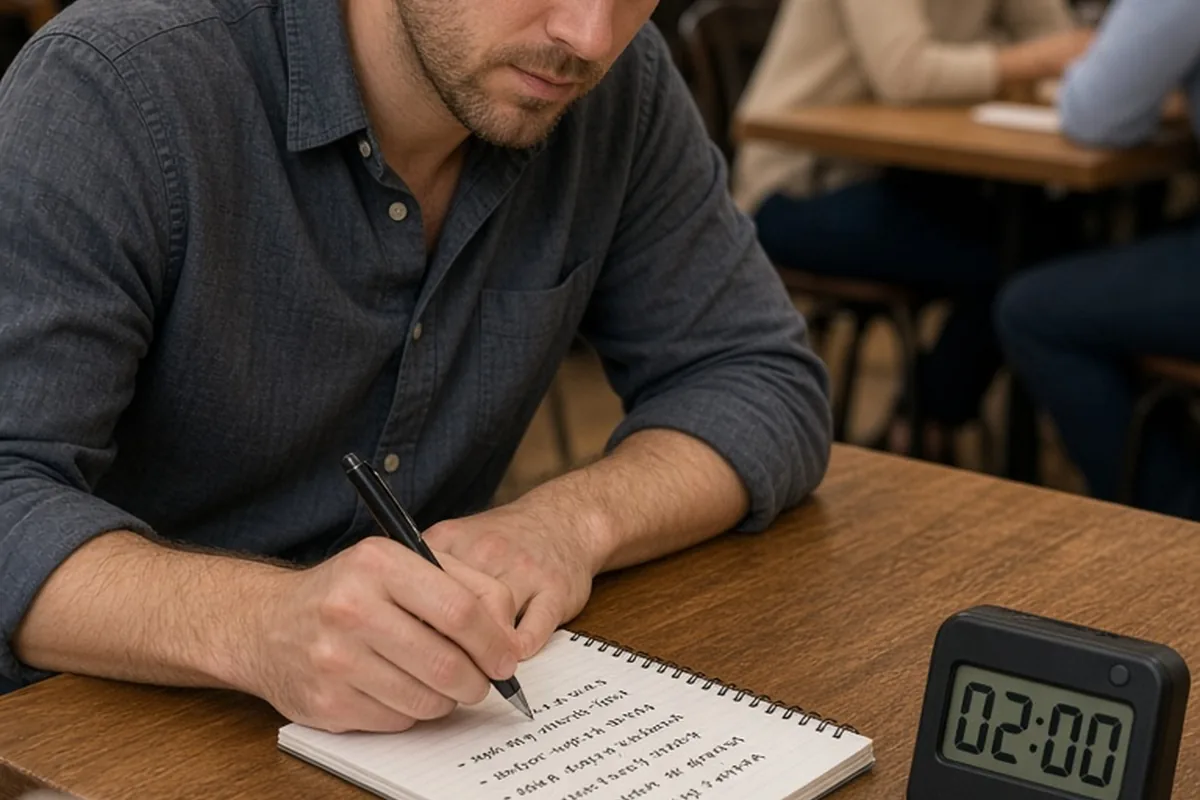
To make every second count in speed dating, treat each brief rotation as an authentic snapshot rather than an interview. Skip generic career questions in favor of conversational hooks about current projects, travel, or genuine interests. Listen actively without planning your next line, keep notes between rounds to avoid confusing people later, and focus on mutual ease rather than trying to impress everyone in the room.
Speed dating compresses the initial phase of meeting someone into three to eight minutes, which can feel overwhelming if you treat it like a series of rapid job interviews. Approaching the event with curiosity, grounded boundaries, and a light structure allows you to showcase your personality without burning out halfway through the evening.
Choosing Openers That Go Beyond Standard Resume Swapping
In a room where twenty people will speak to you in under two hours, repetitive questions like what do you do for work and where are you from quickly lead to rehearsed, robotic answers. When people repeat the same professional summary eight times in forty minutes, their vocal cadence flattens and their genuine personality disappears behind a practiced script. If you want to make a meaningful impression, invite the other person into a topic that requires them to think in the present moment rather than recite a resume.
Effective openers are open-ended, low-pressure, and anchored in personal enjoyment. Inquiring about an exciting weekend project, a recent movie that lived up to expectations, or the best meal they have cooked recently shifts the conversation toward emotional energy and personal taste. For example, asking someone what they would do with a completely unscheduled Saturday morning often reveals far more about their lifestyle and rhythm than knowing their corporate title. It allows both of you to talk about how you live rather than just what you do for a paycheck.
At the same time, adapt your questions to the other person's comfort level. If your date is noticeably nervous and leans heavily on talking about their job because it feels like safe ground, avoid cutting them off or demanding an immediate switch to deep philosophy. Instead, use their work as a bridge to something more personal by asking what part of their week they enjoy most or how they unwind after a busy day. Meeting people where they are keeps the interaction cooperative rather than demanding.
Managing the Speed Dating Rotation Without Sensory Burnout
The physical environment of a speed dating mixer can be demanding. Loud ambient music, dozens of overlapping conversations, and constant room movement create sensory fatigue that peaks around the midpoint of the event. If your vocal cords get strained or your concentration drops, your final several dates may experience a depleted version of you simply because your physical energy ran out, not because of any lack of compatibility.
Preserving your stamina requires small, deliberate habits from the first bell. Keep a glass of water nearby and take small sips during the sixty-second transition windows between rounds to keep your voice clear. Anchor yourself physically by keeping both feet flat on the floor, relaxing your shoulders, and taking one deep breath before turning to greet the next person. Modulating your volume so that you project from your chest rather than shouting over background noise will keep your voice intact across fifteen or twenty rounds.
Pacing your enthusiasm is equally vital. Trying to maintain high-energy theatrical excitement across every single table is unsustainable and often comes across as performative. Aim for steady warmth and grounded curiosity instead. If you hit a round where your energy dips, you do not need to fake high adrenaline; simply acknowledge the fast pace with a warm smile. Often, speaking in a calm, unhurried tone stands out positively in a room full of people racing against the clock.
Organizing Your Scorecard Notes Between Fast Rounds
One of the most common pitfalls at speed dating events is the memory blur that occurs by the end of the evening. After meeting a dozen people in rapid succession, faces, careers, and shared jokes blend together. If your scorecard only contains checkmarks or simple yes and no responses, you will likely struggle to remember why you marked someone as a match when the host emails your contact list the following day.
Develop a quick shorthand system using two specific anchors: one visual cue and one unique conversational detail. Write down something like green linen shirt or silver ring along with a specific mention such as owns two rescue greyhounds or wants to visit Japan next spring. This two-part note takes less than fifteen seconds to jot down while the organizer resets the timer, but it instantly revives your mental image when you review your matches at home.
Establish realistic criteria for marking a match before the event begins. You do not need to determine if someone is a lifelong romantic partner during a four-minute interaction; you only need to decide whether you felt comfortable and would enjoy a relaxed twenty-minute coffee or drink to learn more. Avoid ruling people out over minor conversational stumbles caused by social anxiety, but equally avoid marking yes out of politeness if you felt genuine discomfort or total disinterest.
Distinguishing Genuine Curiosity from Polite Social Etiquette
In a social environment designed for polite mingling, basic friendliness is standard protocol. A date smiling, nodding, and answering your questions indicates courteous manners, but it does not automatically indicate mutual romantic interest. Confusing basic politeness with active attraction can create unrealistic expectations, while misinterpreting quiet listening as disinterest can lead you to discard promising connections.
Instead of trying to read micro-expressions or body language formulas, look for conversational reciprocity. Mutual curiosity shows up when someone builds upon the topic you introduce, shares a related thought from their own life, and asks an unprompted follow-up question. If every exchange requires you to initiate a new subject while they give brief answers without asking anything about you, they may simply be riding out the timer politely. Conversely, when the conversation flows back and forth like a cooperative game of catch, mutual engagement is present.
Remember that romantic chemistry takes different forms. Some people expect an immediate, movie-like spark and mistake nervous excitement for real compatibility. Many stable, rewarding relationships begin with a calm sense of ease, comfortable humor, and relaxed conversation. If you walk away from a three-minute chat feeling calm, grounded, and slightly curious to hear more, that is often a more reliable foundation than intense, performative charm.
Navigating Awkward Moments and Mismatched Values with Grace
Not every rotation will run smoothly. You will inevitably encounter dates where conversation stalls, where interests do not align, or where awkward silences stretch out between sentences. Treating a quiet lull as a catastrophe only magnifies the tension. When words run dry, simply leaning back and remarking that speed dating is definitely an unusual social experiment can break the silence and allow both participants to laugh off the pressure.
Occasionally, a participant may express an opinion, humor style, or lifestyle stance that clashes directly with your values. Speed dating tables are not designed for ideological debates or corrective lectures. A calm, neutral acknowledgement such as that is an interesting perspective, though I look at it quite differently allows you to state your disagreement without escalating into an argument during a three-minute round. Shift the discussion to neutral topics like the venue or the event logistics until the bell sounds.
Your comfort and physical boundaries always take precedence over social etiquette. If a participant makes inappropriate comments, uses unwelcome physical contact, or behaves aggressively, you are never obligated to sit through the timer out of politeness. You can excuse yourself immediately to get a glass of water, step into the restroom, or inform the event host. Professional organizers expect to handle inappropriate conduct and will quietly reassign seating or remove someone who violates event standards.
Reconnecting After Mutual Matches Are Released
When the organizer releases the mutual match sheet—typically within 24 to 48 hours—the momentum from the event is still fresh. Waiting several days out of an outdated desire to appear aloof usually creates friction and signals low interest. Reaching out with a clear, friendly, and low-pressure message within a day or two of receiving contact information keeps the connection alive without demanding immediate devotion.
Craft your opening message around the specific detail you noted on your scorecard. A generic opening such as hey, great meeting you at the mixer often gets lost in someone's inbox. In contrast, a message that says hi Jordan, I really enjoyed our conversation about vintage record shops on Thursday; I would love to grab a coffee this weekend if you are free makes it clear exactly who you are and provides a simple, direct invitation.
Maintain emotional balance after sending your message. If a match takes a couple of days to reply, an ordinary busy schedule is often the reason rather than hidden subtext. If someone does not respond at all or politely clarifies that they are no longer available, accept the outcome without demanding explanations or sending follow-up prompts. A single warm invitation offers clarity, respects the other person's boundaries, and allows you to focus your attention on people who are equally eager to connect.
Illustrative Scenarios
Transitioning from Interview Mode to Conversational Ease
Marcus attended an evening speed dating mixer in Seattle and realized by his fourth table that every round felt like a formal job review. He kept asking people about their job titles, employer locations, and commute times, resulting in stiff, transactional answers and mutual restlessness. Before the fifth round began, he decided to abandon his career questions entirely. Instead, he opened by asking what new hobby or project the other person was currently enjoying. His dates visibly relaxed, the conversations became animated, and Marcus left the event feeling energized rather than drained.
Key point: Ditching resume-style questions removes social performance anxiety and helps people share their actual personality.
Reframing Match Criteria on the Event Scorecard
Elena participated in a local singles event and initially planned to check yes only if she experienced an immediate, heart-racing spark. After the first six rounds, she noticed she was marking no for everyone, including several kind individuals who were simply a bit shy at the start of the bell. Recognizing that high-pressure expectations were filtering out genuine potential, she adjusted her standard to a simpler question: did this conversation feel easy, and would I like to hear another story from this person over coffee? Using this grounded perspective, she selected three mutual matches.
Key point: Evaluating short dates on conversational comfort rather than instant chemistry gives promising connections room to develop.
Frequently asked questions
What should I wear to a speed dating event?
Wear clothes that fit comfortably, match the venue's atmosphere, and reflect how you typically dress when meeting friends for an evening out. Avoid stiff formal wear unless the event specifically specifies a dress code, as comfortable clothing helps you relax physically during repeated rotations.
Is it considered rude to write on my scorecard while sitting with a date?
It is best practice to wait for the brief transition window between rounds before writing your impressions. Taking extensive notes while someone is speaking can make them feel evaluated or ignored. Keep your focus entirely on the person in front of you while the timer is running, then jot down two quick words once the bell rings.
How many matches should I realistically expect to get from one event?
Match counts vary widely depending on the size of the room, attendance, and personal selection criteria. Many participants receive between one and three mutual matches, while some events yield none and others produce several. Experiencing zero mutual matches is a normal part of the process and simply reflects the specific group present that evening.
How should I handle running out of things to say before the timer rings?
If a conversation stalls, accept the pause without apologizing or scrambling for profound topics. You can ask a simple observational question about how they are finding the speed dating format or take a sip of water together. A quiet moment is an ordinary part of meeting strangers and does not mean the round was a failure.
Your next step
Draft three low-pressure conversation starters about your current leisure interests on a small note card before your next event so you can speak naturally without reverting to work questions.