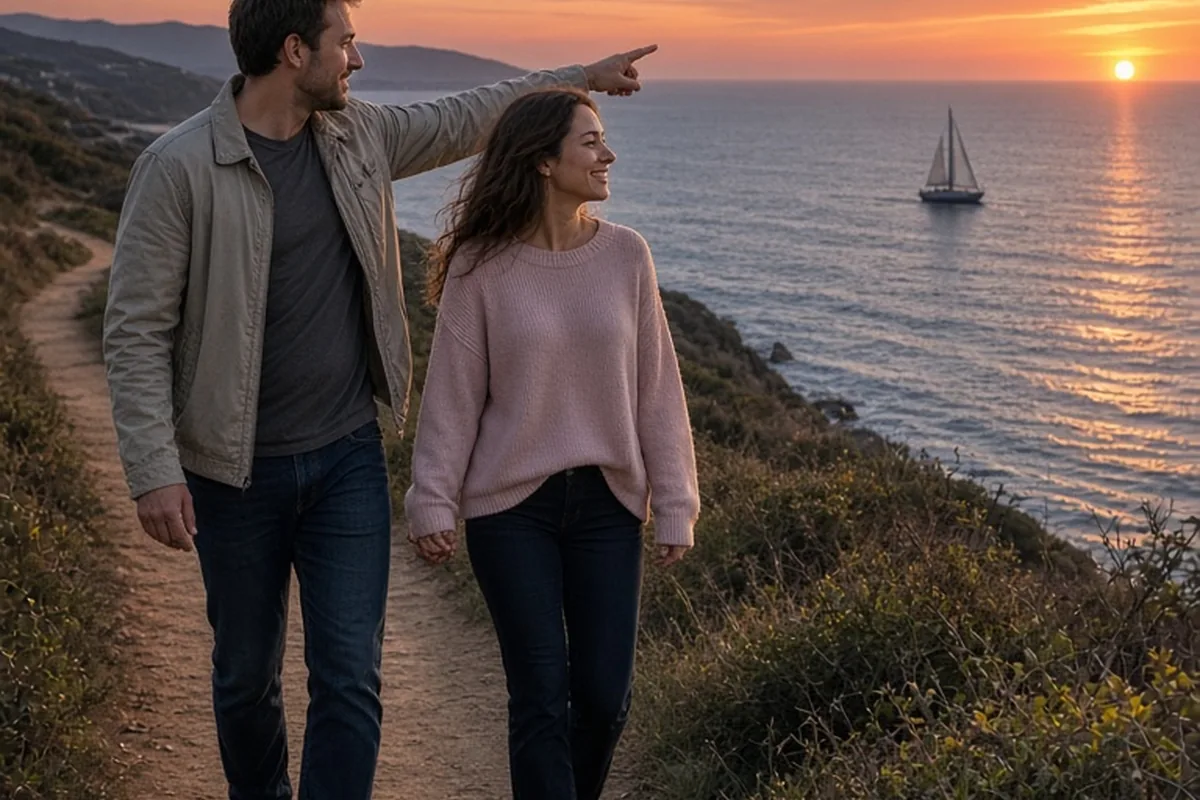
The sweetest couple photoshoots focus on shared activity and natural interaction rather than rigid poses. Instead of stiffly smiling at a camera, plan an environment where you genuinely connect: cooking your favorite meal at home, walking through a neighborhood market, sharing coffee in morning light, or exploring a coastal trail at dusk. Giving your hands and attention something authentic to do naturally highlights emotional warmth, mutual comfort, and genuine affection without feeling awkward or staged.
Capturing genuine warmth between partners often feels daunting when a camera is pointed straight at you. Shifting the session focus from looking perfect to sharing a memorable, low-pressure experience allows your actual relationship dynamics to shine through on camera.
Choosing In-Home Couple Photoshoots for Quiet Comfort
In-home sessions strip away the public performance aspect of portrait photography, making them especially rewarding for couples who feel self-conscious in front of strangers. Your home represents your shared history, containing textures, objects, and corners that belong uniquely to your daily life. Rather than attempting to stage a spotless interior design showcase, focus on the pockets of your living space where you naturally unwind together. A sunlit kitchen island, a low sofa draped with a favorite throw blanket, or a sunny patch of living room rug with your record collection provides an authentic backdrop that cannot be replicated in a commercial studio.
To get the most out of an at-home shoot, identify one or two small routines that bring you comfort. Making pour-over coffee together in the morning, flipping pancakes, or working through a Sunday crossword puzzle gives your hands purpose and keeps your expressions loose. You do not need an immaculate, sprawling home to make this concept work; photographers typically rely on natural window light and tight framing. Clear away visual clutter like mail piles or laundry baskets, but leave the personal touches—mugs you collected on a road trip, well-loved paperback books, and framed prints—that quietly narrate who you are together.
Interactive Date Ideas That Replace Awkward Posing
One of the most effective ways to avoid stiff, mannequin-style framing is to transform the photoshoot into a genuine date where the photographer simply tags along. When you are engaged in an activity, your body language naturally softens, laughter becomes spontaneous, and the camera captures micro-expressions of warmth that cannot be coaxed out through verbal posing commands. Think about the casual outings that define your weekends and invite your photographer to document the experience from a comfortable distance.
Consider visiting a lively farmers market, browsing through an independent bookstore where you trade recommendations, renting a rowboat on a calm city lake, or grabbing ice cream at a walk-up counter. These environments naturally encourage movement, shared eye contact, and playful back-and-forth. If you opt for a public venue, pick an off-peak time—such as a weekday morning or early afternoon—to avoid heavy crowds that might make you feel rushed or observed. Be sure to confirm whether commercial photography requires permission or a small fee at private commercial venues like nurseries or historic arcades before arriving.
Outdoor Sunset and Golden-Hour Concepts for Visual Warmth
Golden hour—the hour just after sunrise or right before sunset—produces long shadows, gentle diffusion, and a warm, flattering glow that flatters skin tones and elevates outdoor landscapes. Open meadows, grassy nature preserves, coastal dunes, and quiet public parks provide wide-open spaces where you can walk, talk, and move freely. The natural environment creates depth and romance without requiring heavy prop setups, letting the environment complement your relationship rather than distract from it.
Working with natural light requires flexibility and realistic planning. The window of ideal golden-hour light typically lasts only forty to sixty minutes, depending on the latitude and time of year, which means punctuality is critical. Prepare for environmental elements that can impact comfort, such as wind, lower evening temperatures, or damp grass. Bringing a second pair of flat walking shoes for traversing trails between shooting spots and carrying a tailored jacket that fits your aesthetic allows you to adapt to changing weather without cutting the shoot short.
Styling Outfits to Complement Each Other Without Matching
Coordinating outfits works best when you select a cohesive color palette rather than wearing identical colors or matching tops. Matching outfits, like both wearing matching denim and white shirts, can flatten the visual dimension of a portrait and distract from the emotional connection between faces. Instead, select three to four harmonious tones—such as warm oatmeal, muted olive, terracotta, and soft navy—and distribute them across your respective wardrobes to create depth and contrast.
Texture and fabric movement play an equally vital role in how comfortable and dynamic you appear on camera. Garments made from breathable linen, chunky knitwear, silk, or corduroy catch the light in flattering ways and add tactile richness to close-up shots. Choose clothes that allow you to sit on the ground, walk briskly, and lean into each other without pulling, riding up, or restricting your breathing. If you feel physically comfortable and look like yourself on your best day, that confidence will show in every frame.
Navigating Camera Shyness and Tension During the Shoot
It is completely normal for one or both partners to feel nervous or hesitant when booking a couple photoshoot. Tension often arises when a partner worries about how their body looks, dreads feeling foolish, or feels pressured to deliver perfect portraits. Acknowledging this hesitation ahead of time helps lower the emotional stakes. Before your session, discuss boundaries and preferences with your photographer, letting them know if you prefer candid documentation over direct-to-camera portraits.
During the session itself, rely on gentle physical touch prompts rather than freezing into stationary poses. Rest your forehead against your partner's temple, whisper a private joke, hold hands while taking slow steps toward the camera, or simply close your eyes for a breath together. Taking short breaks to reset, sip water, and chat casually breaks the cycle of performance anxiety. Remember that genuine connection often looks like a quiet, contemplative smile or an affectionate touch just as much as an exuberant, wide-mouthed laugh.
Capturing Meaningful Milestones Without Stiff Formality
Photoshoots do not need to be reserved exclusively for engagements or formal wedding anniversaries. Documenting transitional life chapters often yields the most treasured images over time. Commemorating moving into your first apartment, welcoming an adopted rescue pet, celebrating a quiet career change, or marking five quiet years of companionship offers a grounded reason to celebrate your bond as it exists right now.
When honoring a milestone, resist the impulse to follow generic Pinterest blueprints that feel disconnected from your real life. If your milestone is buying a home, take photos sitting on empty packing boxes eating takeout off paper plates rather than standing rigidly on the front porch holding a decorative sign. Documenting the real, slightly imperfect circumstances of your life grounds your portraits in honesty, ensuring that when you look back at them decades later, they trigger actual memories rather than staged perfection.
Illustrative Scenarios
Overcoming Camera Stiffness Through a Familiar Routine
Elena and Marcus wanted portraits to mark their tenth anniversary but dreaded the prospect of posing in a public botanical garden. Marcus felt especially anxious about looking awkward in formal portraits. After discussing their hesitation, they asked their photographer to join them for a morning at their local neighborhood coffee shop, followed by a walk through the tree-lined streets where they first lived together. With hot drinks in hand and a familiar path to stroll, Marcus relaxed within fifteen minutes. The photographer captured unforced laughter, spontaneous hand-holding, and quiet mutual smiles that felt entirely true to their rhythm.
Key point: Grounding a portrait session in an everyday setting removes performance pressure and lets natural affection surface.
Balancing Different Outfit Preferences for an Urban Walk
Priya preferred bold earth tones and textured vintage dresses, while Jordan felt most authentic in minimalist, dark monochrome basics. Planning an autumn shoot in downtown Chicago, they initially worried their personal styles would look mismatched on camera. Rather than forcing Jordan into an uncomfortable color or asking Priya to tone down her aesthetic, they chose charcoal and slate layers for Jordan and a warm rust-colored wrap dress for Priya. Against the cool granite and brick buildings, the contrasting textures complemented each other without either partner feeling disguised.
Key point: Harmonizing contrasting personal styles through tonal balance looks far more natural than forcing matching outfits.
Frequently asked questions
How far in advance should we book a photographer for a couple session?
Most independent portrait photographers suggest booking two to six weeks ahead, though peak autumn and spring weekends can book out several months in advance. If you have weekday flexibility, you can often secure an evening golden-hour session with much shorter notice. Check the photographer's rescheduling policy regarding bad weather before placing a deposit.
What should we do if it rains on the day of our outdoor shoot?
Decide in advance whether you prefer to lean into the mood with clear umbrellas and rain jackets or reschedule for clear skies. Many photographers offer backup weather dates or can shift the session indoors to your home, a local greenhouse, or an architectural covered walkway. Clarify bad-weather contingency options during your initial consultation so there is no confusion on shoot day.
How many outfit changes are ideal during a one-hour photoshoot?
Sticking to one strong outfit, with an optional removable layer like a jacket or sweater, works best for a standard sixty-minute session. Changing clothes entirely uses ten to fifteen minutes of prime lighting and frequently breaks the natural momentum of the shoot. If you want two distinct looks, look into booking an extended ninety-minute session.
How can we look natural if neither of us knows how to pose?
Focus on slow, natural motion and engaging with your partner instead of freezing in place for the shutter. Simple actions like walking side by side, leaning together on a bench, or sharing a whispered comment provide organic posture without deliberate effort. An experienced portrait photographer will offer interactive prompts rather than rigid posing instructions.
Your next step
Pick one shared activity or familiar location that already brings you both genuine comfort, and build your photoshoot concept around that experience rather than a generic pose guide.