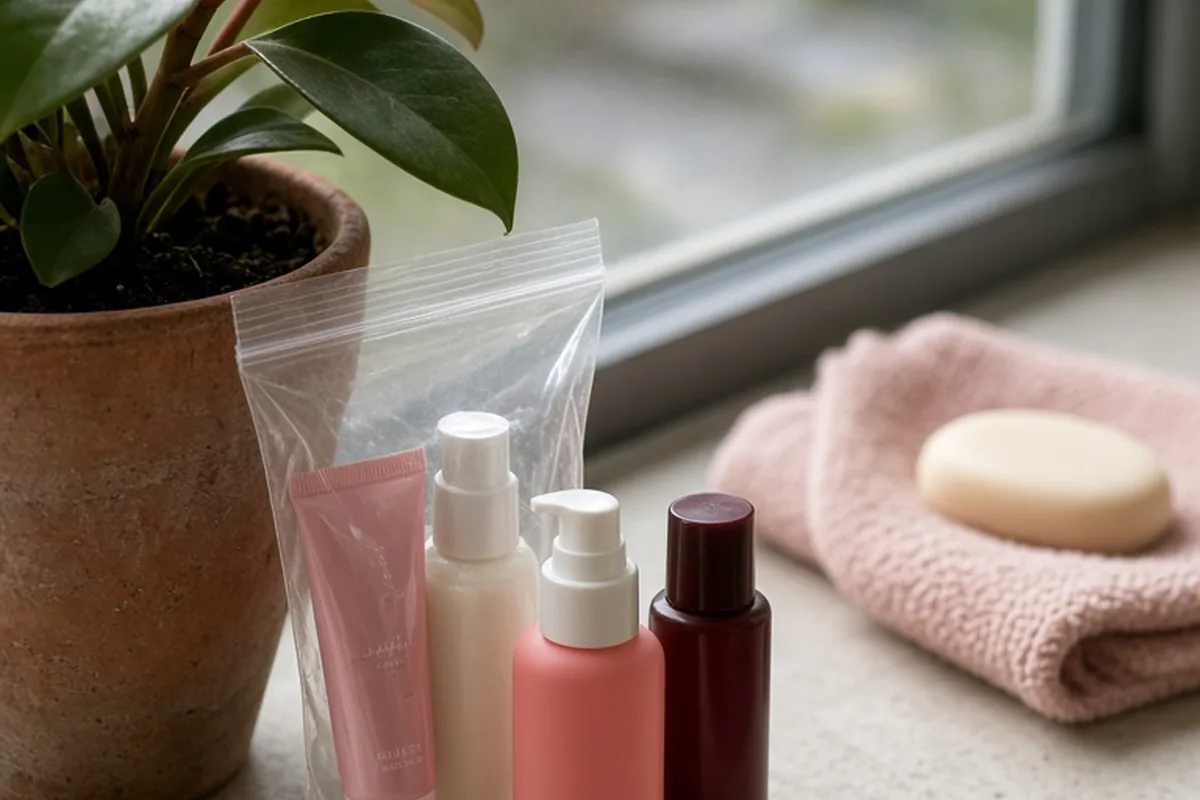
To pack travel size skincare effectively, streamline your routine to core essentials: cleanser, moisturizer, and sunscreen. Decant stable formulas into reusable silicone or airless pump bottles, keep active ingredients like retinoids or vitamin C in opaque, original travel packaging, and place all liquids in a clear, sealed bag. This approach saves space while preventing formulation breakdown and accidental leaks.
Traveling frequently disrupts daily habits, and personal skincare routines often suffer first when luggage space is constrained. Managing airline liquid rules, changing climates, and limited bag volume requires practical preparation to maintain consistent skin health on the road.
Choosing Between Decanting and Purchasing Miniatures
Decanting full-sized products into smaller containers offers complete control over the exact formulations you bring, preventing the skin reactions that often accompany unfamiliar travel-sized items. Buying pre-packaged travel miniatures from retail stores may seem convenient, but brands frequently reformulate minis or charge disproportionately high prices per ounce. Moreover, specialized products such as prescription treatments or niche toners rarely exist in travel sizes, making decanting the only viable path to maintaining your specific regimen.
When selecting reusable containers for decanting, match the container material to the product formulation. Airless pump bottles work best for water-based serums, lotions, and creams because they minimize air exposure and dispense virtually every drop without requiring you to reach inside with fingers. Flexible silicone squeeze tubes are ideal for thick cleansers and body lotions, though they can degrade or swell when filled with pure oils or volatile silicones. Hard plastic bottles made from polyethylene or polypropylene offer reliable chemical resistance for micellar waters, liquid toners, and facial oils. Avoiding rigid, clear jars with wide mouths helps reduce bacterial contamination and air exposure during your trip.
Prioritizing Core Routine Steps Over Multistep Regimens
Condensing an extensive bathroom counter routine into a compact travel pouch requires distinguishing essential skin barrier maintenance from optional cosmetic steps. The core foundation of any effective travel routine consists of a gentle, non-foaming cleanser, a balanced moisturizer suited to your skin type, and a broad-spectrum sunscreen with at least SPF 30. These three steps preserve the skin's protective lipid barrier and shield against environmental stress without consuming valuable luggage volume.
You can simplify your packing list by selecting multi-functional products that fulfill multiple roles simultaneously. For instance, a rich moisturizing lotion containing niacinamide and ceramides provides hydration while soothing redness, eliminating the need to pack separate soothing serums. Similarly, a hydrating sunscreen can replace a dedicated morning cream in humid destinations. However, avoid combining steps in ways that compromise safety or efficacy, such as relying on sunscreen-infused facial wipes, which rarely deposit enough product to achieve stated sun protection ratings.
Protecting Light- and Oxygen-Sensitive Active Ingredients
Potent skincare actives—such as L-ascorbic acid (vitamin C), retinoids, and exfoliating alpha or beta hydroxy acids—are inherently vulnerable to degradation from light, elevated temperatures, and ambient oxygen. Transferring a concentrated vitamin C serum into a clear plastic dropper bottle can cause rapid oxidation, rendering the product ineffective and potentially irritating to the skin within days. Similarly, retinoids lose potency when exposed to air during repeated decanting.
To travel safely with sensitive actives, seek out opaque, airtight travel packaging or purchase certified travel sizes directly from the manufacturer to ensure formulation stability. If you must decant, use dark amber or opaque glass dropper bottles, fill the container completely to minimize trapped oxygen, and complete the transfer in a single quick step. For shorter trips lasting less than a week, consider pausing unstable actives altogether and relying solely on hydrating and barrier-supportive products to prevent destabilizing your skin in unfamiliar environments.
Preventing Leaks and Managing Cabin Pressure Changes
Aircraft cabins experience significant drops in atmospheric pressure as planes ascend, causing the air trapped inside sealed cosmetic bottles to expand. This pressure differential forces liquids out through cap threads and pump nozzles, creating messy leaks across travel bags. Screw-top bottles and flip-top caps are particularly vulnerable to this effect, especially when packed at full capacity without room for air expansion.
You can eliminate leaks by using the squeeze-and-seal technique before securing caps. Before twisting the cap onto a flexible tube or bottle, gently squeeze the container until the liquid reaches the rim, expelling the pocket of ambient air, and then tighten the closure completely. For rigid containers, unscrew the lid, place a small square of plastic cling wrap over the opening, and screw the cap firmly over the plastic barrier. As an additional precaution, organize all decanted liquids into dedicated clear, waterproof pouches with durable zip closures rather than standard slide-lock sandwich bags.
Adapting Skincare Choices to Destination Climates
A travel kit formulated for your home environment may fail to support your skin under different climatic conditions. Moving from a temperate, humid region to an arid or high-altitude setting accelerates transepidermal water loss, leaving the skin feeling tight, flaky, and uncomfortable. Conversely, traveling to a hot, humid climate increases sweat and sebum production, which can cause heavy creams to feel suffocating and contribute to clogged pores.
Prepare for climate shifts by packing modular formulas that allow you to adjust hydration levels without carrying duplicate routines. If heading to a dry or cold climate, pack a tiny dropper vial of squalane or jojoba oil, which can be blended drop-by-drop into your standard moisturizer to boost its occlusive properties. When visiting humid locations, pack a lightweight gel moisturizer and prioritize water-resistant, matte-finish sunscreens that hold up against perspiration. Assessing destination weather patterns ahead of time ensures you only carry adjustments that you will actually use.
Maintaining Sanitation and Shelf Life for Decanted Products
Commercial skincare products rely on carefully balanced preservative systems designed for the original container volume and specific dispensing mechanism. When you open a bottle and pour the contents into a travel container, you expose the formula to environmental spores, surface bacteria, and ambient oxygen. This transfer alters the preservative balance and significantly shortens the usable lifespan of the product compared to its original shelf-life rating.
Establish a clean transfer protocol to protect decanted products from premature spoilage. Wash and sanitize all travel bottles, funnels, and spatulas with 70 percent isopropyl alcohol, allowing them to air-dry completely on clean paper towels before filling. Never use tap water to rinse containers right before filling, as residual moisture encourages microbial growth. Decant only the quantity needed for the duration of your trip plus two extra days, and discard any leftover decanted product upon returning home rather than storing it for future travel.
Assembling an Accessible In-Flight Skincare Kit
Commercial airplane cabins maintain relative humidity levels typically between 10 and 20 percent, which is significantly drier than most indoor environments. Packing your entire travel kit into overhead carry-on luggage or checked bags leaves you without access to protective products during long flights. Having a dedicated, palm-sized kit in your personal item allows you to counter cabin dryness without occupying significant space.
An effective in-cabin pouch should contain a rich lip balm, a travel-sized hand cream, and a multi-purpose barrier balm or facial mist. Avoid touching your face with unwashed hands during transit; always apply hand sanitizer or wash thoroughly before refreshing your skin mid-flight. Furthermore, avoid sheet masks or aggressive physical exfoliants in the cabin, as they introduce unnecessary bacterial contact and can evaporate rapidly in dry cabin air, drawing moisture out of the outer skin layers rather than replenishing it.
Frequently asked questions
How do I calculate how much skincare product to pack for a trip?
A standard face routine uses approximately 1 milliliter (about a quarter-teaspoon) of cleanser and moisturizer per application, and 1.25 milliliters of sunscreen. For a seven-day trip, packing 15 to 20 milliliters of cleanser and moisturizer and 30 to 40 milliliters of sunscreen provides sufficient coverage with a comfortable margin for reapplication.
Can I bring solid skincare bars to save space in my liquids bag?
Yes, solid cleansing sticks, facial soap bars, and solid moisturizer or sunscreen sticks do not count toward airline liquid volume restrictions. Using solid alternatives frees up valuable space inside your transparent liquids bag for sensitive serums and liquid lotions that cannot be replaced.
How should I label decanted travel bottles so I do not mix them up?
Use waterproof label tape or a permanent marker written directly on painter's tape to clearly mark the product name and whether it is intended for morning or evening use. Adding the decanting date ensures you know when the product was transferred and when it should be discarded.
What is the best way to clean travel bottles between trips?
Soak disassembled bottles and pump mechanisms in warm water with gentle dish soap to break down oily residues, then rinse thoroughly. Finish by rinsing with 70 percent isopropyl alcohol and allowing all components to air-dry completely before storing them in a dust-free container.
Your next step
Review your upcoming itinerary, select your essential cleanser, moisturizer, and sunscreen, and decant precise quantities into sanitized, opaque containers labeled for morning and evening use.