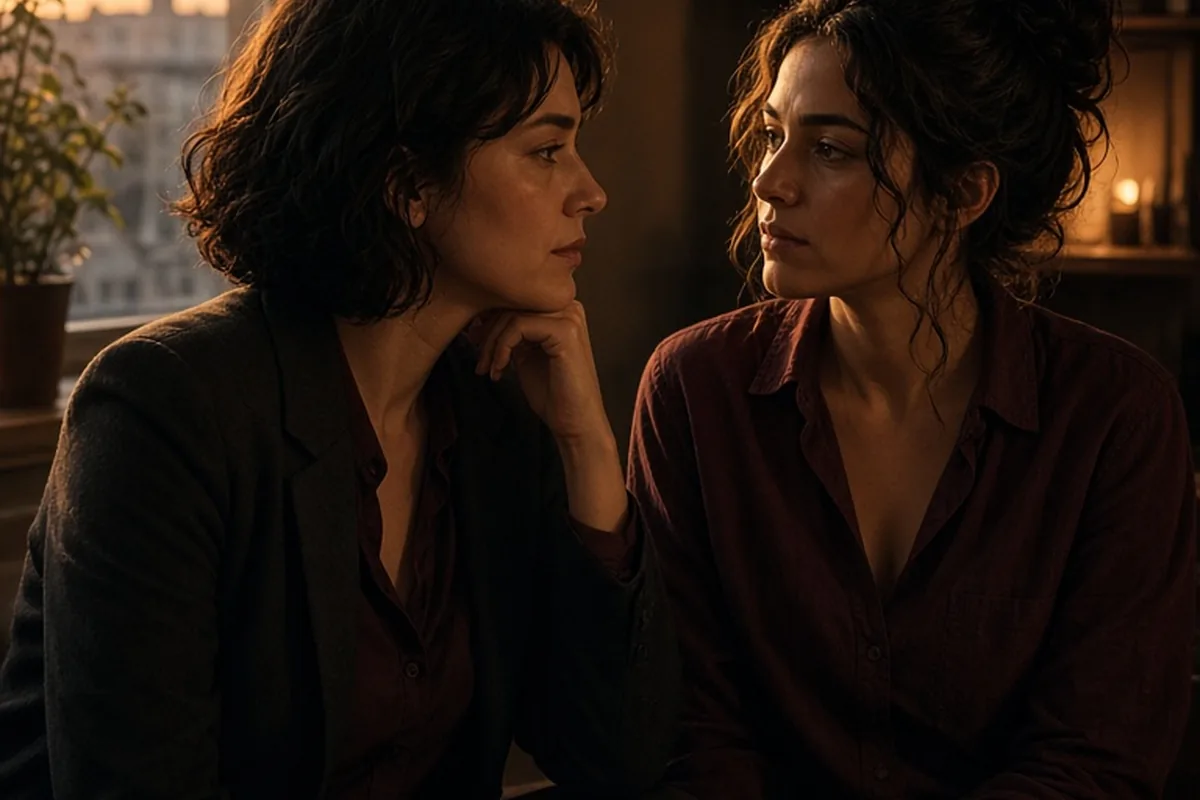
Terms describing types of lesbians typically refer to gender presentation, cultural history, and aesthetic expression rather than rigid personal categories. Common community words include butch, femme, stud, stem, and chapstick lesbian. These labels offer language for community belonging, personal style, and shared queer traditions, but they remain voluntary descriptions that individuals adopt, adapt, or skip entirely depending on what feels authentic to them.
Stepping into queer culture often introduces a rich vocabulary shaped by decades of grassroots history, community organizing, and evolving personal style. Understanding these terms helps people navigate social spaces, clarify self-expression, and communicate with partners respectfully.
Butch and Femme Traditions and Their Cultural Roots
The terms butch and femme represent two of the oldest and most culturally enduring traditions within the lesbian community. Arising prominently in mid-twentieth-century working-class bars and social clubs, these identities were never mere fashion statements. They functioned as vital social roles, mutual support systems, and visible declarations of queer existence during eras when open homosexuality carried severe legal and social hazards. A butch individual historically embraced a masculine presentation, protective posture, and distinct aesthetic that rejected conventional female expectations. Conversely, a femme cultivated an intentional, often stylized femininity that existed outside the male gaze, reclaiming softness and glamour on woman-centered terms.
In modern contexts, butch and femme continue to thrive as nuanced identities rather than rigid caricatures. Being butch may involve tailoring, workwear, short hair, and a grounded, masculine presence, but it also reflects a specific emotional sensibility and pride in female or nonbinary masculinity. Being femme is not simply default womanhood; it is deliberate, active femininity centered in lesbian desire. Outside observers sometimes mistakenly assume butch-femme relationships simply duplicate heterosexual dynamics, but community members understand that two women or gender-expansive individuals interacting within these roles create their own distinct language of intimacy and mutual respect.
A common challenge arises when newcomers feel pressured to pick one side of the binary immediately upon entering queer spaces. Some people worry that choosing femme makes them invisible in lesbian settings, while others fear that adopting butch aesthetics will limit their social comfort in traditional workplaces. The strength of these traditions lies in their history of intentionality, meaning they are available as affirming frameworks of belonging, not compulsory uniforms that anyone must adopt to prove their authenticity.
Black and Brown Community Terms Like Stud and Stem
Language within the lesbian community is not universal across all cultural backgrounds. Specific terms have emerged from Black, Latina, and Indigenous experiences to honor intersections of racial identity, gender expression, and social survival. The term stud is a prominent example, originating within the Black lesbian community to describe a dominant, masculine-presenting woman. A stud typically embraces masculine clothing, barbershop cuts, and a strong personal presence rooted distinctly in African American vernacular culture and community spaces.
Because mainstream white lesbian circles historically marginalized women of color or defined butch-femme dynamics through a narrow lens, terms like stud and stem arose to create autonomous spaces and self-definition. A stem, sometimes called a stemme, describes an individual who blends attributes of a stud and a femme, moving fluidly between masculine swagger and feminine glamour or combining them in hair, makeup, and wardrobe. These terms carry specific cultural resonance, which is why community etiquette asks non-Black individuals to refrain from appropriating them, using terms like butch or soft butch instead to describe their own masculine expressions.
Navigating culturally specific labels requires understanding both solidarity and boundary-setting. When entering Black queer social settings, recognizing the cultural pride and leadership embodied by studs helps foster mutual respect. The boundary to observe is simple: honor the origins and ownership of these words without attempting to dilute their meaning or claim them outside their original cultural framework.
Casual and Blended Presentations from Chapstick to Soft Butch
Not everyone feels drawn to heightened masculinity or theatrical femininity, which has led to widespread everyday terms that describe the vast middle ground of presentation. The term chapstick lesbian gained popularity in the late twentieth century to describe someone who feels comfortable with an understated, casual aesthetic. A chapstick lesbian typically favors minimal makeup, functional clothing like jeans and sneakers, and a practical lifestyle that does not lean heavily into either conventional glamour or sharp masculinity.
Similarly, terms like soft butch or futch describe individuals who incorporate elements of butch culture while maintaining softer textures, longer hair, or mixed wardrobe components. For instance, a person might wear men's blazers paired with delicate jewelry, or keep a masculine haircut while enjoying colorful, expressive textiles. These labels provide a comfortable resting place for people who want queer visibility without feeling confined to a singular end of the presentation spectrum.
The trade-off with casual or blended categories is that they can sometimes feel vague or informal compared to deeply theorized historical roles like butch and femme. Some people find chapstick lesbian overly lighthearted or tied to dated popular-culture references, while others appreciate its low-stakes simplicity. When using these terms, it helps to treat them as convenient descriptive shorthand rather than comprehensive definitions of one's whole worldview.
The Distinction Between Presentation and Relationship Roles
A frequent misconception among those new to queer life is the assumption that aesthetic presentation determines relationship behavior, sexual preferences, or domestic roles. Mainstream scripts often assume that the more masculine-presenting partner automatically pays for dinners, makes decisions, or initiates intimacy, while the more feminine partner assumes a passive role. In actual lesbian relationships, aesthetic choices and interpersonal dynamics are entirely separate considerations that partners negotiate based on personality and communication.
A butch woman may be emotionally sensitive, deeply nurturing, and prefer her partner to initiate affection, while a femme partner might handle household finances, exhibit assertive leadership, and drive dating momentum. Furthermore, presentation does not dictate who someone dates. While butch-femme partnerships have deep historical roots, femme-femme couples, butch-butch relationships, and pairings involving androgynous individuals are just as common and fulfilling.
Relying on aesthetic assumptions during dating often leads to miscommunication. A healthy approach involves speaking plainly about personal desires, boundaries, and emotional preferences rather than expecting someone's haircut or footwear to signal how they want to be treated in an intimate relationship. Asking a partner what makes them feel appreciated and respected avoids the friction of unexamined stereotypes.
Nonbinary Overlaps and Evolving Gender Language
The boundaries between lesbian identity and transgender or nonbinary experiences have been intertwined throughout queer history. Far from being mutually exclusive, many people experience their lesbianism through an expansive understanding of gender. Phrases such as nonbinary lesbian, genderqueer lesbian, or he/him butch describe people who feel their attraction is fundamentally woman-aligned or queer-centered, even while their personal gender does not align neatly with traditional womanhood.
This conceptual overlap exists because lesbian communities have long served as a refuge for individuals who felt disconnected from patriarchal expectations of what a woman should be. When a person steps away from living for the male gaze, their relationship to gender expression often shifts naturally toward exploration. For some, this includes changing pronouns, modifying physical presentation, or embracing gender neutrality while retaining deep community roots in lesbian culture.
This dynamic can occasionally spark debate between traditional definitions that strictly equate lesbianism with cisgender women and broader views that embrace gender variance. In day-to-day community life, the most practical approach is simple courtesy: respect each person's self-identified pronouns and descriptive choices without subjecting them to ideological litmus tests. Language serves to help people connect, not to police who belongs in shared spaces.
How to Navigate and Use Community Labels Authentically
Deciding which subcultural labels fit your life is an entirely voluntary process. For many individuals, finding a label like femme, butch, or androgynous provides profound relief, offering immediate vocabulary for feelings they held in isolation for years. It can streamline dating profiles, clarify aesthetic goals, and help connect with like-minded friends who share similar perspectives on gender and romance.
However, labels can become counterproductive if they cause anxiety about conforming to an imagined standard. You do not need to alter your wardrobe, adopt specific hobbies, or change your vocal cadence to earn a title. Furthermore, presentation is rarely static across a lifetime; someone might lean into a soft butch aesthetic during college, shift toward chapstick practicalities during career building, and embrace a vibrant femme presence years later.
When exploring these concepts, consider treating labels as tools of self-discovery rather than binding contracts. You are entirely free to use a term when it clarifies your experience and set it aside when it feels restrictive. Self-definition works best when it makes your daily life feel lighter and more truthful, rather than adding another set of behavioral rules to follow.
Frequently asked questions
Do I have to choose a specific type or label to be a valid lesbian?
No, you do not need to identify with any subcultural label to be a valid lesbian. Words like butch, femme, or chapstick are optional descriptions that some people find affirming, but identifying simply as a lesbian, gay, or queer is completely sufficient.
Can two femmes or two butches date each other?
Yes, presentation does not limit who you are attracted to. Femme-femme, butch-butch, and blended relationships are common, healthy, and widely recognized throughout the queer community.
Is it offensive to use terms like stud if I am not Black?
Yes, community consensus holds that stud is a culturally specific term created by and for the Black queer community. Non-Black individuals should describe their masculine presentation using broader terms such as butch, androgynous, or masculine-of-center.
Can my presentation change over time without losing my community identity?
Yes, presentation often evolves as people age, shift careers, explore personal tastes, or change life circumstances. Your personal integrity and community belonging remain intact regardless of how your clothing, hair, or daily styling choices develop.
Your next step
Explore queer vocabulary as an open menu of historical traditions and creative tools, choosing only the terms that make your self-expression and relationships feel clear, grounded, and authentic.