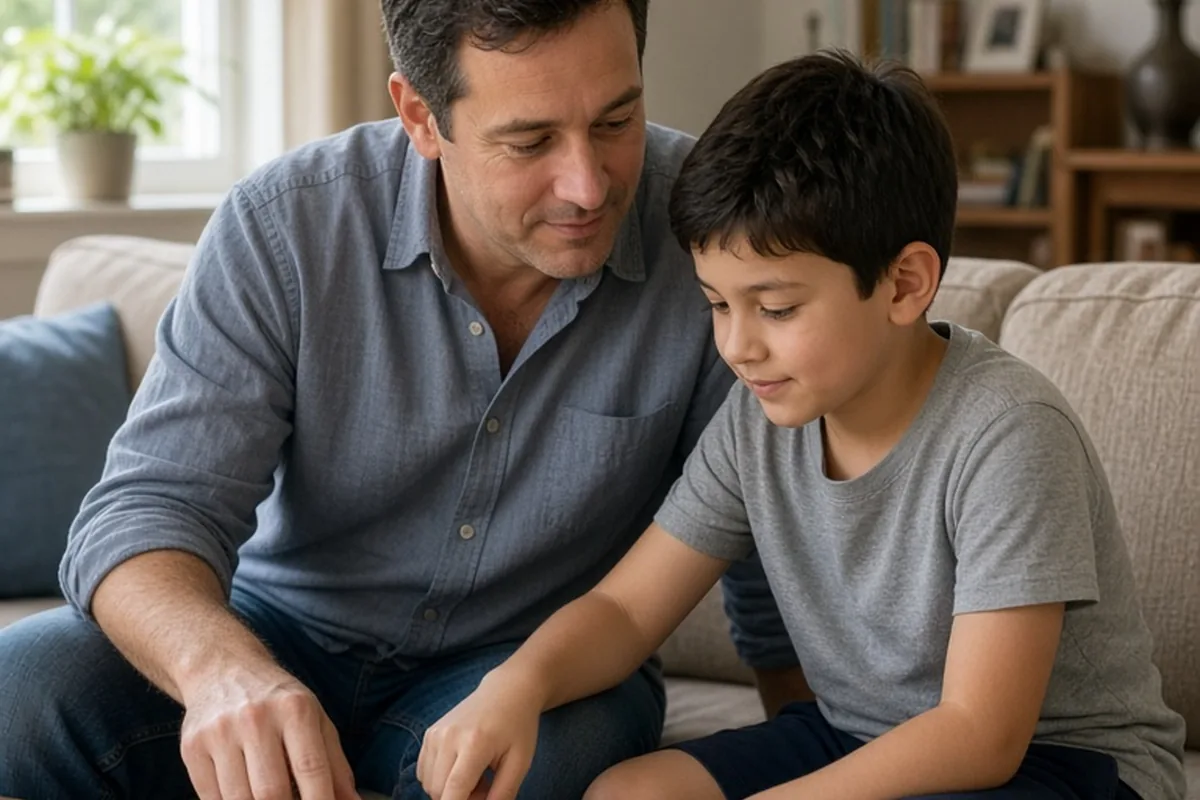
The primary difference between stepsiblings and half siblings comes down to biological connection and legal status. Half siblings share one biological parent (either a mother or a father), meaning they share approximately twenty-five percent of their DNA. Stepsiblings share no biological parents; their relationship exists because one person's parent married or partnered with another person's parent. Both relationships can form deep, lifelong family bonds, but their legal, medical, and structural foundations differ.
Modern families come together through many different paths, including marriage, remarriage, adoption, and co-parenting partnerships. As households blend, understanding how various sibling relationships work can help family members communicate clearly, respect personal boundaries, and handle practical matters such as medical planning and family legal rights.
Genetic and Biological Distinctions Between Half Siblings and Stepsiblings
From a biological perspective, the distinction between half siblings and stepsiblings is straightforward. Half siblings are related by blood through a shared biological parent. In genetic terms, full siblings share both biological parents and roughly fifty percent of their genetic material, whereas half siblings share one biological parent and roughly twenty-five percent of their DNA on average. This shared genetic ancestry remains constant regardless of whether the half siblings grow up in the same household, live in separate cities, or meet later in life.
In contrast, stepsiblings share zero biological parents and have no inherent genetic connection to one another. Their sibling relationship is formed through the union, marriage, or cohabitation of their respective biological or adoptive parents. If two adults marry, and each adult brings children from previous relationships into the household, those children become stepsiblings. Because there is no genetic link, changes in the marital status of the parents—such as a divorce—can alter or dissolve the formal legal step-relationship, whereas biological half-sibling ties are permanent.
Medical History and Health Implications for Family Members
The biological difference between half siblings and stepsiblings carries meaningful implications for family medical records and health assessments. When medical professionals evaluate an individual's personal risk for hereditary conditions, cardiovascular health, or certain cancers, first-degree and second-degree biological relatives provide critical data. Half siblings are considered second-degree biological relatives, which means their confirmed health histories can offer relevant clues about shared genetic predispositions coming from the common parent.
Stepsiblings do not share medical risk profiles because they come from entirely separate gene pools. When filling out pediatric forms, routine diagnostic questionnaires, or genetic counseling histories, a stepsibling's medical history should not be listed as personal hereditary background. However, sharing a living environment means stepsiblings may share environmental health exposures, household dietary habits, and routine pediatric illnesses, which healthcare providers may still evaluate when assessing lifestyle factors and infectious conditions.
Legal Rights, Inheritance, and Custody Distinctions
In most legal jurisdictions across the United States, half siblings and stepsiblings occupy very different categories under probate and family law. Because half siblings share a biological or legal parent, state laws of intestate succession—which apply when someone passes away without a formal will—frequently recognize half siblings as legal kin with rights to inherit from their shared parent or, under certain circumstances, from each other if no closer relatives exist. While exact statutory shares vary by state, the biological and legal parentage creates an established baseline of kinship.
Stepsiblings typically possess no automatic legal inheritance rights or statutory visitation privileges unless specific legal arrangements have been established. If a stepparent dies without a valid will, stepchildren and stepsiblings rarely inherit through standard intestacy laws. Families wishing to grant stepsiblings equal inheritance shares, assign guardianship, or ensure continued financial protection must execute explicit estate planning documents, such as living trusts, named beneficiary designations, or wills that explicitly name stepchildren by name rather than relying on standard legal definitions of children.
Navigating Emotional Bonds and Blended Family Dynamics
While biology and law outline formal classifications, everyday emotional closeness in blended households depends far more on shared experiences, communication quality, and mutual respect than on genetics. Stepsiblings who grow up under the same roof from early childhood often develop attachments and mutual support that mirror or exceed traditional sibling bonds. Conversely, half siblings who live in different households or have large age gaps may experience relationships that feel more like distant cousins until they intentionally build their connection.
One common challenge in blended families is managing the assumption that siblings must instantly feel affectionate toward one another. When parents marry or move in together, children are often adjusting to multiple major changes simultaneously, including new routines, shared bedrooms, and divided parental attention. Allowing relationships between stepsiblings or half siblings to develop naturally, without pressure to perform immediate warmth, reduces resentment and creates a safer foundation for genuine trust.
Deciding What to Call Each Other: Labels, Comfort, and Respect
Terminology can be a sensitive subject for children and adults in blended families. Some individuals prefer precise labels like 'stepbrother' or 'half-sister' to clarify household relationships to friends, teachers, or extended family members. Others prefer simply using the word 'brother' or 'sister' without modifiers because they view any distinction as artificial or exclusionary. In some cases, siblings may prefer using first names alone, particularly when they were introduced as teenagers or adults.
The most effective approach is to let each person define their comfort level without enforcing rigid household rules about vocabulary. Forcing a child to call a stepsibling their 'brother' before they feel ready can create pushback, while forbidding a half sibling from using 'brother' or 'sister' can make them feel marginalized. Parents can model inclusive language while privately confirming with each child how they prefer to introduce one another in social, school, and family settings.
How Parents and Stepparents Can Support Sibling Connections
Parents and stepparents play a central role in setting the tone for sibling relationships across blended households. One of the most effective strategies is maintaining predictable one-on-one time with each child. When children feel secure in their individual bond with their biological or custodial parent, they are far less likely to view stepsiblings or new half-sibling babies as rivals for attention, resources, or parental love.
Additionally, adults should avoid direct comparisons between children. Comparing grades, household chores, behavioral temperaments, or athletic abilities across stepsiblings or half siblings can breed unnecessary competition and hostility. Instead, establishing consistent household rules that apply equitably to all children living in the home fosters a shared sense of fairness. Parents should also coordinate with co-parents in other households whenever possible to ensure schedules, expectations, and transitions remain clear and respectful.
Handling Conflict, Age Gaps, and Unequal Household Schedules
Household logistics often complicate relationships between stepsiblings and half siblings. In many families, stepsiblings transition between two different homes on alternating weeks or weekends, while a younger half sibling born to the current couple lives in the home full-time. This dynamic can lead to feelings of displacement or jealousy if the older children feel like guests in their own home or if the younger child struggles with frequent departures and arrivals.
To manage these transitions smoothly, maintain dedicated personal space for children who split their time between residences, even if it is a specific storage area, desk, or decorated corner. When disputes arise over shared possessions or shared spaces, encourage problem-solving discussions that focus on specific actions rather than identity or belonging. Giving each child room to express frustration without fear of being labeled uncooperative helps resolve conflicts before they turn into chronic resentment.
Illustrative Scenarios
Navigating Introduction of a New Half Sibling
When Marcus and his wife welcomed a new baby girl, Marcus noticed his ten-year-old son from a previous relationship, Leo, becoming withdrawn. Leo initially worried that his new half-sister would replace him because she lived with Marcus full-time while Leo visited on an alternating weekly schedule. Instead of dismissing Leo's hesitation or demanding enthusiastic enthusiasm, Marcus instituted a weekly Saturday morning tradition just for the two of them. He also gently offered Leo low-pressure opportunities to help with the baby, such as picking out bedtime stories, without assigning him mandatory caregiving chores. Over several months, Leo felt secure in his standing and developed an affectionate, protective relationship with his sister.
Key point: Giving children individual reassurance and voluntary ways to connect helps ease transitions when a new half sibling joins the family.
Establishing Boundaries Between New Stepsiblings
After Sarah and her partner combined their households, Sarah's fourteen-year-old daughter, Maya, clashed frequently with her new sixteen-year-old stepbrother, Jason. The parents initially insisted that the teenagers attend every family outing together and referred to them as 'brother and sister' to create unity. The pressure led to heated arguments over privacy and shared personal belongings. Recognizing the strain, the parents sat down with both teenagers, apologized for forcing the label, and agreed on clear ground rules: knocking before entering bedrooms, asking before borrowing electronics, and making some weekend outings optional. With their privacy protected and expectations normalized, Maya and Jason developed a friendly, respectful roommate-like rapport that gradually turned into a solid friendship.
Key point: Respecting individual boundaries and personal pacing is far more effective than mandating instant closeness between stepsiblings.
Frequently asked questions
Can half siblings take a DNA test to confirm their relationship?
Yes, commercial sibling DNA tests or formal legal paternity/maternity tests can evaluate the amount of shared genetic material. Half siblings typically share approximately twenty-five percent of their DNA, whereas full siblings share roughly fifty percent and unrelated individuals share virtually none.
Do stepsiblings have legal custody or visitation rights to each other after a parental divorce?
In most states, stepsiblings do not have automatic statutory visitation or custody rights if their parents separate or divorce. However, judges may consider established bonds under third-party visitation petitions in specific circumstances, though formal legal rights remain limited compared to biological or adoptive relationships.
Is it normal for stepsiblings to take a long time to get along?
Yes, it is entirely normal for stepsiblings to require months or even years to adjust to living together. Blending routines, sharing space, and navigating new family rules take time, and a calm, polite coexistence is a healthy and realistic milestone.
Should parents correct children if they introduce a half sibling as a full sibling?
Parents do not need to correct children in casual social settings if the child feels comfortable using the word 'brother' or 'sister.' As long as medical and legal professionals receive accurate biological information when necessary, daily social terminology should reflect what feels natural and supportive to the family members involved.
Your next step
Take a moment today to speak with your family members about their comfort level with household terms, and ensure all important estate and emergency medical documents accurately specify each child by name.