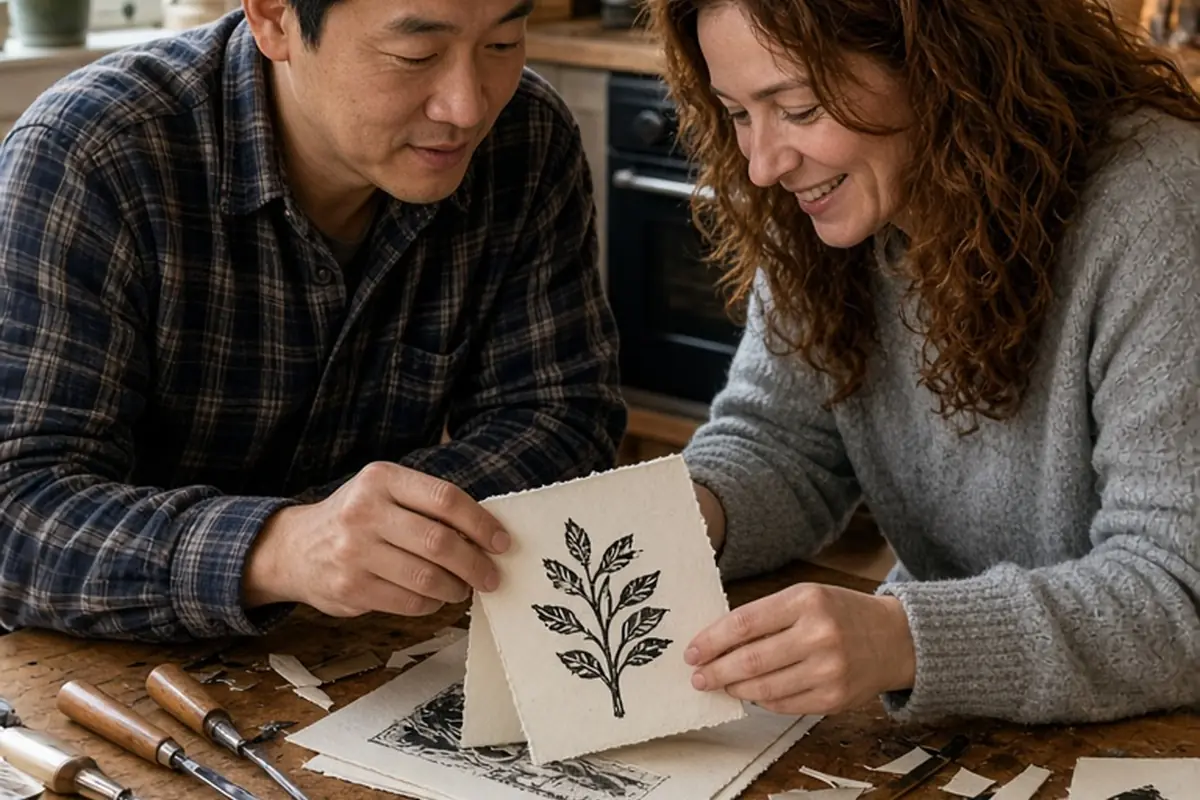
Unique hobbies strengthen a relationship when they invite mutual vulnerability, demand lighthearted cooperation, and remove the everyday pressure of domestic logistics. The most effective pursuits are novel to both partners, such as linocut printmaking, nocturnal foraging, bouldering, or collaborative storytelling. By shifting focus from passive entertainment to shared problem-solving and tactile creation, couples build fresh communication patterns, navigate gentle frustrations together, and create private inside jokes outside their routine roles.
When evenings collapse into parallel scrolling or predictable dinner routines, relationships often suffer not from lack of affection, but from a deficit of shared novelty.
Why Novel Shared Pursuits Reshape Everyday Couple Dynamics
Most adult relationships run on well-worn operational scripts. Partners naturally divide household chores, manage calendars, debrief each other on workplace stress, and default to passive entertainment when energy flags at the end of the day. While these routines provide domestic stability, they rarely demand the kind of attentive presence that characterized early dating. Engaging in an uncommon hobby disrupts this predictability by removing both individuals from their established comfort zones. When neither person holds immediate expertise, the dynamic instantly shifts from administrative co-management to mutual curiosity, requiring partners to communicate without relying on rehearsed conversational shortcuts.
Experiencing novelty together also provides what psychologists call an external third focus. Instead of sitting across a table analyzing the health of the relationship itself, partners stand side by side directing their attention toward an external medium, whether that is wet clay, an unfamiliar trail map, or a complex game mechanic. This lateral posture takes the emotional pressure off direct interpersonal evaluation. Small moments of confusion, unexpected physical awkwardness, and the satisfaction of mastering a minor technique generate organic laughter and shared memories. Over time, these low-stakes interactions build emotional resilience, teaching couples how to regulate their moods together when an activity does not go according to plan.
Tactile Arts: Wheel Throwing, Linocut Printmaking, and Bookbinding
Hands-on, material-based creative arts offer a profound antidote to digital exhaustion. Wheel throwing, for example, demands absolute somatic presence; the clay reflects every muscle twitch, posture shift, and hesitation. When a couple attends open studio sessions together, they encounter a craft where perfectionism is quickly dismantled. Centering clay requires physical grounding and patience, and watching each other produce lopsided vessels creates an environment where failure feels harmless and humorous rather than frustrating. It also provides tactile, physical engagement that stands in stark contrast to staring at glowing screens after work.
Linocut printmaking and hand bookbinding offer similarly immersive experiences with minimal initial investment and lower space requirements. Carving rubber or linoleum blocks allows each person to work on individual components of a combined visual piece, such as a custom series of greeting cards, a visual travel journal, or custom bookplates for a shared home library. Hand-binding paper using coptic stitches or Japanese stab techniques introduces rhythmic, quiet teamwork where one partner holds tension while the other threads needles. These crafts generate tangible artifacts that remain in your living space as quiet reminders of focused, unhurried afternoons spent making something from raw raw materials side by side.
Exploratory Outdoor Hobbies: Nocturnal Foraging, Bouldering, and Orienteering
Traditional outdoor activities like casual walking can easily turn into another venue for discussing household logistics or workplace anxieties. By contrast, specialized outdoor pursuits demand active cognitive focus and mutual physical awareness. Bouldering is an exceptional couples pursuit because it is essentially physical puzzle-solving. Each climbing route, called a 'problem,' requires careful sequencing, balance, and trial. While one partner is on the wall, the other stands below offering encouragement, observing foot placement, or discussing alternative body positions. Because difficulty grades are individualized, two partners with completely different athletic backgrounds can climb side by side on adjacent problems without competing.
For couples drawn to nature rather than climbing gyms, recreational orienteering and ethical foraging offer structured ways to engage with the natural landscape. Orienteering substitutes turn-by-turn smartphone navigation with a physical topographic map and a magnetic compass, turning a routine woodland hike into an active scavenger hunt that requires continuous verbal negotiation and joint direction-finding. Similarly, learning to identify local edible plants, medicinal herbs, or native fungi under regional safety guidelines trains both partners to observe seasonal changes, soil conditions, and forest canopies with heightened detail, converting ordinary walks into mindful investigative journeys.
Sensory and Flavor Palates: Single-Origin Tea Cupping and Sourdough Science
Developing a shared vocabulary around taste and aroma gives couples a sensory language that elevates everyday eating into a deliberate ritual. Specialty tea cupping involves setting up comparative blind tastings of loose-leaf oolongs, puerhs, or single-estate green teas, using formal evaluation spoons and timed steeps. As partners sip and compare notes, they learn to isolate fleeting notes of stone fruit, wet cedar, roasted grain, or honey. Because flavor perception is deeply personal and tied to memory, these tastings frequently open unexpected conversational doorways into childhood recollections, travels, and associations that rarely emerge in standard small talk.
Baking artisanal sourdough takes sensory exploration into the realm of biology and patience. Maintaining a wild yeast starter, tracking fermentation stages through ambient temperature shifts, and learning the physical feel of dough hydration requires steady observation over several days. Couples can split the routine: one person feeds and monitors the starter's peak activity, while the other develops shaping and scoring techniques. Unlike cooking a rapid weekday meal under time pressure, working with live dough enforces a deliberate pace. Waiting for the loaf to cool before slicing creates shared anticipation, turning the kitchen counter into a warm laboratory where process matters far more than culinary perfection.
Cognitive Collaboration: Cooperative Board Gaming and Cryptic Crosswords
Competitive games can easily backfire in relationships if one person holds a natural advantage in spatial reasoning, speed, or tactical calculation. Cooperative tabletop gaming completely reframes the board by pitting both partners together against the game system itself. Modern tabletop titles offer deeply thematic, campaign-driven puzzles where players must pool asymmetric character abilities, balance scarce resources, and communicate openly to avoid systemic defeat. Win or lose, the emotional outcome is shared, eliminating the awkward friction of one person gloating while the other absorbs a loss.
For couples who prefer linguistic puzzles, tackling British-style cryptic crosswords together provides an intellectual workout that relies on complementary thinking styles. Cryptic crossword clues are constructed with two distinct halves: a direct definition and a secondary wordplay puzzle involving anagrams, homophones, or hidden words. One partner might instantly catch the literal definition, while the other untangles the phonetic pun or letter substitution. Solving these intricate verbal riddles over weekend coffee fosters a quiet camaraderie where each person's unique cognitive strengths directly support the other's breakthroughs.
Managing Skill Disparities, Equipment Costs, and Frustration on Bad Days
A common pitfall in couples hobbies occurs when one partner improves much faster than the other, or when one person already holds prior experience. If left unaddressed, the pursuit can quickly devolve into an unpaid teacher-student dynamic, where the less experienced partner feels evaluated, patronized, or self-conscious. To keep the activity healthy, agree in advance that unsolicited coaching is off-limits. If one partner wants technical advice, they can ask for it explicitly; otherwise, both individuals should be allowed to explore the medium at their own natural pace, free from running performance reviews.
Financial commitments and bad days also demand sensible boundaries. Enthusiastic couples often purchase high-end equipment immediately, only to feel guilty when busy workweeks cause their commitment to lapse. Rent gear, take introductory community college workshops, or buy secondhand tools before committing significant financial resources. Furthermore, recognize that fatigue, hunger, and external work stress will occasionally spill into your hobby sessions. When a linocut block slips or an orienteering bearing leads into dense underbrush, treat the frustration as useful data rather than relationship failure. Agreeing on a no-fault pause button allows either partner to step back for tea or water without guilt.
Preserving Individuality and Emotional Energy Within a Shared Pastime
Starting a shared hobby should never mean merging all free time or abandoning individual identities. In healthy relationships, shared pursuits complement solitary interests rather than replacing them entirely. If every weekend project requires joint participation, the activity risks becoming an obligation rather than a joyful escape. Sustainable hobbies leave room for individual exploration: one partner might spend extra time sketching linocut concepts alone on a Tuesday evening, while the other focuses on reading route guides or refining equipment maintenance during their own quiet hours.
Similarly, partners should establish a comfortable cadence that respects varying energy levels throughout the year. Some seasons of life demand more professional energy or caregiving responsibilities, leaving less bandwidth for complex pastimes. Reassessing your schedule every couple of months ensures the pursuit remains a source of restorative connection rather than another demanding task on an overcrowded calendar. If interest in a specific activity wanes naturally for one person, treat the transition with gentle grace, celebrating the fun you shared while exploring a different direction together.
Illustrative Scenarios
Navigating Unequal Learning Curves in Rock Climbing
Elena and Marcus joined an indoor bouldering gym to find an active winter hobby. Marcus, who had years of past weightlifting experience, quickly powered through beginner routes, while Elena struggled with forearm fatigue and felt self-conscious on the wall. Elena initially interpreted Marcus's constant beta suggestions as subtle criticism, leading to tense, silent car rides home. Instead of quitting, they established a explicit boundary: Marcus would refrain from offering technical advice unless Elena directly asked, 'What foot placement would you try here?' Marcus focused on learning proper footwork and balance techniques on lower-grade slabs rather than rushing ahead to steep overhangs. Relieved of unsolicited coaching, Elena found her own rhythm, and their gym sessions transformed from frustrating evaluations into supportive, shared problem-solving dates.
Key point: Skill differences do not ruin a shared hobby; unrequested coaching and unspoken performance pressure do.
Shifting from Passive Screens to Linocut Printmaking
Maya and Jordan noticed their evenings had deteriorated into four straight hours of scrolling social media on opposite ends of the sofa. They felt emotionally distant despite sitting in the same room. Hoping to shake the rut, they bought two basic carving tools, a small block of linoleum, and a tube of water-soluble black relief ink. On their first night, Jordan felt foolish because his hand shook while cutting lines, and Maya accidentally gouged a curved leaf backwards. Rather than abandoning the project in pursuit of perfection, they decided to combine their flawed prints into a humorous, collaborative greeting card to send to a close friend. The tactile mess, mutual laughter, and physical absence of phone screens restored their evening conversational energy.
Key point: Shared creative activities don't require polished artistry; they succeed when they create a low-stakes environment where imperfection is funny.
Frequently asked questions
What if my partner refuses to try any uncommon hobbies with me?
Propose a single, low-stakes trial session rather than asking for an ongoing commitment. Frame the activity as an experiment to see what feels enjoyable, and give your partner veto power over specific categories they genuinely dislike. If they still decline, pursue the hobby on your own; personal fulfillment often naturally sparks your partner's curiosity over time.
How do we choose a hobby if we have completely opposite personalities and physical stamina?
Look for pursuits that allow parallel participation or decoupled physical effort. For example, bouldering lets each person climb routes matched to their personal comfort while sharing the same space, and cooperative board gaming allows analytical thinkers and creative storytellers to contribute different skills to the exact same objective.
How much money should a couple spend when starting a new activity?
Start with the minimum expenditure necessary to test basic interest. Rent gear, enroll in one-off community workshops, borrow tools from municipal tool libraries, or purchase starter kits before investing in professional equipment. Upgrading gear together after sticking with the hobby for several months can become an enjoyable milestone in itself.
What should we do if one of us gets frustrated and loses their temper during a project?
Call an immediate, no-fault time-out to drink water or change the setting. Separate the frustration with the material—such as uncooperative clay or a lost trail marker—from your feelings toward each other, and resume only when both people feel rested and lighthearted.
Your next step
Pick one low-barrier activity from this guide tonight, check your local community center or library for an introductory session, and schedule a single two-hour trial run on your shared calendar.