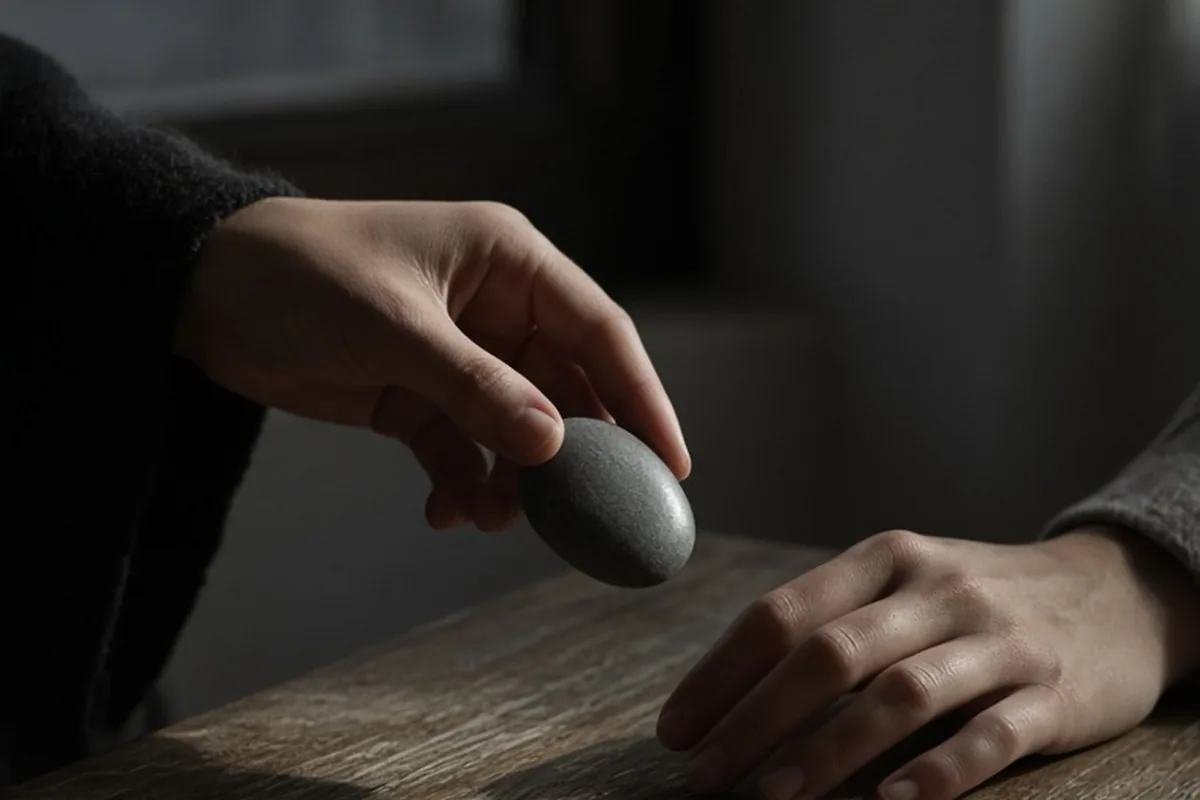
Unrequited love is romantic affection that is not returned by the other person. Resolving it requires accepting their lack of reciprocal interest rather than waiting for a change of heart, establishing clear emotional and physical boundaries to halt obsessive overthinking, and deliberately redirecting your time and energy toward pursuits and relationships that offer genuine mutual engagement.
Holding intense romantic feelings for someone who does not feel the same way is an exhausting emotional state. Whether the dynamic involves a close friend, a confusing dating prospect, or an acquaintance, waiting for someone to suddenly see your value drains your confidence and keeps you tethered to a connection that cannot sustain you.
Recognizing the Reality of One-Sided Attraction
Unrequited love rarely feels simple while you are inside it. The human mind naturally seeks patterns, and when you strongly desire a romantic outcome, confirmation bias takes over. A polite text message, a shared laugh, or a warm glance can easily be misinterpreted as hidden attraction or hesitation on their part. You might find yourself analyzing time stamps, dissecting casual phrasing, or rationalizing why they seem warm one day and distant the next. This mental gymnastics keeps hope alive on life support, but it prevents you from dealing with reality.
The clearest benchmark of romantic interest is consistent, unforced reciprocity. When someone wants a romantic relationship with you, they do not leave you perpetually guessing. They make time, initiate plans, and engage with your life in ways that move the connection forward. If you constantly have to decode their behavior, that ambiguity is usually your answer. Acknowledging this truth is painful, but continuing to negotiate with reality costs far more in lost time, emotional exhaustion, and eroded self-worth.
The Psychological Toll of Chasing Mixed Signals
One-sided feelings often persist because of intermittent reinforcement. When someone gives you occasional attention, friendliness, or affection followed by prolonged silence or emotional unavailability, it triggers an obsessive cycle. You hold out through the cold periods in anticipation of the next warm interaction. This dynamic can feel like passionate romance, but it is actually an anxiety response driven by the desire for validation from someone who keeps you at arm's length.
Remaining in this state slowly recalibrates your baseline for healthy relationships. You begin to treat basic courtesy as a victory and accept breadcrumbs of affection while giving a feast of devotion in return. Over time, you may start questioning your attractiveness, your worthiness, or your conversational skills, wondering what you could do differently to earn their affection. Recognizing that unrequited feelings are a product of basic incompatibility, not a verdict on your personal value, is essential for breaking the cycle.
Dismantling the Covert Contract of the Friend Zone
One of the most common traps in unrequited love is attempting to stay close to the person under the banner of friendship while privately hoping their feelings will change. This setup creates an unspoken covert contract: you act as the loyal, always-available confidant, and in exchange, you hope they will eventually realize you were the right partner all along. While this dynamic often feels noble or self-sacrificing, it is inherently disingenuous to both parties.
True friendship requires mutual honesty and emotional parity. If hearing about their dating life sparks jealousy, or if hanging out with them leaves you feeling depleted because you want more, you are not functioning as a friend. You are auditioning for a role that is not open. Stepping away from this dynamic is not an act of cruelty or abandonment; it is an act of integrity that honors both your genuine feelings and the reality of what the other person can offer.
Establishing Clean Distance Without Grand Gestures
To break the emotional grip of unrequited love, you need real separation. Distance cannot be achieved while you are continuously monitoring their social media stories, texting them whenever something funny happens, or saying yes to casual hangouts. You do not need to stage a dramatic confrontation, deliver an emotional ultimatum, or make an angry public exit. Quiet, dignified boundaries are far more effective and protect your self-respect.
Start by removing the daily triggers that keep the person top of mind. Mute their social media accounts so their daily updates do not interrupt your day. Stop initiating messages, and let responses become brief and infrequent. If they notice the shift and ask why you have become distant, maintain clarity without over-explaining. A calm statement such as, I am taking some space to focus on my own priorities right now, sets a firm boundary without opening the door to an exhausting debate.
Redirecting Mental Energy and Breaking the Rumination Loop
Breaking the habit of unrequited love requires actively managing your thoughts. Rumination thrives in idle moments, such as late evenings or unstructured weekends. When your thoughts drift toward what could have been or why they did not choose you, you must treat that mental loop as an impulse to disrupt rather than a puzzle to solve. Rereading old text threads or imagining hypothetical conversations only reinforces the emotional pathways you are trying to weaken.
Replace that cognitive space with demanding, grounded activities. Physical exertion, challenging work projects, learning a technical skill, or reconnecting with reliable friends forces your brain to engage with the present. When you invest your energy into tangible accomplishments, your sense of competence returns. You begin to realize that your fulfillment was never truly dependent on that person's approval, but on your own engagement with life.
Setting New Standards for Reciprocity in Future Dating
The ultimate remedy for unrequited affection is raising your standard for what makes someone attractive. Many people mistakenly believe that intense chemistry or strong physical attraction is enough to pursue someone, even when the interest flows in only one direction. However, genuine romantic compatibility cannot exist without mutual desire and equal effort. A partner who is indifferent or ambivalent toward you is, by definition, fundamentally incompatible.
As you move forward, train yourself to evaluate potential partners based on how they treat you rather than how exciting they seem from afar. Look for clarity, consistency, and an active desire to spend time together. When someone matches your energy and communicates without games, connection feels calm and secure rather than agonizing. Choosing to invest only where your affection is matched ensures that you never again waste months or years waiting for someone to notice you.
Illustrative Scenarios
Clarifying Boundaries with a Workplace Acquaintance
Marcus spent four months overanalyzing every interaction with a colleague from another department. They frequently chatted over coffee, and she occasionally texted him funny links on weekends. Marcus interpreted her friendliness as subtle romantic interest, hesitating to make a move while continuously daydreaming about a future together. The ambiguity began affecting his focus at work. Instead of continuing to drop hints and dissect her replies, Marcus directly asked her to join him for dinner on Saturday. She thanked him politely but clarified that she saw him strictly as a work friend. Though the rejection stung, Marcus accepted her answer gracefully, stopped lingering by her desk, and redirected his attention to his professional goals and personal fitness routine.
Key point: Seeking direct clarity ends painful speculation and allows you to accept reality and move forward with your dignity intact.
Stepping Back from an Imbalanced Friendship
Elena had been close friends with an old college peer for over two years, all while harboring deep romantic feelings for him. Whenever he faced a breakup or needed advice, Elena was the first person he called for late-night emotional support. However, whenever she attempted to express her own needs or hint at deeper affection, he redirected the conversation. The dynamic left Elena feeling drained, bitter, and increasingly resentful of his dating life. Recognizing that she could not be an authentic friend while hoping for romance, Elena stopped initiating calls, declined non-essential one-on-one hangouts, and focused on building new friendships. Within a few months of creating physical and emotional space, the emotional fog cleared, allowing her to pursue dating partners who were emotionally available.
Key point: Staying in an unrequited dynamic under the guise of friendship breeds resentment, while intentional distance creates room for genuine connection.
Frequently asked questions
Can unrequited love ever transform into a healthy romantic relationship?
While rare exceptions exist, waiting around for someone to change their feelings is rarely productive or healthy. Romantic interest and attraction typically establish themselves early, so building a life around the hope of a sudden shift leads to prolonged frustration.
How long does it typically take to get over unrequited feelings?
The timeline depends directly on how strictly you enforce emotional and physical boundaries. If you maintain regular contact and continue monitoring their personal life, the attachment can linger for years, whereas complete space and focused redirection usually bring noticeable relief within a few weeks.
Should I confess my feelings to the other person just to get closure?
Stating your feelings can be useful if the ambiguity is paralyzing you and you need a definitive answer to let go. However, you should do so only if you are prepared to accept a direct refusal gracefully and immediately establish distance without attempting to debate their response.
Why do I find myself repeatedly drawn to people who are emotionally unavailable?
Repeatedly chasing unrequited love often reflects an underlying comfort with emotional distance or a subconscious belief that affection must be earned through persistence. Identifying this habit allows you to consciously select partners who offer clear, consistent communication from the start.
Your next step
Take one concrete action today to reclaim your emotional space: mute their profiles across all social platforms, decline the next ambiguous invitation, and schedule an activity that firmly refocuses your attention on your own life.