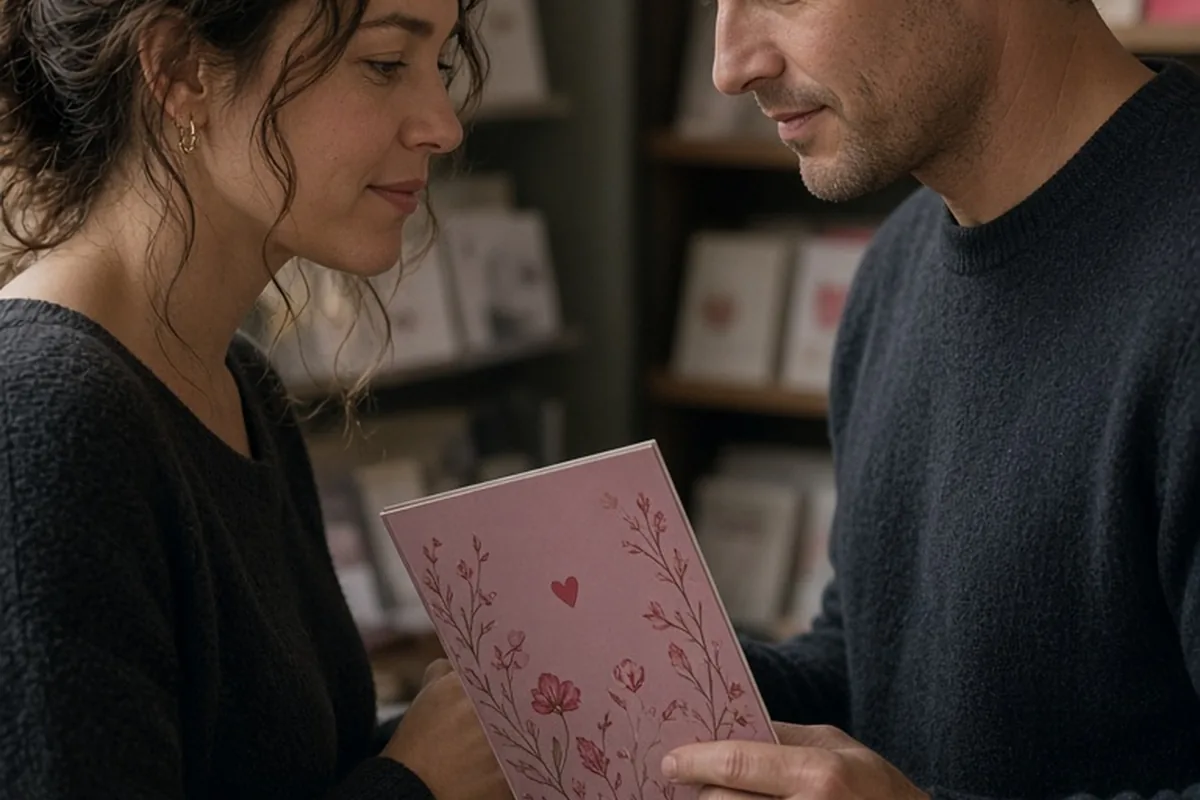
Valentine's Day cards for a husband work best when they move past generic sentimentality and highlight specific appreciation, shared history, and daily partnership. Choosing the right card involves matching your husband's communication style—whether humorous, understated, deeply emotional, or playful—and writing a personalized message that acknowledges who he is as a partner, validates his efforts, and reinforces your romantic bond without unnecessary pressure.
Selecting a card for your husband can easily feel routine after years together, but an intentional note offers a rare pause to reset romantic focus and communicate genuine gratitude.
Finding the Right Tone for Your Husband's Personality
A card resonates most when its primary tone matches the dynamic you naturally share. Many store displays lean heavily on exaggerated romance or generic declarations of eternal passion, which can feel disconnected from the reality of your day-to-day life. If your husband tends to be pragmatic, an overly theatrical card might feel foreign or awkward for him to receive. Conversely, if your relationship thrives on deep emotional conversations, a sarcastic or overly brief card can feel dismissive. Selecting the right card begins with identifying what emotional frequency makes him feel seen, valued, and understood.
Consider whether your marriage leans toward shared laughter, quiet loyalty, intellectual partnership, or energetic adventure. A humorous card works wonderfully when the humor reflects an authentic inside joke or shared perspective rather than tired tropes about domestic misery or marital obligation. A minimalist card with clean design and ample blank space allows you to craft a thoughtful, tailored note without fighting against prefabricated text that sounds artificial. The goal is not to match what society suggests a romantic holiday should look like, but to deliver a message that sounds unmistakably like you speaking directly to him.
One common limitation to keep in mind is that tone can occasionally be misread if you rely solely on irony. If you choose a playful or teasing card, ensure that your handwritten message anchors the gesture in clear affection so that your humor is received as loving intimacy rather than disguised criticism.
What to Write to Express Specific Daily Appreciation
The most memorable cards move beyond broad statements like 'You are the best husband' to spotlight concrete actions and character traits. Men frequently carry silent responsibilities, whether managing household logistics, providing emotional stability during crises, or quietly troubleshooting daily challenges. When you name specific ways he supports your partnership, it communicates that his ongoing contributions do not go unnoticed. This recognition builds mutual respect and validates the sustained effort required to maintain a healthy marriage.
To write an effective message of appreciation, choose two or three specific observations from the past year. You might mention how he stayed patient during a chaotic home renovation, the way he consistently makes coffee before you wake up, or how his calm perspective grounded you during a difficult career decision. For example, writing 'I noticed how hard you worked to keep our weekends calm during my recent promotion, and having your steady backing made all the difference' carries significantly more emotional weight than a generic expression of love. It tells him that his presence actively enriches your life in tangible ways.
Be careful not to turn your note into a purely transactional performance review. Acknowledging helpful tasks is vital, but always connect those actions back to who he is as a person and your romantic attraction toward him. Pairing gratitude for his effort with an affirmation of your emotional bond prevents the message from reading like a thank-you note to a business partner.
Balancing Humor and Sincerity Without Deflecting Romance
Humor is one of the most effective tools for creating warmth and defusing the formal pressure that often surrounds Valentine's Day. A witty observation about your shared habits, funny parenting moments, or long-running private jokes can instantly make a card feel intimate and personal. Shared laughter reinforces camaraderie, reminding both of you that marriage is an ongoing friendship where you genuinely enjoy each other's company.
However, humor can easily become a defensive shield that avoids genuine vulnerability. If every line of your card is a punchline, you risk leaving your husband wondering if you are uncomfortable expressing sincere feelings. The most effective approach combines lightheartedness on the printed cover with grounded warmth in your handwritten section. You might select a card that jokes about who controls the thermostat or your mutual obsession with a television show, but follow it inside with a grounded sentence explaining why you would still choose him as your partner through every mundane routine.
Avoid self-deprecating remarks that shift focus toward your own insecurities, as well as jokes that poke fun at his vulnerabilities or past missteps. Constructive humor should celebrate the quirky reality of your life together while leaving no ambiguity about your affection, loyalty, and ongoing desire for connection.
Writing a Meaningful Card During Stressful or Distant Seasons
Marriage naturally moves through seasons of exhaustion, career stress, parenting demands, or emotional distance. When Valentine's Day arrives during a challenging period, pretending that everything is effortless can feel disingenuous, while ignoring the day entirely can deepen the sense of isolation. A card during a tough season does not need to declare that things are flawless; instead, it can serve as a steady bridge that reaffirms your commitment to working through challenges together.
Focus your message on partnership, endurance, and quiet solidarity. Acknowledge that life has been demanding without turning the card into a list of grievances or an exhaustive analysis of problems. A sentence such as 'This season has tested our energy, but I remain deeply grateful to have you by my side through the heavy lifting' honors the reality of your circumstances while validating your continued commitment. This approach respects his emotional space and lowers the pressure to manufacture a dramatic romantic turnaround overnight.
The trade-off here is accepting that a card cannot instantly fix underlying tensions. Use the card as a gentle signal of goodwill rather than an expectation of immediate reciprocity. Offering warmth without strings attached creates safety, making future conversations about connection much easier to navigate.
Choosing Card Formats and Handmade Alternatives
The physical format of your card influences how your husband experiences the gesture. While high-end stationery with embossed lettering works well for formal sentiments, simpler formats often feel more approachable and personal. Many husbands appreciate concise, thoughtfully crafted items over oversized, ornate cards that end up feeling cumbersome to store. The medium you choose should complement the substance of your message rather than distract from it.
If commercial cards feel too generic, consider alternative formats such as a handwritten letter tucked into a sealed envelope, a folded card featuring a recent photograph from a meaningful trip, or a simple index card paired with a thoughtful morning gesture. If you prefer to make a card by hand, prioritize neat legibility and direct phrasing over intricate crafting. You can also include a small token that represents an upcoming shared experience, such as a voucher for an uninterrupted evening walk, a plan to try a new local restaurant, or a ticket to an event he enjoys.
Keep the presentation manageable. Overly elaborate DIY projects with excessive components can sometimes create unintended pressure for the recipient to match the scale of the presentation. Focus on high-quality sincerity, clear handwriting, and clean presentation to ensure the emotional core of the message stands front and center.
Timing and Delivery for Maximum Comfort and Impact
How and when you deliver the card shapes how your husband receives it. Handing a card to someone while they are rushing out the door for work or juggling household chores rarely allows for meaningful reflection. Rushed moments often lead to a hasty glance and an obligatory nod, which leaves both partners feeling unsatisfied. Creating a deliberate, relaxed moment gives your husband the space to read and absorb your words without feeling put on the spot.
Consider his processing style when deciding how to give him the card. Some people appreciate receiving a card privately over a quiet morning coffee, where they can read it at their own pace. Others prefer finding it on their desk, nightstand, or steering wheel as an unexpected surprise during their day. Leaving the card in a personal spot allows him to read it without an immediate audience, which can be especially helpful if he tends to process emotional expressions introspectively before reacting.
Avoid demanding an instantaneous, dramatic emotional reaction. Giving a card is an act of generous communication, not a performance test. Allow him to absorb what you wrote in his own time, trusting that genuine appreciation registers deeply even if his initial response is understated.
Illustrative Scenarios
Moving Past Clichés During a Busy Career Phase
Rachel spent twenty minutes in the greeting card aisle feeling frustrated by cards that focused on dramatic fairy tales that did not match her ten-year marriage to Nathan. Nathan had recently taken on a demanding management position, leaving them both drained by evening. Rachel initially considered buying an ironic, funny card to avoid being overly sentimental, but realized it might feel dismissive of his fatigue. Instead, she chose a simple blank card and wrote three specific examples of how Nathan's calm reliability grounded their household during his busiest weeks, closing with an invitation to a low-key weekend lunch. Nathan read the card privately at his desk and later told her that having his quiet efforts recognized meant more than any lavish dinner.
Key point: Specific gratitude tailored to your partner's current reality resonates far more than generic romance or deflective humor.
Bridging Distance During Early Parenthood
After the arrival of their second child, Marcus and Claire felt more like co-workers managing a nursery than romantic partners. Claire struggled with what to write for Valentine's Day, feeling that writing 'everything is wonderful' was inaccurate, yet fearing an honest note might sound critical. She chose to write a grounded card that acknowledged how demanding the current infant stage was, while explicitly naming qualities she continued to admire in Marcus—such as his patience during night feeds and his humor when plans derailed. Marcus appreciated that the card validated their shared exhaustion without placing unrealistic pressure on them to plan an elaborate date night.
Key point: Honest solidarity during demanding life stages builds more authentic connection than pretending external pressures do not exist.
Frequently asked questions
How long should my handwritten message inside my husband's Valentine's Day card be?
A meaningful message typically requires only three to six focused sentences. Aim to include one clear expression of affection, two specific examples of appreciation from your shared life, and an encouraging closing statement about your future together.
What if my husband is not naturally expressive or sentimental?
Keep your message grounded, clear, and focused on tangible appreciation rather than grand poetic statements. Men who are less verbally expressive often respond best to cards that acknowledge their actions, character, and practical contributions to the relationship.
Is it better to give the card in person or leave it somewhere for him to find?
Leaving the card in a private space—such as his laptop bag, nightstand, or coffee mug—allows him to read and process it without feeling monitored. If you prefer to hand it to him directly, choose a quiet moment when neither of you is rushed or distracted.
Can I use humor in a Valentine's Day card without making it feel unromantic?
Yes, as long as the humor celebrates shared memories or affectionate inside jokes rather than passive-aggressive complaints. Pair the lighthearted joke on the cover with a handwritten line inside that clearly reaffirms your genuine love and respect.
Your next step
Choose a card that aligns with your husband's communication style, write down three specific things you genuinely appreciate about him from the past year, and place the note where he can read it at his own pace.