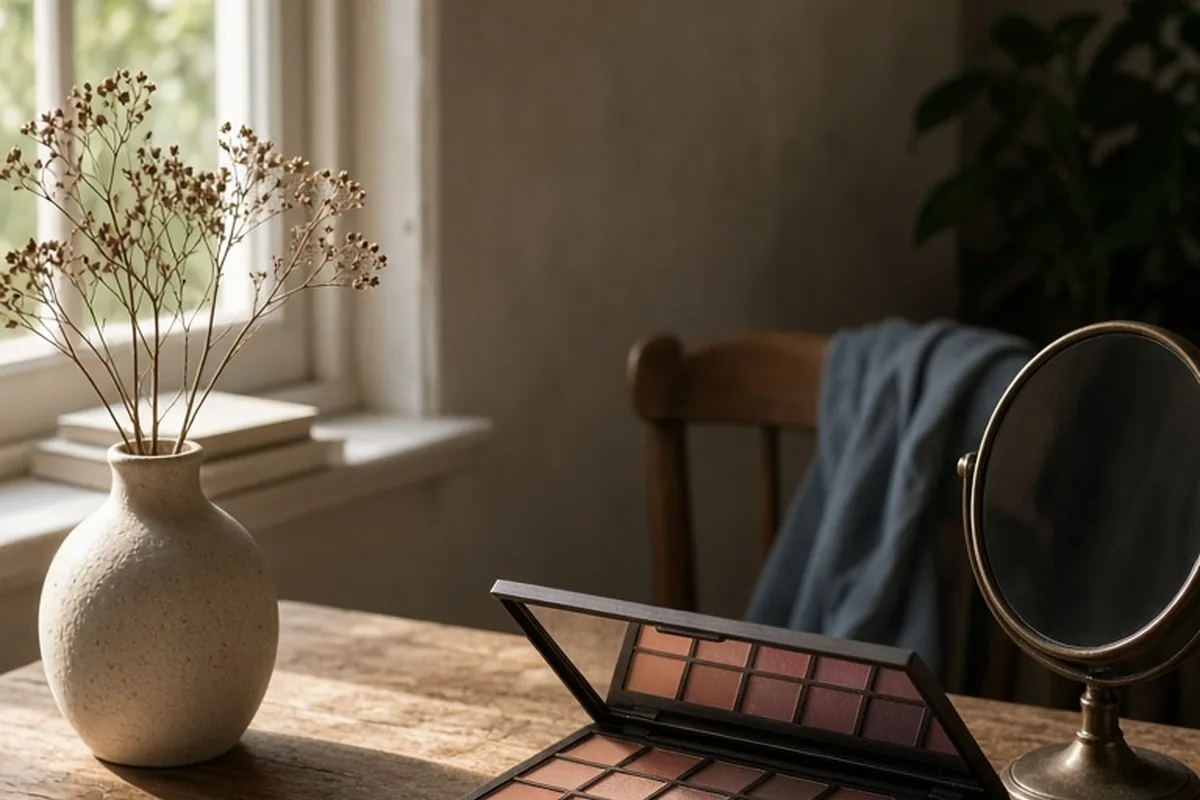
To choose the best makeup colors, identify your skin undertone, contrast level, and natural eye shade. Warm undertones look harmonious in peaches, terracottas, and warm golds. Cool undertones thrive in berry, rose, taupe, and slate hues. Neutral undertones can wear both. For eyes and lips, select shades that either subtly complement or vibrantly contrast with your features.
Standing in front of a beauty counter displaying hundreds of lipstick swatches and eyeshadow pans can quickly lead to decision fatigue. Rather than guessing which shades will flatter you or copying trends that may leave you looking washed out, you can build a reliable everyday color palette by evaluating three personal elements: your skin undertone, your eye color, and your natural contrast level.
Identifying Your Undertone: Warm, Cool, Neutral, or Olive
Skin tone refers to the surface depth of your skin, ranging from fair to deep, while undertone describes the subtle hue beneath your surface coloring. Undertone remains constant regardless of sun exposure or seasonal tanning. Cool undertones feature hints of blue, pink, or red. Warm undertones carry peach, golden, or yellow notes. Neutral undertones feature a balanced blend of both warm and cool qualities, while olive undertones contain a distinct greenish or grayish cast over warm or neutral bases.
You can evaluate your undertone using a few practical checks in indirect natural daylight. Look at the veins on the inside of your wrist: blue or purple veins usually indicate a cool undertone, greenish veins suggest a warm undertone, and blue-green veins point to neutral. Holding pure white paper next to your bare face is another helpful test. If your skin looks yellow or golden against the sheet, you lean warm; if you look pinkish or rosy, you lean cool. Olive skin may appear faintly greenish or muted gray against pure white.
A common limitation with self-assessment is confusing surface redness with a cool undertone. If you experience rosacea, acne, or sun sensitivity, your surface skin may look pink while your structural undertone remains warm or olive. Always check less reactive areas, like your neck, collarbone, or inner forearm, to confirm your true undertone before committing to a shade family.
Choosing Flattering Lip Shades for Your Undertone and Depth
Lip color functions as an anchor for the entire face, so matching its temperature to your undertone creates instant harmony. For warm undertones, flattering lip options include warm nudes, peachy pinks, coral, terracotta, and warm brick reds. For cool undertones, shades with blue or purple bases—such as berry, mauve, crisp rose, magenta, and true cherry red—provide a clear, radiant appearance. Neutral complexions have the flexibility to wear almost any temperature, depending on the rest of the makeup.
Skin depth also dictates how light or dark a lip product appears once applied. A beige nude that looks balanced on fair skin might appear ghostly on medium or deep skin, while a deep plum could read as a neutral brown on dark complexions but create dramatic contrast on fair skin. When selecting a daily nude, look for a shade that matches or sits one shade deeper than your natural inner lip pigment rather than your foundation shade.
Consider the opacity and finish of your lip products as well. Sheer balms, glosses, and tinted oils allow your natural lip color to peek through, making them far more forgiving across different undertones. Completely matte liquid lipsticks deliver concentrated pigment that reveals undertone mismatches much more readily, requiring precise shade matching.
Selecting Eyeshadow Colors That Make Your Eye Shade Pop
Color theory offers a dependable framework for eyeshadow selection: complementary colors (shades opposite each other on the color wheel) create the strongest visual contrast, making your eye color appear brighter and more vivid. Monochromatic shades (colors similar to your eye color) offer an understated, cohesive look, though high-contrast pairings are generally more eye-catching.
Blue eyes stand out dramatically against warm, orange-based shades such as copper, bronze, warm champagne, apricot, and soft taupe. Green and hazel eyes gain intense vibrancy from purples, plummy mauves, rose golds, rich cranberries, and burgundy. Brown eyes, being inherently neutral and versatile, look striking against jewel tones like emerald green, royal navy, sapphire, rich amber, and rich chocolate browns.
While bold complementary colors highlight your irises, applying them in heavy blocks across the entire eyelid can occasionally look dated or overpowering. A practical approach is using neutral bases—like soft brown, biscuit, or slate—across the mobile lid, then introducing your complementary shade as an accent along the lash line or in the outer corner.
Matching Blush and Bronzer to Your Natural Complexion
Blush should mimic the healthy flush your skin produces after light exercise or a walk on a crisp day. If you have cool undertones, look for blushes in cool pink, rosebud, lavender, or soft berry. For warm undertones, reach for peach, warm coral, apricot, and warm terracotta. Deep skin tones across all undertones benefit from richly saturated formulas like spiced cinnamon, bright fuchsia, vibrant orange-red, or deep wine, which prevent the pigment from looking ashy.
Bronzer and contour serve distinct roles that require different color profiles. Bronzer warms the high points of the face where the sun naturally hits, requiring warm, golden, or reddish-brown tones. Contour creates the illusion of shadow under cheekbones and along the jawline, requiring a cooler, muted taupe or gray-brown shade. Using an overly orange bronzer as a contour can make facial hollows look muddy rather than sculpted.
When coordinating blush with your overall makeup, balance the intensity with your lip color. Pairing a strong statement blush with an equally vibrant, contrasting lip can create visual competition. If you choose a bold lip, opt for a muted, soft blush; if you want a luminous, cheek-focused look, pair it with a sheer, low-contrast lip tint.
Balancing High and Low Contrast in Your Features
Contrast level describes the difference in depth between your hair, eyes, eyebrows, and skin. High-contrast individuals—such as someone with fair skin, dark brown hair, and bright blue eyes—can comfortably wear high-saturation makeup, bold eyeliner, and vibrant lips without looking overwhelmed. Low-contrast individuals—such as someone with fair hair, light eyebrows, and light skin, or deep skin paired with deep hair and dark brown eyes—generally look most harmonious in blended, tonal, or softly muted shades.
If you have low contrast and apply an intensely bold, graphic black liner with a sharp neon lip, the makeup may visually dominate your features. You can soften this effect by swapping black eyeliner for espresso brown, charcoal, or deep plum, and choosing velvet or blurred lip textures over sharp, hard lines. High-contrast individuals wearing completely muted beige tones may conversely find that their features appear slightly tired or under-defined.
Your natural contrast is not a rigid rule, but a tool for intentional styling. You can always increase your perceived contrast by defining your brows, adding mascara, and wearing a crisp lip, which prepares your canvas to carry bolder, more saturated makeup colors effectively.
Adjusting Makeup Colors for Lighting, Season, and Occasion
The lighting in your environment changes how makeup colors appear. Bright, cool office fluorescent lighting can amplify cool pigments and wash out warm tones, making overly pale or ashy shades look stark. Warm incandescent lighting in restaurants and evening venues softens contrast and absorbs warm tones, which allows you to wear slightly richer, more saturated pigments without appearing overdone.
Seasonal shifts in daylight and personal skin tone also influence color harmony. In summer, your skin might take on a warmer or deeper surface tone, making golden bronzers and coral blushes look effortless. In winter, as surface color fades, cool berries, classic rose, and neutral mauves often restore freshness to the face.
When applying makeup for events where photography or shifting light is expected, test your swatches under varied light sources. Check your finished makeup near a window in indirect daylight, under indoor bulbs, and with a quick test photo on your phone to ensure seamless blending and color balance.
Experimenting with Accent Shades Without Overpowering Your Face
You do not need to restrict yourself exclusively to your strict color palette; personal preference and creative expression are central to wearing makeup. If you love an eyeshadow or lipstick that falls outside your typical undertone, you can make it work through strategic placement and thoughtful balancing.
If you have cool undertones but want to wear warm mustard or copper eyeshadow, ground the look with cool black mascara and a neutral-to-cool lip to keep the warm shadow from clashing with your skin tone. If you are warm-toned and want to wear cool lilac or baby pink, keep the pigment sheer, use a warm bronzer to anchor the perimeter of your face, and add a peach-toned lip gloss as a bridging shade.
One helpful guideline is the single-focus approach: select one feature for an experimental or trend shade, and keep the remaining features in your reliable, natural neutral family. This allows you to explore vibrant greens, icy blues, or electric oranges while preserving a polished, harmonious overall aesthetic.
Illustrative Scenarios
Finding Daily Lip and Cheek Harmony
A composite scenario involves an individual with fair skin, hazel eyes, and medium-brown hair who consistently felt washed out by popular nude-beige lipsticks and orange-toned bronzers. After testing her undertones in daylight, she realized her skin had a cool, muted undertone rather than the warm undertone she assumed from her golden hair highlights. She swapped peach blushes for soft rose and replaced yellow-based nude lipsticks with neutral mauves and soft berry tints.
Key point: Matching makeup to your undertone rather than surface hair highlights prevents products from clashing with your natural skin tone.
Frequently asked questions
How can I tell if a lip color washes me out?
A lip color washes you out if it is lighter than your natural lip line, makes your teeth appear yellow, or causes your skin to look gray and tired. A flattering daily shade should define your mouth and subtly brighten your overall complexion even without other makeup on.
Can I wear cool-toned makeup if I have warm skin?
Yes, you can wear cool-toned makeup by opting for sheerer textures or using cool colors as small focal points, like a blue eyeliner or a berry lip stain. Grounding the rest of your face with your natural warm-toned complexion products creates balance.
What is the safest everyday eyeshadow color for beginners?
A matte or satin neutral taupe or soft warm brown sitting one to two shades deeper than your skin tone is the most foolproof choice. It softly contours the eyelid crease without requiring complex blending or strict undertone coordination.
Why does my foundation or blush look orange throughout the day?
Makeup can shift orange due to oxidation, which happens when ingredients react with your skin's natural oils and air. Alternatively, it may simply indicate that the product has a warm undertone that is clashing with your cool or neutral skin.
Your next step
Test one product category at a time in indirect natural daylight along your jawline or bare lip to observe how the color interacts with your natural tone before building your full palette.