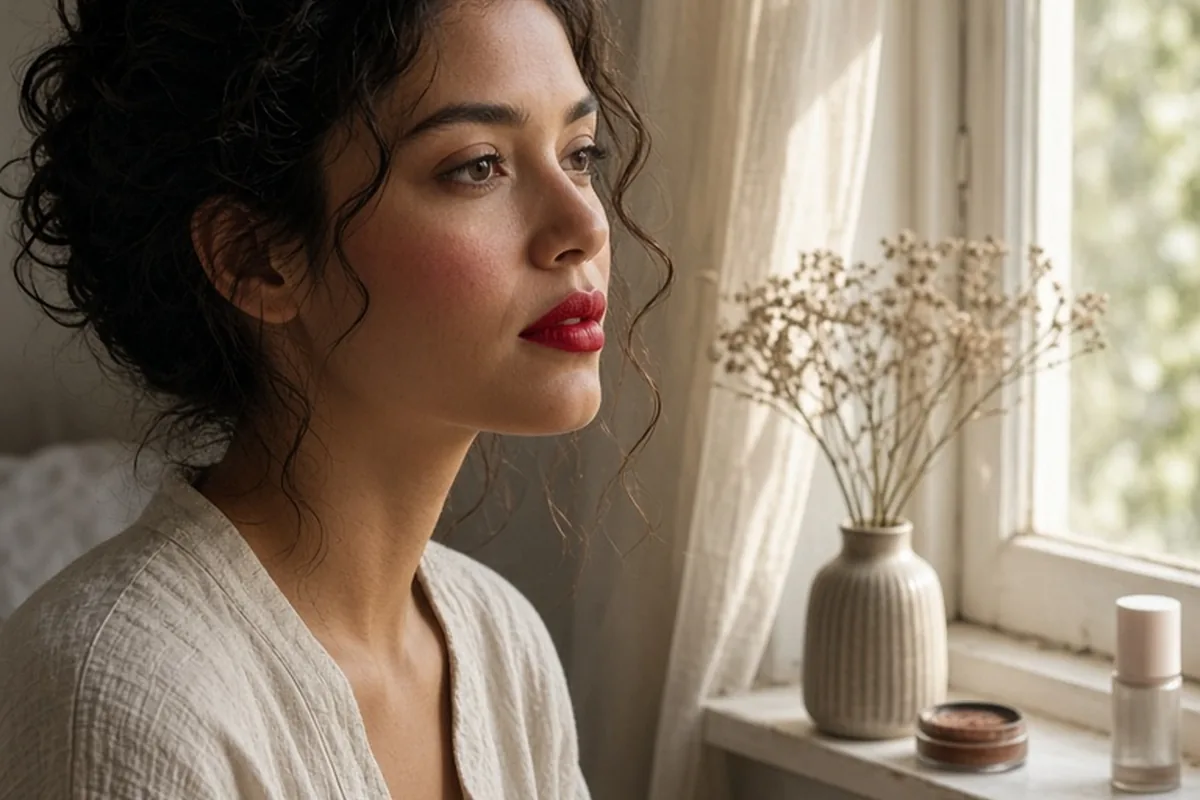
When wearing red lipstick, choose a blush that mirrors your lipstick's undertone or stick to a soft, neutral nude. Pair cool, blue-based reds with muted rose or sheer berry tones, and warm, orange-toned reds with soft peach, warm apricot, or tawny bronze. If you prefer a subtle look, a neutral almond, dusty rose, or translucent cream cheek tint keeps the focus on your lips without washing out your complexion.
Red lipstick instantly commands attention, making the balance of the rest of your makeup both crucial and occasionally tricky. Selecting the right blush shade is less about finding an exact color duplicate and more about harmonizing your facial undertones so your features appear vibrant, sculpted, and cohesive rather than visually overwhelmed.
Harmonizing Undertones Between Lips and Cheeks
The most reliable guideline for pairing blush with red lipstick is matching the underlying temperature of both products. Red is rarely just primary red; it almost always leans slightly warm or cool. A cool-toned red features subtle blue or pink undertones, reminiscent of cherries, rubies, or cranberries. When wearing a blue-red lipstick, applying a blush with cool undertones—such as a soft plum, muted mauve, or sheer petal rose—creates a naturally unified palette across the face.
Conversely, warm-toned reds contain yellow, orange, or brown bases, such as brick red, chili, tomato, or fiery vermilion. These shades look most harmonious when accompanied by blushes infused with warm pigments like peach, terracotta, soft ginger, or warm apricot. Pairing a warm orange-red lipstick with a cool bubblegum-pink blush often creates visual tension, causing the colors to fight for attention on your face rather than complementing one another.
If your lipstick is a true neutral red—a balanced shade with equal amounts of warm and cool pigments—you have significantly more flexibility. Neutral reds allow you to base your blush choice entirely on your natural skin undertone or the overall mood of your makeup look, whether you prefer a fresh, youthful rose or a sculpted, tawny nude.
Neutral and Nude Blushes for Everyday Balance
If you want your red lip to remain the undisputed centerpiece of your look, neutral and nude blushes are the safest and most sophisticated option. Bright or highly saturated cheek colors can quickly turn a classic red lip into a theatrical or vintage costume effect if not carefully controlled. Neutral blushes provide structure, warmth, and dimension to the cheeks while ensuring the lips remain the primary focal point.
For fair to light complexions, neutral blush options include soft beige, warm almond, or muted dusty rose that merely mimics a subtle shadow with a hint of life. Medium and olive skin tones thrive with soft caramel, toasted peach, or tawny rose shades. Deep complexions look stunning with rich spiced cinnamon, warm mocha, or deep terracotta that provides depth without introducing a jarring secondary color.
When choosing a nude blush, look for a formula that contains enough pigment to prevent your skin from looking flat or washed out under the intensity of a bold lip. The goal is not to eliminate color entirely from the cheeks, but rather to introduce a healthy, sculpted warmth that frames the lower half of your face seamlessly.
The Monochromatic Technique: Using Sheer Reds and Stains
Monochromatic makeup is a timeless aesthetic often associated with classic French beauty, where the cheek color directly echoes the lip shade. Instead of searching through multiple blush compacts to find a complementary undertone, you can wear a sheer wash of red on the cheeks that mimics the exact pigment of your lipstick.
To execute this look successfully without over-saturating your cheeks, application technique is everything. If you are using a cream or satin red lipstick, dab a tiny amount onto the back of your hand first to warm the product. Pick up a minimal amount using your fingertips or a damp makeup sponge, then gently tap and diffuse it onto the apples of your cheeks, sweeping upward toward your temples until it forms a sheer, translucent flush.
The primary limitation of using your lipstick as blush is formula suitability. Matte liquid lipsticks or formulas containing heavy waxes may set too quickly or disrupt your underlying foundation. In those instances, opting for a dedicated sheer red cream blush or a water-based red cheek tint provides the same unified color harmony with far greater blendability and comfort.
Choosing Blush Shades Based on Skin Tone Depth
While undertone harmony is essential, the depth of your skin tone also dictates how intensely a blush shade will translate once applied alongside a saturated red lip. Fair skin can easily become overwhelmed by pigmented blush, whereas deep skin requires sufficient color saturation to avoid an ashy or invisible appearance.
Fair and light skin tones generally look best with sheer, buildable washes of color. When wearing a classic red, reach for soft peach, pale nude-rose, or delicate petal pinks. Applying pigment gradually with a fluffy brush prevents harsh demarcations and keeps the overall finish fresh and effortless rather than overly made-up.
Medium, tan, and olive skin tones carry natural golden, green, or neutral depth that can handle richer pigments. Warm terracotta, burnt peach, rosewood, and amber blushes enhance the skin's natural radiance while balancing the boldness of a red lip. Olive undertones in particular benefit from warm rose or tawny bronze blushes, which keep the skin looking healthy without turning muddy.
Deep and rich complexions require rich, highly pigmented cheek shades that maintain their true color payoff against deep skin. Deep berries, warm plums, burnt oranges, and rich brick reds provide a stunning, radiant contrast that pairs effortlessly with both deep wine-reds and vibrant scarlet lipsticks.
Selecting the Right Blush Formula and Finish
The texture and finish of your blush play an equally significant role in the harmony of your overall makeup. Matching or intentionally contrasting the textures of your lip and cheek products helps tie the entire look together with professional polish.
Cream and liquid blushes melt into the skin, offering a natural, dewy sheen that mimics genuine vitality. These formulas pair exceptionally well with satin, sheer, or glossy red lips, creating a youthful, skin-first aesthetic. Cream textures are also forgiving on dry or mature skin, as they do not settle into fine lines or emphasize dry patches around the cheekbones.
Powder blushes, on the other hand, provide superior longevity and control, making them ideal for long-wear events, humid environments, or oily skin types. A velvety matte or satin powder blush complements a traditional matte red lip, resulting in a cohesive, refined, and classic Hollywood finish. If you use powder blush, ensure the edges are thoroughly diffused using a clean buffing brush to avoid harsh lines.
Placement and Application Strategies for Bold Lips
When your lips carry high-contrast pigment, the placement of your blush determines whether your face looks lifted and open or crowded and bottom-heavy. Because red lipstick naturally draws the viewer's eye to the lower third of the face, thoughtful cheek placement helps restore vertical balance.
Applying blush high on the cheekbones—starting slightly outside the center of the eye and sweeping upward toward the hairline—creates an uplifting, elongated effect. This high-placement technique prevents the color on your cheeks from competing directly with the boldness of your mouth, leaving ample open space across the center of your face.
Applying blush directly to the apples of the cheeks creates a rounded, doll-like flush that works beautifully for vintage or romantic looks, but it requires a very light hand. If applied too heavily in the center of the face alongside red lipstick, the combination can make the features appear congested. Always apply your red lipstick first before applying blush; seeing the intensity of the lip allows you to gauge exactly how much cheek color is needed.
Troubleshooting Common Clashes and Application Mistakes
One of the most frequent mistakes when styling red lipstick is introducing too many competing bright colors across the eyes, cheeks, and lips. Bright neon fuchsia, pastel baby pink, or electric coral blushes almost always clash with traditional red lipsticks because the eye cannot establish a clear focal point.
If you realize you have over-applied blush after your red lipstick is already on, you do not need to wash your face and start over. Take the foundation brush or sponge you used earlier—which still contains a small amount of residual base makeup—and gently press it over the edges of your cheek color. This instantly tones down the pigment and blends the blush seamlessly back into your foundation.
Another common issue is muddiness, which occurs when cool contour shades, warm bronzers, and bright blushes are layered haphazardly. Keep your complexion routine streamlined when sporting a red lip: choose between a light bronzer or a soft blush rather than heavily layering both, ensuring your base remains clean and luminous.
Frequently asked questions
Can I wear bronzer instead of blush with red lipstick?
Yes, substituting blush with a soft, warm bronzer is an excellent way to wear red lipstick with modern simplicity. A light sweep of bronzer across the cheekbones and temples warms the face and adds dimension without introducing any competing floral or pink tones. This approach works particularly well with warm or neutral red lipsticks.
What blush pairs best with deep burgundy or wine-red lipstick?
Deep burgundy and wine lipsticks look best with muted plum, deep berry, or soft dusty rose blushes that share their cool, dark undertones. Alternatively, a sheer, neutral taupe-rose or light terracotta can add warmth without distracting from the dramatic intensity of the dark lips.
Should my blush always be applied lighter than my red lipstick?
Generally, yes; keeping your blush softer and more sheer than your lipstick ensures your lips remain the clear focal point of your makeup. Applying heavy, highly saturated blush alongside dark or bright red lipstick can make the overall appearance feel crowded or excessively theatrical.
How do I choose a blush if my red lipstick is completely neutral?
With a true neutral red lipstick, match your blush to your skin's natural undertone rather than the lipstick itself. If your skin leans warm, choose soft peach or almond; if your skin leans cool, choose muted rose or soft mauve; and if your skin is neutral, you can freely wear either with equal success.
Your next step
Swatch your red lipstick on your inner wrist to identify whether it pulls cool, warm, or neutral, then select a sheer blush or nude cheek tint that matches that specific undertone for your next makeup application.