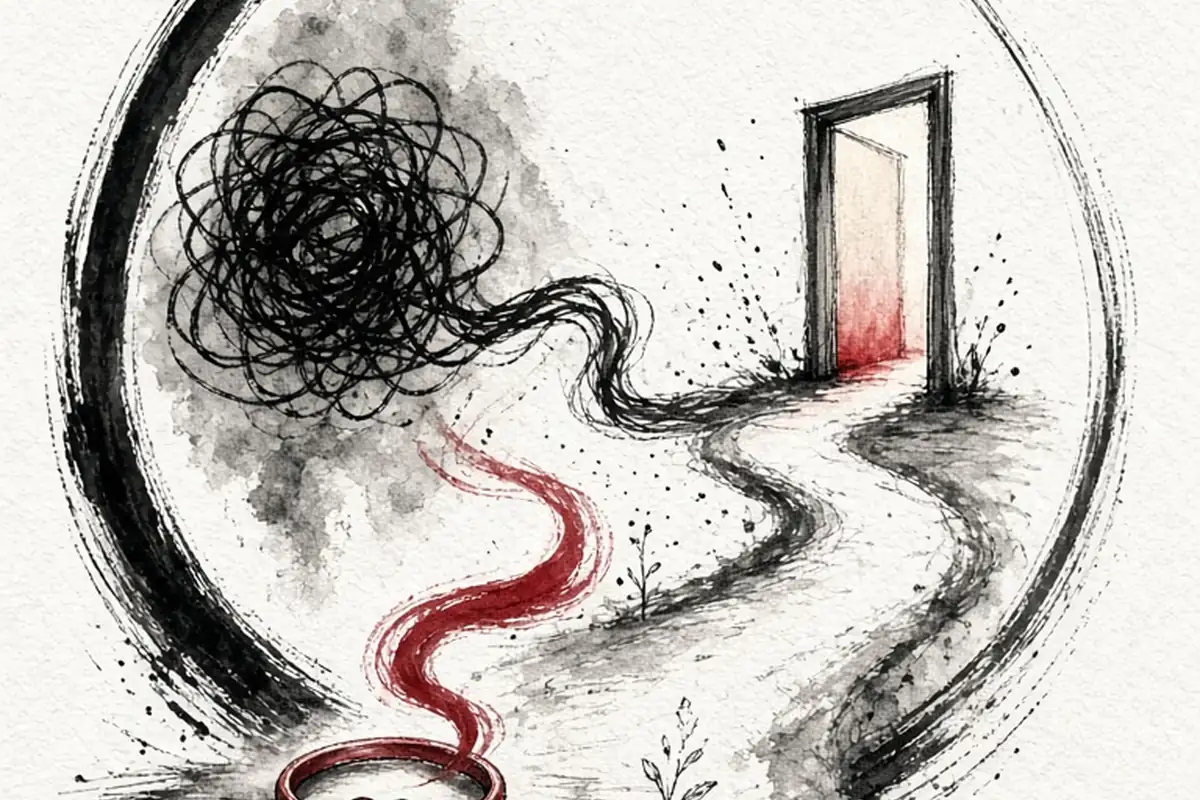
A promise ring is a ring given to symbolize a serious commitment, but its meaning is set by the couple rather than by a universal rule. It can signal exclusivity, future engagement, long-distance loyalty, or a personal vow. The key is to name the promise clearly so the ring does not create bigger expectations than either person intends.
A promise ring can be romantic, confusing, reassuring, or premature depending on the conversation around it. The jewelry matters less than the agreement it represents.
What a promise ring usually means
At its simplest, a promise ring says the relationship matters and the giver wants to be intentional about it. Unlike a friendship bracelet or a casual gift, it carries a public or private signal that two people are choosing each other in a defined way. That definition might be exclusivity after a few months, commitment during a separation, a shared plan to get engaged later, or a vow to work through a hard season with honesty.
The important point is that the ring does not come with one fixed script. For one couple it may mean we are not seeing other people. For another it may mean we want marriage someday but are not ready to plan it. If the meaning stays vague, the ring can become a Rorschach test: one person sees devotion, the other sees pressure, and both feel oddly unsure why a small object suddenly carries so much weight.
How it differs from an engagement ring
An engagement ring usually points toward a concrete question: will you marry me, and are we planning a future with a recognizable next step? A promise ring is broader and less legally or socially loaded. It can be a step toward engagement, a substitute for engagement during school, military service, finances, or distance, or simply a symbol of commitment that never needs to become marriage.
The trade-off is ambiguity. Because a promise ring is flexible, it can fit relationships that do not match a standard timeline, but it can also blur expectations if one person quietly treats it as a pre-engagement while the other treats it as a meaningful gift. A useful rule is to compare verbs, not jewelry: are we promising exclusivity, patience, fidelity, a future proposal, or a change in behavior? The clearer the verb, the less room for resentment.
When giving one makes sense
A promise ring tends to work best when the relationship already has some stability and both people can talk about the future without panic. Good moments include deciding to be exclusive, starting a long-distance chapter with planned visits, recommitting after a breach of trust that is being actively repaired, or marking a shared value such as waiting, saving, or finishing a degree before engagement. The ring should name a commitment that already exists in words.
It makes less sense as a shortcut. If the real issue is insecurity, jealousy, a recent fight, or fear that a partner is drifting, a ring can become an expensive pause button. It may temporarily soothe anxiety while leaving the actual problem untouched. Before buying, ask whether you would still feel good about the promise if there were no ring at all. If the answer is no, the conversation needs to come first.
How to choose the ring without overspending
Promise rings are usually simpler than engagement rings: a modest band, a small stone, a birthstone, an engraved date, or a design tied to an inside joke can all work. The practical goal is to match cost and style to the meaning. A ring that strains your budget can accidentally imply engagement-level intent, while a thoughtless grab from a checkout case can make a sincere promise feel disposable.
Choose based on wearability and symbolism rather than status. If your partner works with their hands, a low-profile band may beat a tall setting. If they rarely wear jewelry, a necklace or engraved item might communicate the same promise better. A concrete example: for a couple separated by graduate school, a plain band engraved with the next visit date can feel more honest than a flashy stone that suggests a proposal neither person has agreed to yet.
How to give or receive one clearly
The best moment is calm, private, and specific. Say what the ring means and what it does not mean: this is a promise to be exclusive and honest while we are apart, not a secret engagement. Then invite a response without demanding instant delight. A partner may need time because the symbol is meaningful, and needing clarity is not rejection.
If you are receiving one, it is fair to ask gentle questions before putting it on. What are we promising? Is this about exclusivity, marriage later, distance, or repair? What would breaking this promise look like? Those questions may feel unromantic, but they protect the romance from turning into guesswork. A ring accepted under pressure can create compliance rather than commitment, which is weaker than a slower yes.
Common mistakes and mixed signals
The biggest mistake is letting the ring speak for you. If one person thinks it means engagement within a year and the other thinks it means we are serious for now, the same object can produce two different relationships. Another mistake is using it to mark territory after jealousy, to soften a betrayal without changed behavior, or to test whether a partner will perform gratitude on cue.
Mixed signals also come from context. Wearing it on the left ring finger may lead friends and family to assume engagement, which can be fun or stressful depending on the truth. Posting it online before talking privately can make a partner feel managed. None of this means promise rings are risky by default; it means symbols amplify whatever clarity or confusion is already present.
If the promise changes or ends
Promises can be renegotiated without treating the whole relationship as fake. If distance lasts longer than planned, if engagement stops feeling right, or if one person realizes the commitment was made too early, the respectful move is to update the meaning out loud. Keeping the ring while quietly withdrawing from the promise is where hurt usually grows.
If the relationship ends, there is no universal etiquette for the ring. Some people return it because it represented a specific future; others keep it as a gift from a meaningful chapter. The cleaner approach is to ask once, calmly, and accept the answer. If the promise was broken through deception or repeated boundary violations, the ring should not be used as leverage, proof of virtue, or a reason to stay.
Illustrative Scenarios
The ring before the move
Maya and Jordan had dated for a year when Jordan took a job four hours away. Before the move, he gave Maya a slim band and said he wanted them to keep choosing this. Maya heard engagement, while Jordan meant exclusive and serious. For two weeks she answered texts faster, then felt anxious when he called it just a promise. They finally compared expectations over video: no wedding date, but honesty about visits and a check-in in six months. The ring stopped being a test and became a reminder with terms attached.
Key point: A promise ring works when the promise is named in plain language, including what it is not.
The apology that sparkled too soon
After a tense birthday dinner, Luis apologized to Noor by presenting a small ring the next morning. Noor liked him, but the gesture felt like a shortcut around the argument: he had criticized her friends, then tried to sparkle his way out. Instead of accepting or refusing on the spot, she asked what the ring meant. Luis said it was a promise to listen better, not a request to forget. They agreed the ring could wait until he showed that promise for a month. When he followed through, the symbol matched the behavior instead of replacing it.
Key point: A ring should mark repair that is already happening, not substitute for accountability.
Frequently asked questions
Is a promise ring the same as a pre-engagement ring?
Sometimes, but not automatically. It can mean a future proposal only if both people say that explicitly; otherwise it may simply mark exclusivity, distance, or a personal commitment.
Which finger should a promise ring go on?
There is no required finger. Many people choose the right hand or another finger to avoid engagement assumptions, while others use the left ring finger and correct people when needed.
How much should a promise ring cost?
There is no correct price, and a modest ring can carry more meaning than an expensive one. Choose a budget that does not create debt or imply a bigger promise than you intend.
What if my partner gives me one and I am not ready?
You can appreciate the intention and still ask for clarity or time. Try saying you care about them, want to understand the promise, and do not want to accept a symbol whose terms are unclear.
Your next step
Before giving or accepting a promise ring, write one sentence that names the exact promise, one sentence naming what it is not, and one realistic check-in date to revisit it.