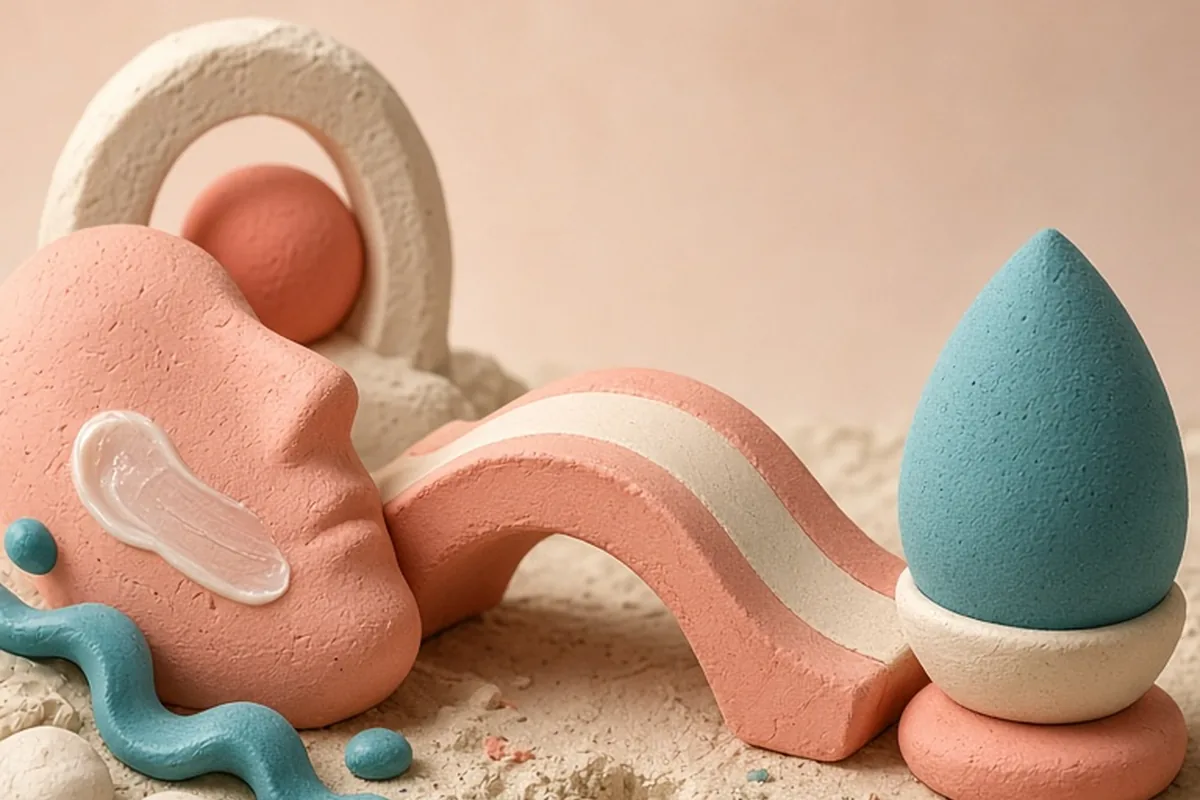
A makeup base is a preparatory cosmetic product applied after skincare and before foundation to smooth skin texture, balance oil or dryness, and enhance cosmetic longevity. Depending on the formulation, it can color-correct discoloration, blur enlarged pores, hydrate dry patches, or provide a luminous or matte finish. It acts as an intermediate barrier that helps makeup adhere evenly while preventing pigment from settling into fine lines or breaking down prematurely.
While often confused with standard primers or tinted moisturizers, a makeup base serves a dedicated role in bridging daily skin prep and pigment application, ensuring a seamless, balanced complexion throughout the day.
The Core Functions and Purpose of a Makeup Base
Skincare products like rich moisturizers, facial oils, and sunscreens leave an emollient or protective lipid layer on the stratum corneum. While essential for moisture retention and UV protection, this surface film can cause liquid and powder foundations to slide, separate, or oxidize unevenly. A makeup base functions as an engineered interface between these skincare lipids and cosmetic pigments. By modifying surface tension and balancing epidermal moisture levels, it prevents natural facial oils from breaking down your foundation while ensuring dry areas do not leach moisture out of your makeup.
Beyond extending wear time, a makeup base mechanically smooths surface texture. Normal skin naturally possesses micro-irregularities, such as enlarged pores, fine lines, rough patches, and minor scarring. When foundation is applied directly over untreated texture, the pigment particles tend to settle into depressions and catch on dry edges, exaggerating the very features you may wish to soften. A makeup base fills micro-fissures and forms a flexible, permeable layer over the epidermis, allowing subsequent cosmetics to glide on evenly and diffuse light across the face for a more uniform appearance.
Makeup Base vs. Primer vs. Foundation
The cosmetic industry frequently uses the terms makeup base and primer interchangeably, but their historical origins and formulations feature distinct differences. In Western beauty terminology, a primer is traditionally formulated to target a single mechanical function, such as oil control, extreme pore blurring, or tacky grip for long-wearing foundations. In contrast, the concept of a makeup base originates prominently from East Asian beauty traditions, where it functions as a multi-corrective veil that harmonizes skin tone, enhances natural luminosity, and replenishes moisture balance alongside its priming capabilities.
Foundation differs fundamentally from both bases and primers because its primary objective is opacity and coverage. Foundations contain high concentrations of color pigments, such as iron oxides and titanium dioxide, designed to mask discoloration and create a uniform skin shade. A makeup base contains minimal to sheer pigmentation, designed to optimize the skin's surface and balance undertones so you can apply significantly less foundation. Using foundation without a base can lead to heavy product buildup, whereas pairing a sheer base with targeted concealing produces a lighter, more natural finish.
Major Formulations and How They Perform
Mattifying and pore-blurring bases are engineered for combination to oily complexions that experience midday shine or prominent pores around the nose, chin, and forehead. These formulas typically feature dimethicone, cyclopentasiloxane, or silica polymers that create a velvety, soft-focus finish over the skin while absorbing excess sebum. The primary trade-off with heavy silicone or mattifying bases is breathability; applying them too heavily over dry or dehydrated skin can cause a chalky appearance or trigger flaking.
Hydrating and illuminating bases cater to dry, mature, or fatigued skin types that struggle with dullness and flaking. Infused with humectants like glycerin and hyaluronic acid, alongside light emollients such as squalane, these bases deliver continuous surface hydration to prevent foundation from clinging to dry patches. Radiant variations incorporate ultra-fine light-reflecting mica or pearl pigments that restore a healthy glow. However, those with active breakouts or pronounced texture should use illuminating bases selectively, as reflective particles can catch light and accentuate raised blemishes.
Color-correcting bases utilize complementary color theory to balance widespread skin discoloration before any foundation is applied. For example, pale green bases neutralize facial redness stemming from rosacea or sensitivity, lavender bases counteract dull or sallow undertones, and peach or soft yellow bases brighten dark shadows and hyperpigmentation. Using a color-correcting base reduces the need for thick, heavy concealers, resulting in a fresher, more breathable complexion.
Matching Base Formulas to Your Skin Type
Selecting the right makeup base requires analyzing your skin type, primary concerns, and how your skin behaves throughout the day. If you have oily skin, prioritize water-based gel formulas or oil-absorbing bases with ingredients like niacinamide or silica that keep sebum under control without clogging pores. For combination skin, multi-basing is an effective strategy: apply an oil-control base strictly to the T-zone and a lightweight hydrating base across the cheeks to address competing skin needs simultaneously.
Dry and mature skin types benefit most from nourishing, serum-infused bases containing ceramides, panthenol, and floral waters that soften the look of fine lines and prevent powder products from settling into creases. Avoid high-alcohol formulas or overly drying matte bases that strip surface moisture. If your skin is sensitive or acne-prone, look for non-comedogenic, fragrance-free options enriched with soothing botanicals like centella asiatica or green tea extract to reduce irritation while maintaining cosmetic performance.
Step-by-Step Application for Maximum Longevity
Flawless application begins with proper skincare timing. After cleansing, moisturizing, and applying broad-spectrum sunscreen, wait two to three minutes before applying your makeup base. If your base is placed over wet, unabsorbed skincare or sunscreen, the formulas can mix unpredictably, reducing sunscreen efficacy and causing your makeup to slide or streak. Once your skincare has settled to a soft, non-sticky finish, dispense a pea-sized amount of makeup base onto the back of your hand.
Dot the product onto key areas—the forehead, nose, cheeks, and chin—and spread it outward using clean fingertips, a damp sponge, or a flat foundation brush. Using your fingers is often the most effective method because the gentle warmth of your hands helps blend the product smoothly into the skin's surface. Gently press the base into areas with visible pores or fine lines rather than rubbing vigorously across the face. Allow the base to sit for approximately one minute to form a stable film before applying foundation, tinted moisturizer, or concealer.
Preventing Product Pilling and Ingredient Incompatibilities
Product pilling—the formation of small, rubbery flakes when layering makeup—is one of the most common issues encountered when using a makeup base. Pilling usually occurs when incompatible base ingredients are layered together, most notably mixing a heavy silicone-based product with a water-based product. Silicone forms a smooth, hydrophobic shield across the face; when a water-dominant foundation is spread on top, the water cannot bind to the silicone film, causing the layers to separate and roll up into pills under friction.
To avoid pilling, review the first few ingredients on your skincare, base, and foundation packaging. If your makeup base lists ingredients ending in -cone, -siloxane, or -silane near the top, pair it with a silicone-compatible foundation for optimal blending. If you prefer water-based, serum-like foundations, select a water-based, silicone-free makeup base. Additionally, always apply base in thin, measured layers; using more than a dime-sized amount overwhelms the skin's absorption capacity and creates excess residue that easily pills under brush strokes.
Adapting Your Base for Minimalist and Glamour Routines
A makeup base is versatile enough to serve both understated daily routines and full-coverage, long-wear applications. On low-maintenance days, a tinted, color-correcting, or luminous base can be worn on its own directly over sunscreen. This single step smooths texture, neutralizes minor redness, and imparts a natural glow without the weight of standard foundation. Pairing a base with a touch of spot concealer where needed delivers an effortless, polished look that lets your natural skin show through.
For special occasions, photography, or high-humidity environments, a high-performance makeup base is essential for structural stability. Under bright lighting or warm conditions, natural facial oils and perspiration rapidly degrade cosmetic pigments. A dedicated gripping or mattifying base anchors your foundation, minimizes transfer onto clothing, and prevents pigment separation along smile lines and around the nose. Adjusting how and where you apply your base allows you to tailor your makeup's durability to the demands of your day.
Frequently asked questions
Can I use a makeup base instead of moisturizer?
A makeup base should not replace your daily moisturizer because it is formulated primarily to improve cosmetic adhesion and surface texture rather than deeply nourish the skin barrier. While some hydrating bases contain humectants, skipping moisturizer can lead to underlying dehydration and patchy makeup application. Apply your standard moisturizer first, allow it to absorb, and follow with your base.
Do I need to apply makeup base all over my entire face?
You do not need full-face application if your skin concerns are localized. Many people benefit from zone-priming, such as applying a pore-blurring or mattifying base only to an oily T-zone while leaving the cheeks bare or using a hydrating formula there instead. Targeted application prevents unnecessary product buildup on balanced areas.
What is the correct order of application between sunscreen, base, and foundation?
Sunscreen should always be applied as the final step of your skincare routine, directly before your makeup base. Let your sunscreen dry down completely for two to three minutes to form its protective UV filter before smoothing your makeup base over top, followed by your foundation.
Can wearing a makeup base cause acne breakouts?
A makeup base can contribute to clogged pores if it contains comedogenic ingredients that disagree with your skin or if it is not thoroughly cleansed at the end of the day. If you are prone to breakouts, choose oil-free, non-comedogenic formulas and double-cleanse each evening with an oil-based cleanser followed by a gentle water-based wash.
Your next step
Check the ingredient labels of your current moisturizer and foundation today to confirm whether they are water- or silicone-based, then choose a matching makeup base formula to prevent pilling and ensure smooth application.