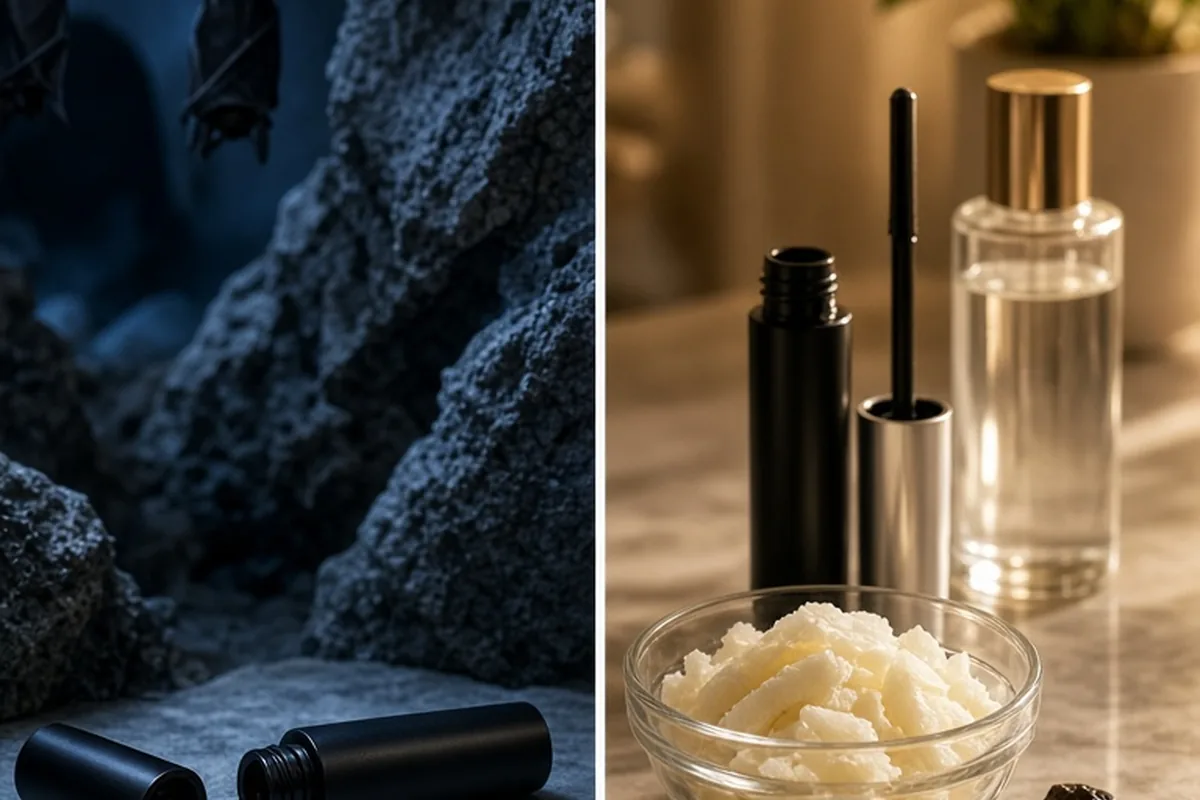
Mascara is not made of bat poop. This widespread rumor stems from confusion between guano, which refers to bat or bird droppings, and guanine, a shimmering cosmetic colorant traditionally derived from fish scales. Modern mascara consists of safe, regulated cosmetic ingredients, primarily blended waxes, conditioning oils, iron oxide pigments, polymers for curl, and preservatives that protect against microbial growth.
Cosmetic urban legends have a way of lingering in popular culture, and few beauty rumors are as persistent as the claim that everyday mascara contains bat droppings. Reading an ingredient deck can feel overwhelming when scientific names sound complex, making it easy for misunderstandings to spread across social media. Understanding what cosmetic chemists actually formulate into liquid, cream, and gel mascaras can put your mind at ease and help you choose the best products for your daily routine.
The Linguistic Mix-Up: Guano Versus Guanine
The urban legend claiming that mascara contains bat droppings is the result of a simple linguistic misunderstanding between two completely different substances: guano and guanine. Guano is the biological term for accumulated excrement from bats or seabirds, historically harvested as an agricultural fertilizer due to its high concentration of nitrogen and phosphorus. Guano has never been an approved or utilized ingredient in commercial cosmetic formulations, particularly around the sensitive ocular region.
Guanine, on the other hand, is a naturally occurring amino acid base found in the genetic building blocks of all living organisms. In cosmetic history, guanine crystals were isolated from fish scales to create a pearlescent, light-reflecting pigment known as pearl essence. Because the word guanine sounds remarkably similar to guano, the two substances became conflated in pop culture lore. Furthermore, standard black and brown mascaras rarely use guanine anyway, as dark lash products require rich matte opacity rather than the translucent, silvery shimmer that guanine provides.
The Foundation Layer: Structural Waxes and Emollients
Every tube of mascara relies on a carefully balanced structural foundation made of cosmetic-grade waxes and emollients. Waxes provide the necessary viscosity that allows the formula to grip individual eyelashes, build noticeable volume, and hold an upward curl throughout the day. Without a sturdy wax matrix, mascara would remain too liquid, running down the face or pooling at the base of the lash line.
Formulators select a combination of natural and synthetic waxes to achieve specific performance attributes. Beeswax delivers pliable body and flexibility, allowing multiple coats without immediate clumping. Carnauba wax, harvested from the leaves of Brazilian palm trees, has a higher melting point that imparts structure and heat resistance, helping the formula hold curl in humid weather. Synthetic microcrystalline waxes and candelilla wax are often blended to optimize spreadability and ensure that the mascara glides smoothly from root to tip.
Colorants and Pigments: Creating Deep, Eye-Safe Shades
The deep black, rich brown, or jewel-toned colors in mascara come from purified mineral pigments rather than organic waste products. The most common colorant in black mascara is black iron oxide, listed on ingredient decks as CI 77499. For intensely dark, dramatic formulas, chemists often incorporate carbon black, an ultra-fine, purified elemental carbon that creates an ink-like finish.
Cosmetic colorants intended for the eye area are subject to strict regulatory oversight to ensure they are free from heavy metals, arsenic, and harmful contaminants. For example, brown mascaras rely on blends of red, yellow, and black iron oxides, while specialty formulas like navy or plum use ultramarines and titanium dioxide. Coal-tar dyes, which can be found in some hair colorings, are strictly prohibited in eye cosmetics due to the risk of severe irritation and ocular injury.
Film Formers and Polymers: Engineering Length and Smudge Resistance
Modern mascaras owe much of their lengthening, curling, and smudge-resistant power to synthetic film formers and polymers. These specialized compounds dissolve within the wet formula and reorganize into a flexible, continuous film as the mascara dries on the lashes. This synthetic shield locks the waxes and pigments in place, preventing flakes from breaking off onto the under-eye area during natural blinking.
Common film formers include acrylates copolymer, polyvinylpyrrolidone, and polybutene. In lengthening mascaras, formulators may also suspend fine nylon or rayon microfibers within the polymer base. As you comb the wand through your lashes, these microfibers adhere to the tips of natural hairs, creating the physical illusion of extended lash length without requiring false lash adhesives.
Water and Preservative Systems: Protecting Eye Health
Most conventional mascaras are emulsions combining water and oils or waxes. Because water introduces the potential for microbial growth, an effective preservative system is essential. Every time a mascara wand is removed from the tube, applied to lashes, and reinserted, it introduces environmental air, skin cells, and surface bacteria into the container.
To prevent dangerous bacterial or fungal colonization that could cause conjunctivitis or corneal infections, cosmetic manufacturers include broad-spectrum preservatives such as phenoxyethanol, ethylhexylglycerin, potassium sorbate, or parabens. These ingredients work in tiny, safe concentrations to keep the formula sterile throughout its intended lifespan. Even with robust preservative systems, the dark, moist interior of a mascara tube requires responsible consumer habits, which is why experts consistently advise discarding any mascara after three to six months of regular use.
Specialty Formulations: Waterproof, Tubing, and Vegan Options
Understanding cosmetic chemistry helps clarify why different mascara categories perform and feel uniquely on the eyes. Waterproof mascaras, for instance, minimize or completely eliminate water from their formulas, replacing it with volatile solvents like isododecane alongside hydrophobic waxes and silicone polymers. This creates a barrier impervious to tears, rain, and sweat, although it requires oil-based cleansers to remove without damaging fragile natural lashes.
Tubing mascaras represent an alternative technological approach, using high concentrations of polymers like polyvinyl alcohol that wrap each lash in a 360-degree flexible casing. Instead of breaking down with oil, these tubes slide off effortlessly using only warm water and gentle fingertip pressure, making them ideal for people prone to under-eye smudging or oily eyelids. Meanwhile, vegan mascaras replace animal-derived components like beeswax and lanolin with plant waxes such as rice bran, sunflower seed, or synthetic alternatives, providing identical visual performance without animal ingredients.
How to Read Mascara Labels and Shop for Sensitive Eyes
If you have sensitive eyes, wear contact lenses, or simply want full visibility into what you apply to your face, learning to scan a cosmetic ingredient list is an empowering skill. The ingredients are listed in descending order of concentration until reaching substances used at one percent or less, which can be listed in any order. The first three to five ingredients typically tell you whether the formula is water-based, wax-heavy, or polymer-dominant.
When shopping for reactive eyes, look for ophthalmologist-tested formulas that omit synthetic fragrances, drying denatured alcohols, and excessive essential oils. A shorter ingredient deck can minimize the risk of contact dermatitis. If you ever experience stinging, redness, or watery eyes after applying a new product, remove it immediately with a gentle micellar water and verify that the product is neither expired nor contaminated.
Frequently asked questions
Is guanine still used in any modern mascaras?
Guanine is rarely, if ever, used in black or brown mascaras because it creates a silvery pearlescent sheen rather than the deep, matte opacity required for lash definition. When cosmetic guanine is used today, it is primarily found in shimmering nail polishes, highlighters, or frosted eyeshadows, and it is derived from purified fish scales or produced synthetically.
How long can I safely keep a tube of mascara before replacing it?
You should replace your mascara every three to six months once opened. Repeatedly pumping air and the wand into the tube introduces bacteria, and the preservative system gradually loses effectiveness over time, increasing the risk of eye irritation or infection.
Are vegan mascaras safer for your eyes than traditional formulas?
Vegan mascaras are not inherently safer or cleaner; they simply avoid animal-derived ingredients like beeswax and lanolin in favor of plant-based or synthetic alternatives. Both vegan and conventional mascaras must pass the same rigorous safety and preservation standards to ensure they are safe for use around the eyes.
What is the best way to avoid clumping and flaking?
Wipe excess product from the tip of the wand onto a tissue before application, and apply thin, even coats while the formula is still slightly damp. Avoid pumping the wand inside the tube, which pushes excess air inside and causes the formula to dry out and flake prematurely.
Your next step
Take a moment to check the opening date on your current mascara, discard any tube older than six months, and look at the ingredient list to choose a formula suited to your lash goals.