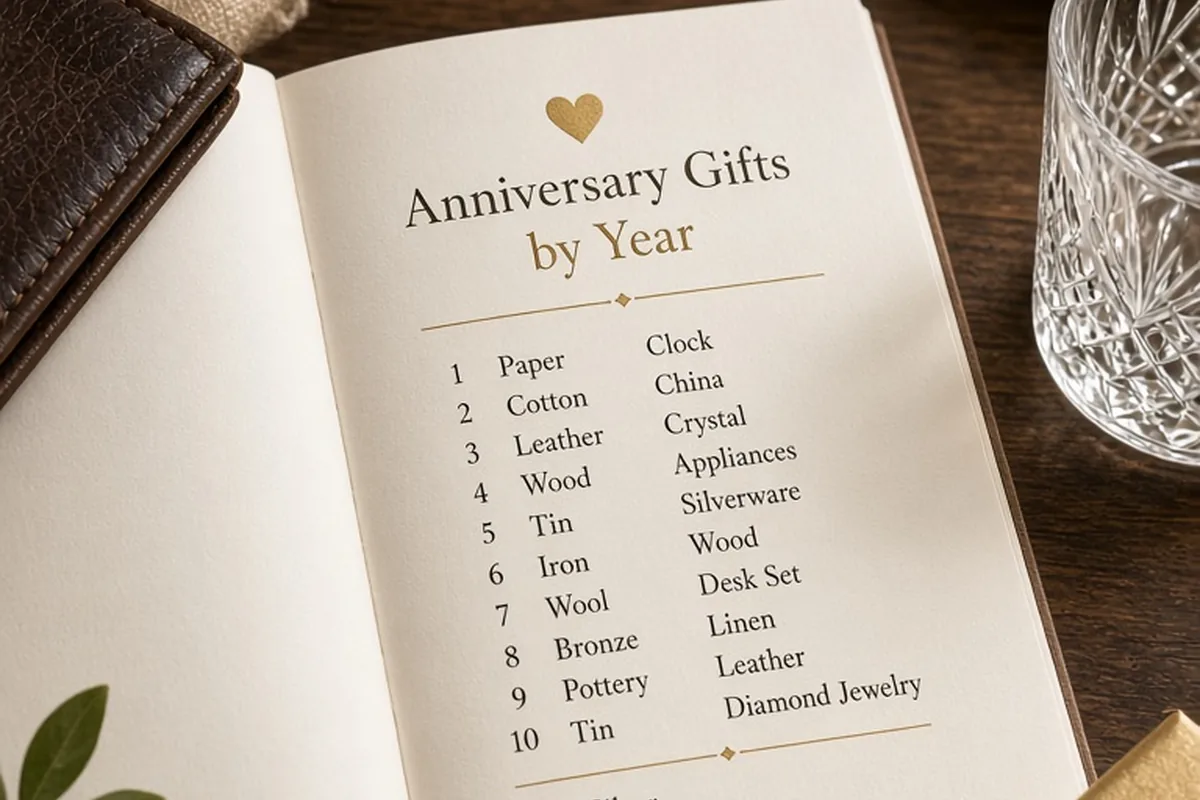
Anniversary gifts by year follow established traditional and modern lists that progress from delicate, everyday materials to rare, resilient gems and precious metals. Year one traditionally begins with paper and modern clocks, moving through cotton, leather, wood, and tin in the first decade. Major milestones highlight silver for twenty-five years, gold for fifty, and diamond for sixty, offering symbolic themes you can personalize for any budget.
Navigating anniversary milestones can feel overwhelming when you want a present that balances tradition, personal sentiment, and genuine utility. Understanding the symbolic progression of anniversary materials provides a creative framework to celebrate your shared history without feeling constrained by rigid rules.
The First Five Years: Establishing Foundations with Flexible Materials
The early years of marriage represent adaptation, shared discovery, and the gradual building of a home together. Traditional lists honor this initial phase with humble, flexible materials that symbolize an unfolding story. Year one starts with paper, representing the unwritten future and the fragile beginnings of a new union, while the modern alternative is a clock, symbolizing the passage of shared time. Year two introduces cotton, reflecting the way two lives weave closely together, paired with the modern counterpart of fine china. Year three moves to leather, denoting protection, resilience, and warmth, while crystal or glass serves as the modern alternative.
As couples reach years four and five, the materials gain greater substance and stability. Year four traditionally focuses on fruit or flowers to signify a blossoming relationship, though modern guides frequently suggest electrical appliances to support domestic ease. Year five reaches a significant landmark represented by wood, chosen for its grounded strength and deep roots, with silverware serving as the modern choice. When selecting gifts in these formative years, focus on functional upgrades or meaningful keepsakes that suit your everyday living space. A potential trade-off during this phase is balancing novelty with clutter; practical items like high-thread-count cotton sheets, custom framed wedding vows on archival paper, or handcrafted wooden kitchen boards often deliver lasting value without gathering dust on a shelf.
- Year 1: Traditional paper, modern clock
- Year 2: Traditional cotton, modern china
- Year 3: Traditional leather, modern crystal or glass
- Year 4: Traditional fruit or flowers, modern appliances
- Year 5: Traditional wood, modern silverware
Years Six Through Ten: Embracing Resilience and Daily Comfort
Entering the latter half of the first decade marks a transition toward materials that withstand pressure and daily wear. Year six pairs traditional iron or candy with modern wood, highlighting both the sweetness of enduring companionship and the unyielding strength required to navigate life transitions. Year seven brings wool or copper, symbolizing comforting warmth and conductive energy, alongside modern brass or desk accessories. Year eight moves into bronze or pottery, representing preservation and artistic growth, with modern lists offering linens or lace as refined alternatives.
The approach to the ten-year mark reinforces durability through practical metals and sparkling milestones. Year nine traditional pottery or willow suggests flexibility and shaping a life together, balanced by modern leather goods. Year ten celebrates a full decade with tin or aluminum, metals celebrated for their resistance to rust, corrosion, and bending under strain. Modern ten-year guides elevate this landmark with diamond jewelry. To keep these gifts personal, consider blending durability with shared hobbies, such as a cast-iron skillet for home cooking, a copper pour-over coffee set, or an aluminum luggage upgrade for future travel. The primary limitation here is ensuring heavy or industrial materials match your partner's actual aesthetic preferences rather than fulfilling a theme literally.
- Year 6: Traditional candy or iron, modern wood
- Year 7: Traditional wool or copper, modern brass or desk sets
- Year 8: Traditional bronze or pottery, modern linen or lace
- Year 9: Traditional pottery or willow, modern leather
- Year 10: Traditional tin or aluminum, modern diamond jewelry
Years Eleven Through Nineteen: Refining Elegance and Longevity
The teenage years of marriage celebrate refinement, polished beauty, and the intricate patterns of a deeply established partnership. Year eleven highlights steel, known for supreme strength and modern design, while modern lists suggest turquoise or fashion jewelry. Year twelve features silk and fine linen, capturing comfort and luxury, paired with modern pearls. Year thirteen traditionally honors lace, reflecting intricate care and craftsmanship, while textiles or furs represent the modern option. Year fourteen embraces ivory historically, though modern ethical standards favor elephant motifs, opal, or gold jewelry. Year fifteen marks a major checkpoint with traditional crystal and modern watches.
While traditional lists historically skipped intermediate individual years between fifteen and twenty, modern registries assign themes to each annual marker. Year sixteen highlights silver hollowware or coffee and tea themes; year seventeen focuses on furniture; year eighteen centers on porcelain; and year nineteen suggests bronze. These years provide an excellent opportunity to invest in enduring household comforts, entertaining essentials, or elevated wardrobe pieces. The main consideration when shopping in this tier is quality over quantity, as well as checking whether high-maintenance textiles like silk or lace fit your household lifestyle.
- Year 11: Traditional steel, modern fashion jewelry
- Year 12: Traditional silk or linen, modern pearls
- Year 13: Traditional lace, modern textiles
- Year 14: Traditional ivory alternatives or opal, modern gold jewelry
- Year 15: Traditional crystal, modern watches
Major Decadal Milestones: Honoring Silver, Gold, and Precious Gems
Decadal landmarks from twenty years onward represent profound loyalty, deep mutual history, and shared resilience across multiple life chapters. Year twenty centers on traditional china and modern platinum, symbolizing delicate beauty that requires careful handling alongside unbreakable resolve. Year twenty-five marks the renowned Silver Jubilee, where both traditional and modern lists unite under sterling silver, symbolizing radiance, clarity, and lasting value. Year thirty celebrates pearl, representing beauty cultivated slowly over time, while modern lists suggest diamond accents.
As decades continue to accumulate, the materials shift almost exclusively to the most durable precious metals and gems in existence. Year thirty-five features coral or jade, year forty celebrates the rich warmth of ruby, year forty-five features sapphire, and year fifty marks the Golden Jubilee with pure gold. Year sixty culminates in the Diamond Jubilee. Celebrating these monumental milestones often involves higher financial commitments, making it essential to plan ahead. Many couples honor these occasions with collaborative decisions, such as custom resetting heirloom jewelry, planning a milestone travel itinerary, or hosting a gathering with family and friends rather than exchanging surprise individual packages.
- Year 20: Traditional china, modern platinum
- Year 25: Traditional and modern silver
- Year 30: Traditional pearl, modern diamond
- Year 35: Traditional coral or jade, modern emerald
- Year 40: Traditional and modern ruby
- Year 45: Traditional and modern sapphire
- Year 50: Traditional and modern gold
- Year 60: Traditional and modern diamond
Traditional Versus Modern Frameworks: Choosing Your Approach
Understanding where anniversary gift lists originated can help remove the pressure of adhering to them perfectly. Traditional lists date back to medieval Germanic customs and nineteenth-century Victorian conventions, where husbands presented wives with silver wreaths for twenty-five years and gold wreaths for fifty years. Over time, etiquette authorities like Emily Post expanded the sequence to provide annual suggestions. In 1937, the American National Retail Jewelers Association introduced the modern list, updating earlier agrarian and domestic materials with practical appliances, watches, and structured gemstones to suit twentieth-century lifestyles.
Choosing between traditional and modern frameworks depends entirely on your personal tastes, budget, and lifestyle. Traditional themes often encourage quirky, poetic interpretations, such as gifting concert tickets printed on paper for year one or cozy wool blankets for year seven. Modern themes tend to favor daily utility and long-term durability, such as high-end kitchen appliances for year four or luxury watches for year fifteen. There is no rule requiring you to stick to one system permanently; many couples alternate between traditional and modern guidelines depending on which theme offers the most relevant idea for that particular year.
Creative and Budget-Friendly Interpretations of Annual Themes
Literal interpretations of anniversary themes can sometimes lead to excessive spending or unwanted items that do not match your partner's taste. Viewing the material as a creative prompt rather than an exact shopping specification allows you to tailor gifts to any financial circumstance. For example, a year-one paper gift can take the form of an affordable journal filled with favorite memories, a vintage book by a beloved author, or boarding passes for a weekend road trip. Similarly, a year-two cotton theme can be celebrated with a casual cotton picnic blanket paired with an afternoon in the park.
Metaphorical and experiential gifts also allow couples to honor expensive themes without stretching their budget. If year ten calls for tin, you might curate an artisanal gift basket of gourmet tinned olive oils, specialty teas, and preserves from a favorite vacation destination. For year twenty-five silver or year fifty gold, a couple might choose to take a sunrise hike, visit a historical museum, or toast each other with cocktails featuring edible gold leaf. The value of the gift lies in the intentionality and thought behind the gesture rather than the physical weight or market price of the material.
Practical Habits for Meaningful Anniversary Celebrations
To ensure gift giving remains a source of joy rather than seasonal stress, maintain open communication about expectations well before your anniversary date arrives. Couples often experience frustration when one partner invests substantial effort into a themed heirloom while the other assumes a simple dinner reservation suffices. Having a casual conversation a month prior to clarify your intended budget, format, and whether you want to follow the annual theme prevents mismatched surprises and financial discomfort.
Another helpful practice is keeping a running shared note on your phone or computer throughout the year to capture spontaneous ideas, offhand comments, and upcoming desires. When your partner mentions an interest in leather crafting, an appliance upgrade, or a specific piece of artwork, logging it immediately makes your anniversary planning effortless when the date approaches. Above all, remember that anniversary themes exist to inspire celebration, not create mandatory checklists. If a particular year's material does not resonate with your life, feel free to substitute a theme that honors your shared journey in a more authentic way.
Frequently asked questions
What happens if both traditional and modern themes feel unappealing for a specific year?
You are never obligated to follow traditional or modern gift themes. You can interpret the theme loosely through colors, experiences, or alternative gemstone charts, or simply choose an experience or gift that directly reflects your partner's current interests.
Are anniversary gift lists the same across all countries?
While many core milestones like silver at twenty-five and gold at fifty years are widely recognized internationally, specific annual materials vary by region. For instance, the United Kingdom traditional list features subtle differences from American registries on several intermediate years.
How can couples celebrate milestones together instead of exchanging separate gifts?
Couples frequently pool their resources to invest in a shared experience or home improvement project themed around that year's material. Choosing a joint trip, upgrading a living room sofa, or booking a special tasting menu allows you to honor the anniversary collaboratively.
Your next step
Take a moment this week to check your upcoming anniversary milestone and discuss with your partner whether you would like to follow the traditional theme, the modern list, or a shared experiential celebration.