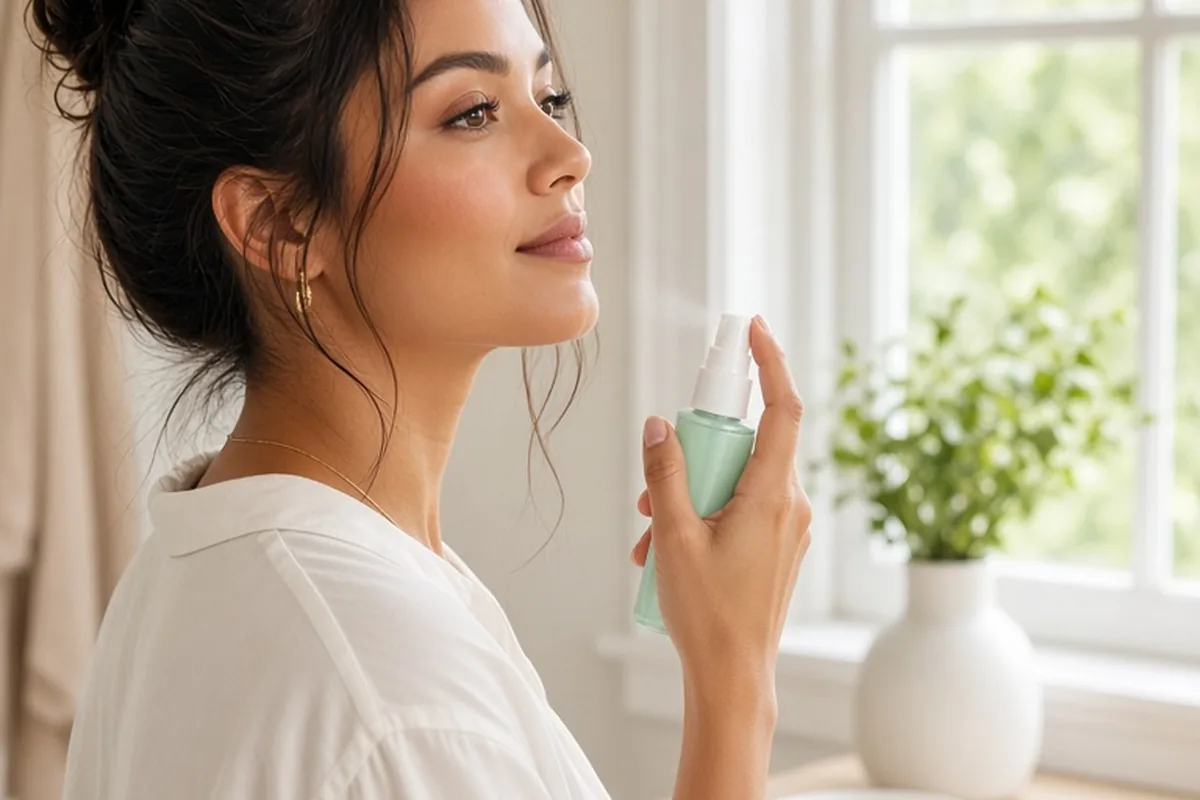
Makeup setting spray is a liquid mist formulated to lock foundation, concealer, and powder in place and extend cosmetic wear. Applied across the face after makeup, it typically contains polymers that create a flexible, breathable barrier over the skin. This protective film helps resist sweat, humidity, friction, and natural oils while preventing makeup from smudging, creasing, melting, or fading throughout the day.
Getting makeup to look seamless in the morning is satisfying, but keeping it fresh through long workdays, unpredictable weather, or evening plans often requires a reliable barrier against oil and friction.
How Setting Spray Works on the Skin
At its core, setting spray functions through a blend of specialized polymers, humectants, and lightweight solvents. When you mist the product onto your face, the liquid vehicle evaporates quickly, leaving behind microscopic film-forming agents. These polymers bond to the surface of your makeup, linking pigment particles and powders together into a unified, flexible mesh. Instead of sitting as separate cosmetic layers vulnerable to rubbing or shifting, your foundation, blush, and contour act as a cohesive film anchored to your skin.
Beyond mechanical hold, setting spray alters the visual texture of finished makeup. Powder products often leave a dry, chalky cast that separates under bright light or settles unevenly into fine lines. The fine droplets of setting spray gently solubilize the uppermost layer of powder, melting individual grains into the underlying cream or liquid products. This creates a more natural, skin-like appearance while forming a moisture-resistant seal that slows down the rate at which facial sweat and sebum break down cosmetic pigments.
However, setting spray is not an impenetrable shield. While high-performance formulas significantly slow makeup degradation, heavy friction from clothing, persistent touch, or intense perspiration will eventually wear down the polymer layer. Understanding that setting spray manages wear rather than completely waterproofing every cosmetic base helps you set realistic expectations for day-long longevity.
Setting Spray Versus Fixing Spray and Facial Mists
In everyday beauty conversation, terms like setting spray, fixing spray, and facial mist are often used interchangeably, yet they serve distinct chemical purposes. Traditional facial mists consist primarily of water, botanical extracts, and humectants like glycerin or hyaluronic acid. Their primary job is to deliver immediate surface hydration and refresh tired skin, but because they lack polymer film formers, they will not prevent makeup from transferring or breaking down over time.
Fixing sprays and setting sprays represent two sides of cosmetic preservation. In professional terminology, a fixing spray contains higher concentrations of cosmetic alcohol and heavy-duty polymers designed to fuse makeup and create a virtually transfer-resistant barrier for stage or bridal wear. Standard daily setting sprays offer a milder balance, blending lightweight binding agents with skin-conditioning ingredients to soften the powdery look of makeup while offering moderate hold without dehydrating the skin.
Choosing between these formulas depends on your primary goal. If your makeup looks dry and lifeless halfway through the day, a hydrating mist can reintroduce moisture. If you need your makeup to survive high humidity or an active twelve-hour day without shifting, a dedicated polymer-rich setting or fixing spray is the appropriate choice.
- Hydrating facial mists: Add moisture and soothe the skin, but do not prolong makeup wear.
- Daily setting sprays: Melt powdery layers together, soften skin texture, and provide moderate hold.
- Heavy-duty fixing sprays: Form a rigid, water-resistant barrier that maximizes transfer resistance.
Selecting the Best Finish for Your Skin Type
Setting sprays are engineered with different base formulas to complement specific skin types and desired aesthetic finishes. A matte setting spray typically incorporates oil-absorbing powders, silicas, or astringent ingredients that suppress excess shine and keep oily areas under control throughout the day. If you have an oily T-zone or work in humid environments, a matte formula prevents foundation from sliding off the nose and forehead.
Conversely, dewy and luminous setting sprays utilize higher proportions of emollients, lightweight oils, or light-reflecting minerals. These formulas are suited for dry, mature, or dull complexion types because they prevent powders from accentuating flakiness or fine lines. For balanced or combination skin, a natural or satin finish spray locks cosmetics in place without pushing the skin too far toward intense gloss or total flatness.
The trade-off lies in balancing longevity with comfort. Highly mattifying sprays can occasionally feel tight on dry patches or highlight texture around the mouth and eyes, while ultra-dewy sprays may shorten the wear time of liquid foundations on naturally oily skin. Matching your setting spray finish to your skin's oil production ensures the formula supports your foundation rather than fighting it.
Step-by-Step Application Technique
Applying setting spray correctly ensures an even distribution of film formers without saturating or dissolving your base makeup. Start by completing all your face products, including foundation, concealer, powder, blush, and bronzer. If you plan to use wet mascara or liquid eyeliner, consider holding off on those until after you spray, as fine droplets can cause fresh water-soluble eye formulas to bleed before they fully cure.
Hold the bottle approximately eight to ten inches away from your face. Spraying too close can deposit large droplets that create visible water spots or dissolve patches of foundation, while spraying too far away allows the mist to dissipate into the air before reaching your skin. Mist your face in an 'X' pattern across the cheeks and forehead, followed by a 'T' pattern down the bridge of the nose and across the brow line. This ensures uniform coverage across the most mobile areas of the face.
Allow the mist to air-dry completely for one to two minutes without touching your face, fanning vigorously, or making exaggerated facial expressions. Moving your facial muscles while the polymers are wet can cause the product to settle into expression lines before it forms its protective matrix.
Pro Techniques to Maximize Longevity and Pigment
Makeup artists often incorporate setting spray into intermediate application steps rather than saving it exclusively for the final touch. One effective method is dampening a beauty sponge with setting spray instead of water when pressing foundation and concealer into the skin. This embeds the binding polymers directly into the liquid base, significantly boosting transfer resistance from the initial layer upward.
Another practical technique involves sandwiching your makeup steps for high-demand occasions. You can apply your liquid base, mist a light layer of setting spray, allow it to dry, apply your setting powders, and finish with a final misting. This creates alternating structural layers that resist both interior facial oils and external humidity. Additionally, spritzing a flat eyeshadow brush with setting spray before dipping into metallic or shimmer pigments amplifies color payoff and prevents fallout on the cheeks throughout the day.
While sandwiching creates exceptional longevity, it can feel heavier on the skin and requires more thorough double cleansing at night. Reserve multi-layer spray techniques for special events or long days where touch-ups are impractical, relying on single-layer application for standard daily wear.
Common Setting Spray Mistakes to Avoid
One frequent error is failing to shake the bottle before dispensing. Many setting sprays contain suspended powders, silicas, or dual-phase oils that naturally separate when standing still. If applied unshaken, the spray nozzle may deposit concentrated alcohol or patchy white spots across the face, leaving some areas over-treated and others unprotected.
Another common mistake is rubbing or blending with a sponge or brush while the skin is still noticeably wet. Physical friction over wet film formers disrupts the setting mesh, lifting foundation underneath and creating bare patches. If an accidental heavy droplet lands on your skin, gently press it down with the clean, dry edge of a sponge using a light tapping motion rather than wiping.
Finally, be mindful of ingredient sensitivities. Formulas with high denatured alcohol content provide rapid drying and robust oil control, but they can trigger irritation or barrier compromise if used daily on reactive, rosacea-prone, or severely dehydrated skin. Checking ingredient labels allows you to select alcohol-free or low-alcohol alternatives that rely on gentler film-forming polymers.
Illustrative Scenarios
Choosing Between Dewy and Matte Sprays for an Outdoor Event
An individual with combination skin—an oily forehead and nose paired with dry cheeks—prepared for a warm outdoor summer gathering. Initially, they considered using a high-shine dewy spray across the entire face to create a radiant finish. Recognizing that the outdoor humidity and natural T-zone oils would cause the dewy formula to break down foundation around the nose, they adjusted their strategy. They applied a light dusting of translucent powder to the T-zone, misted a matte film-forming spray specifically over the center of the face, and finished with a balanced natural mist across the cheeks.
Key point: Targeting different finishes based on regional facial oil production prevents makeup from breaking down in high-shine areas while avoiding dryness elsewhere.
Frequently asked questions
Do I need to use powder if I use a setting spray?
Setting spray and powder perform complementary roles rather than replacing one another. Powder absorbs oil and provides immediate surface blur, while setting spray melds layers and creates a flexible barrier. Those with oily skin benefit from using both, whereas individuals with very dry skin can sometimes skip powder and rely solely on setting spray.
Can I use setting spray on bare skin without makeup?
Yes, you can apply setting spray to bare, moisturized skin. Matte setting sprays can help control midday shine on bare skin, while hydrating formulas add a refreshed, dewy appearance. However, standard moisturizers and sunscreens remain essential for underlying skin health.
How long does a bottle of setting spray typically last?
A standard three- to four-ounce bottle of setting spray generally lasts between two and four months with daily use of three to four sprays per application. Storing the bottle upright in a cool, dry place away from direct sunlight preserves the stability of the film-forming polymers.
Your next step
Evaluate your primary skin concern—whether oil control, hydration, or all-day transfer resistance—and select a polymer-based mist with a matching finish to test on your next full makeup application.