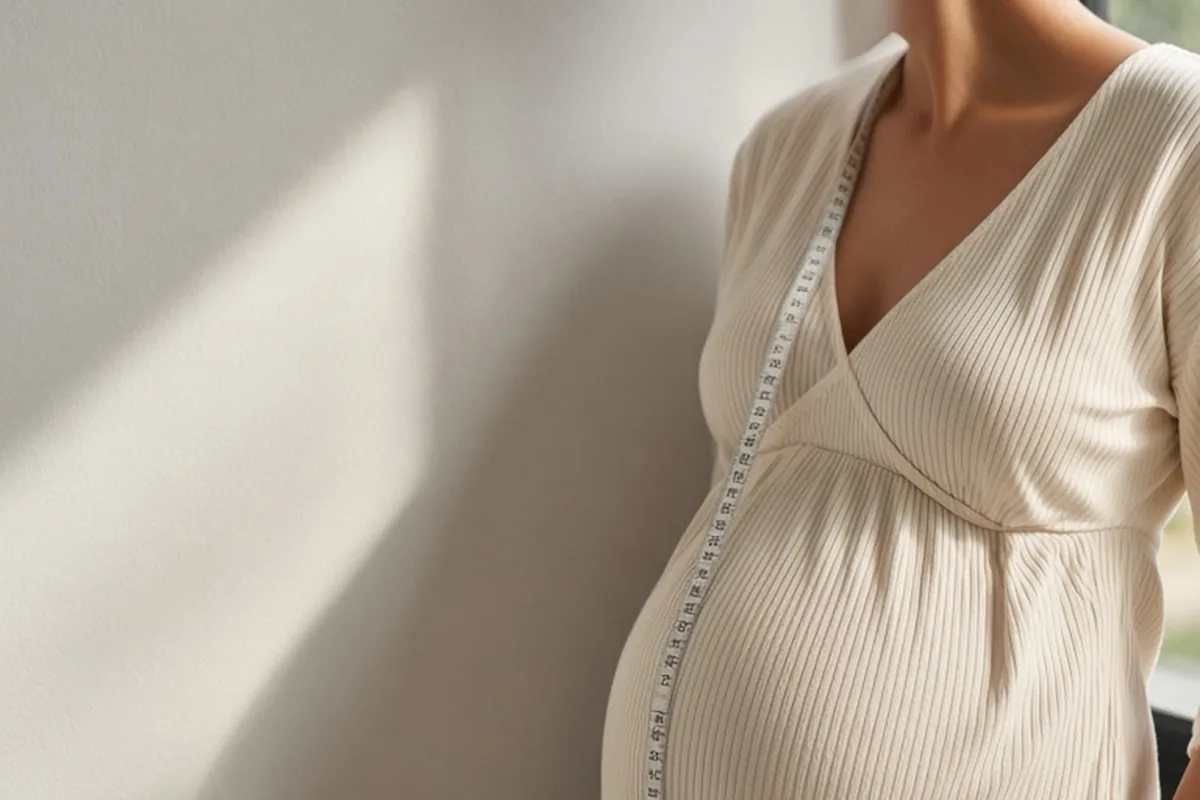
As a general rule, you should buy maternity clothes in your standard pre-pregnancy size. Maternity designers scale their garments based on standard sizing, adding extra fabric, stretch, and room specifically around the bust, belly, and hips. If you wore a size medium or size eight before pregnancy, start by trying a medium or size eight in dedicated maternity lines, adjusting only if you experience significant overall weight changes.
Finding comfortable clothing during pregnancy often feels confusing because your body changes continuously from week to week. Understanding how maternity brands construct their garments can eliminate the guesswork and help you build a comfortable, functional wardrobe.
The Baseline Rule for Maternity Sizing
Most dedicated maternity brands design their collections around standard pre-pregnancy clothing sizes. This means that if you typically wore a size small in dresses, shirts, and jeans before pregnancy, your starting point in maternity clothing remains a size small. Designers account for the anatomical changes associated with carrying a child by incorporating strategic tailoring, such as ruched side seams, pleated fronts, drop hems, and high-percentage elastane panels, rather than simply making the entire garment wider from shoulder to ankle.
Buying larger regular clothing instead of true maternity wear often leads to a sloppy fit in areas where you do not need excess volume. Regular shirts that are sized up tend to hang loosely off the shoulders, drop too low in the neckline, and create excess fabric under the arms while still pulling uncomfortably tight across the stomach. In contrast, authentic maternity items maintain your true shoulder width, armhole circumference, and torso proportion while providing structured accommodation for a growing bump. An exception to this baseline occurs if you carry multiples or experience significant generalized weight fluctuation early in pregnancy, in which case going up one size from your baseline may provide better long-term comfort.
Tracking Fit Adjustments Across Each Trimester
Your sizing needs evolve across each phase of pregnancy, meaning you do not need to purchase a full wardrobe all at once. During the first trimester, most people do not need dedicated maternity apparel because body changes are subtle, though bloating and heightened breast tenderness might make restrictive waistbands uncomfortable. At this early stage, unbuttoning regular trousers with an elastic band extender or switching to flexible, non-compression leggings usually provides adequate relief without requiring new sizes.
By the middle of the second trimester, usually between weeks fourteen and twenty, the uterus expands upward out of the pelvis, prompting the shift to dedicated maternity apparel. This is the optimal window to invest in core essentials in your standard pre-pregnancy size, as garments purchased here are engineered to stretch throughout the remainder of your pregnancy. Entering the third trimester, your center of gravity shifts further forward and fluid retention may increase in your extremities. While your maternity tops and dresses will generally continue to expand appropriately, you may find that footwear, undergarments, and fitted ankle hems require a more relaxed cut to accommodate natural late-stage swelling.
Navigating Pants, Jeans, and Over-the-Bump Waistbands
Maternity bottoms present the greatest sizing variety because waistbands come in distinct construction styles. The two most common designs are over-the-bump panels and under-the-bump waistbands. Over-the-bump styles feature a tall, seamless microfiber or nylon panel that pulls up smoothly over the entire abdomen, offering light support and preventing the waistband from sliding downward. When buying over-the-bump pants, choose your regular pre-pregnancy pants size, ensuring the fabric panel fits smoothly without squeezing the ribs or rolling down at the waist.
Under-the-bump pants sit below the belly curve and rely on low-slung elastic bands, side stretch insets, or hidden button tab adjusters. These styles feel more familiar if you dislike fabric covering your stomach, but they require careful attention to hip and thigh measurements. If you carry low or notice fluid retention in your thighs and calves, under-the-bump denim can occasionally feel snug around the upper leg, making a relaxed cut or sizing up in structured denim a practical choice. Keep in mind that rigid non-stretch denim is rarely comfortable past the midpoint of pregnancy, so prioritizing blended fabrics with at least two to four percent elastane ensures longevity.
Selecting Tops, Sweaters, and Layering Pieces
Maternity tops differ from standard shirts primarily through length, side gathering, and bust flexibility. As your belly pushes the front hem of a shirt outward, standard tops ride up and leave the midsection exposed. Maternity tops incorporate longer front hem allowances and ruched side seams that gather neatly when your bump is smaller and stretch open smoothly as your belly expands. When choosing a size for tops, focus on your shoulder alignment and bust comfort; if your pre-pregnancy size fits your shoulders cleanly, the built-in torso ease will handle the rest.
If you experience substantial bust expansion early in pregnancy, you may need to evaluate tops based on current chest measurements rather than pre-pregnancy bra size. Wrap tops, empire-waist silhouettes, and knit tunics offer adjustable room that adapts to changing chest contours without requiring you to jump multiple garment sizes. For outerwear and heavy sweaters, an open-front cardigan, poncho, or coat extender insert often proves far more versatile and cost-effective than buying specialized heavy jackets that only fit for a few months.
Evaluating Fabric Stretch, Blends, and Recovery
The material composition of a maternity garment determines whether it will retain its shape after weeks of continuous wear. Natural fibers like organic cotton, bamboo viscose, and modal offer superior breathability and softness, which helps regulate fluctuating body temperatures. However, natural fibers alone can lose their shape and sag when stretched over a baby bump for hours. The most reliable maternity wear blends these soft natural fibers with synthetic elastane, spandex, or Lycra to create fabric with high recovery.
Fabric recovery refers to a textile's ability to snap back to its original dimensions after being stretched. When shopping, check the garment label for a four-way stretch blend, typically containing four to ten percent spandex. High-recovery knits prevent the dreaded bagging out at the knees in leggings and eliminate sagging around the underside of the belly. Conversely, woven fabrics such as linen, poplin, or stiff twill lack innate elasticity; when purchasing non-stretch woven maternity items, look for functional features like smocked panels, back ties, or drawstring waists that allow mechanical adjustability.
Smart Capsule Strategies to Avoid Overbuying
You do not need to replace every item in your closet with a maternity counterpart to maintain a polished, functional wardrobe. A practical approach involves curating a small capsule of interchangeable core basics in your true pre-pregnancy maternity size while repurposing flexible non-maternity layers. Investing in two pairs of quality maternity bottoms, three to four neutral layering tops, one versatile knit dress, and comfortable support undergarments usually covers daily routines effectively across all seasons.
To maximize value, integrate loose, non-maternity items you already own, such as oversized cardigans, unbuttoned flannel shirts, kimono jackets, and stretchy swing dresses. These pieces layer comfortably over fitted maternity tanks and leggings, giving you variety without the expense of buying specialized outerwear. Focusing your maternity purchases on items that require precise anatomical support—specifically pants, leggings, and undergarments—keeps your wardrobe streamlined, manageable, and comfortable throughout every stage.
Frequently asked questions
What if I am between sizes when ordering maternity clothes?
If your measurements fall between standard sizes, it is usually best to choose the larger size. Your body will continue to expand in the third trimester, and extra room in the hips, thighs, and bust ensures the garment remains wearable longer.
Can I just buy regular clothes two sizes larger instead of maternity wear?
Sizing up in regular clothes often results in poorly fitting shoulders, overly wide necklines, and excessively long sleeves while still lacking sufficient room across the belly. True maternity clothing keeps your standard proportions in the frame while adding focused space where you actually need it.
Do maternity bra sizes work the same way as maternity clothing?
Maternity and nursing bras do not follow your pre-pregnancy size because rib cages naturally expand and breast volume increases significantly. It is best to measure your current band and cup dimensions around the second and third trimesters rather than relying on your pre-pregnancy bra size.
When is the best time to start buying maternity clothes?
Most people begin purchasing maternity clothes during the early second trimester, between twelve and eighteen weeks. Buying during this window allows you to select items in your pre-pregnancy size that are built to accommodate your body through delivery.
Your next step
Take your current bust, hip, and pre-pregnancy waist measurements, then compare them against a maternity brand's dedicated sizing chart to order one versatile pair of bottoms and a basic top in your standard size.