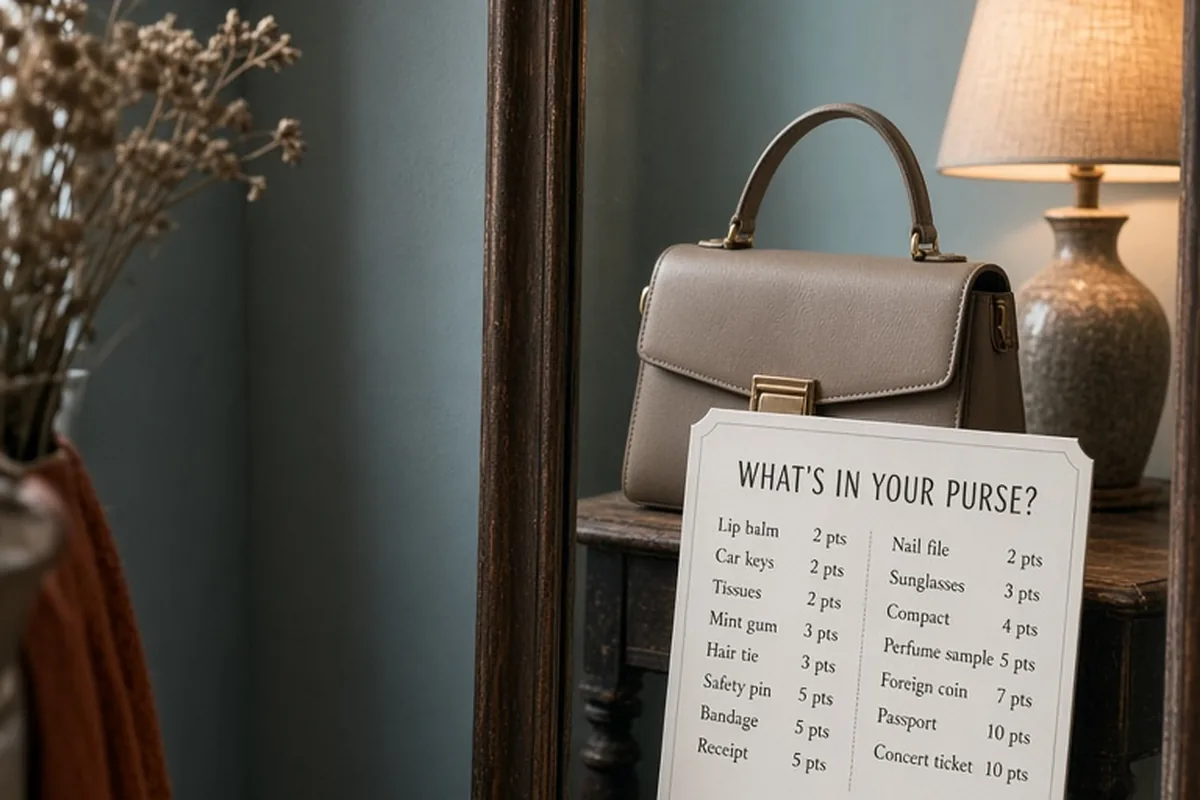
The What's in Your Purse bridal shower game is a quick, interactive icebreaker where guests search their bags for items listed on a preprinted card. Common everyday items like lip balm or car keys earn modest points, while unusual items like safety pins or foreign currency score higher. The guest with the highest point total wins a prize, creating an easy, low-pressure way to spark conversation across different tables.
Bridal showers often bring together guests from different chapters of the couple's life, from childhood friends and coworkers to future in-laws. Icebreakers help bridge these social circles, but overly complicated or high-stakes activities can sometimes feel awkward. A classic bag-search game offers a familiar, casual format that gets guests talking without requiring public speaking or intensive physical participation.
Core Rules and Step-by-Step Gameplay
Running the game is straightforward, requiring minimal equipment and almost no setup time during the party. Each guest receives a printed checklist and a pen or pencil placed at their seat or handed out by the host. The sheet contains a list of items categorized by point value. Guests rummage through their own handbags, backpacks, or pockets, checking off every item they actually have on hand. Once everyone finishes tallying their scores, the host reads through the list to verify the rarest items and announces the winner with the highest verified score.
While the honor system usually works well for social gatherings, asking top-scoring players to briefly showcase their most unusual items adds a fun, shared laugh for the room. For example, if someone claims points for carrying a mini tape measure or a vintage photograph, having them hold it up validates their score and prompts natural storytelling. Hosts should decide beforehand whether duplicate items count multiple times, such as scoring three points for three separate lipsticks, or whether each item category can only be claimed once. Establishing this rule upfront prevents friendly disputes during the tallying phase.
Building a Balanced and Fun Point System
A successful game card relies on a well-structured point curve. If every item is either too common or completely impossible to find, scores will cluster together and eliminate the suspense. Organizing your card into four distinct tiers—such as one point, five points, ten points, and twenty points—creates healthy variance. Low-point tiers reward basic preparedness, middle tiers reward practical organizers, and high-point tiers reward quirkiness or over-preparedness.
To build a dynamic score sheet, distribute items across different levels of rarity so that every guest feels engaged from the start. Consider including a mix of utility, personal care, and whimsical objects across the following suggested tiers:
- One-Point Items: Smartphone, car keys, sunglasses, mints or gum, lip gloss, wallet, and pen.
- Five-Point Items: Hand sanitizer, tissue packet, store receipt from today, hair tie, nail file, compact mirror, and band-aid.
- Ten-Point Items: Safety pin, postage stamp, dental floss, gift card, foreign coin, protein bar, and perfume rollerball.
- Twenty-Point Items: Measuring tape, screwdriver or multi-tool, physical paperback book, passport, sewing kit, and an invitation to the shower.
Customizing the List for Themes and Seasons
Customizing the checklist to match the shower's theme or the time of year elevates the activity from a generic party game into a personalized experience. For an outdoor garden shower or summer brunch, points might be awarded for travel-sized sunscreen, insect bite relief, floral hair accessories, or decorative handheld fans. For a winter or cozy holiday shower, items like hand warmers, rich hand salve, throat lozenges, or festive holiday cards make natural additions.
Destination wedding showers or travel-themed events also present great opportunities for custom cards. In these settings, hosts can award high points for luggage tags, currency from the couple's honeymoon destination, boarding passes, or travel-sized sanitizing wipes. The trade-off with heavily themed cards is the risk of alienating guests who packed light. Striking a balance between sixty percent standard everyday items and forty percent themed novelties ensures that the game stays accessible while celebrating the unique occasion.
Adapting for Mini Bags, Clutches, and Digital Wallets
Modern fashion trends lean heavily toward micro-purses, sleek belt bags, and minimalist phone wallets. If several guests arrive carrying only a phone and an ID card, a traditional bag-search format could leave them sitting on the sidelines. To keep the activity inclusive and modern, hosts can create a hybrid card that incorporates smartphone contents alongside physical handbag items.
A digital section allows guests with small bags to earn competitive points through their phone usage. For instance, you might award points for having a battery percentage over eighty percent, an unread email count above one thousand, a photo with the bride stored in the camera roll, a loyalty app for a wedding registry store, or an active alarm set for earlier that morning. Blending digital and physical finds levels the playing field, making sure guests who prefer traveling light have just as much fun as those who carry oversized tote bags.
Event Timing and Hosting Facilitation
The ideal window to play this game is during the transitional phase of the shower, typically right after guests have arrived and settled with food or drinks, but before the gift opening begins. During this mid-party window, energy can naturally dip as conversation lulls between courses. Introducing an interactive checklist takes ten to fifteen minutes and re-energizes the room without interrupting the overall flow of the day.
Facilitation style sets the tone for the game. An effective host keeps the energy lively by acting as an entertaining emcee rather than a strict referee. Instead of quietly collecting papers and doing math in the corner, call out the highest-point items one by one and ask guests to wave them in the air. This turns what could be a solitary desk activity into an animated group spectacle. Keep background music playing at a moderate volume while people search their bags, and give a clear one-minute warning before final score calculation.
Prize Ideas and Thematic Pairings
Selecting the right prize gives guests something pleasant to play for without creating high-pressure competition. Because the game revolves around personal bags and organization, choosing a prize that mirrors this theme creates a cohesive aesthetic. High-utility gifts that suit almost any lifestyle work best, avoiding hyper-specific sizes, scents, or tastes that might go unused.
Consider pairing practical elegance with everyday usefulness when planning your winner's gift. Great options include:
- Luxury Hand Care Set: A high-end hand cream paired with a nourishing cuticle oil or soothing lip treatment.
- Travel Pouch or Cosmetic Case: A structured canvas or vegan leather organizer pouch filled with miniature travel essentials.
- Specialty Coffee or Tea Gift: A gift card to a local bakery or cafe packaged inside a reusable insulated tumbler.
- Compact Tech Accessories: A sleek portable power bank, cord organizer, or mini ring-light attachment.
Privacy, Etiquette, and Keeping Things Comfortable
Handbags are inherently personal spaces containing sensitive items such as prescription medications, financial documents, and hygiene products. A key hosting duty is maintaining clear boundaries so that no guest feels uncomfortable or judged. Emphasize early on that guests are only required to reveal items they actively choose to claim for points, and that looking into someone else's bag without explicit permission is strictly off-limits.
Hosts should avoid placing overly personal, intimate, or potentially embarrassing items on the public scorecard. Stick to neutral, practical, or humorous household objects rather than controversial items. Furthermore, remind the room that participation is voluntary. If a guest prefers to simply watch, chat, and enjoy their brunch rather than sort through their personal belongings, gracious hosting means letting them enjoy the event without singled-out attention or pressure.
Frequently asked questions
How long does the What's in Your Purse game usually take to run?
The game typically takes 10 to 15 minutes from card distribution to winner announcement. This includes five minutes for guests to search their bags and calculate scores, followed by several minutes for the host to review top scores and showcase fun items.
What happens if two or more guests tie for the highest score?
A quick tiebreaker question easily resolves a tie without extra scorecards. The host can challenge the tied players to produce the most unusual single item not listed on the card, or name a specific rare item on the spot, such as an odd-denomination coin or a grocery store coupon.
How many items should be included on a standard game card?
A well-paced scorecard contains between 20 and 30 total items distributed across four scoring tiers. Including fewer than 20 items increases the chance of frequent ties, while more than 30 items can make searching feel tedious for guests with large bags.
Can guests work in pairs if someone does not have a purse?
Yes, pairing guests into two-person teams is an excellent way to include attendees who brought minimal belongings. Teams pool their bag contents and compete together, fostering quick bonding between guests who may not have met before.
Your next step
To get started, draft a 25-item checklist tailored to your shower's setting, print copies on cardstock to match your party decor, and prepare a versatile prize like a luxury travel pouch for the winner.