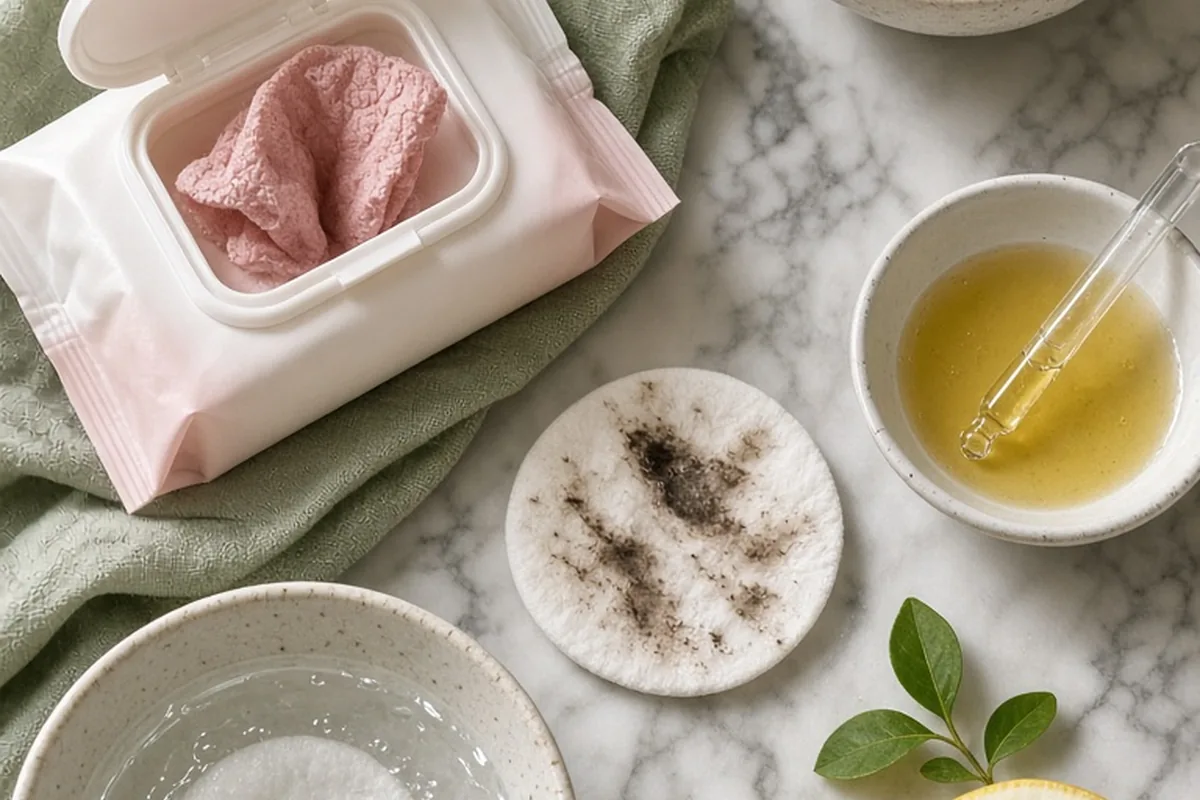
Makeup wipes are bad for daily skincare because they smear dirt, cosmetics, and oils across your face rather than washing them away. The physical friction of rubbing pulls on delicate skin, while residual surfactants, alcohol, and preservatives left behind without rinsing can disrupt your protective moisture barrier, cause micro-irritation, and lead to clogged pores or breakouts.
Pre-moistened facial towelettes have long been marketed as the ultimate shortcut for late-night makeup removal, gym sessions, and travel. However, treating these disposable sheets as a substitute for proper facial cleansing frequently leads to persistent dryness, unexplained redness, and recurring congestion.
The Friction Factor: How Mechanical Pulling Damages Delicate Skin
A primary drawback of facial wipes lies in the physical force required to lift pigmented cosmetics, water-resistant sunscreen, and settled grime. Unlike liquid cleansers that emulsify makeup so it glides away effortlessly, a wipe relies heavily on friction. People instinctively press, drag, and scrub the cloth across their face to loosen stubborn pigments like waterproof mascara or long-wear foundation. This repeated mechanical tension tugs directly on the skin's surface, stressing its elasticity and creating subtle micro-trauma over time.
The delicate skin surrounding your eyes is particularly vulnerable to this abrasive handling. Eyelid skin is significantly thinner than the skin on the rest of the face and contains fewer oil glands, making it prone to inflammation and premature fine lines when subjected to aggressive pulling. When you scrub repeatedly to dissolve eyeliner or mascara, you risk breaking fragile capillaries, triggering chronic puffiness, and loosening lash follicles. Even formulations labeled as ultra-soft still require dragging pressure that compromises your skin's surface integrity.
The Chemistry of Wipes: Smearing Dirt Instead of Removing It
When you evaluate how a wipe operates on a chemical level, it becomes clear that it cannot deliver a true cleanse. Standard facial cleansing requires water to act as a universal solvent, working in tandem with gentle surfactants to lift impurities into a rich lather and rinse them down the drain. A makeup wipe, by contrast, functions more like an absorbent cloth soaked in a diluted cleaning solution. As you glide it over your cheeks and forehead, it picks up top-layer pigments while redistributing the remaining cosmetics, sebum, and environmental debris across your pores.
This smearing effect leaves an invisible film of dissolved makeup mixed with sebum trapped across the facial plane. You might see foundation stains on the discarded cloth and assume your face is clean, but closer inspection under bright light often reveals cosmetic residue pooled in skin creases, along the hairline, and inside pore openings. Over consecutive days of relying solely on wipes, this accumulating film settles deeper into follicles, mixing with natural dead skin cells and fueling both inflammatory blemishes and stubborn blackheads.
Surfactants, Solvents, and Preservatives Left Unrinsed
To keep pre-packaged towelettes moist inside plastic packaging for months without developing mold or bacterial colonies, manufacturers must formulate them with robust preservative blends and concentrated surfactants. In standard facial washes, these active cleansing agents are designed to remain on your skin for less than a minute before being completely rinsed away with fresh water. With a wipe, however, the cleansing fluid stays on your face, evaporating slowly and leaving its concentrated chemical components behind.
Leaving cleansing surfactants, denatured alcohols, synthetic fragrances, and strong preservatives sitting directly on your face throughout the night can gradually degrade the stratum corneum, which serves as your natural moisture barrier. As this protective lipid shield weakens, transepidermal water loss accelerates, leaving your skin parched, tight, and hypersensitive. Common signs of a compromised barrier from wipe overuse include a stinging sensation when applying basic moisturizers, sudden flaky patches, and a paradoxical increase in oil production as your skin tries to compensate for surface dehydration.
The Environmental Toll of Single-Use Synthetic Fabrics
Beyond dermatological consequences, makeup wipes present a serious environmental challenge. Many commercial wipes are not made from pure biodegradable cotton, but rather from woven synthetic blends that include polyester, polypropylene, and rayon fibers. These non-woven plastic sheets cannot dissolve in standard municipal water treatment systems, meaning that when consumers mistakenly flush them, they contribute to catastrophic pipe blockages and municipal sewer clogs known as fatbergs.
When discarded into regular household waste, non-biodegradable wipes end up in landfills where they can take hundreds of years to break down, gradually fragmenting into microscopic plastic particles that leach into soil and aquatic ecosystems. Even wipes marketed with biodegradable claims frequently require specialized industrial composting environments to decompose properly, conditions that standard domestic waste streams and landfills rarely provide. Switching to reusable or water-based cleansing methods eliminates this substantial stream of unnecessary single-use waste.
Gentle Alternatives: Micellar Water, Cleansing Balms, and Oils
Replacing makeup wipes does not require sacrificing convenience or spending hours at the sink. For those who love the quickness of a no-rinse solution, micellar water offers a significantly milder approach. Micellar formulas contain suspended surfactant molecules that naturally attract oil and dirt without requiring aggressive friction. When poured onto a soft, reusable cotton pad and held gently over the eyes for a few seconds, the solution dissolves pigment on contact, minimizing the need for harsh dragging.
For heavier makeup, mineral sunscreens, or water-resistant cosmetics, oil-based cleansers and solid cleansing balms represent the gold standard in modern skincare. These products utilize the fundamental chemical principle that like dissolves like. Massage a dime-sized amount of cleansing balm onto dry skin, and plant oils or gentle esters will break down waterproof silicones and sebum within thirty seconds. Once water is introduced, the balm turns into a milky emulsion that rinses away completely, leaving zero sticky residue behind.
How to Adopt an Effective Two-Step Evening Routine
Transitioning away from wipes is easiest when you establish a structured two-step evening routine, commonly called double cleansing. The first step focuses entirely on breaking down surface products, including foundation, tinted SPF, and waterproof eye makeup, using an oil, balm, or micellar formula. This preparatory phase ensures you do not have to scrub your face raw or rely on harsh detergents to loosen heavy cosmetic layers.
The second step involves washing with a gentle, water-based foaming or gel cleanser tailored to your specific skin type. This step purifies the actual skin surface, removing sweat, ambient pollution particles, and any lingering traces of your first-step oil. By following this method, you cleanse thoroughly down to the pore level while preserving your natural hydration levels. Finish immediately with your regular hydrating toner, serum, and moisturizer to seal in water and support overnight cellular recovery.
Emergency Guidelines: How to Minimize Harm When Wipes Are Unavoidable
While makeup wipes are ill-suited for daily hygiene, realistic situations arise—such as multi-day camping trips, long-haul flights, or extreme exhaustion—where traditional sink washing is impossible. In these rare instances, using a wipe is generally preferable to leaving heavy cosmetic layers on your face overnight. However, adjusting how you use them can significantly reduce the risk of irritation and pore blockage.
To minimize harm during unavoidable wipe usage, look for fragrance-free formulations designed for sensitive skin, and avoid towelettes that list drying denatured alcohols high in their ingredient lists. Rather than dragging the sheet vigorously, press it flat against the skin to allow the liquid to saturate and soften the makeup before wiping with light, downward strokes. Most importantly, follow the wipe by splashing your face with bottled water or wiping down with a water-dampened cloth to remove leftover surfactant residue, then apply a basic moisturizer.
Frequently asked questions
Can I use makeup wipes if I rinse my face with water right after?
Rinsing with water helps remove leftover surfactants and preservatives, which reduces chemical irritation. However, it does not prevent the physical irritation and skin dragging caused by scrubbing with the wipe in the first place.
Why do makeup wipes make my skin sting or burn?
Stinging usually indicates that your skin barrier is compromised from repeated friction or that your skin is reacting to concentrated preservatives, synthetic fragrances, or alcohols left behind on the surface. When the outer barrier is weakened, nerve endings become exposed and react quickly with a burning sensation.
Are baby wipes a safe alternative for removing face makeup?
Baby wipes are generally gentler on sensitive skin than standard makeup wipes, but they are not formulated to break down stubborn cosmetic polymers and waterproof sunscreens. Using them still requires mechanical rubbing and leaves behind residue that can clog facial pores.
How quickly will my skin improve after I stop using wipes?
Many people notice a reduction in surface redness, tightness, and dry patches within one to two weeks of switching to a gentle oil or balm cleanser. Continued proper cleansing will gradually decrease pore congestion and help restore balanced natural hydration over several skin cycles.
Your next step
Replace your disposable makeup wipes with a nourishing cleansing balm or micellar water tonight, and follow with a quick water rinse to keep your skin barrier calm, clear, and hydrated.