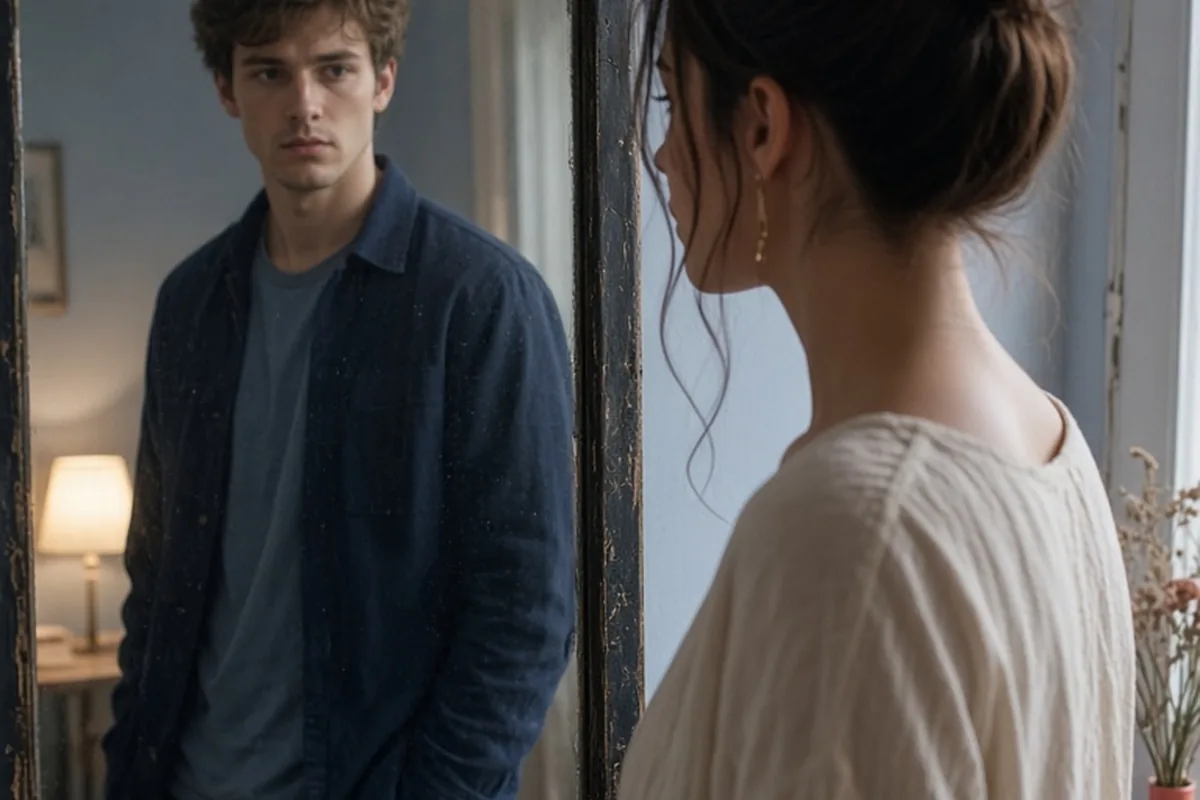
When a guy stares at you without smiling, he is usually processing visual attraction, feeling intimidated, lost in unrelated thought, or attempting to read your social receptivity. A neutral expression often reflects hesitation or cognitive absorption rather than hostility. To interpret his intent accurately, observe whether his posture leans toward you, how quickly he looks away when caught, and the surrounding social environment before deciding how to respond.
Catching someone's steady gaze across a room or a quiet workspace can feel intense, especially when his face remains completely blank. While an unsmiling stare often creates an aura of awkwardness or ambiguity, understanding the underlying behavioral context can help you assess the situation with clarity and poise.
Hidden Attraction and the Hesitation to Show Interest
Attraction can paradoxically inhibit expressive behavior rather than encourage it. When someone experiences an unexpected surge of romantic or visual interest, the brain often enters an analytical state of evaluation and self-monitoring. A man might look at you intently because he finds you captivating, yet his facial muscles remain still because he is self-conscious about displaying his feelings openly. Smiling can feel vulnerable, as it explicitly signals interest before he knows whether that interest will be welcomed or reciprocated. To shield himself from potential embarrassment or immediate rejection, he may instinctively adopt a guarded, neutral expression.
Consider an everyday setting like a local coffee shop or a university study lounge. A guy sitting a few tables away might look over repeatedly while pretending to focus on his laptop. Each time your eyes meet his, his gaze holds for a second or two without any warmth before he abruptly looks down. This pattern usually points to an internal debate over whether smiling would seem overly forward or intrusive. While this dynamic is common among reserved individuals, remember that silence and a neutral face provide limited certainty; relying on an unsmiling stare alone without subsequent positive interaction is rarely enough to confirm genuine romantic interest.
Cognitive Overload and Inadvertently Zoning Out
Not every prolonged gaze carries personal intent or hidden emotional meaning. A frequent and mundane reason for an unsmiling stare is simply cognitive fatigue or deep internal contemplation, commonly known as zoning out. When an individual is mentally exhausted, solving a complex problem, or daydreaming, their visual focus shifts into a passive state. In this mode, the eyes naturally lock onto a random point in the visual field—which often happens to be a person standing or sitting nearby—without the brain actively registering who or what is there.
This scenario frequently unfolds in everyday transitional environments such as public transit, office breakrooms, or fitness centers between workout sets. Someone sitting across from you may appear to be staring directly into your eyes, but their gaze is slightly unfocused and their blink rate is noticeably slow. If you make a sudden movement or change seats, they might blink rapidly, look around with slight disorientation, and reset their posture. In these instances, the absence of a smile does not signify coldness; it merely reflects an idle mind waking up from a momentary mental pause.
Decoding Accompanying Posture and Physical Signals
Because facial expressions can be easily masked or unintentionally blank, examining the surrounding physical cues provides a much more accurate picture of someone's mindset. Body language often reveals the true direction of an individual's focus even when their mouth remains still. When a person is focused on you with genuine curiosity or attraction, their torso, feet, and shoulders typically align in your direction. They may also display subtle displacement behaviors, such as smoothing down their clothing, adjusting their hair, or shifting their weight when they realize you noticed their gaze.
Conversely, if someone is simply observing the room neutrally or preoccupied with their own agenda, their body language tends to remain closed or oriented elsewhere. For example, during a team meeting, a colleague might look toward you with a stern, unsmiling face, but his shoulders remain square to the presenter and his pen continues moving across his notebook. In that context, his gaze is an incidental part of tracking the conversation rather than a personal statement directed at you. Evaluating the entire physical posture prevents you from misinterpreting a brief moment of facial stillness as intentional staring.
Social Anxiety and the Perception of Intimidation
For many people, entering a social exchange with someone they perceive as particularly attractive, confident, or accomplished triggers performance anxiety. When a man feels intimidated, his instinctive response is often to freeze his expressive output. Rather than offering an easy, warm smile, his attention turns inward to manage his own nervousness, causing his resting facial expression to appear rigid, serious, or unreadable.
This dynamic frequently occurs in spaces where social dynamics are somewhat unpredictable, such as networking mixers, new group fitness classes, or mutual friend gatherings. A guy in this position may hold eye contact because he wants to find an opening to introduce himself, but the fear of saying the wrong thing keeps him frozen in place. While understanding this social hesitation can foster empathy, it is equally important to recognize that his comfort is his own responsibility; you are under no obligation to manage his awkwardness or step in to lead the interaction.
How Environment Influences Nonverbal Expression
Different social and professional environments carry distinct behavioral expectations that shape how people use eye contact and facial expressions. In professional settings like corporate offices, legal environments, or medical facilities, maintaining a neutral demeanor is often a deliberate effort to uphold boundaries and project focus. A coworker or supervisor might maintain direct, unsmiling eye contact during a discussion or while evaluating a project simply to communicate attentiveness and professional detachment.
In contrast, social settings such as lounges, music events, or casual bars introduce different social norms, where an unsmiling stare might stem from social posturing. Some men intentionally withhold a smile because they mistakenly believe that an aloof, stoic look makes them seem more confident or enigmatic. Being mindful of the environment allows you to differentiate between appropriate professional concentration, casual social detachment, and calculated posturing, helping you choose the most suitable response for the context.
Practical Ways to Acknowledge, Test, or Defuse the Stare
When someone repeatedly looks at you without smiling, you have several practical choices depending on whether you want to encourage contact, test their intentions, or end the interaction cleanly. If you find the person appealing or simply want to clarify the situation, a subtle micro-gesture can quickly reveal their intent. Offering a brief, polite smile paired with a slight nod provides an immediate social cue. If his unsmiling stare was caused by shyness, this low-stakes green light usually prompts a returned smile, relaxed shoulders, or an attempt to start a conversation.
If you prefer to assess his behavior without inviting a dialogue, you can hold his gaze steadily for two seconds with a calm, neutral expression, and then deliberately look away. If he quickly glances down or looks flustered, he was likely caught staring unintentionally; if he maintains an intense, unbroken gaze without acknowledging your presence, it may point to mindless distraction or social posturing. If the stare feels intrusive or makes you uncomfortable, cutting off his line of sight by turning your body, adjusting your seating, or focusing entirely on your phone or companion sends an unambiguous signal of disinterest.
Setting Boundaries When Persistent Looking Crosses the Line
While most unsmiling stares arise from benign reasons like shyness, distraction, or social hesitation, prolonged and unyielding eye contact can sometimes become unsettling. There is a clear distinction between someone glancing your way periodically and someone maintaining an unbroken, intense gaze that continues even after you have signaled your discomfort. You have every right to feel secure, unmonitored, and at ease in any public or shared space.
When an unsmiling stare feels persistent, invasive, or disrespectful of your personal space, prioritize your safety and comfort over politeness. You can relocate to a different area, position yourself closer to friends or staff members, or establish a physical barrier using a bag, coat, or laptop. In structured environments like a workplace or gym, you can address the behavior directly with a calm, matter-of-fact question such as, 'Can I help you with something?' or report ongoing boundary issues to managers, HR, or facility staff. You never need to rationalize someone else's behavior if it infringes upon your peace of mind.
Frequently asked questions
Why does a guy hold eye contact without smiling when I catch him looking?
When caught looking, many people experience a split-second freeze response caused by surprise or self-consciousness before deciding their next move. This brief delay keeps their facial muscles neutral while their brain catches up to the situation. If he quickly looks away right after that moment, it usually indicates embarrassment at being spotted.
Does an unsmiling stare mean he dislikes me or feels hostile?
Hostility is rarely the primary reason for a neutral gaze in everyday settings. Unless accompanied by aggressive cues like clenched fists, narrowed eyes, or an encroaching posture, an unsmiling stare is typically the result of daydreaming, curiosity, or shyness. Most people naturally default to a serious resting face when observing others from a distance.
How can I tell if he is looking at me specifically or just staring blankly?
Watch his gaze behavior when you change your physical position. If his eyes track your movement across the room or repeatedly find you again after you sit elsewhere, his focus is specifically on you. If his eyes stay fixed on the original empty space after you move away, he was simply zoning out in your direction.
Should I smile first if I want to encourage him to approach me?
Giving a brief, friendly smile is an effective and low-risk way to signal approachability. If he was holding back due to uncertainty or fear of intruding, your warm gesture gives him clear permission to respond. If he does not smile back or engage, you can comfortably move on knowing you tested the dynamic.
Your next step
Take a brief moment to evaluate his overall body language and the surrounding setting, then decide whether to offer a subtle smile to test his interest or shift your position to maintain your personal comfort.