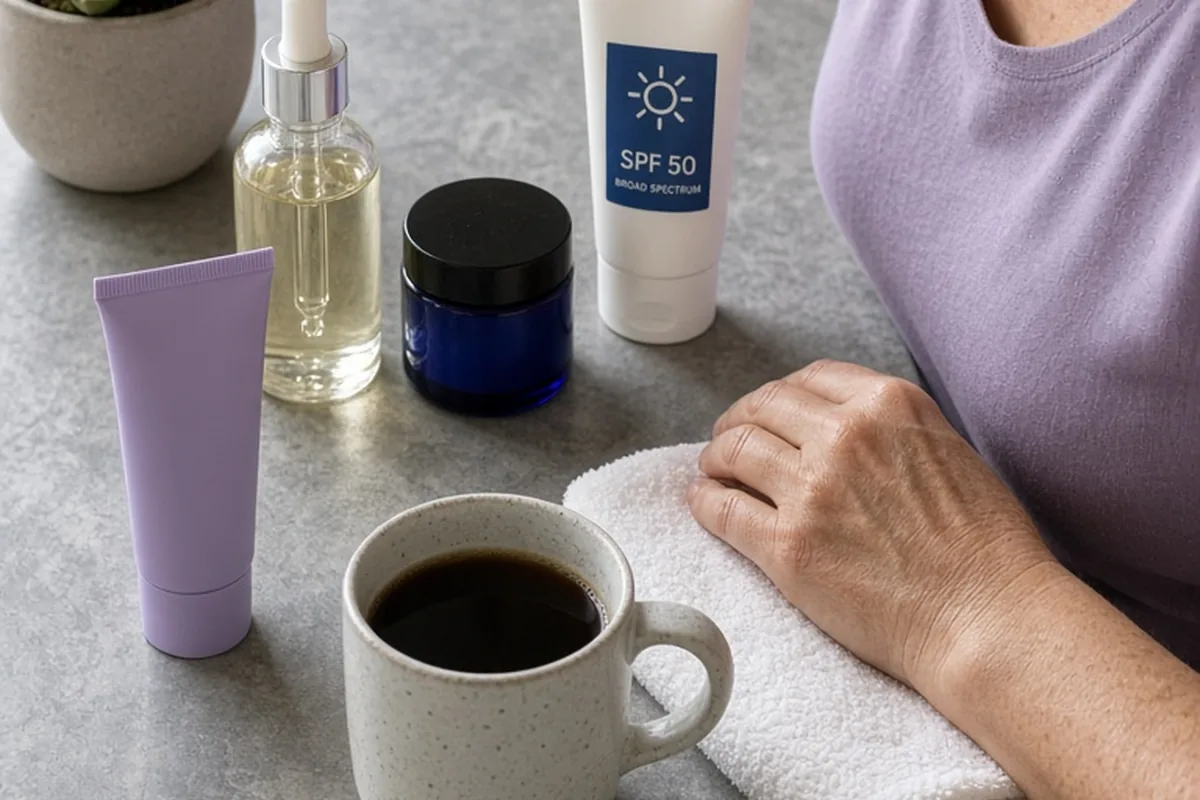
Treating age spots typically involves combining daily broad-spectrum sun protection with active topical agents or clinical procedures. Over-the-counter options like vitamin C, niacinamide, and azelaic acid gradually lighten hyperpigmentation by reducing excess melanin production. For faster or more pronounced results, dermatologists often recommend prescription retinoids, chemical peels, cryotherapy, or targeted laser therapies tailored to individual skin types and pigmentation depth.
Hyperpigmentation develops naturally over time, especially on areas frequently exposed to ultraviolet light such as the face, hands, shoulders, and arms. While these benign marks do not pose medical risks, choosing the right treatment helps you manage skin tone changes safely, predictably, and in alignment with your personal skincare goals.
Understanding What Age Spots Are and How They Form
Age spots, clinically known as solar lentigines or liver spots, are flat, oval patches of increased pigmentation that vary in color from light brown to dark brown or grayish-black. They arise when localized clusters of melanocytes, the specialized cells responsible for producing skin pigment, become overactive following prolonged or cumulative exposure to ultraviolet radiation. Unlike freckles, which frequently appear during childhood and fade during winter months, solar lentigines generally persist year-round and become more common as natural cellular regeneration slows with age.
Before beginning any cosmetic intervention, it is essential to evaluate the characteristics of the pigmented spot. Benign solar lentigines have uniform coloring, smooth borders, and consistent texture. If a spot displays asymmetrical shapes, uneven borders, multiple shades of color, a diameter larger than a pencil eraser, or noticeable changes over time, a dermatologist should examine it to rule out melanoma or other serious conditions. Once confirmed as benign, you can assess treatments based on whether the pigment is concentrated primarily in the superficial epidermis or extends deeper into the dermis.
Over-the-Counter Topical Brightening Ingredients
Non-prescription topical formulations provide a non-invasive, accessible entry point for addressing mild to moderate hyperpigmentation. These products typically work by inhibiting tyrosinase, the rate-limiting enzyme involved in melanin synthesis, or by preventing the transfer of pigment packets from melanocytes into surrounding skin cells. Key ingredients include stabilized L-ascorbic acid (vitamin C), niacinamide (vitamin B3), azelaic acid, tranexamic acid, and alpha arbutin. When formulated properly and used consistently, these actives help fade darkened clusters while delivering antioxidant benefits that defend against ongoing environmental stressors.
Incorporating these ingredients into a daily routine requires patience and consistency, as superficial cell turnover takes approximately twenty-eight to forty days. A practical approach involves applying an antioxidant serum such as vitamin C in the morning beneath sunscreen, followed by a barrier-supporting serum containing niacinamide or azelaic acid in the evening. The primary trade-off with over-the-counter options is speed and potency: while they carry minimal risk of irritation or downtime, noticeable lightening often takes eight to twelve weeks of uninterrupted application, and deeply rooted or long-standing spots may only partially soften.
Prescription Topicals and Medical-Grade Creams
When non-prescription ingredients produce plateaued results, medical providers can prescribe targeted pharmaceutical agents with higher potency. Hydroquinone remains one of the most widely studied topical depigmenting agents, functioning by directly suppressing melanin synthesis and disrupting the structure of melanosomes. Dermatologists frequently pair hydroquinone with topical retinoids, such as tretinoin, which accelerate epidermal turnover to shed pigmented keratinocytes more rapidly, alongside a mild corticosteroid to control localized inflammation.
While prescription regimens offer reliable corrective power, they demand close supervision and structured usage cycles. Hydroquinone is typically applied for designated intervals of two to three months, followed by a mandatory resting phase to minimize the risk of adverse effects, including rebound hyperpigmentation or exogenous ochronosis (a rare blue-black darkening of the skin). Retinoids can cause initial flaking, redness, and heightened photosensitivity. Consequently, anyone utilizing prescription-strength formulas must pair their regimen with rigorous daily broad-spectrum sun defense and gentle, barrier-repairing moisturizers.
In-Office Chemical Peels for Targeted Exfoliation
Chemical peels utilize concentrated acid solutions to controlled depths, dissolving the intercellular bonds that hold dead, pigmented cells to the surface of the skin. Superficial peels commonly employ alpha hydroxy acids (such as glycolic or lactic acid) or beta hydroxy acids (such as salicylic acid) to gently renew the outermost epidermal layer. Medium-depth peels, often using trichloroacetic acid (TCA) or Jessner's solution, penetrate deeper into the upper dermis to treat more pronounced, stubborn solar lentigines that resist topical intervention alone.
The selection of peel depth involves balancing desired speed of results against recovery time and individual skin sensitivity. Superficial peels usually involve mild redness and light flaking over two to four days with minimal disruption to daily routines, though a series of three to six sessions is typically required. Medium peels achieve noticeable lightening in fewer sessions but involve noticeable peeling, crusting, and social downtime lasting up to ten days. Furthermore, individuals with deeper skin tones require customized formulations to avoid post-inflammatory hyperpigmentation, underscoring the importance of seeking treatment from an experienced practitioner.
Laser Resurfacing and Intense Pulsed Light Therapies
Energy-based devices offer precise, localized targeting of excess pigment without requiring widespread chemical exfoliation. Intense Pulsed Light (IPL), sometimes referred to as a photofacial, delivers broad-spectrum light pulses that are selectively absorbed by dark melanin deposits. The generated thermal energy breaks apart the pigment clusters, causing them to darken and rise to the surface before naturally sloughing off like tiny coffee grounds over seven to fourteen days. For distinct, highly concentrated spots, Q-switched or picosecond lasers deliver rapid, focused energy to shatter pigment particles into microscopic fragments that the body's immune system gradually eliminates.
While energy-based treatments frequently yield noticeable improvements in one to three sessions, they require careful pre-treatment assessment. Factors such as skin phototype, recent sun exposure, and underlying conditions like melasma dictate the safety and efficacy of light-based therapies. Improper wavelength selection or inadequate cooling can cause thermal burns, textural changes, or paradoxical hyperpigmentation. A professional consultation helps ensure the specific laser or light modality matches both the depth of the spot and the biological tolerance of your skin.
Cryotherapy and Mechanical Exfoliation Options
Cryotherapy is a fast, clinical option often used to treat isolated, raised, or distinct solar lentigines. During this procedure, a clinician applies a small amount of liquid nitrogen directly to the spot using a specialized spray tip or cotton swab. The freezing temperature destroys the excess melanocytes and superficial skin cells. Over the following days, the treated area blisters slightly, scabs, and eventually sheds, revealing newly regenerated skin underneath.
The primary advantage of cryotherapy is its efficiency for individual, clearly defined spots during a routine office visit. However, the trade-off involves precision control: if applied too aggressively, freezing can permanently damage healthy surrounding melanocytes, leaving behind a persistent white spot (post-inflammatory hypopigmentation). Alternatively, mechanical exfoliation methods like microdermabrasion gently polish the stratum corneum with fine crystals or diamond tips. While microdermabrasion improves overall skin texture and product penetration, it operates purely on the surface and rarely eliminates mature age spots on its own.
Building a Preventative Daily Routine for Long-Term Results
Regardless of whether you choose topical products, chemical peels, or energy-based procedures, hyperpigmentation will readily recur if ultraviolet exposure continues unmitigated. UV radiation activates cellular signaling pathways that stimulate dormant melanocytes to produce fresh melanin in previously treated areas. Maintaining an even skin tone requires an unwavering commitment to daily sun protection as the foundation of your ongoing skincare regimen.
A comprehensive protective routine includes applying a broad-spectrum sunscreen with an SPF of 30 or higher every morning, reapplying every two hours during extended outdoor activity, and seeking shade during peak solar hours. Incorporating physical barriers, such as wide-brimmed hats, UV-blocking sunglasses, and long sleeves for outdoor driving or gardening, provides reliable secondary protection. Layering an antioxidant serum beneath daily sunscreen further neutralizes free radicals generated by visible light and environmental pollution, preserving the results of your corrective treatments.
Frequently asked questions
How long does it take for age spots to fade with topical treatments?
Over-the-counter brightening products generally require eight to twelve weeks of consistent daily application to produce visible lightening. Prescription formulations, such as those containing hydroquinone or tretinoin, can show noticeable results within four to eight weeks depending on skin turnover rates and spot depth.
Can age spots turn into skin cancer over time?
True solar lentigines are benign skin changes and do not transform into skin cancer. However, certain forms of melanoma and other skin malignancies can closely mimic the visual appearance of harmless age spots, making professional skin checks essential for any changing or irregular lesions.
Are in-office laser treatments safe for all skin tones?
Laser and light-based therapies can be performed safely across various skin tones when managed by an experienced professional using appropriate wavelengths. Individuals with deeper skin complexions generally require specialized devices, such as long-pulsed or picosecond lasers, to minimize the risk of post-inflammatory hyperpigmentation.
Do home remedies like lemon juice effectively remove age spots?
Applying undiluted citrus juices or raw household acids directly to the skin is not recommended. These substances can cause severe chemical irritation, barrier disruption, and phototoxic reactions that worsen discoloration rather than safely fading it.
Your next step
Schedule a skin evaluation with a board-certified dermatologist to confirm the spots are benign, then select a personalized treatment plan starting with daily broad-spectrum sun protection.