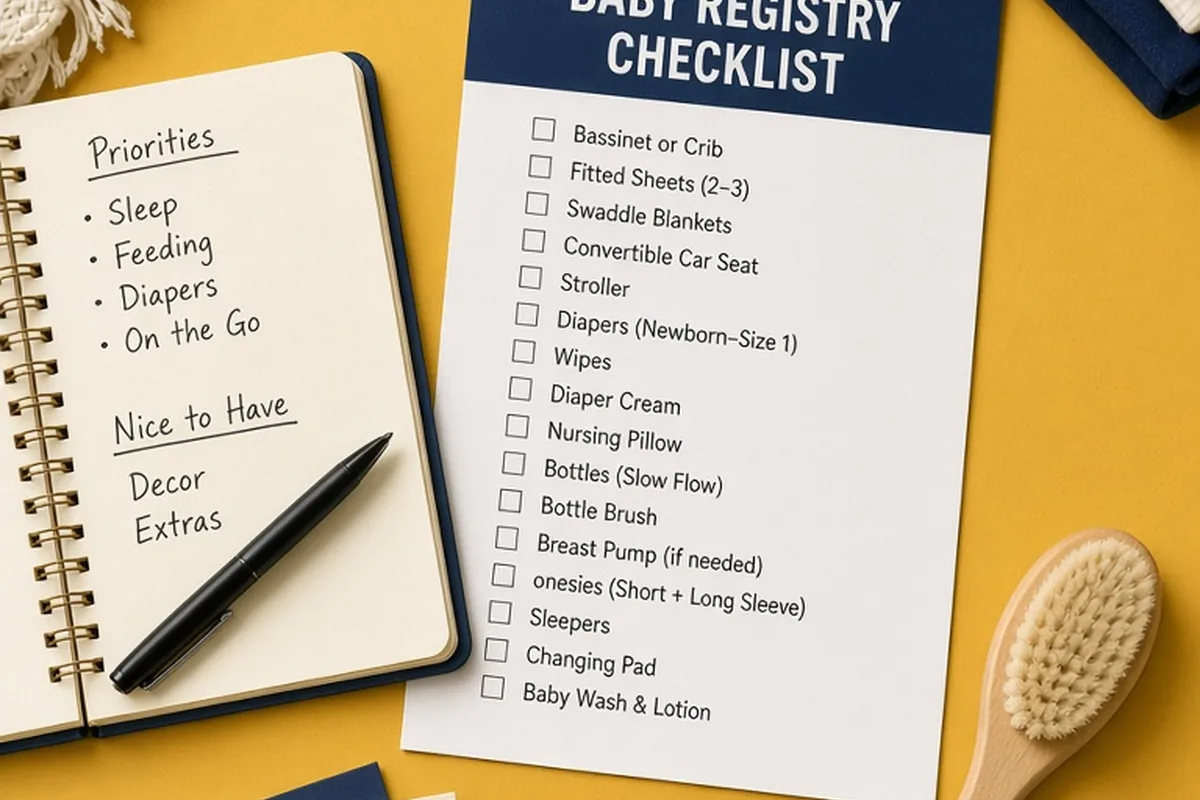
A baby registry checklist organizes the essential gear, clothing, feeding supplies, and nursery items you need for your newborn. To build an effective registry, focus on core daily necessities—such as a safe sleep space, a certified car seat, basic diapers, and feeding tools—before adding specialty convenience gear, decorative nursery accessories, or advanced electronics.
Preparing for a new baby can feel overwhelming when browsing thousands of infant products, each advertised as an absolute necessity. Sorting through marketing claims to build a functional, realistic registry requires looking at how your household will navigate daily routines like sleeping, feeding, diapering, and traveling during the first six months.
Safe Sleep and Nursery Fundamentals
Setting up a safe and functional sleep space is one of the most critical parts of early baby preparation. In the first few months, the American Academy of Pediatrics suggests room-sharing by placing the infant in a separate sleep surface near your bed. A standalone bassinet offers portability and a small footprint for bedside care, while a full-size crib or travel crib with a bassinet insert can serve your child well into toddlerhood. Whichever option you choose, the mattress must be firm, flat, and fitted tightly with a breathable sheet without any loose blankets, pillows, bumper pads, or plush toys.
Beyond the sleep surface itself, nursery essentials should support calm night routines and practical convenience. A reliable white noise machine can help mask household sounds, while an adjustable nightlight with a warm, low-intensity glow allows you to manage midnight diaper changes without fully waking your baby. While elaborate nursery furniture sets look appealing, many families find that a basic dresser paired with a secure changing topper works just as effectively as a dedicated changing table while saving square footage and money.
- One certified crib, mini crib, or bedside bassinet
- Firm infant mattress tailored to the specific sleep unit
- Two to four waterproof mattress covers and fitted crib sheets
- Three to four lightweight sleep sacks or wearable blankets
- Dimmable nursery nightlight and portable sound machine
Transportation and On-the-Go Gear
Selecting travel gear involves balancing physical safety, vehicle dimensions, lifestyle habits, and weight limits. An infant car seat is mandatory for departing the hospital in a personal vehicle or rideshare. Infant bucket seats click in and out of a pre-installed vehicle base and frequently attach to compatible strollers, allowing you to transport a sleeping infant without unbuckling them. However, infants outgrow these seats relatively quickly—often around their first birthday—which leads some budget-conscious families to register directly for an all-in-one convertible car seat that stays permanently in the car from infancy through preschool.
Your choice of stroller should match your primary physical environment. City dwellers navigating narrow sidewalks and public transit benefit from lightweight, compact fold strollers, whereas suburban parents who walk neighborhood trails may prefer robust wheels with all-wheel suspension. In addition to wheeled transport, an ergonomic baby wrap or structured carrier provides hands-free comfort around the house and on short errands. Be mindful that carriers fit adult bodies differently; choosing an adjustable carrier ensures both partners can wear it comfortably without complicated readjustments.
- Rear-facing infant car seat or convertible car seat with infant insert
- Compatible stroller suited to your local walking terrain
- Ergonomic soft-structured baby carrier or stretchy fabric wrap
- Durable, wipeable diaper bag with backpack straps and changing mat
- Weather protection accessories such as stroller rain shields or sunshades
Feeding Supplies for Nursing, Pumping, and Bottle-Feeding
Feeding setups vary widely depending on whether you plan to breastfeed, pump, use infant formula, or combine methods. Because feeding plans often evolve after birth based on physical recovery and newborn latching, building flexibility into your registry prevents unnecessary stress. For bottle-feeding, it is wise to register for multi-brand sampler packs rather than committing to a single twelve-pack of one specific brand. Newborns frequently exhibit preferences for particular nipple shapes, materials, and flow rates, and testing options early avoids wasted supplies.
If you are breastfeeding or expressing milk, prioritize tools that support posture and physical comfort. A supportive nursing pillow elevates the baby to breast height, relieving strain on your neck and lower back. Adding items like silicone manual breast pumps, reusable milk storage bags, soothing nipple balms, and washable nursing pads ensures you are prepared for the early weeks of milk regulation. Electric breast pumps are often covered through health insurance plans, making it practical to reserve registry space for replacement pump parts, storage bottles, and specialized bottle-cleaning brushes.
- Four to six 4-ounce and 8-ounce baby bottles with slow-flow nipples
- Bottle brush with integrated nipple cleaner and a compact drying rack
- Firm nursing support pillow with a removable, washable cover
- Silicone collection pump and breast milk storage bags
- Absorbent cloth bibs and six to eight soft flannel burp cloths
Diapering Essentials and Changing Stations
Newborns typically go through eight to twelve diaper changes each day, making a well-stocked diaper station central to your daily workflow. When registering for disposable diapers, avoid requesting large quantities of newborn sizes. Many infants outgrow newborn diapers within two to three weeks, and some larger babies start directly in size 1. Requesting a spread of sizes—primarily size 1 and size 2—ensures you have practical inventory on hand as your baby grows rapidly during the first four months.
Setting up your changing area requires prioritizing hygiene and accessibility over aesthetic gadgets. A contoured wipe-clean changing pad eliminates the need for frequent laundry cycles compared to fabric-covered pads. Pair this with unscented, water-based baby wipes and a zinc oxide-based barrier cream to protect delicate skin from moisture irritation. Dedicated steel diaper pails do an exceptional job of trapping odors, though standard trash bins with tight-sealing lids can work adequately if emptied on a regular daily schedule.
- Two large boxes each of size 1 and size 2 diapers, plus one pack of newborn size
- Hypoallergenic, fragrance-free baby wipes in bulk packs
- Contoured changing pad with a non-absorbent, wipe-down surface
- Odor-locking diaper pail with matching refill bags or standard trash compatibility
- Diaper rash barrier ointment and a soft silicone applicator
Bathing, Grooming, and Health Supplies
Infant hygiene during the first few weeks is relatively low maintenance. Before the umbilical cord stump falls off, newborns only need gentle sponge baths. Once ready for water immersion, an infant tub featuring an ergonomic support sling keeps your baby secure while leaving your hands free to wash them. Look for tubs that transition from newborn support to an upright seated position so the product remains functional throughout the baby's first year.
A well-curated baby health and grooming kit helps you respond promptly to minor discomforts. Essential items include a digital rectal or multi-use thermometer—which provides the most accurate core temperature readings for young infants—alongside a silicone nasal bulb or gentle suction aspirator for clearing congested airways. Soft-bristle cradle cap brushes and specialized infant electric nail trimmers or emery boards make routine grooming manageable without the risk of nicking soft infant skin.
- Convertible infant bathtub with newborn mesh sling insert
- Three to four ultra-soft hooded cotton bath towels and gentle washcloths
- Fragrance-free, tear-free baby wash and mild baby lotion
- Fast-read digital infant thermometer and soft silicone nasal aspirator
- Infant nail file or safety nail scissors designed for small fingers
Everyday Clothing and Layette Basics
Newborn clothing should prioritize ease of dressing and frequent diaper access over intricate buttons, snaps, or stiff fabrics. Sleepers with two-way zippers are universally favored because they allow you to unzip from the bottom for midnight diaper changes without exposing your baby's chest to cold air. While dressing babies in miniature adult outfits can be fun, stiff collars, non-stretchy denim, and outfits with numerous tiny buttons often cause unnecessary fuss during dressing routines.
When estimating clothing quantities, factor in seasonal temperatures and how frequently you intend to run laundry. A practical starter wardrobe includes a balanced mix of short-sleeve bodysuits, long-sleeve onesies, stretchy footed sleepers, and soft pants. Avoid over-registering for newborn-sized garments, as growth spurts happen quickly; having a reliable supply of 0-3 month and 3-6 month clothing ensures you are never caught unprepared when your baby abruptly transitions between sizes.
- Five to seven two-way zippered footed sleepers in newborn and 0-3 month sizes
- Six to eight short-sleeve and long-sleeve cotton bodysuits with lap shoulders
- Four pairs of soft, stretchy pull-on pants
- Four to six pairs of stay-on infant socks or soft booties
- Two lightweight cotton swaddles or transitional sleep pods
Registry Management and Budget Optimization
Managing a baby registry effectively involves strategic planning to accommodate both your personal budget and your gift-givers' price ranges. Most modern registry platforms allow you to enable group gifting on big-ticket items like strollers, cribs, and gliders, which lets multiple friends or coworkers contribute smaller sums toward one essential purchase. It is also beneficial to register for non-material support, such as diaper funds, meal delivery credits, or postpartum doula contributions.
Take full advantage of registry perks, especially completion discounts and extended return windows. Most major retailers offer a 15% discount on remaining unpurchased items starting 60 days before your estimated due date. Keep registry items organized by priority, marking core essentials clearly so guests who want to give practical items know exactly what you need most. Delay unboxing and washing secondary items until you are certain your baby will use them, allowing you to return unopened items for store credit.
- Enable group gifting options on all items priced over one hundred dollars
- Include non-physical funds for meal services or diaper subscriptions
- Track completion discount activation dates across different registry hosts
- Keep gift receipts organized and leave tags on excess gear until needed
Frequently asked questions
When is the best time to create and share a baby registry?
Most parents start building their registry privately around 12 to 16 weeks of pregnancy after their first trimester scans. Sharing the registry typically occurs around 20 to 28 weeks, coinciding with baby shower invitations and giving guests adequate time to select gifts.
How many items should I put on my baby registry checklist?
A well-balanced registry generally includes between 75 and 100 items across varying price points. This gives gift-givers sufficient options while preventing your home from becoming overcrowded with duplicate or unneeded infant gear.
Which baby items are generally considered unnecessary to register for?
Items such as dedicated wipe warmers, baby shoe collections, specialty bottle sterilizers, and complicated diaper stackers are often unnecessary. Standard dishwashers, warm tap water, and simple storage bins handle these tasks effectively without taking up extra counter space.
Your next step
Start by auditing your available living space and vehicle dimensions, then create a registry draft containing only the core sleep, travel, diapering, and feeding essentials needed for the first three months.